


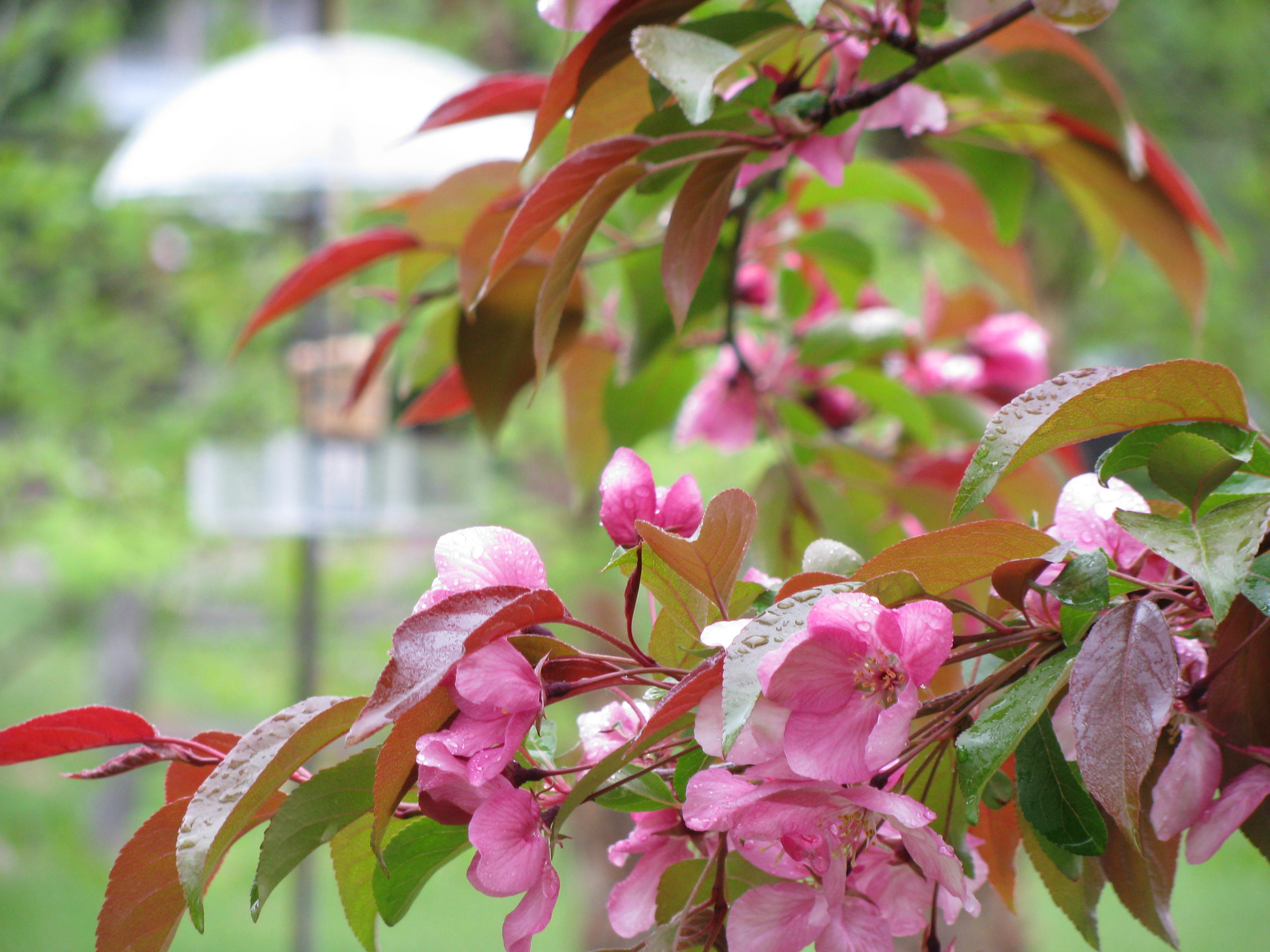
It was a drizzly overcast day today… the kind that reminds me of most times that we visit the Black Hills where the dark, heavy-laden rain clouds seem to brush the tops of our heads. The grass and leaves appeared to be a deeper green than when the sun shines and the rain droplets added a sheen and freshness to the new spring growth. These blossoms on my flowering crab apple tree are in their prime.
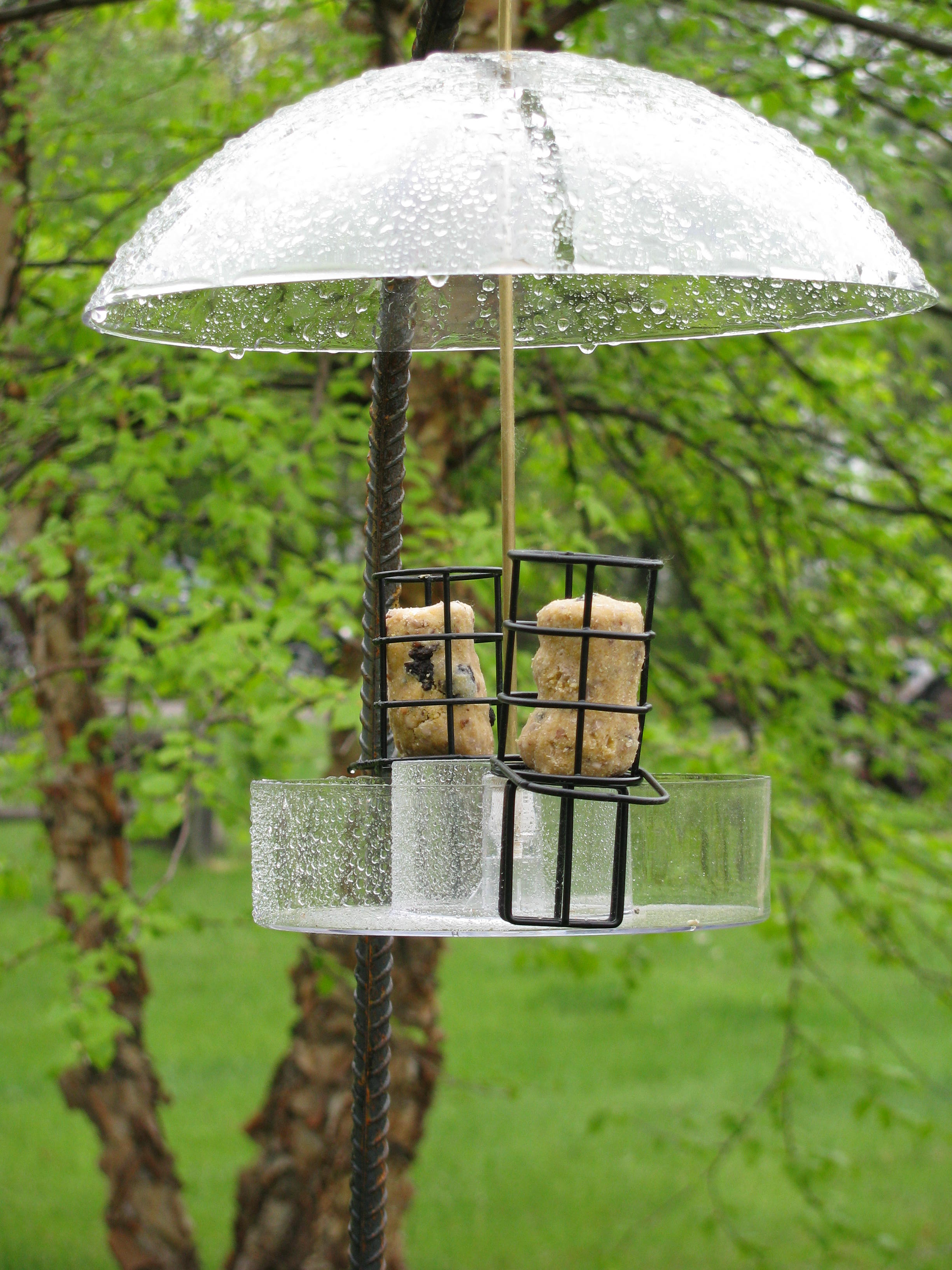
This is a new dining station next to a one of my bluebird houses inhabited by some babies that just recently hatched. The suet is especially suited for bluebirds. Since I took this photo, the bottom tray is now filled with wiggly mealworms to further entice the bluebirds to hang out and raise a second and possibly a third brood. Here's the recipe for the suet if you'd like to make your own or you can also purchase it.
BLUEBIRD BANQUET RECIPE:
|

Resulting mix will be crumbly and should have bean/pea sized lumps from the drizzling of the melted suet. If too sticky after cooling, mix in a bit more flour. If too dry, drizzle in more melted suet.
Refrigerate any mix you are not using – to prevent suet from turning rancid. I use a commercial pure bird suet cake. You can render you own suet. Grind or cube butcher store suet. Melt over low heat. Watch carefully as suet is a fat and can start on fire with too high heat. A microwave can be used. Strain out the stringy bits (cracklings). Cool. Remelt a second time for the recipe.
For information on feeding mealworms to bluebirds, I found this link to be helpful. "Mealworms are not really worms at all but are the larval form of the darkling beetle (Tenebrio molitor). They are clean, easy to raise, do not carry human diseases and, most importantly, are a nutritious food supplement readily accepted by bluebirds. Mealworms entice bluebirds to use a nest box, assist the incubating female to find food quickly so she does not have to leave her eggs for long periods of time, and is a supplementary food for nestlings if food becomes scarce when weather conditions prevent the parents from finding insects."
 Whiteley Creek Homestead
Leave a comment