


Over Labor Day Weekend, when Dick and I attended a Steam Threshers Reunion in Rollag, I shopped in a general store that is part of the event's 18oos town's main street. I chose two hand-crocheted dishcloths made with autumn yarn colors and two jars of homemade jelly… one is made from corncobs and the other one from chokecherries. I was drawn to their colors that glisten in the sunlight. I have made chokecherry jelly from berries picked in my yard, but I was curious about how corn cob jelly is made, so I went online to learn. The food coloring and excessive amount of sugar would deter me from making it, but now I know the process. I am impressed with the use of a plant's part that is normally tossed aside.
Corn Cob Jelly
12 sweetcorn cobs
4 c. sugar
4 c. water
Bring corn cobs and water to boil for 10 minutes. Strain through cloth or sieve. Measure 3 cups liquid. Put in pan. Add 1 box fruit pectin. Bring mixture to a boil and simmer 3 minutes. Then skim. Add 2 drops yellow food coloring. Pour into clean, sterilized glasses and seal.
A pink shade of jelly can be achieved by using "Ruby Queen" sweet red corn.
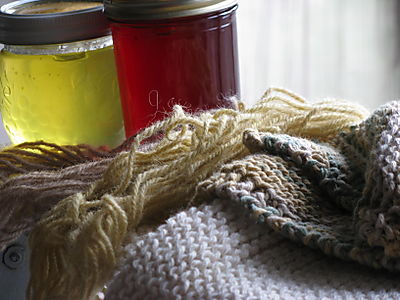
Down the street, in another building, I stopped to watch an elderly woman dye wool yarn with natural materials. The yarn is first soaked in water and mineral powder such as chrome, copper, iron, or tin then it is rinsed and dried. Next the yarn is soaked in water that has been simmered with flowers such as dahlia, marigold, goldenrod, coreopsis, or hollyhock. Berries such as sumac and juniper work well also. Black walnut green hulls or leaves, as well as the leaves of poplar and sumac make good colors, too. I bought two pieces of her dyed yarn… one that she had first soaked in an aluminum powder then a combination of blueberries and acorns which turned into a tan color. The other piece of yarn she soaked in a tin powder then gladiola blooms. It turned out to be a yellow gold color. I'd like to try natural yarn-dyeing one day.
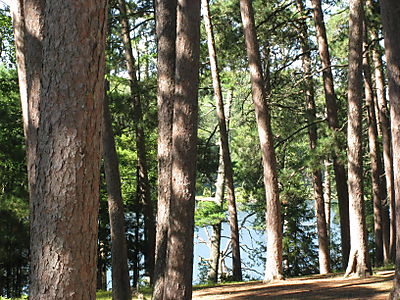
After spending three days at the Rollag Steam Threshers Event, we headed to Itasca State Park for two days. I stood there in amazement among the red pine stands. Their growth is slow and their lifespan long. One amazing tree in the park is over 300 years old! It is there that the solitude of the forest spoke to me… "Nature does not hurry, yet everything is accomplished." I ran across the wise message in a magazine recently. Since I tore the page out, I can't give credit where it is due. The words, in script handwriting style, were scrawled across a chest of drawers. They were ordered custom from the online decal company wonderfulgraffiti.com.
 Whiteley Creek Homestead
Leave a comment