


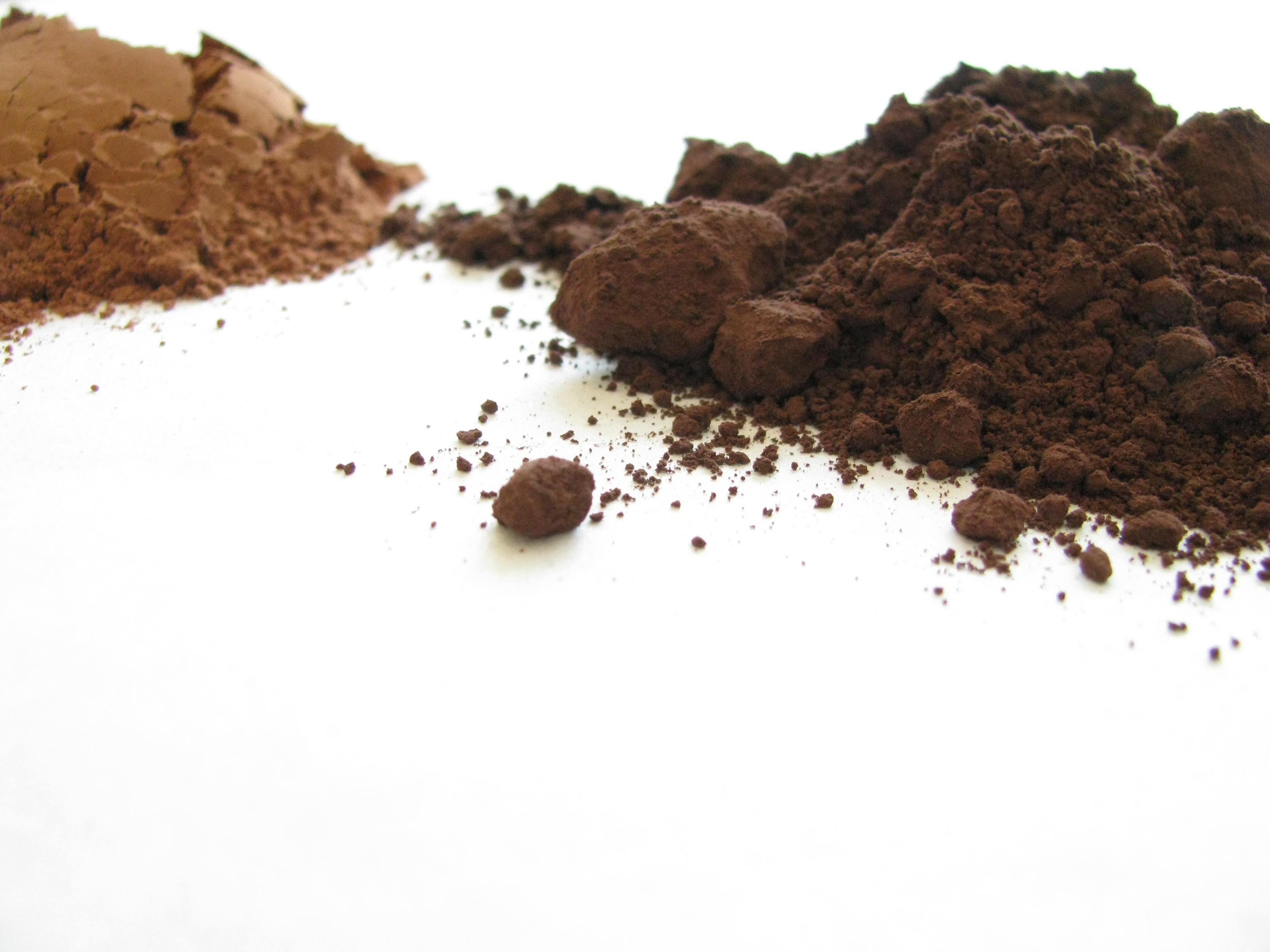
Since Valentine's Day is synonymus with chocolate, I thought I'd share some research I conducted recently on regular baking cocoa vs. Dutch chocolate baking cocoa. I discovered the Dutch variety when I first made Martha Stewart's chocolate buttermilk cupcakes because that was one of the ingredients in the recipe. I purchased a box, mixed up the batter, and was in total awe at the deepest black batter I had ever set my eyes upon! I loved the unique color but thought that, when I took my first bite of the baked product, it would be bitter with a strong flavor. Rather, it had a more mellow flavor than regular cocoa.
Sometimes I have more "Why?" questions than a young child experiencing life for the first time. I had a burning need to find out what made the cocoa's deep color. I started out at Eating Well Magazine's web site then jumped from here to there taking notes. In a nutshell, this is what I learned…
Dutch-process cocoa: "Dutch-process cocoa is treated with alkali to neutralize its natural acidity. This raises its pH from around 5.5 to about 7, making it almost neutral. This process produces cocoa that is darker and has a mellower chocolate flavor than regular cocoa. You should use Dutch cocoa in recipes that call for baking powder; if the recipe uses baking soda, you should use regular cocoa. (My chocolate buttermilk cupcake recipe has both baking powder and baking soda in it and it turns out equally well with either cocoa.) Some brands to look for include Droste, Schokinag, Bensdorp and Pernigotti. Find it in the baking section of your supermarket or online at kingarthurflour.com." -www.eatingwell.com and eGullet Society Culinary Arts Forum (The link I've provided to King Arthur Flour is for organic Dutch cocoa from an American company committed to sustainable agriculture worldwide.)
Feb. 7, 2009
Today's mileage: 2-mile walk
Total monthly mileage: 15 miles
Bible reading? Ya betcha.
 Whiteley Creek Homestead
Leave a comment