


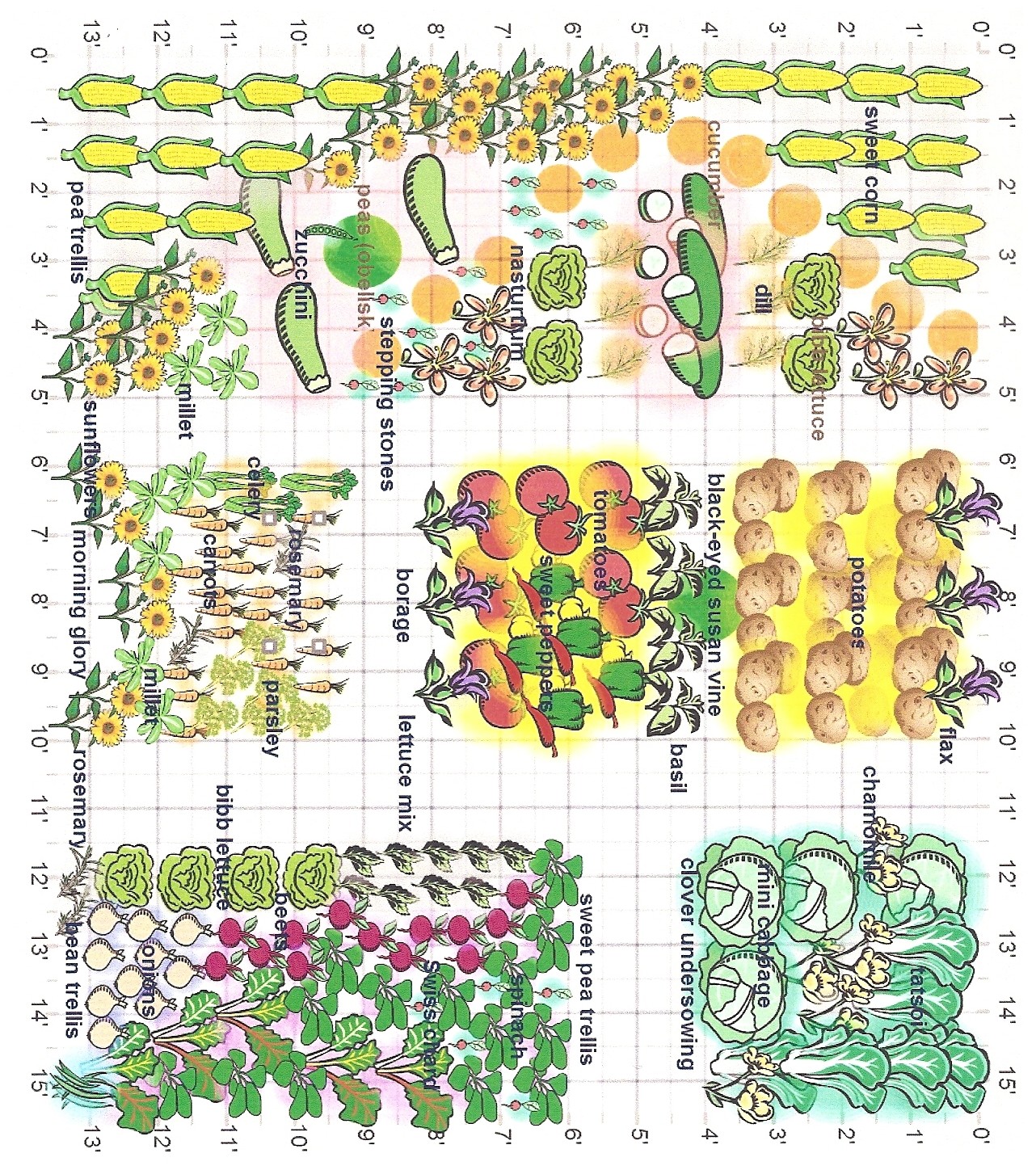
I created this diagram of my garden layout with a new garden planning tool that I discovered. You can easily move the plant symbols around to a different location until you have it just right. It's so easy to visualize what your garden will look like. To determine placement, I first decided upon what I wanted to grow. Next, I grouped the plants into families for the purpose of crop rotation and determined companions. I considered each plant's horizontal or vertical growth, its height, colors, texture, and shape for visual appeal, fragrance to attract or deter insects and provide scent along walkways, and spacing to allow for succession planting. For example, to protect a late sowing of lettuce from summer sun, I will grow it in the shadows of taller tomatoes. By allowing proper spacing for each plant, family members will not compete for the same nutrients. In areas where rows will be used, I positioned them in an east/west direction to maximize sunshine. Using my plant list, I devised a five-year crop rotation plan because a crop that is grown in the same area year after year can deplete the soil's nutrients and cause the buildup of soil-borne diseases and pests. Plants in the same family should not follow each other in rotation, so I identified five distinct areas in my garden space where I could group plant families together. I labeled the areas Site 1, Site 2, Site 3, Site 4, and Site 5. Each year, crop rotation will be a simple procvess because the entire plant family will be planted in a new area. After you complete your plan, the garden planning tool site allows you to print out a personalized guide that tells you when to sow, transplant, and harvest each crop determined by your planting zone. It tells how many of each crop to plant based upon the size of your garden space and each plant's spacing requirements. (Note: This feature is ineffective if you don't insert the exact number of symbols in the ruled grid to accurately depict the number of plants you will sow/transplant in your actual garden space. If you attempt to fit the correct number of symbols into the plan, it creates a very jumbled diagram causing difficulty visualizing the aesthetic component of your plan. Instead, to determine spacing, I will refer to the book Square Foot Gardening by Mel Bartholomew.) The site has helpful information on companion planting, crop rotation, natural pest control, etc. You can use the planning tool free for 30 days, then it's $25.00 a year if you decide to continue.
March 28, 2010
Today's Mileage: 2-mile walk
Total Mileage for March: 37.5 miles
Bible reading? Yes
March 29, 2010
Today's Mileage: 2-mile walk
Total Mileage for March: 39.5 miles
Bible reading? Yes
March 30, 2010
Today's Mileage: 2-mile walk
Total Mileage for March: 41.5 miles
Bible reading? Yes
March 31, 2010
Today's Mileage: 2-mile walk + 4.25 mile bike ride
Total Mileage for March: 47.75 miles
Bible reading? Yes
 Whiteley Creek Homestead


Leave a comment