


When Kim Boyce's book, Good to the Grain Baking with Whole-Grain Flours debuted in 2010, it found a special place in my recipe book collection. I have made her Beet and Quinoa Pancakes countless times and the Figgy Buckwheat Scones are a major reason I buy dried figs in bulk. The book is divided into sections by types of flours including whole wheat, amaranth, barley, buckwheat, corn, kamut, mulitgrain, oat, quinoa, rye, spelt, and teff with a bonus chapter on jams and compotes. Even if you don't make every recipe in the book, it inspires you to think beyond whole wheat flour. And the photography is lovely. Some time back, my oldest daughter, Heather, told me that she adds barley flour and oat flour to her whole wheat pastry flour to sweeten her muffins, cakes, and cookies. Ever since, I have been doing the same. Last night, as I was reading Good to the Grain before falling asleep, there on p. 109, it reaffirmed what I already knew. I have a very smart daughter. Kim Boyce states that often she likes to use a combination of flours in a recipe, so she mixes up a large batch and keeps a jar on her counter. In her "Multigrain Flour Mix," she combines 1 cup whole-wheat flour, 1 cup oat flour, 1 cup barley flour, 1/2 cup millet flour, and 1/2 cup rye flour.

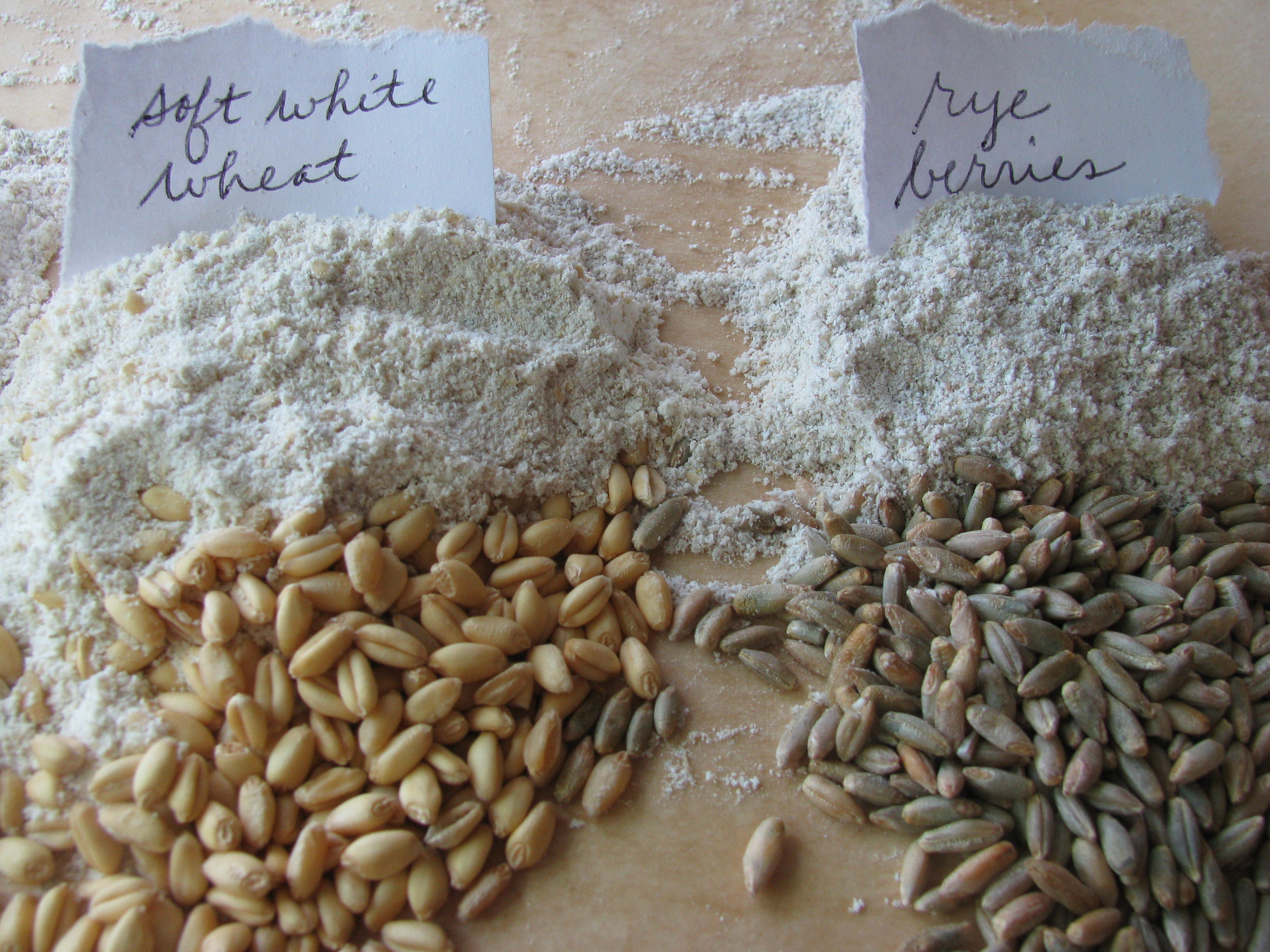
My grain mill quickly transformed five whole grains into a Multigrain Flour Mix that I used to make peach cranberry scones. Will I limit myself to these five flours? No. As a go-to all-purpose mix, most definitely.
 Whiteley Creek Homestead
Leave a comment