


The Battle of Gettysburg, fought July 1-3, 1863 in and around the town of Gettysburg, Pennsylvania, was a turning point in the American Civil War (April 12, 1861-April 9, 1865). The Union Army led by Maj. Gen. George Meade defeated Gen. Robert E. Lee's Confederate Army, but not without cost. Both armies experienced heavy losses. I remember learning of this battle in Mr. Engebretson's 10th grade American History class. Dick's and my visit to Gettysburg so many many years later, to retrace the steps of the soldiers who bravely fought this battle, was a field trip forty-six years overdue. Our visit began at the Gettysburg National Military Park Museum and Visitor Center where we viewed the film, "A New Birth of Freedom," which provided an overview of the American Civil War and the Battle of Gettysburg.
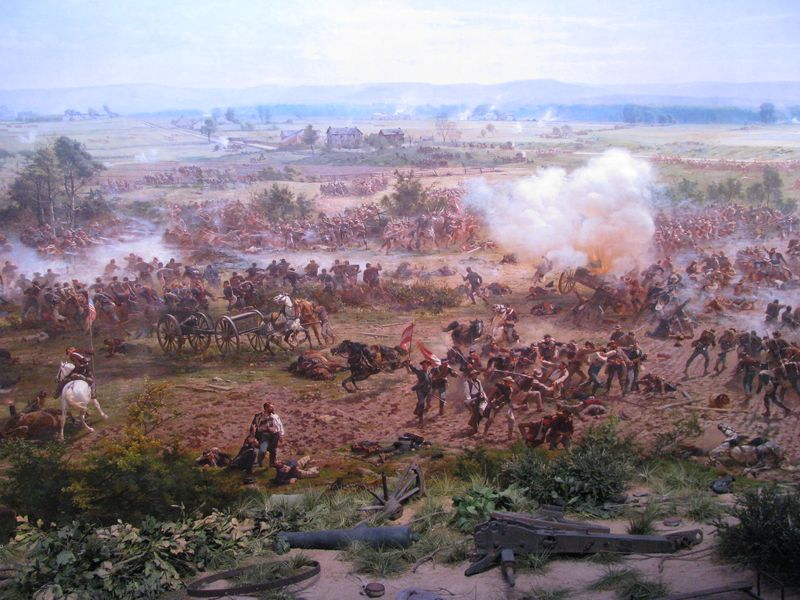
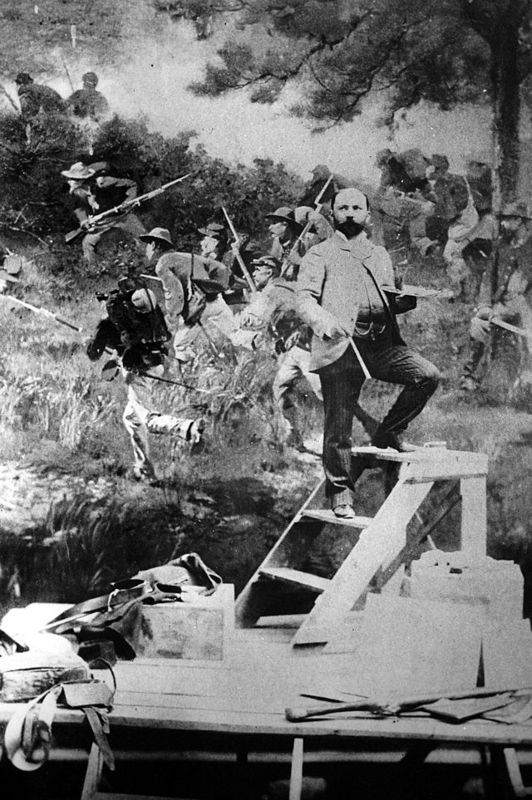
We, then, moved on to a huge round room with concave walls covered with a 360 panoramic painting called a cyclorama depicting Pickett's Charge, which was Gen. Robert E. Lee's infantry's failed assault against the Union Army that marked the turning point of the Battle of Gettysburg thus ending the Confederate Army's attempt to invade the North. Wagon wheels, cannons, canteens, clothing, broken fences, and other three-dimensional relics of battle litter the foreground to create a diorama which adds depth to the realistic, detailed scene. As we stood in the center of the room, a narrator recounted the battle's major events while spotlights highlighted locations in the painting. The black and white photo is the French artist, Paul Philippoteaux, who, along with a team of assistants, sketched the topography and key areas in the battlefield and interviewed veterans of the battle before beginning the oil painting which took over a year and one-half to complete.
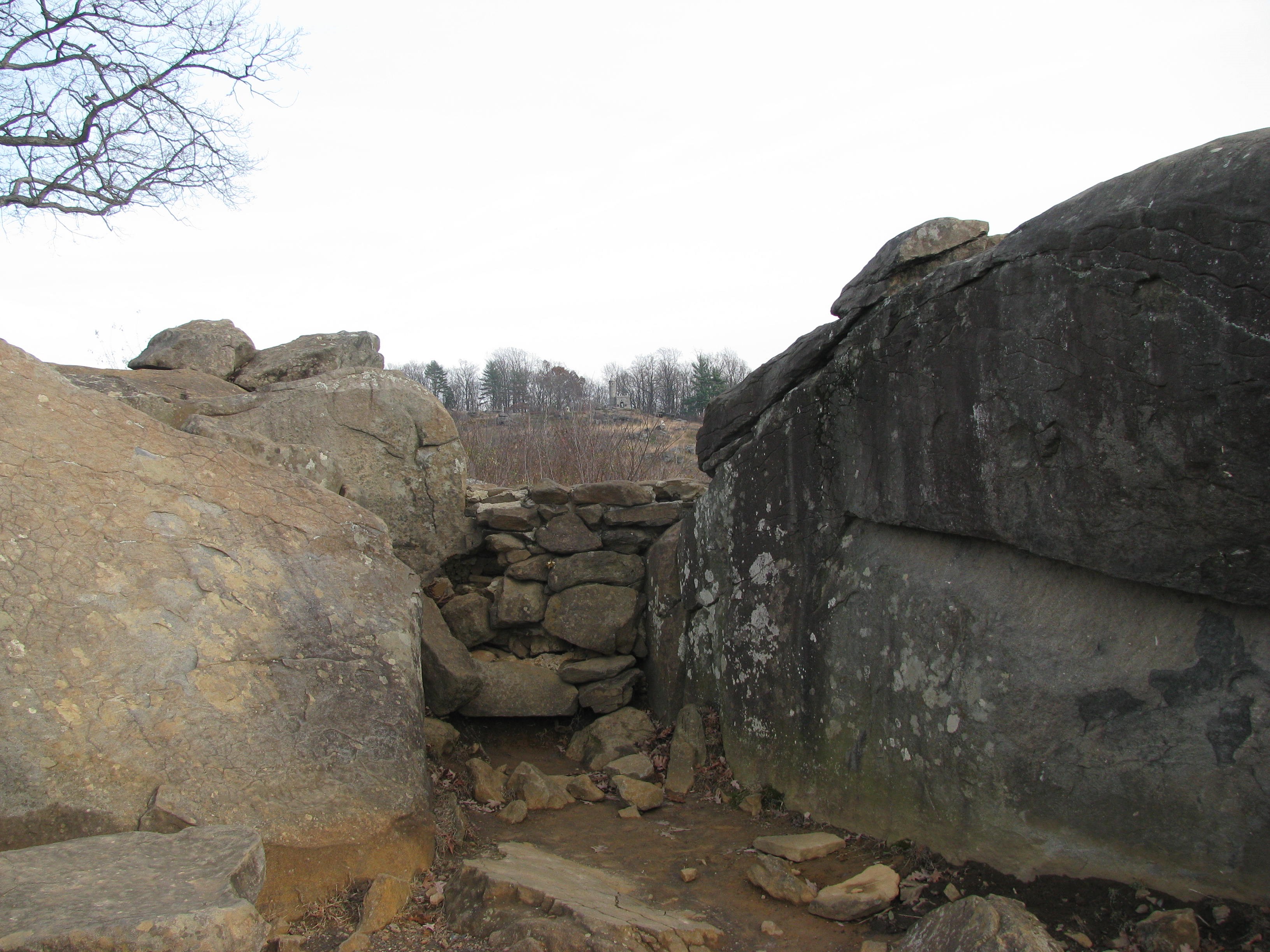
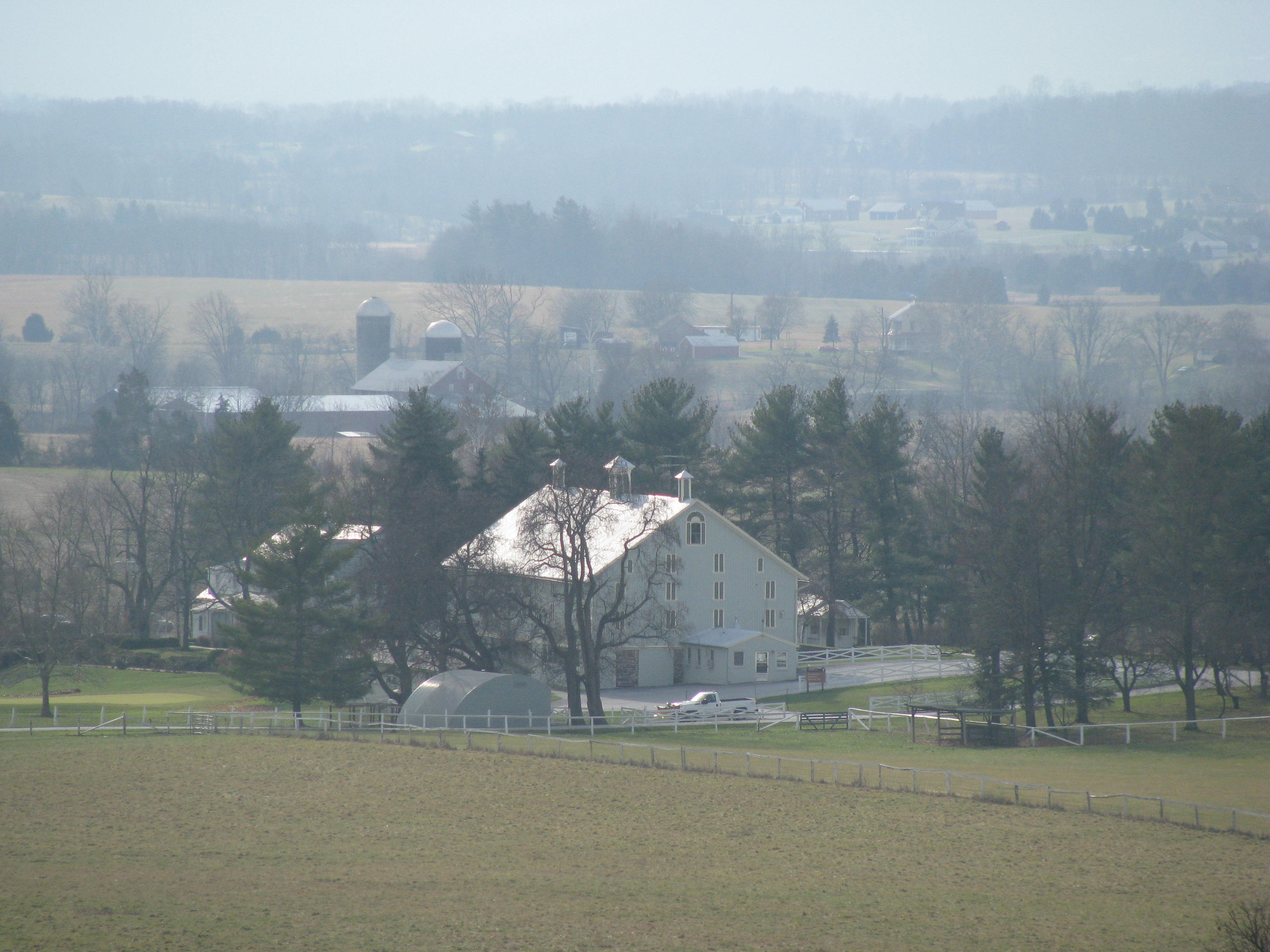
Informational markers along a 24-mile route identify key chronological events during the 3-day Battle of Gettysburg. One location known as Devil's Den (left photo) is a hill strewn with huge boulders that shielded Confederate sharpshooters from Union soldiers occupying Little Round Top which can be seen off in the distance above the rock barricade. (Right Photo) Adjacent to the battlefield is the 189-acre Eisenhower Farm. The farm was purchased in 1950 by General Dwight D. Eisenhower. After completing two terms as president (1953-1961), he retired to the farm with First Lady Mamie Eisenhower living there until his death in 1969. Mamie continued to live at the farm until her death in 1979. The farm became a national historical site after the Eisenhower's gifted the farm to the federal government in 1967. It was opened for public tours in 1980. Tickets can be purchased at the Gettysburg National Military Park Visitor Center where a shuttle is taken to the farm. After completing the three hour driving tour of the battlefield, there was not enough time remaining to tour the farm. We will return.
The Henry Ford (1863-1947) Museum and Greenfield Village in Dearborn, Michigan followed by Thomas Edison's (1847-1931) factories, lab, and home in West Orange, New Jersey then the American Civil War's (1861-1865) Battle of Gettysburg in Gettysburg, Pennsylvania were three destinations that fit together so perfectly in one trip.
 Whiteley Creek Homestead
Leave a comment