Whiteley Creek Homestead

LIFE AT THE END OF A DIRT ROAD IN CENTRAL MINNESOTA

organically grown triticale in our field
canoeing in our wetlands
raspberries growing wild on our property
our back porch fieldstone fireplace
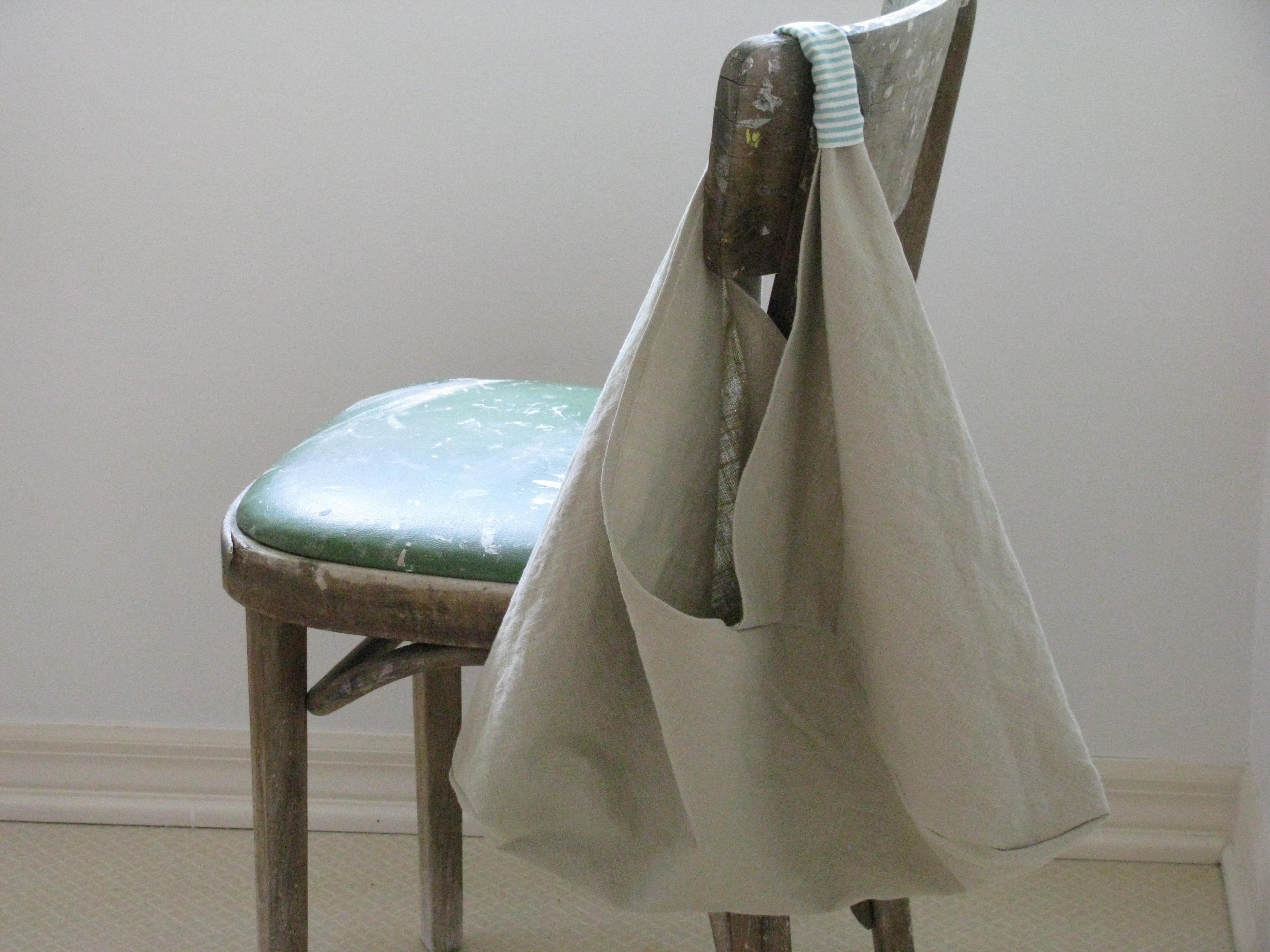
  • Springtime. Farmer's markets. I'm in. With a few simple folds and some quick stitching, I've got the sweetest bag to hold freshly cut ruby red rhubarb and asparagus, deeply hued leafy greens, a dozen farm fresh eggs (to fill in until my hens begin laying), a loaf of homemade sprouted grain bread, a jar of raw buckwheat honey, and a bouquet of wild flowers for my table.   

    Origami market bag

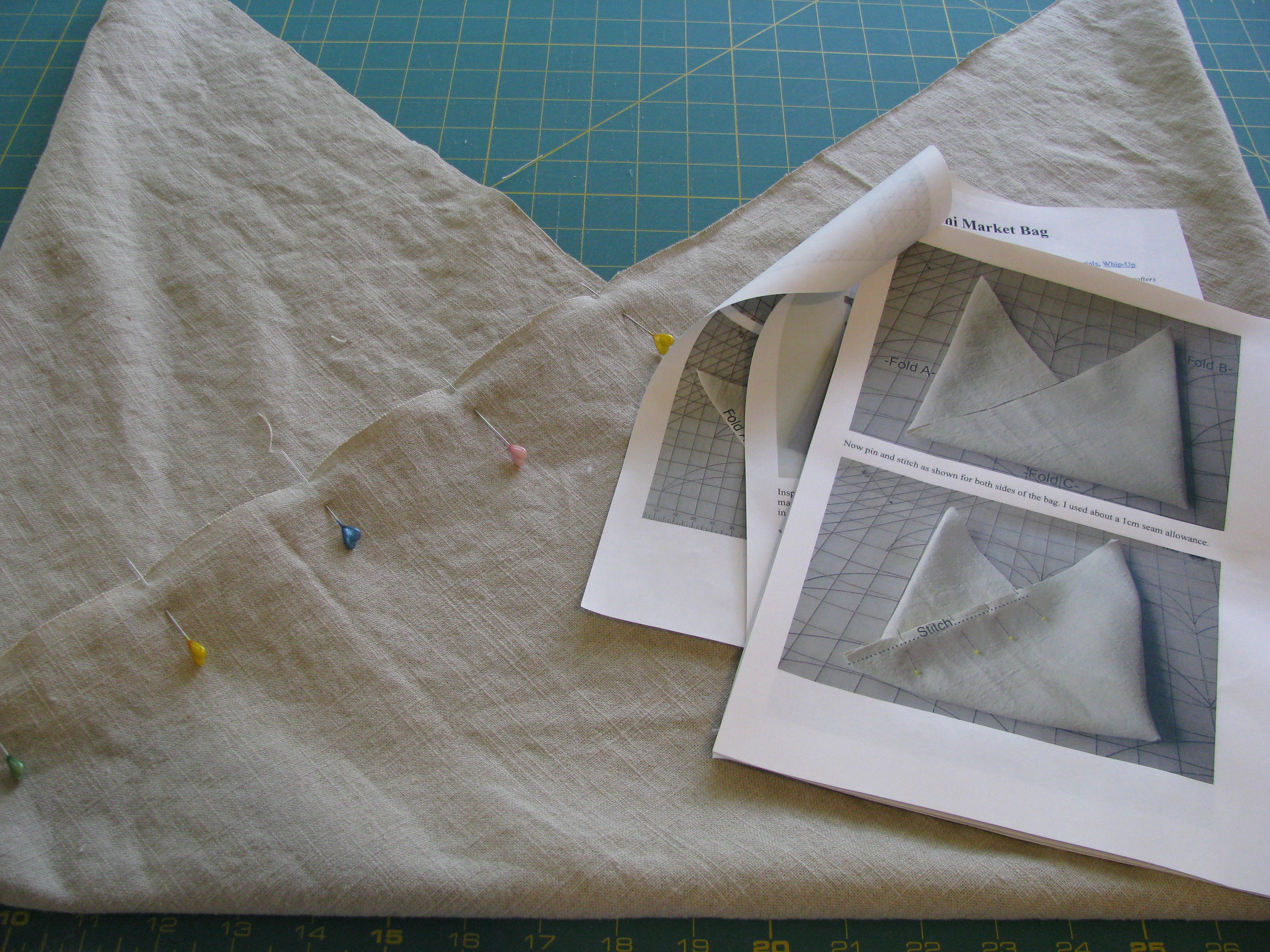
    Here's where I snagged the brilliant tutorial: http://lolanovablog.blogspot.com/2013/06/origami-market-bag-tutorial.html Today, Jo-Ann's offered a senior citizens (60+) discount of 20% off your total purchase. I cringed to think that I am now considered a senior citizen, but I'm good with the saving money part. For this project, I chose linen from the home decor section. The weight is suitable, the earthiness of natural fiber appropriate, and it was discounted 40%. A total savings of 60%. 1 easy-to-follow tutorial + 1 yard 54" wide fabric = 2 multipurpose bags.

    Origami market bag folding

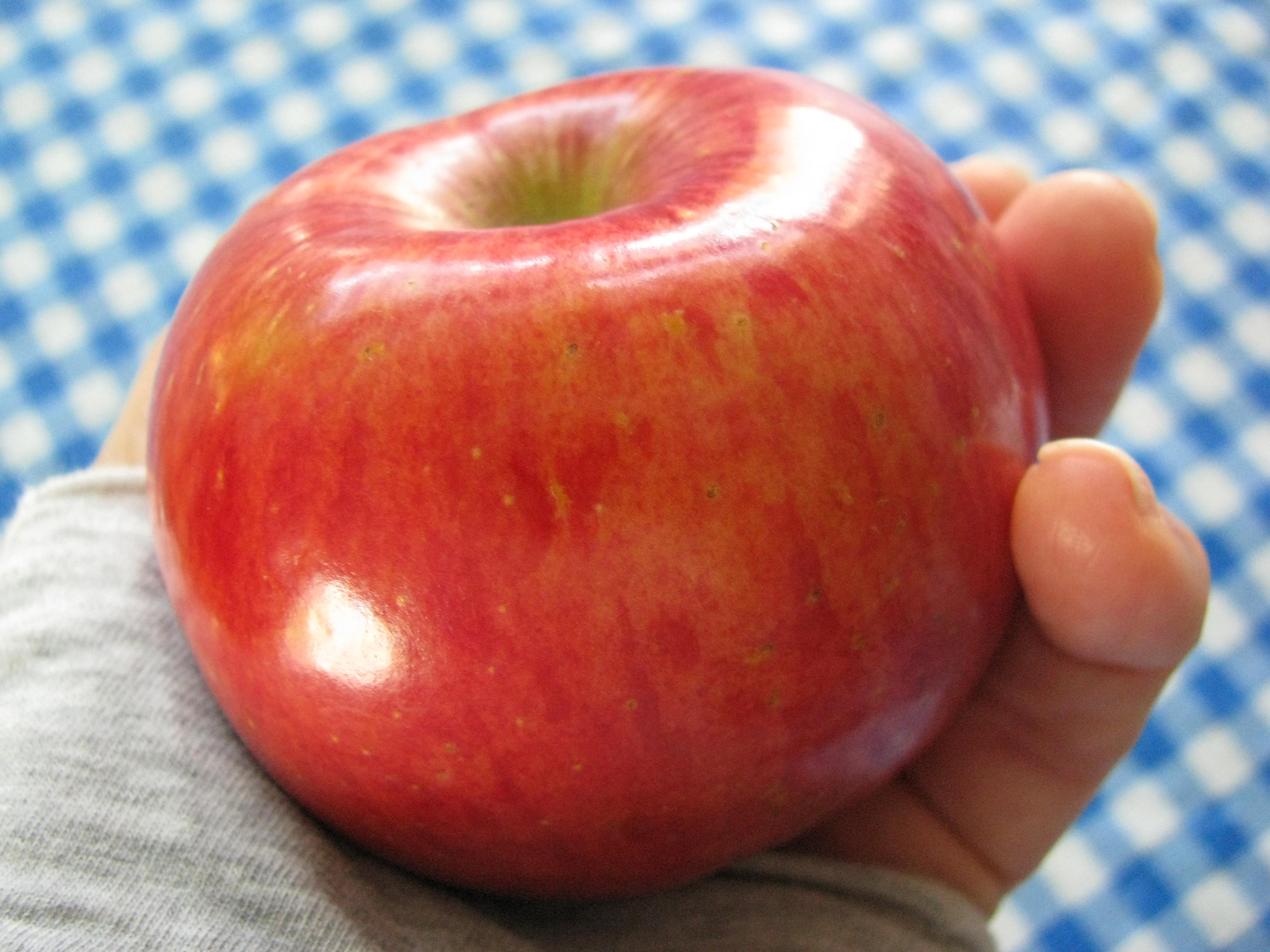
  • This apple's beautiful coloring reminds me of a crayon resist elementary school art project. Imagine a ruby-red crayon to make blotchy stripes then yellow watercolor paint brushed over top to fill in the gaps and create the background color. I discovered the apple during a routine sweep through the organic produce bins at my local supermarket yesterday. Its name is "Kiku."

    Kiku apple

    Kiku apples were discovered in 1990 by an Italian apple grower named Luis Braun who noticed them growing on a Fuji apple tree in a Japanese orchard. They are considered a natural genetic mutation of the Fuji apple. Braun bought the rights to the apple and began growing it in Italy. Introduced into the U.S. market in 2010, select growers in Pennsylvania, Michigan, and Washington State are licensed to grow this apple. Availability is limited. Info source: http://www.specialtyproduce.com

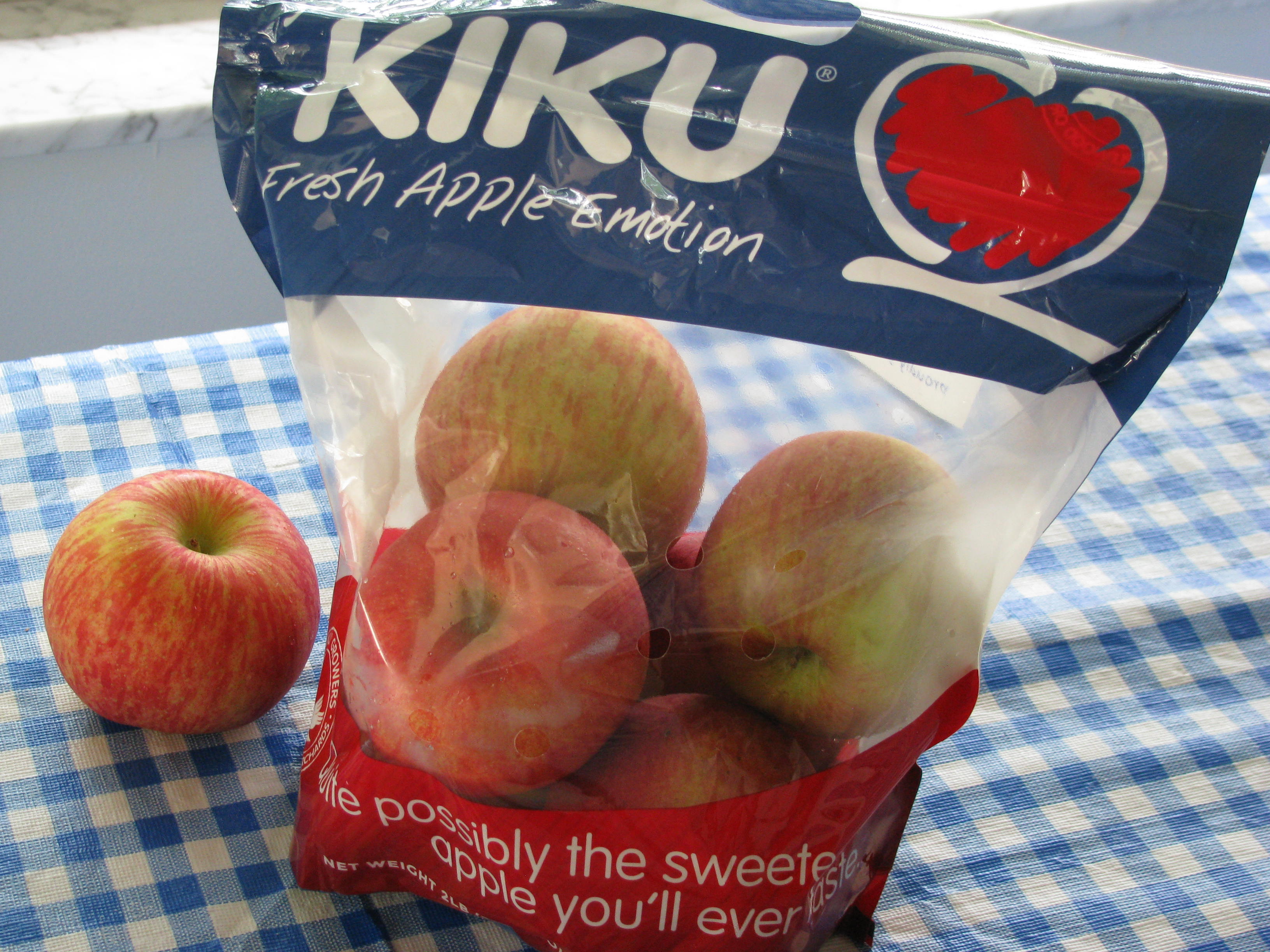
    Bag of kiku apples

    This super sweet strain of a Fuji apple is "quite possibly the sweetest apple you'll ever taste," as the package label boasts. I can attest to this. In addition, the flesh is firm, juicy, and crunchy… all traits that I consider important. Today, I returned to purchase another bag. And another. The Kiku apple has become my winter/early spring favorite alongside my autumn apple favorite, Honeycrisp. Note: Although the apple was displayed in the organic department, it is not organic.

    Kiku apples were discovered in 1990 by Louis Braun, an Italian apple grower, who found them growing on a Fuji apple tree in a Japanese orchard. They are considered a ‘sport’ (or natural mutation) of the Fuji; different mostly in appearance and size. Braun bought the rights to the apple and began growing it in Italy. The sweet Kiku was introduced to the US Market in 2010. Now, select growers around the world have permission to grow these sweet apples. Though primarily grown in Italy, they can be found growing in Pennsylvania, Michigan and Washington State in the US and perhaps New Zealand and Chile in the near future.
    – See more at: http://www.specialtyproduce.com/produce/Kiku_Apples_8800.php#sthash.MbjuqBep.dpuf
    Kiku apples were discovered in 1990 by Louis Braun, an Italian apple grower, who found them growing on a Fuji apple tree in a Japanese orchard. They are considered a ‘sport’ (or natural mutation) of the Fuji; different mostly in appearance and size. Braun bought the rights to the apple and began growing it in Italy. The sweet Kiku was introduced to the US Market in 2010. Now, select growers around the world have permission to grow these sweet apples. Though primarily grown in Italy, they can be found growing in Pennsylvania, Michigan and Washington State in the US and perhaps New Zealand and Chile in the near future.
    – See more at: http://www.specialtyproduce.com/produce/Kiku_Apples_8800.php#sthash.MbjuqBep.dpuf
    Kiku apples were discovered in 1990 by Louis Braun, an Italian apple grower, who found them growing on a Fuji apple tree in a Japanese orchard. They are considered a ‘sport’ (or natural mutation) of the Fuji; different mostly in appearance and size. Braun bought the rights to the apple and began growing it in Italy. The sweet Kiku was introduced to the US Market in 2010. Now, select growers around the world have permission to grow these sweet apples. Though primarily grown in Italy, they can be found growing in Pennsylvania, Michigan and Washington State in the US and perhaps New Zealand and Chile in the near future.
    – See more at: http://www.specialtyproduce.com/produce/Kiku_Apples_8800.php#sthash.MbjuqBep.dpuf
  • Chickens do not handle stress well. It can hinder their growth and adversely affect egg production. Although a chicken's breed factors into its personality, creating and maintaining a calm environment will help to produce mellow chickens with friendly dispositions. It will prevent what I refer to as "Chicken Little" hysteria.

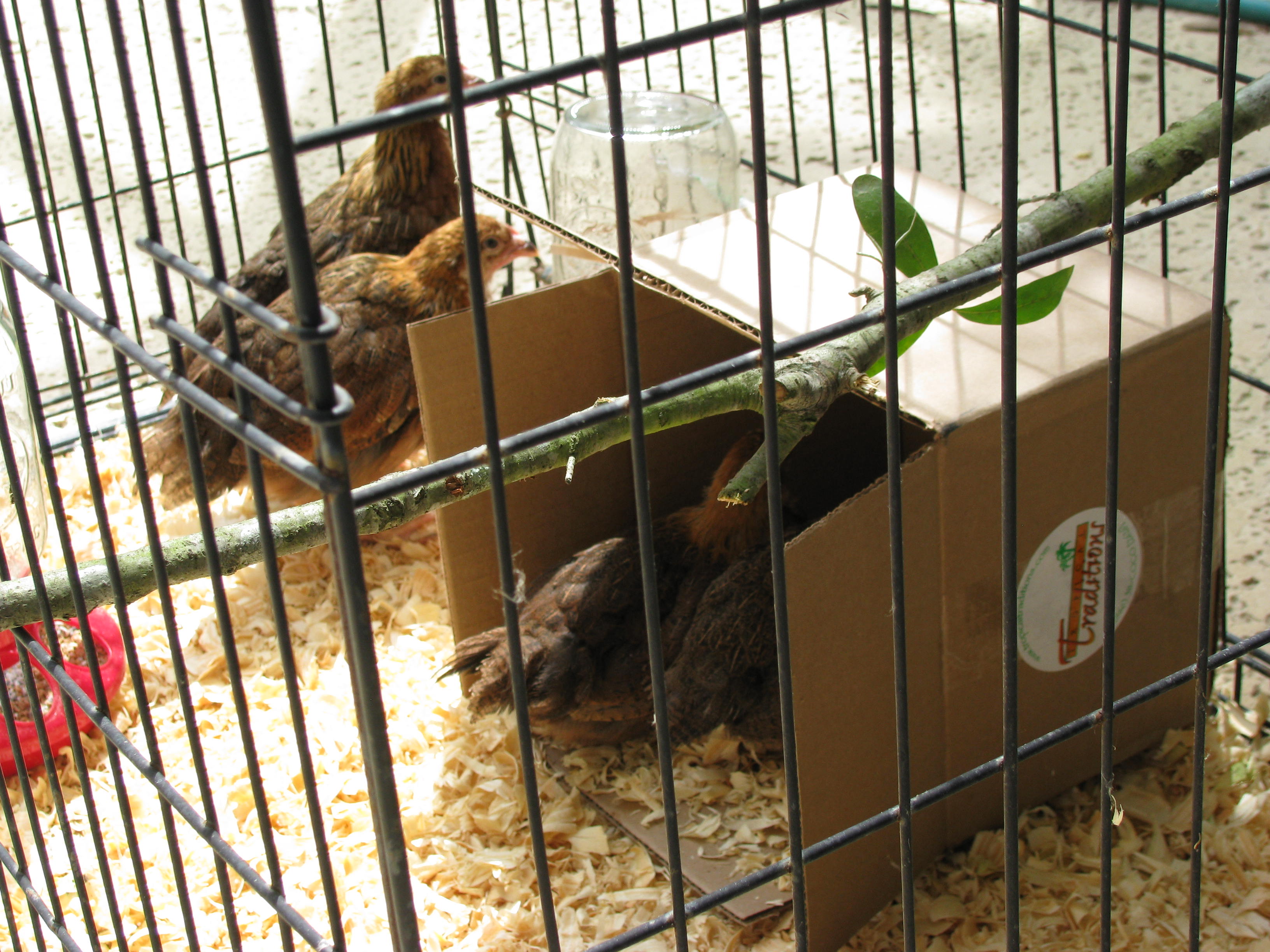
    Welsummer pullets roost and box

    A small cardboard box within a wire cage provides comfort and security until it is time to transition to the larger space that a coop provides then beyond to the big world of the yard and the buckwheat field and the woods thick with fallen autumn leaves. The box mimics a coop where chickens habitually enter at dusk when darkness begins to settle across the landscape. A "roost" created from a small tree branch allows young chickens to practice perching, which is a natural instinct.

  • It happens just that quick. One little trip to the farm store.

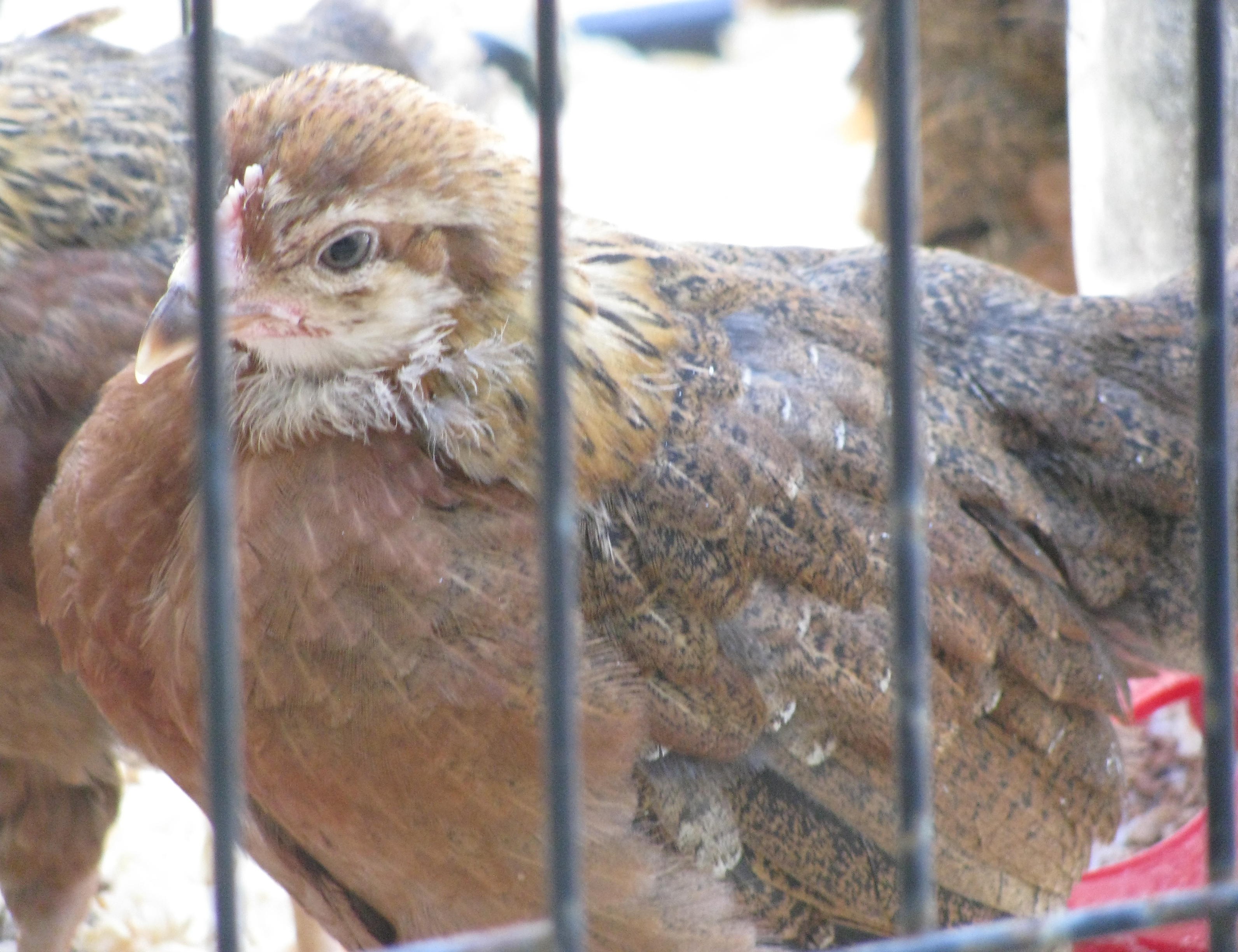
    Welsummer pullet

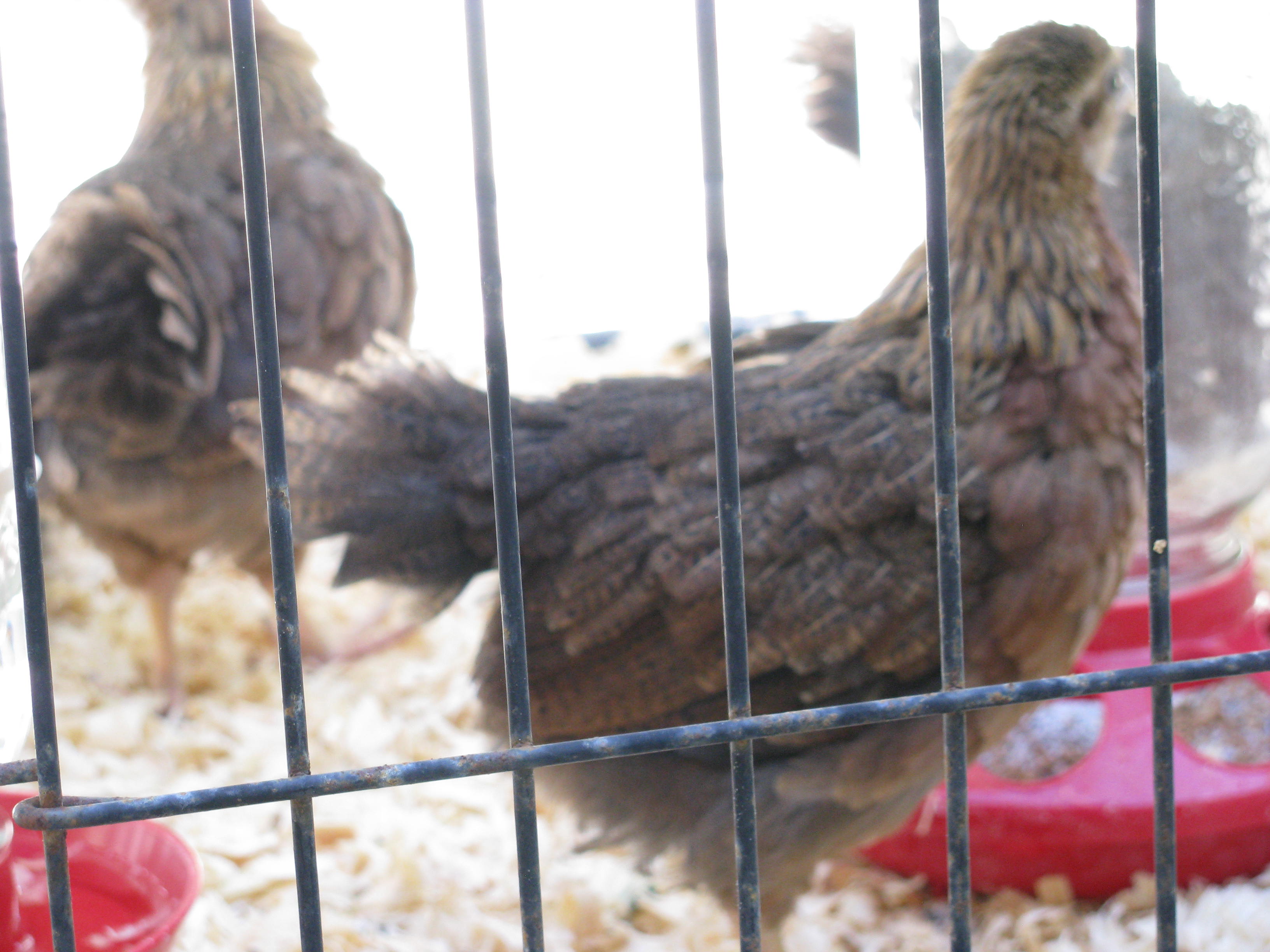
    Welsummer pullets

    It began this morning. Dick had noticed that area farmers were set up in the parking lot outside the Tractor Supply Store selling goats, rabbits, chicks, pullets (female chickens less than one year old), and cockerels (male chickens less than one year old). He asked me if I wanted to go. Just to look. "Well, in Whoville they say that the Grinch's small heart GREW THREE SIZES that day." -Dr. Seuss That's what our hearts did do today. When our eyes fell upon four Welsummer pullets. Seven weeks old. Now ours. 

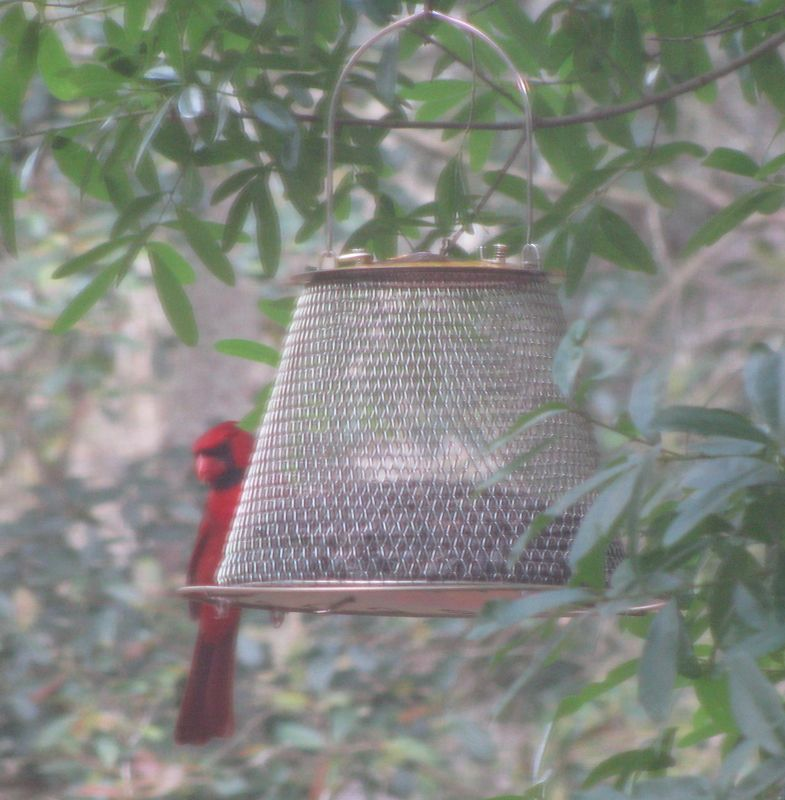
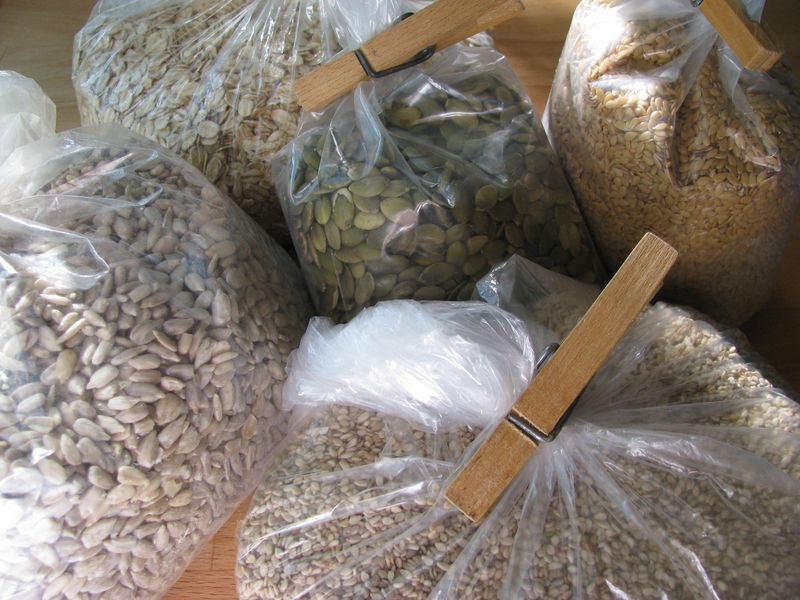
  • Dick and I watched a cardinal at a feeder in our yard busily crunching black oil sunflower seeds. He paused ever so briefly to acknowledge our gaze and tell us, "Go to your kitchen. You have your own seeds there." And he was right. Pumpkin, sunflower, sesame, and flax. And oats.

    Cardinal at feederNatures banquet seeds

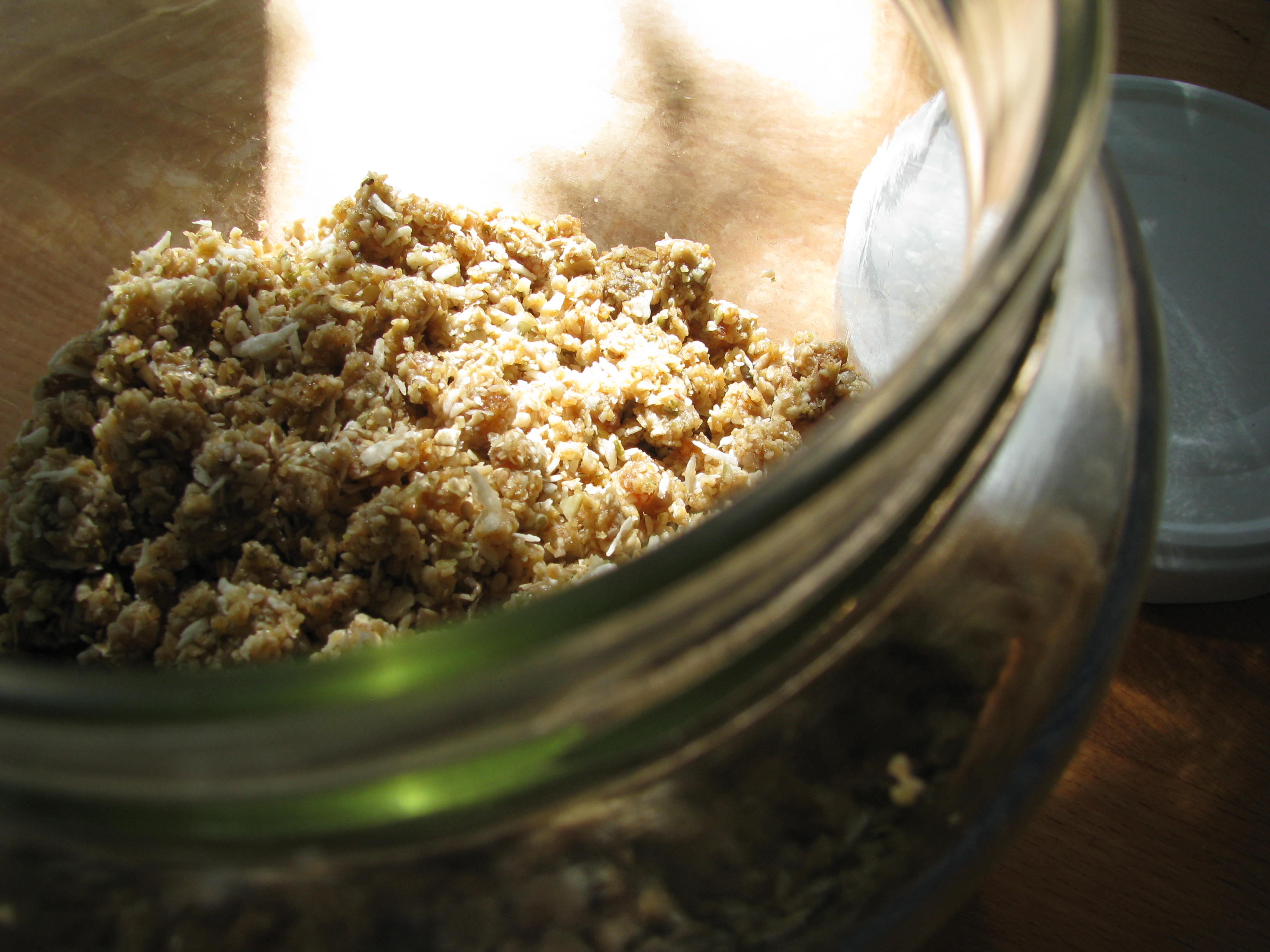
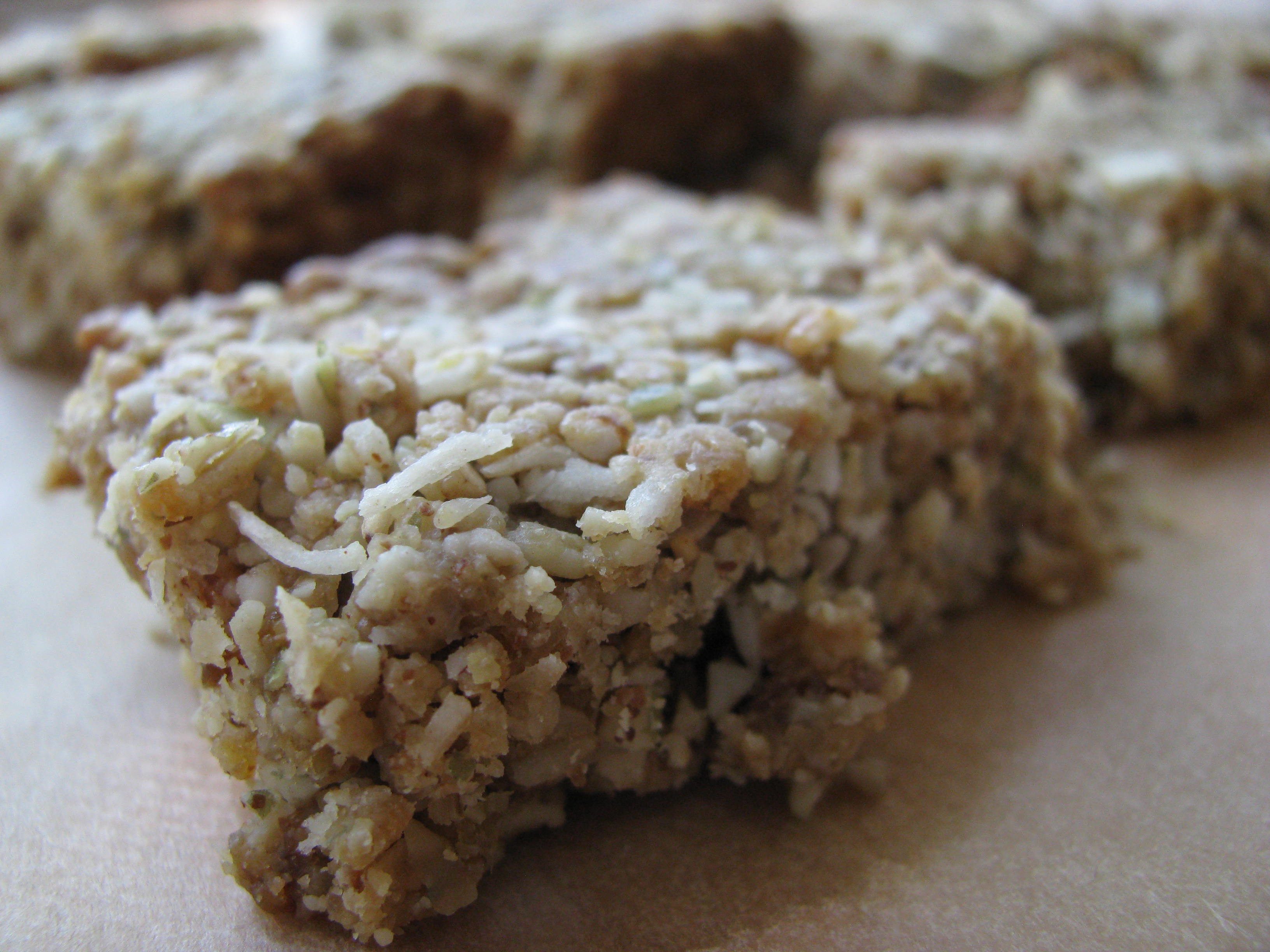
    I chose a recipe titled "Chewy Fruit Seed and Coconut Bars" from The Taste Traveller Blog, which came from a blog called Weelicious where it had been named "Fruit and Seed Bars." The bars' ingredients are reminiscent of a wild bird seed mix called Nature's Banquet Blend which includes millet, sunflower hearts, cracked corn, safflower seed, peanut pieces, and thistle seed, so I dubbed my recipe "Nature's Banquet Bars." Peanut butter, coconut oil, and honey bind the seeds together. I chose to place some raw mix in a jar to scoop and eat as the urge strikes. I also followed the recipe's directions and pressed the mix into a pan to bake and cut into bars.

    Natures banquet blendNatures banquet bars

    Nature’s Banquet Bars

    1 cup old-fashioned oats

    ½ cup raw pumpkin seeds

    ½ cup raw sunflower seeds

    1 tbsp sesame seeds

    2 to 3 tbsp flax seeds

    1 cup dried fruit (e.g., cranberries, raisins, chopped apricots, currants) I used ½ cup.

    ½ cup unsweetened coconut flakes

    1/3 cup honey (I used ¼ cup.)

    1 tbsp coconut oil

    ½ cup sunflower butter (I used ¼ cup peanut butter.)

    Preheat oven to 325°. In a food processor, pulse the first 7 ingredients until finely chopped (some can be coarsely chopped). Add the honey, coconut oil, and sunflower butter and pulse until starting to combine. Press the mixture into a lightly oiled 9X9 inch pan lined with parchment paper. (The oil prevents theparchment paper from shifting.) Bake for 25 minutes. Let cool before cutting with a serrated knife into granola-shaped bars or squares. Note: The reduction of honey and nut butter will result in a bar that is a bit more crumbly, but… just go with it.

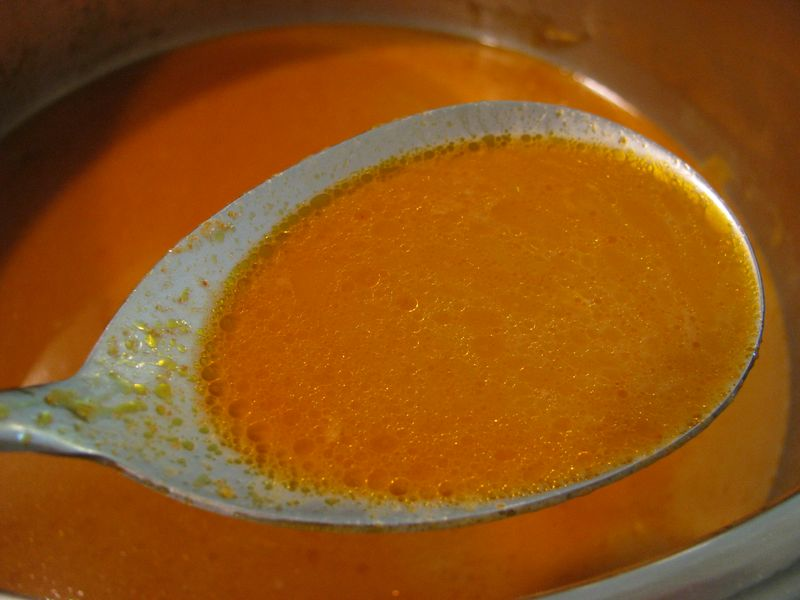
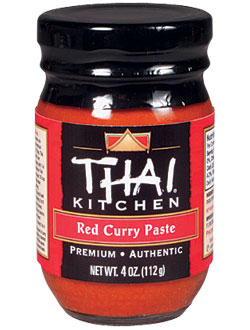
  • As a soup or adapted, as I did, for use as a gravy over meatballs and mashed potatoes… this curry coconut milk broth looks and tastes fussily time-consuming. In reality, it takes but minutes to prepare. Four ingredients. Canned coconut milk, chicken broth, soy sauce (or Bragg Liquid Aminos), and red curry paste. I used Thai Kitchen Red Curry Paste. Ingredients: Red Chili, Garlic, Lemongrass, Galangal (Thai Ginger), Salt, Onion, Kaffir Lime.

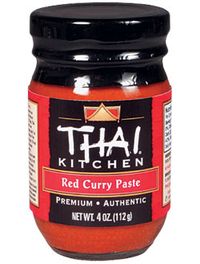
    Coconut curry brothThai kitchen red curry paste

    The recipe comes from Tropical Traditions, an online source for coconut products. Note: The meatballs' green tint? Green puree of steamed spinach, broccoli, and peas. (The Sneaky Chef by Missy Chase Lapine)

    Coconut curry meatball gravy

    Coconut Curry Chicken Meatball Soup or Gravy

    Serves 4.

    1 bunch green onions

    8 oz mushrooms, shitake or button

    1 lb ground chicken breast

    1/2 (or 1) pastured egg, beaten

    1 garlic clove, finely minced

    1 tsp salt

    14 oz full fat coconut milk

    ½ cup chicken broth (I used ½ cup water + ½ tsp Better Than Bouillon Chicken Base.)

    1 tbsp organic fermented soy sauce (I used Bragg Liquid Aminos.)

    1 ½ tbsp red curry paste (I used Thai Kitchen brand.)

    1 ½ inch piece of peeled fresh ginger (I omitted. The red curry paste provides perfect seasoning.)

    Meatballs: Chop the whites off of the onions and set the greens aside for the soup. Finely chop ½ cup of the mushrooms and save the rest for the soup. Combine the chicken, egg, chopped whites from the onions, chopped mushrooms, minced garlic, and salt in a bowl. Form the meat into desired size meatballs and place in the bottom of the crockpot.

    Broth: Combine the coconut milk, broth, soy sauce (or Bragg Liquid Aminos), and curry paste in a mixing bowl. Add the remaining mushrooms and chopped greens from the onions. Pour over the meatballs and place the piece of ginger (if using) into the liquid. Cook on high for 2 ½ to 3 hours. Alternatively, meatballs may be browned in a pan or, using an oven method, space the meatballs on a parchment-lined baking sheet and bake in a 350° oven for 10 minutes. Turn the meatballs over and bake for another 10 minutes until brown and fully cooked internally.   

    Dick got up from the table to get a spatula for swiping his plate clean. It was that good!

     Clean plate

  • Winter. A pot of bean soup. A perfect pairing. With the inclusion of a soaking step, beans nutritional value can be maximized with miniscule additional effort. Soaking beans 12 to 24 (or 36) hours in an acidic, alkaline, or neutral water solution 1)lessens cooking time, 2)reduces or eliminates legumes gaseous effect, and 3)neutralizes phytic acid to improve digestion with increased nutrient absorption. To soak beans, cover 2 cups dry beans with filtered water allowing enough extra for the beans' absorption. Using the chart below as a reference, for each cup of black beans, lentils, or fava beans mix 1 tbsp lemon juice, vinegar (i.e, Bragg Organic Raw Unfiltered Apple Cider Vinegar), or whey into the soaking water. For each cup of dried or split peas, a pinch of baking soda is added to the soaking water. Brown, white (navy), and kidney beans are soaked in plain water. Chickpeas (aka garbanzo beans) require 2 tbsp lemon juice, vinegar, or whey per cup of beans.

    Neutralizing Phytic Acid

    Legume variety

    Optimal water pH

    Soaking time

    Best Soaking Medium

    Black beans

    5.5

    18-24 hours

    Water with lemon juice, vinegar or whey added

    Lentils

    5.0

    10 hours

    Water with lemon juice, vinegar or whey added

    Fava beans

    4.0

    10 hours

    Water with lemon juice, vinegar or whey added

    Dried and split peas

    7.0 to 7.5

    10 hours

    Plain soft water with pinch of baking soda

    Brown, white & kidney beans

    7.0

    18-24 hours

    Plain soft water


    Source: Wise Traditions in Food, Farming and the Healing Arts, the quarterly magazine of the Weston A. Price Foundation, Winter 2006

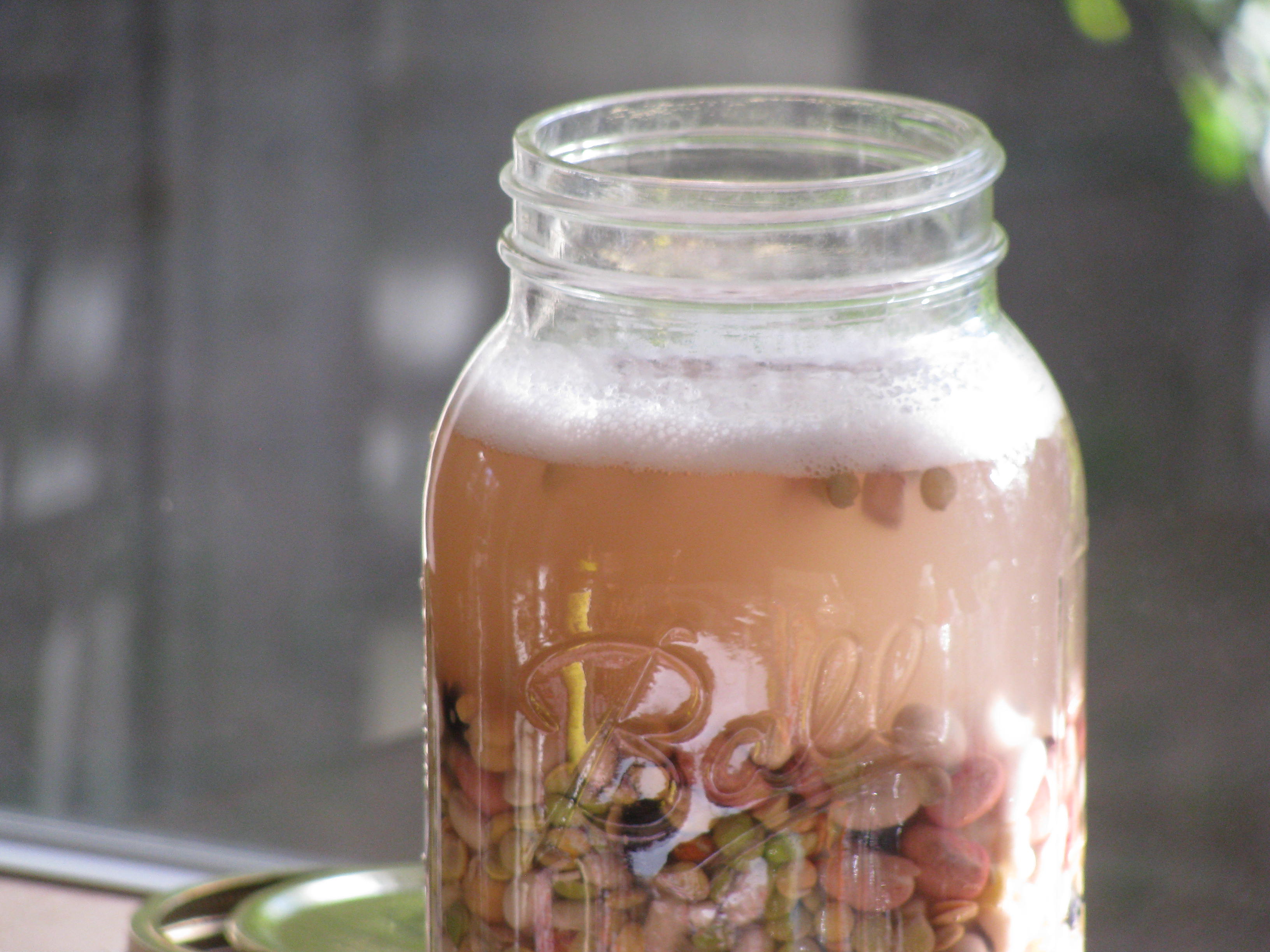
    Foam will form during the soaking process as evidenced in this bean mix that I allowed to soak in a water/vinegar solution for 36 hours on my kitchen counter. Increased digestibility may be attained by draining and replenishing the acid or alkaline solution midway during the soaking process.

    Soaking beans

    At the end of the soaking period, drain the water off and rinse the beans with fresh water. They are now ready to be cooked in fresh water or broth. As the beans simmer, skim off any additional foam that forms.

  • A new magazine. In a shop thirty miles southwest of Atlanta in a community called Serenbe. We had gone there to have lunch and a cupcake to celebrate Dick's birthday at the Blue-Eyed Daisy Bakeshop.

    Modern farmer issue 2

    I purchased that copy of Modern Farmer Issue 02 Fall 2013 in Serenbe.

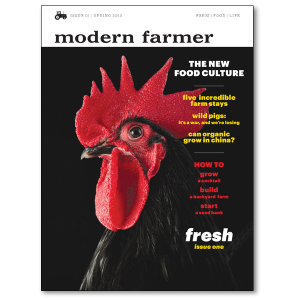
    Modern farmer issue 1 Modern farmer issue 3
    I ordered backcopies of Issue 01 Spring 2013 and Issue 03 Winter 2013/14. I started a subscription. Yes, I am beyond impressed with this publication. It begins with its cover. Thick and substantial. Like a book. Smooth to the touch. Like a hand gently massage with lotion. The content. Real people across this country and around the globe. Some readily recognizable and others not so much but equally important. All vehicles of change, hope, and inspiration. Respecting the land and animals that provide our sustenance. A sampling of features in my Fall 2013 issue: Farm Schools, Farmers Market Etiquette, Rwanda's Agriculture Success, Farm to Table to Landfill Combating Food Waste, Natural Wool Dyeing, Cornell University's Teaching Dairy Barn. You'll learn of must-stops as you traverse the country. The Green Zebra – new convenience stores in the Portland, Oregon area offering "made from scratch soups, sandwiches, and salads instead of hotdogs and Slurpees… and organic produce, regionally sourced meats and cheeses." Stone Barns Center for Food and Agriculture Pocantico Hills, NY. (I was there in 2009. Beyond impressive. I provide a miniscule glimpse here.) The magazine features entrepreneurial farmers. Field Apothecary and Herb Farm which offers a medicinal CSA in the Hudson Valley, NY area. Teff growers in the Fallon, Nevada area. The MAiZE, founded by corn maze creator and design consultant, Brett Herbst. (The website makes it easy to locate an amazing labyrinth.) Does this magazine excite me? Without question. Do I recommend a subscription? Without hesitation.

  • Alton Brown brings it… but my son-in-law, Patrick, brings it to the table. For a pre-Thanksgiving Dinner, he made Alton's "Sweet Corn Bread Pudding." It was so good that I duplicated the recipe when I prepared dinner for a second celebration on Thanksgiving Day at my daughter Jessie's home in Atlanta.

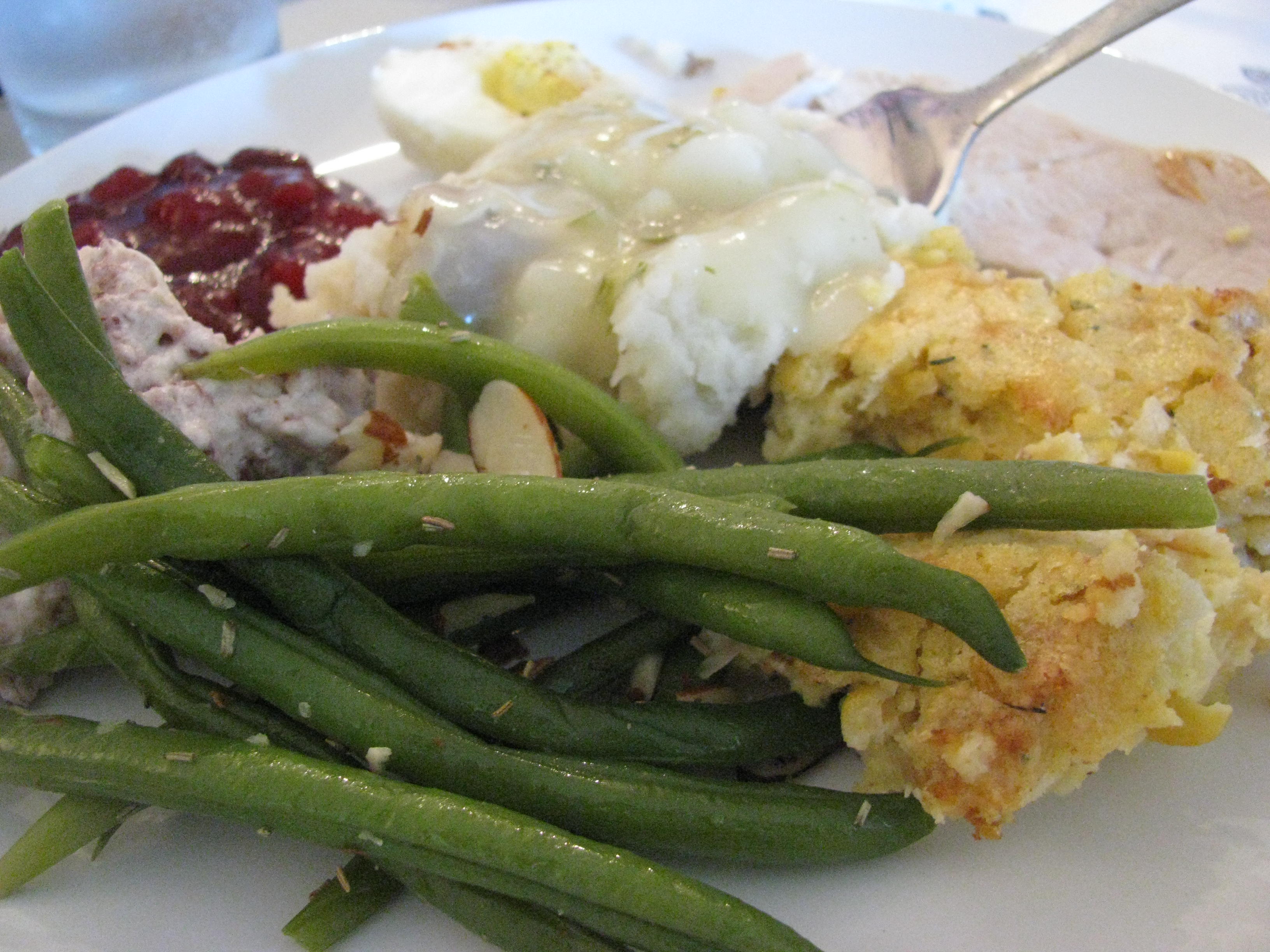
    Thanksgiving dinner 2013 at jessie's

    Sides included deviled eggs, cranberry/apple conserve from Whole Foods Market, glorified rice, green beans almondine, and the Sweet Corn Bread Pudding. But don't wait for Thanksgiving to make this recipe. Its simplistic prep makes it easy to fit into a weeknight schedule.

    Sweet cornbread pudding

    Alton Brown Sweet Corn Bread Pudding

    Yield: 6 servings

    1/2 onion, diced fine

    1 ounce unsalted butter

    ½ tsp thyme

    ½ tsp rosemary

    1-15oz can creamed style sweet corn

    1 cup heavy cream

    2 eggs

    1 tsp baking powder

    ½ cup yellow cornmeal, whole grain, stone ground

    ½ cup shredded Parmesan

    1 tsp salt

    Ground black pepper

    2 cups cubed French bread

    Heat oven to 350°. Saute onions with butter and herbs in a cast iron skillet until translucent. Combine corn, cream, eggs, baking powder, cornmeal, Parmesan, salt, and pepper in a large mixing bowl. Add cubed bread and fold to combine. Pour batter into skillet on top of the onion mixture. (I chose to mix it all together.) Bake 50 minutes or until set. Cool slightly before serving. Note: Sometimes, I bake it in a casserole dish instead of a skillet.

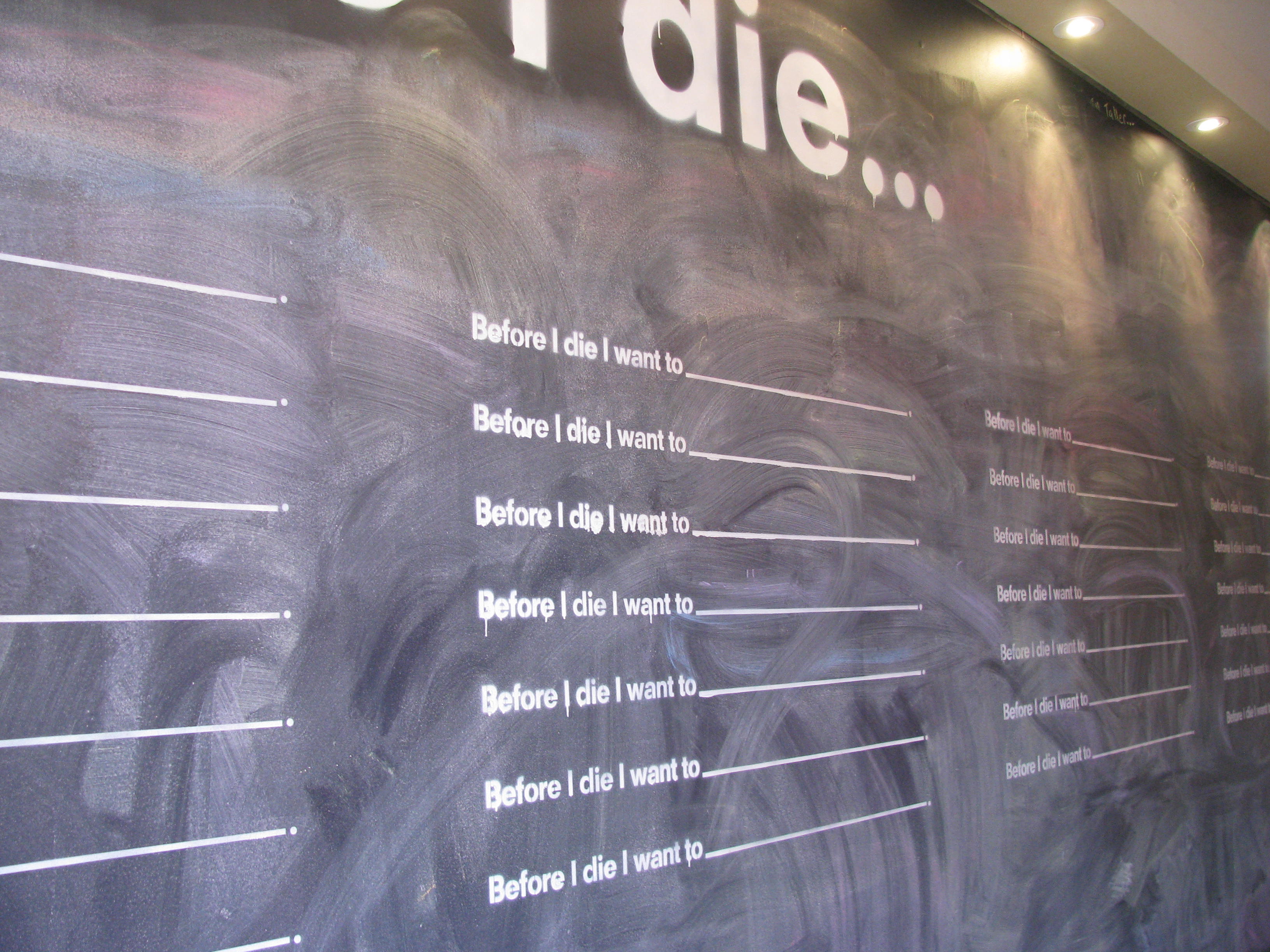
  • After leaving King Arthur Flour in Norwich Vermont, Dick and I set our GPS for Woodstock, New York. To clear up confusion, the town of Woodstock was not the site of the August 1969 music festival of the same name. It was actually held on a 600-acre dairy farm outside of Bethel, New York which is 43 miles southwest of the town of Woodstock. Present-day Woodstock is a throwback to the hippies counterculture of the 1960s era. Its population mushrooms during the summer months. As our stride gently, naturally slowed to match the mid-week late autumn pace, an expansive chalkboard wall leading to the Oriole9 Restaurant's entrance door drew my attention. How could it not?  

    Before i die chalkboard

    It's the first time I had seen an interactive wall of this type. One that invites and encourages participation. Later, I learned of the Before I Die wall's history and its global impact. The idea originated in 2011 when Candy Chang stenciled the first Before I Die wall on the side of an abandoned house in New Orleans. She could not have envisioned the sweeping movement to recreate similar walls worldwide.

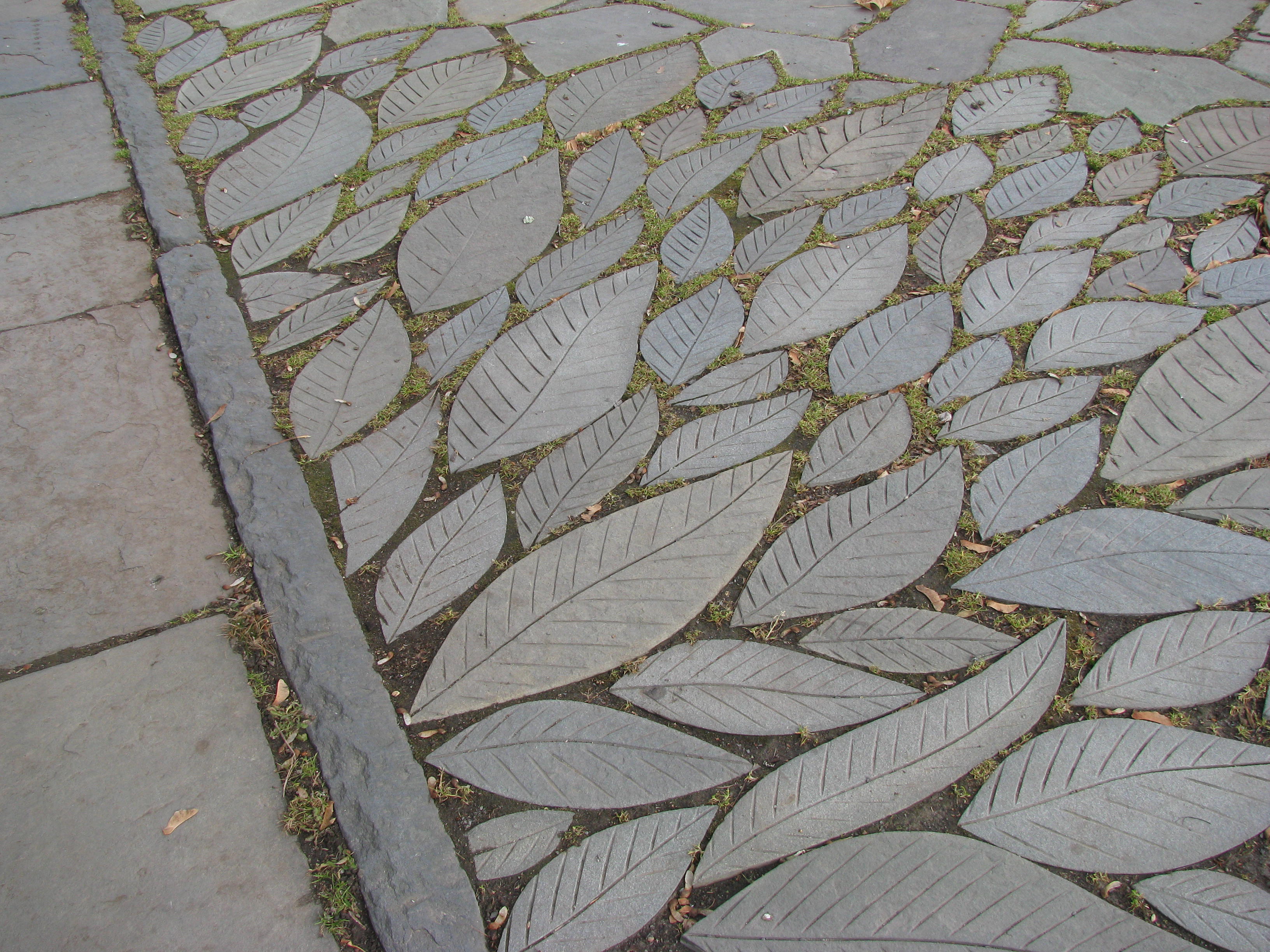
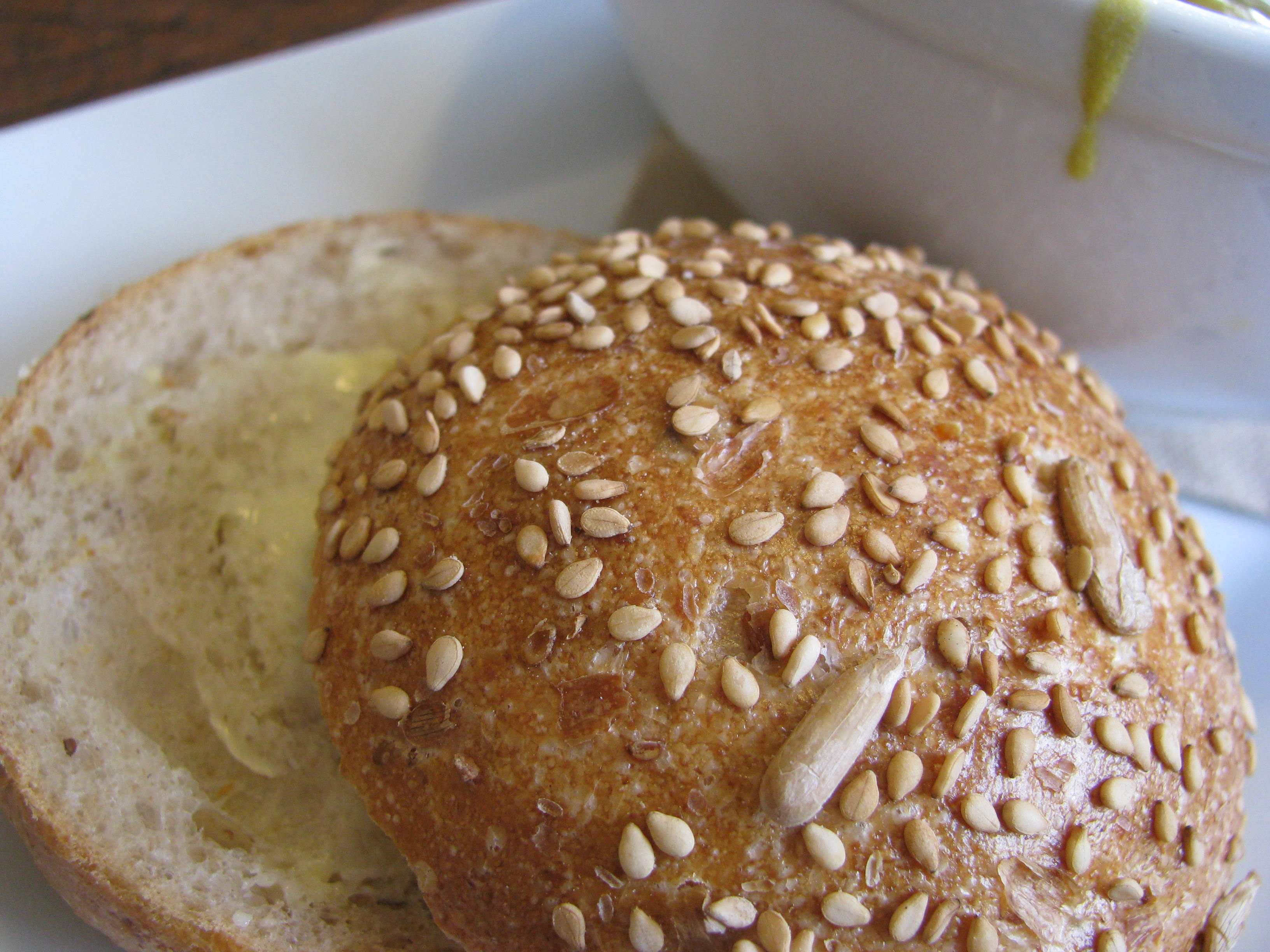
    Concrete leaf walkway Bread alone bakery's crusty bun

    Everywhere I travel, I become inspired by the places I visit and the people who call it home. In this place called Woodstock, I fell in love with a leaf-themed sidewalk and a sesame sunflower seed bun that accompanied my bowl of split pea soup at the Bread Alone Bakery. Before I die I want to create a walkway of leaf carvings. A permanent fluttering of leaves underfoot. Before I die I want to learn to make golden crusty breads. Ones that crunch like toast on the exterior with a soft interior.