Whiteley Creek Homestead

LIFE AT THE END OF A DIRT ROAD IN CENTRAL MINNESOTA

organically grown triticale in our field
canoeing in our wetlands
raspberries growing wild on our property
our back porch fieldstone fireplace
  • Each workstation in the Wholehearted Baking: Whole Wheat Breads class that my granddaughter and I attended at King Arthur Flour's Baking Education Center in Norwich, Vermont on Nov. 19 was set up with supplies to make a batch of scones and a loaf of bread.

    KAF classroom

    As we progressed through the two recipes, we learned techniques through the instructors' demonstrations and guidance so that we might duplicate what we learned when we returned to our home kitchens… which I did. Return home and duplicate.

    KAF ww scone recipe KAF ww scone ingredients

    After scanning the ingredients and reviewing the notes I had jotted in class, I gathered my supplies. From the Baker's Store at the King Arthur Flour Headquarters, I had purchased two bags of organic unbleached white whole wheat flour*…

    Bench knife Bowl and dough scraper

    a bench knife that I used to cube butter… and a scraper to mix dough.

    Scone dough Baked scones

    Applying what I had learned in class, I was able to replicate the scones perfectly. I did run across a suggested option on the King Arthur Flour website to use anywhere from 2-8 tbsp butter instead of the 1/2 cup (8 tbsp) as the recipe states. I am going try 4 tbsp in my next batch. *"King Arthur 100% Organic White Whole Wheat Flour, milled from a blend of hard white winter and spring wheats, tastes milder and bakes lighter than traditional whole wheat (which is milled from red wheat). Unlike red wheat, white wheat lacks some of the pigmentation in the bran layer of the wheat berry; since that pigment carries an astringent flavor, white wheat is lighter in both color and flavor." Source: http://www.kingarthurflour.com To better understand wheat varieties-hard or soft, red or white, and winter or spring, here's an excellent resource.

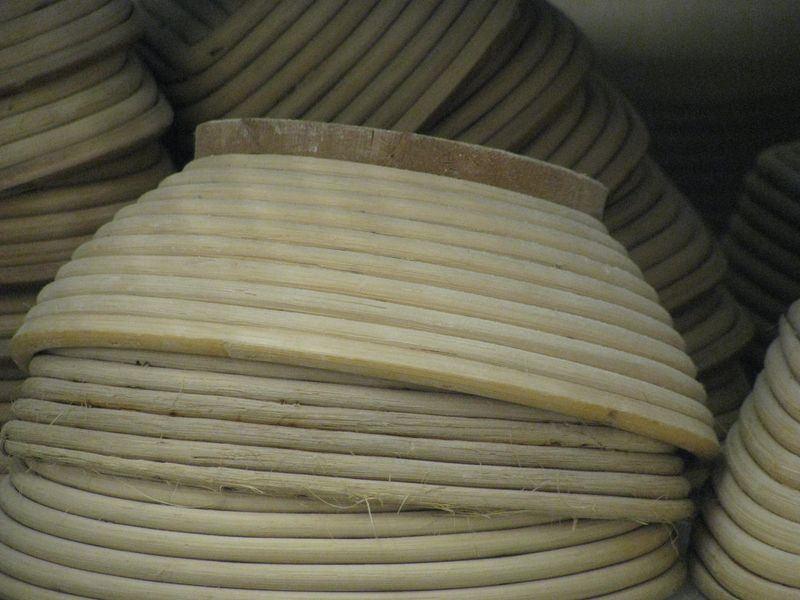
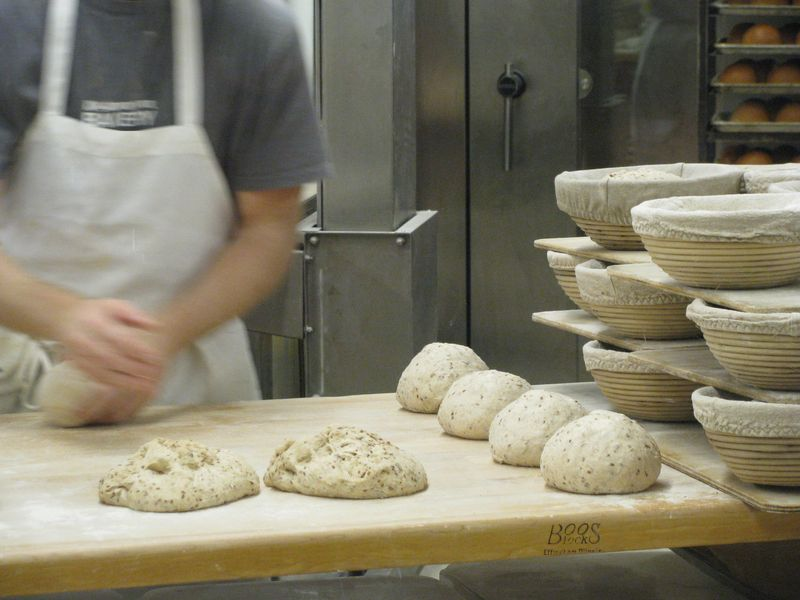
  • When the headquarters for King Arthur Flour in Norwich, Vermont was designed, large viewing windows were included so that visitors could watch bakers at work. My youngest grandson and I were especially inquisitive about stacks of coil-wound wooden baskets. We stood at the bakery's observation window long enough to learn their application.

    Round brotform stacks

    To make a rustic loaf shape called a "boule," a baker deftly forms chunks of dough into balls then places them into fabric-lined, flour dusted, round brotform bread proofing baskets for the dough's final rise before baking. According to the King Arthur website, "the removable liner gives you the option of making a plain loaf or one that has the imprint of the coils."

    KAF boule dough Round brotform proofing baskets

    We also observed a baker shape dough into long, French bread-like pieces then place each within the folds of a heavy linen or canvas sort of fabric to rise. I learned the fabric is called a "baker's couche." It is used to make baguettes.

    KAF baker's couche


  • In addition to the Baking Education Center at King Arthur Flour in Norwich, Vermont, the complex has a bakery, cafe, and baker's store. The cafe is built in the round with beams supporting an expansive open, domed ceiling. Its construction reminded us of the Round Barn Theater in Napannee, Indiana. But chunkier. Not nearly as intricate.

    KAF cafe beams

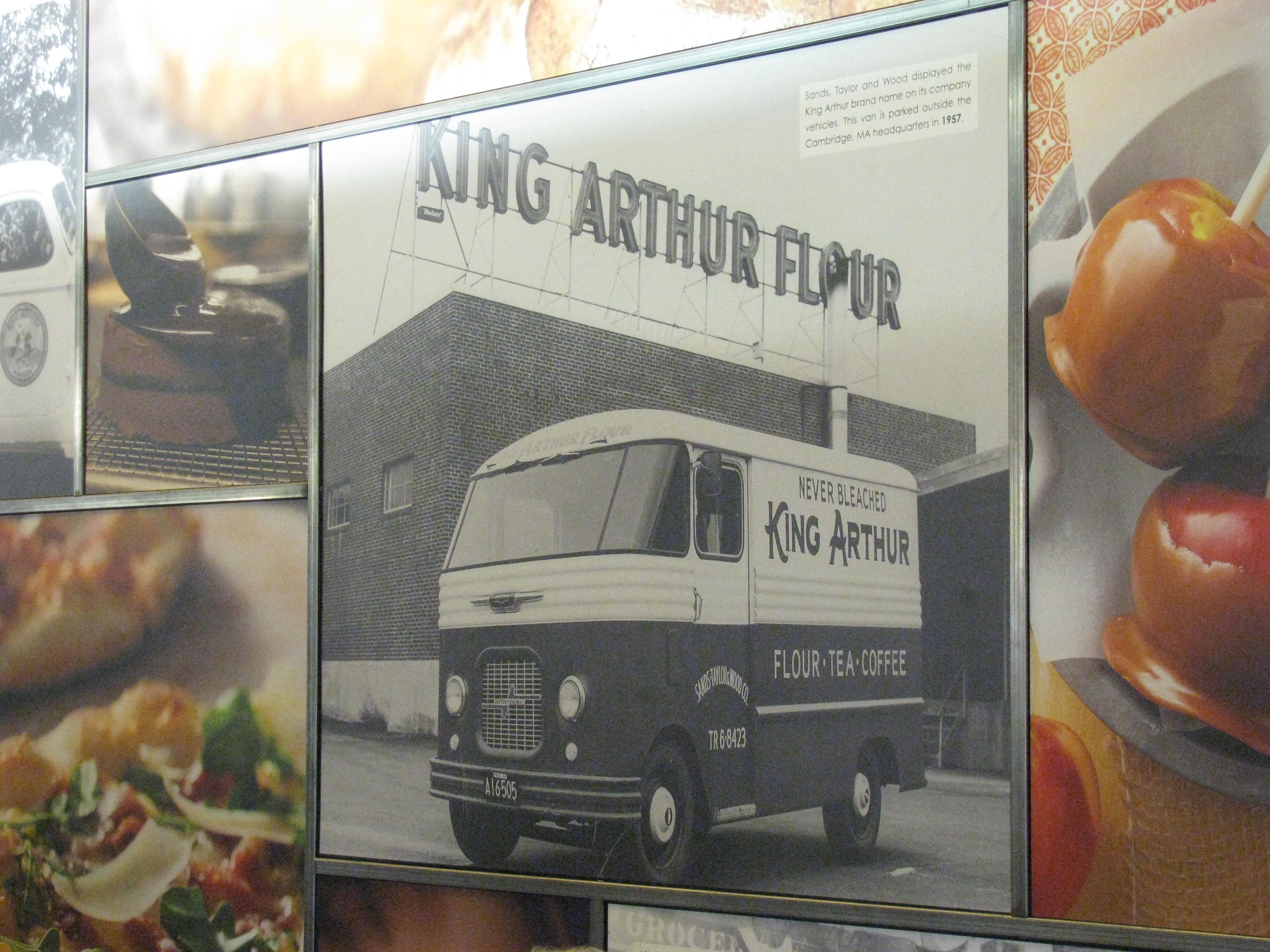
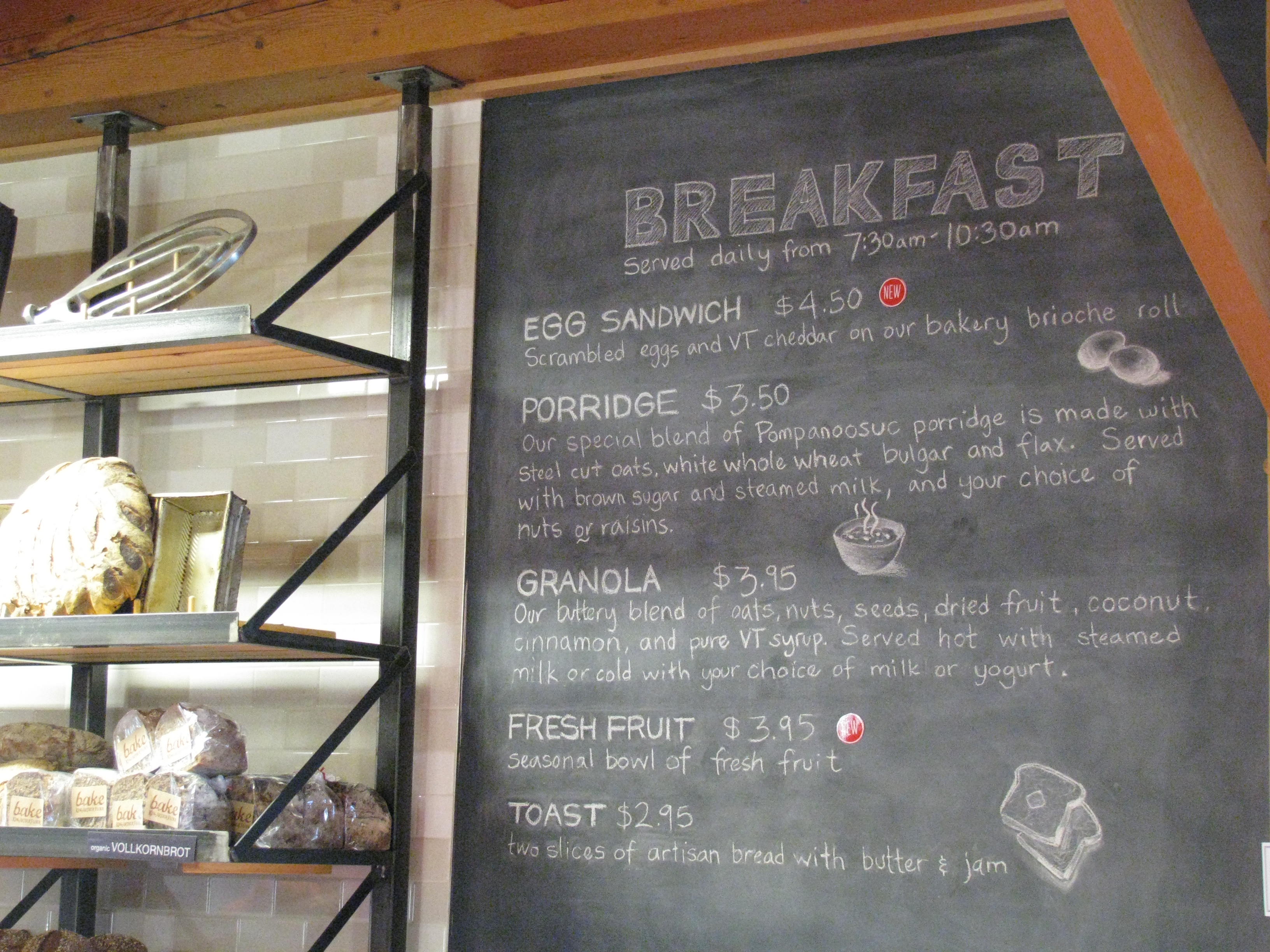
    Displays of black and white and color posters hanging on the walls tell the story of King Arthur Flour's historical journey. The morning after my granddaughter's and my attendance in the class, Wholehearted Baking: Whole Wheat Breads, Dick and I ordered breakfast in the cafe. Appropriately, the menu highlighted grains and bakery items produced onsite.

    KAF wall art KAF breakfast menu

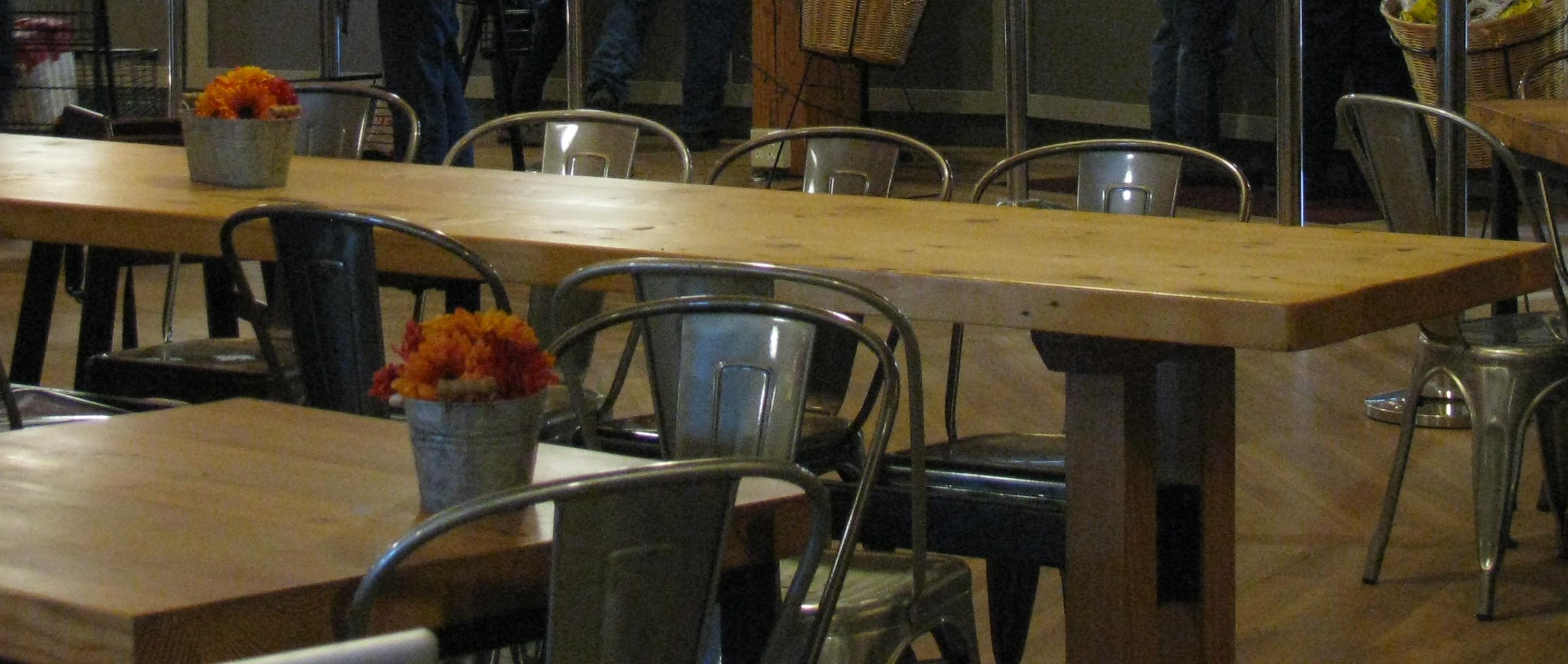
    Farmhouse tables and metal chairs. So fitting. Sweet.

    KAF cafe seating

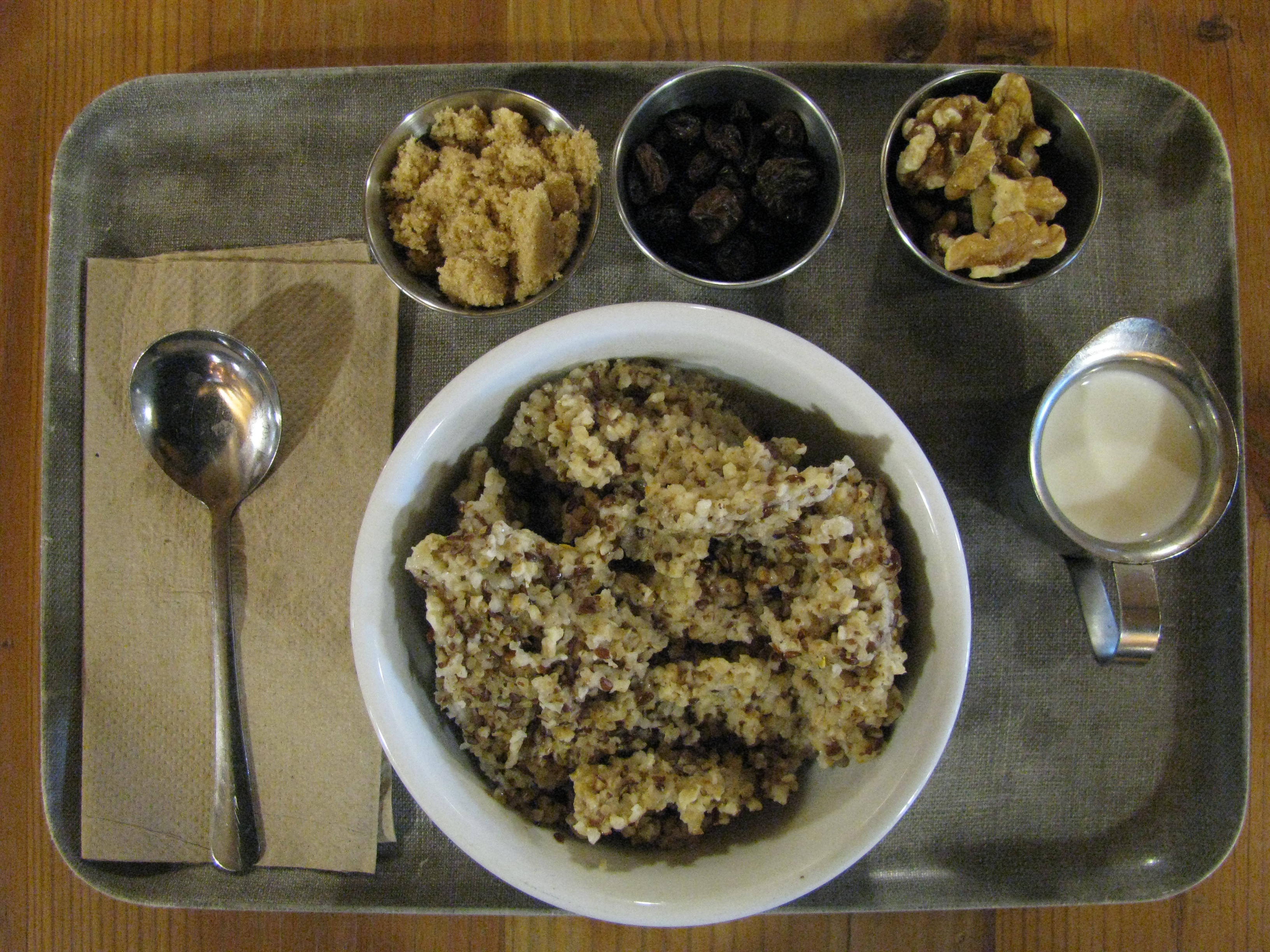
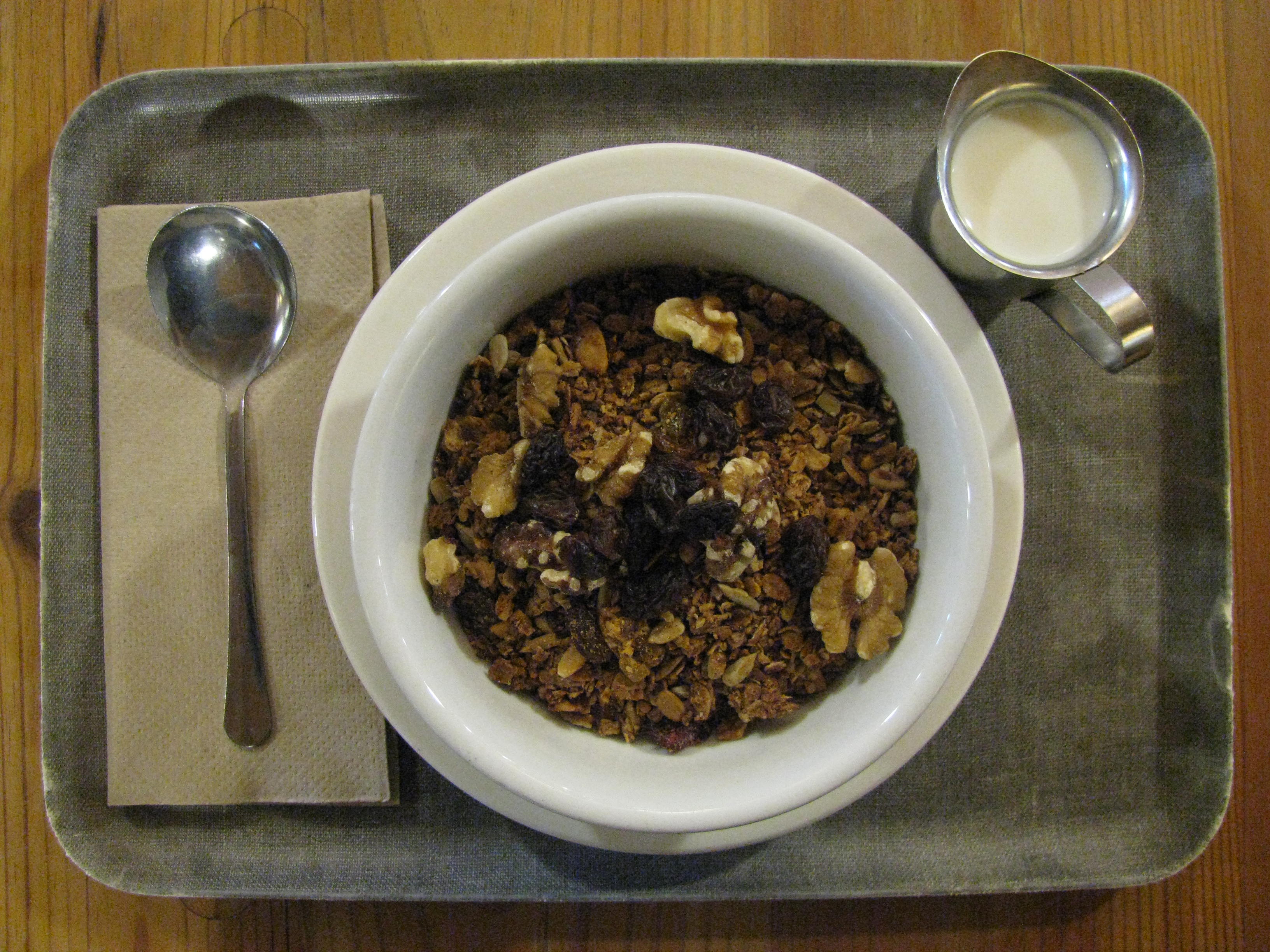
    Dick ordered a bowl of Pompanoosuc Porridge prepared with steel cut oats, white whole wheat bulgur, and flax with a side of nuts and raisins. I chose maple syrup-sweetened granola made with oats, nuts, seeds, dried fruit, coconut, and cinnamon.

    KAF porridge KAF granola

    I loved LOVE the earthy presentation… Metal trays with burlap fabric embedded within provide a backdrop for the breakfast's brown shades of autumn. Natural tan napkins, stainless steel condiment cups to house toppings, and a tiny metal pitcher of milk seal the deal. Even the names-porridge and granola conjure an image of earthiness.

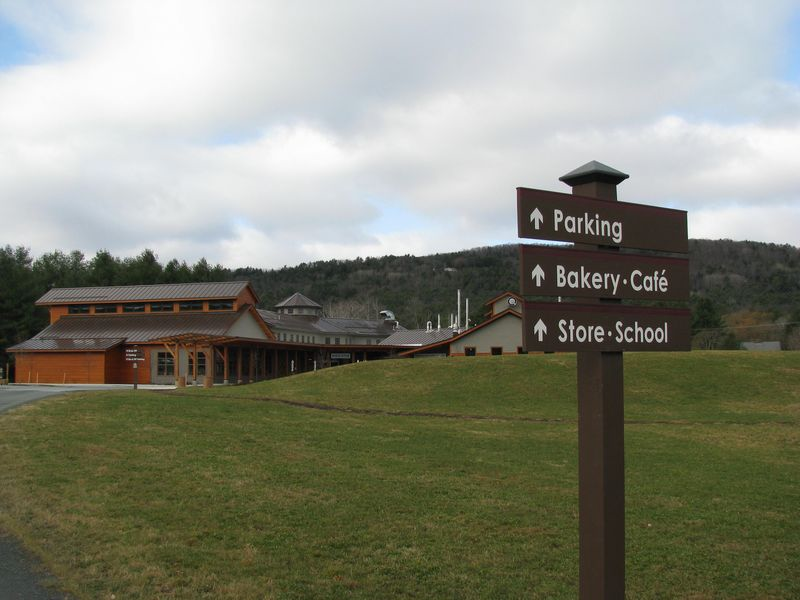
  • It was the brainchild of my son-in-law, Patrick. For my granddaughter and I to attend a class titled Wholehearted Baking: Whole Wheat Breads at King Arthur Flour's Baking Education Center in Norwich, Vermont. To learn together. To create a memory.

    KAF entrance KAF complex

    On Tuesday, November 19th from 10 am – 1 pm, we learned baking techniques in this impressive facilty as we measured, whisked, stirred, kneaded, and sprinkled our way through a batch of raisin scones and a loaf of whole wheat bread. Using a "bench knife" for the first time (shown being used by my granddaughter in two photos below), I learned its many uses including leveling flour in a measuring cup, cubing cold butter, dividing dough into chunks, scooping dough off a work surface, chopping chocolate or nuts, and cutting brownies or bars. The tool impressed me so much that I purchased one at the King Arthur Flour Baker's Store after class. Another tool, that we were given as a take-home gift, was a "bowl and dough scraper." Made from flexible plastic, its curved corners follow a bowl's contours making it ideal for mixing dough by folding over, thus preventing over zealous stirring which produces a tough product. The tool is also useful for scraping dough and flour off a work surface and, like the bench knife, it divides dough into loaves and portions rolls. Both tools are engraved with the King Arthur logo, so they are perfect remembrances of this memorable outing alongside the thoughtful kindness of my son-in-law, the priceless time spent with my granddaughter, and the useful skills that are directly transferrable to our home kitchens.

    Leveling flour using bench knife Vintage mixer postage stamp
    Cubing butter Plastic bowl and dough scraper

    The significance of the vintage mixer postage stamp? Introduced in 1931, the Sunbeam Mixmaster was featured on a postage stamp in 1998. I have saved the stamp pictured in the photo since its issuance. Fifteen years I have kept track of this tiny treasure titled "Household Conveniences,"and then, from where I worked in the baking classroom, there on the wall hung a poster-size print of the postage stamp. (Enlarge the top left photo and you will see it hanging between the first and second windows.) The electric mixer represents a shift in focus. An increase in household income led to the capability of, and desire for, more leisure time. Modernization of small appliances such as mixers, waffle irons, toasters, and coffeemakers resulted in less time in the kitchen. A good thing? In some ways. In all respects? I think not. Note: If you should visit the King Arthur Flour Headquarters, head across the Connecticut River over a short bridge which connects the towns of Norwich, Vermont and Hanover, New Hampshire. Hanover is a quaint New England town that is home to Dartmouth (pronounced DART-mƏth), a private Ivy League university that is the 9th oldest college in the nation.  A campus cafe features King Arthur Flour bakery products on its menu.

    Dartmouth exterior


  • We had a place once. Where Dick and I loved to share a bowl of soup. It was a narrow space sandwiched among upscale shops in Montclair, New Jersey. Making your way from the front door to the ordering counter and kitchen at the back wall required careful navigation down either of two aisles defined by shelves displaying organic groceries and local produce. There were just two or three dining tables in the limited space remaining. It was not uncommon to share a table with a homeless person who knew they could get a bowl of soup for little or nothing. That was the heartbeat of the place. The soul of the proprietors. We happlily slurped our soup in the soup place each year when we trekked across country to visit our daughter. Slurp. Yes. That's exactly how we ate our soup. Not bad manners. Just pure enjoyment. But our soup place closed. It was sad. This year, our daughter was excited to tell us of a new place. We would love it. She just knew. Terra at the Isabel Rose Cafe. Next to the Montclair Public Library. We walked to the cafe. Everyday. For their soup of the day. Hot. Nutritious. Bursting with flavor. The desire to learn more of the soup place and their owners persisted, however. Where would I start my quest? I had noticed framed newspaper clippings hanging on a wall in the soup place, so I emailed the editor of Montclair Patch. Her prompt, sweet response: Hi Adrienne, I would love to help you out but Montclair Patch started in 2010 after the business closed. I think your daughter is right about it having Rainbow in the name. Terra Tea & Fair Trade moved into the spot, but have since moved to serve in the cafe at the Montclair Public Library around the corner from Church Street. Just wanted to make sure you knew about that move. Good luck and if I think of anything I will reach out. -Teresa She could not provide me with clippings, however she affirmed my daughter's remembrance that "Rainbow" was in the business's name AND she cited the thread… connecting the soup place with Terra at the Isabel Rose Cafe. Life's twists and turns… and how they eventually intersect. So fun they are.

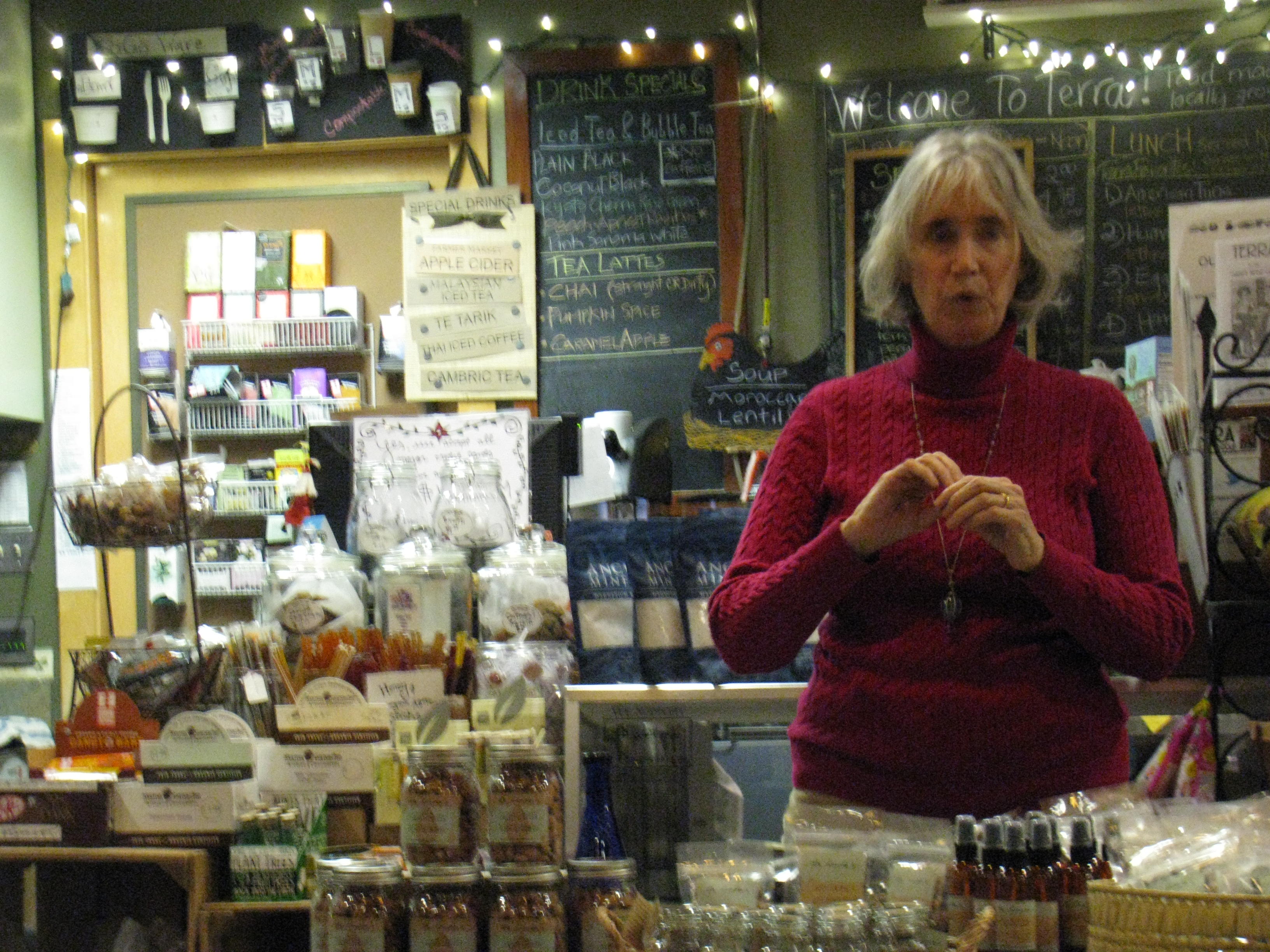
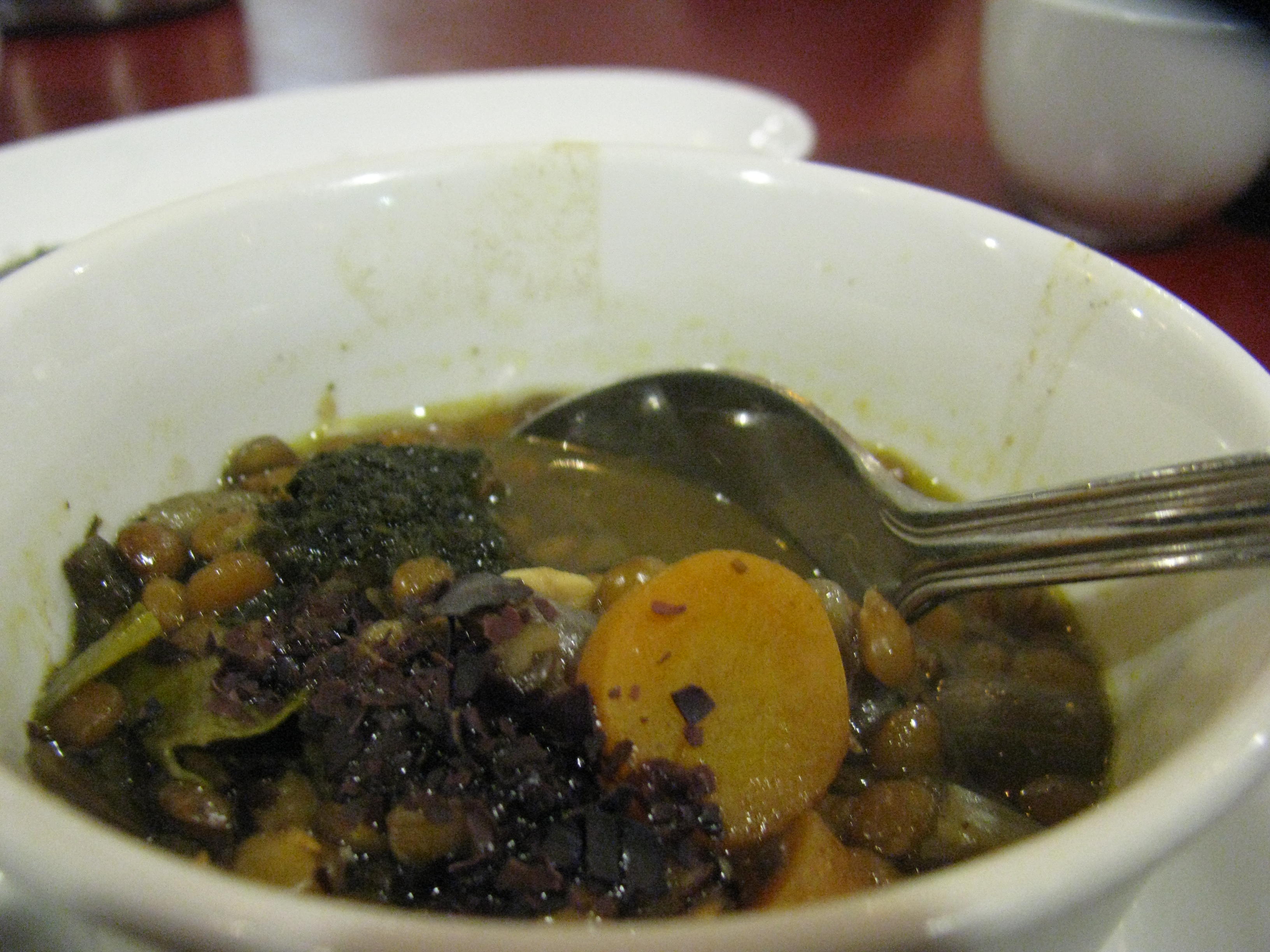
    Magnesium workshop Magnesium workshop lentl soup

    One day, I read a sign at the entrance to Terra at the Isabel Rose Cafe. A Montclair homeopathic doctor was offering a magnesium workshop in the evening at the Terra Cafe. I invited my daughter. Pictured above during her presentation, Dr. Linda Robins stressed the importance of magnesium (e.g., strengthens bones and joints, helps balance cholesterol, boosts immune system, lowers blood pressure, regulates blood sugar). She stated that there there is a widespread deficiency in the general population and shared methods of replenishment. She cautioned against taking magnesium supplements, in most cases, because it's easy to get too much which then can upset the delicate balance of magnesium, calcium, vitamin K2, and vitamin D. Getting nutrients from a varied diet of whole, unrefined, unprocessed foods will prevent overconsumption of any one nutrient. Dr. Robins served a lentil soup prepared with a seaweed broth of kombu and seaweed seasoning because lentils and seaweed supply a significant amount of magnesium. Additionally, she provided us with a sampling of seaweed seasonings to sprinkle atop. Here's a chart listing some magnesium-rich foods.

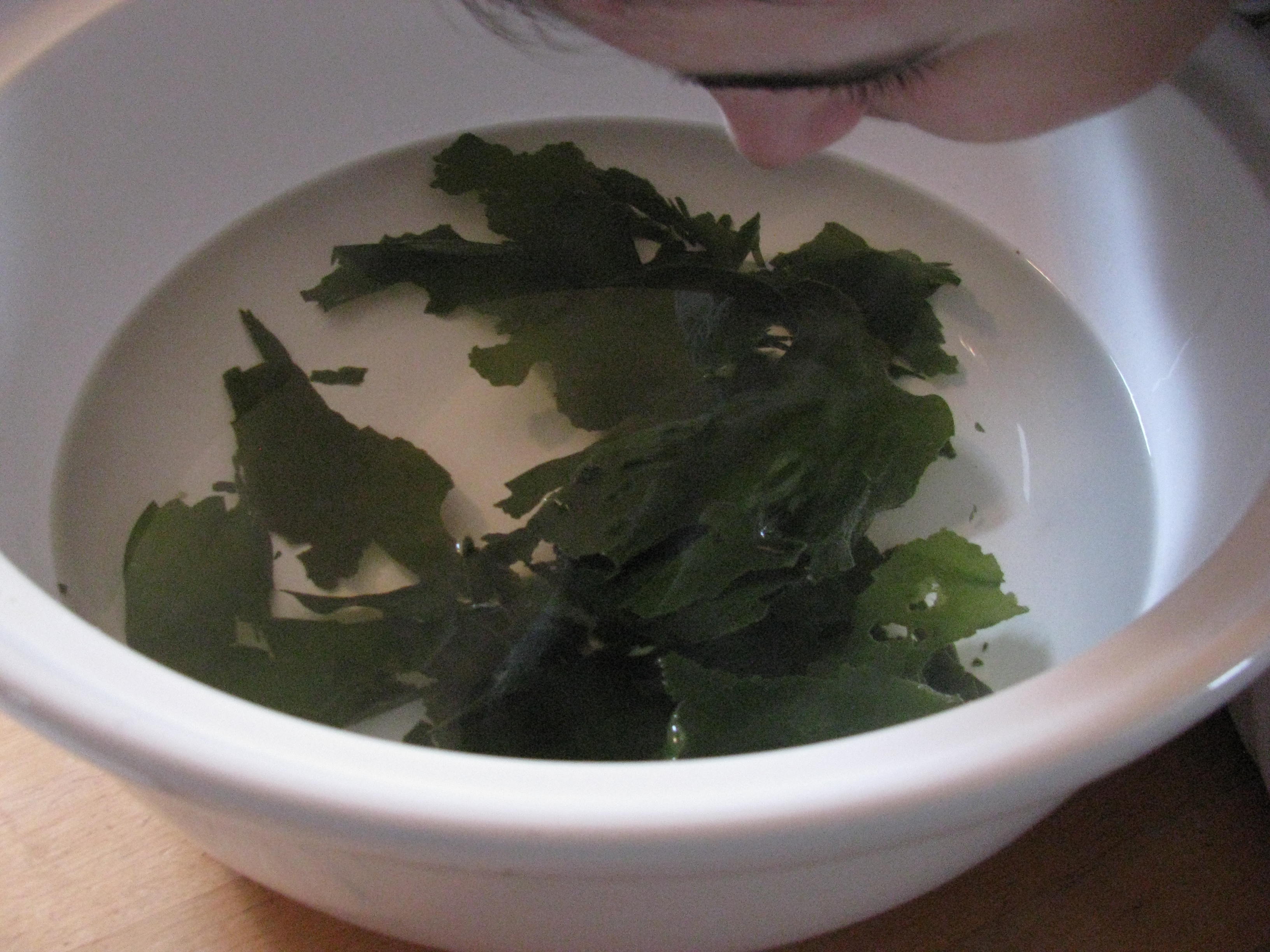
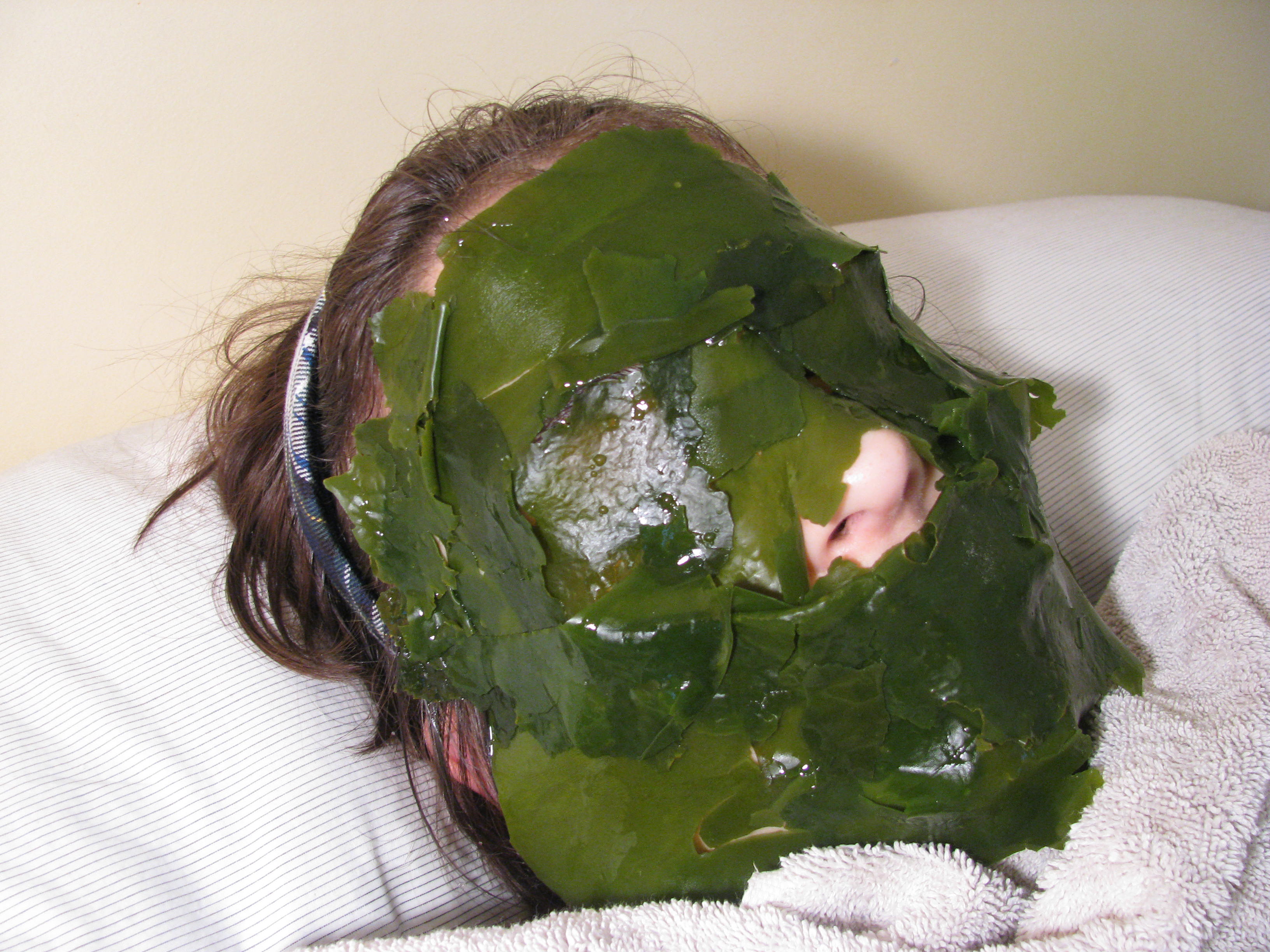
    Seaweed steam bath Seaweed facial

    An alternate method, which Dr. Robins demonstrated, is to provide our bodies with magnesium via absorption from a seaweed steam bath and a seaweed facial. So, I did that. For my eldest granddaughter. A rainstorm CD played in the background as the seaweed dried on her face. I listened to her rhythmic breathing slow as it does when one falls asleep. I gently spoke her name. Yes. She had fallen asleep… within a 5-10 minute timeframe. (Magnesium relaxes nerves and muscles.) After 45 minutes, I woke her. Her few adolescent breakouts on her forehead had dried from the seaweed's salt content and her skin looked refreshed. Dr. Robins recommended Maine Seaweed for wild seaweeds and sea vegetables hand-harvested off the coast of Maine. Besides magnesium-rich food sources and a seaweed steam bath and facial, she suggested bath and/or foot soaks using magnesium chloride flakes (not epsom salt which is magnesium sulfate) and magnesium oil and lotion. After attending Dr. Robins workshop and researching online sources, especially the Ancient Minerals website where you may purchase magnesium chloride products, Dick and have established a daily ritual. We… 1)spray our body with 8 squirts of magnesium oil (or spray a few squirts at a time into your hand then rub on body) after our morning shower on areas that have increased transdermal absorption-inner thigh/groin, stomach, neck, armpits as a deoderant, and/or scalp, 2)rub magnesium lotion onto the bottoms of our feet, and 3)add magnesium chloride flakes to warm water for a foot soak using just enough water to cover our feet set in a plastic shoe storage box. The Ancient Minerals website offers a plethora of information such as a pdf explaining how to use magnesium oil, lotion, and flakes. In the document, it explains why they don't recommend making homemade versions of magnesium oil and lotion. However, if you choose to, here's an excellent YouTube video by "BacktoBasics Gal" that explains how to make your own magnesium oil and magnesium lotion. Here's a recipe for magnesium body butter from "Wellness Mama" with links to online ingredient sources and a recipe for magnesium oil.


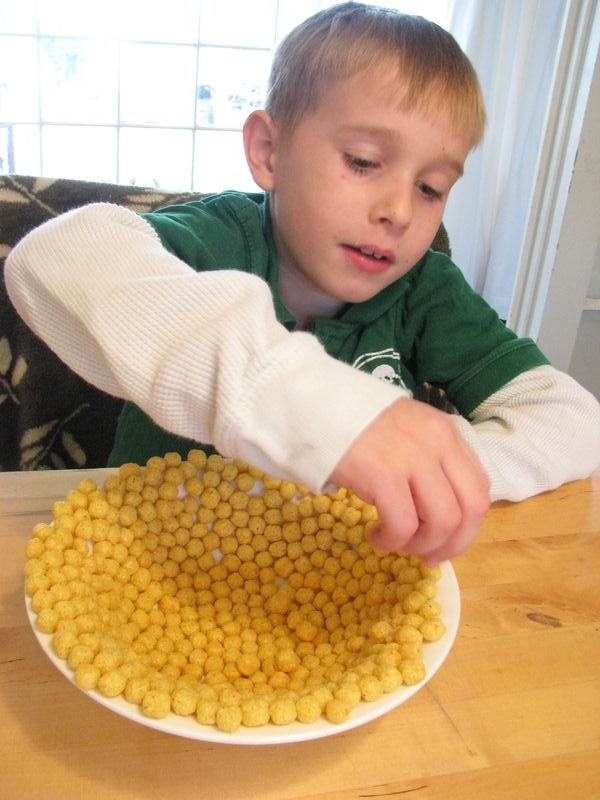
  • My grandson brings new meaning to the term cereal bowl.

    Cereal bowl

    If you're looking for another "out of the box" use for cereal, here's one. In my swim class last winter, I met a man. His name was Jim. I never knew his last name. What I did know is that he was a very sweet man. In his 80s. He'd had a stroke, but, with the aid of a walker, he made his way into the pool Monday, Wednesday, and Friday. Every week. Because he knew the benefit. During our class, we chatted about different things. About his career that spanned so many years. He proudly spoke of his wife and his children. When he learned that I was from Minnesota and liked to try new recipes, he told me of an author named Joanne Fluke who was born and raised in a small town in rural Minnesota. She wrote a series of murder mysteries with recipes interwoven within the chapters, he explained. Upon leaving our class that day, I stopped by the local public library where I discovered her books with titles such as Carrot Cake Murder, Peach Cobbler Murder, Sugar Cookie Murder, and Blueberry Muffin Murder. I decided upon Apple Turnover Murder. I read the book because what I really wanted to do is make a recipe from the book to share with Jim. So I did. The recipe from the book is called "Imperial Cereal." It is a crunchy, nutty, slightly sweet snack. But, sadly, Jim was no longer in class. Then, I left the area and no longer swam. Fast forward. A year later. I'm searching for Jim.

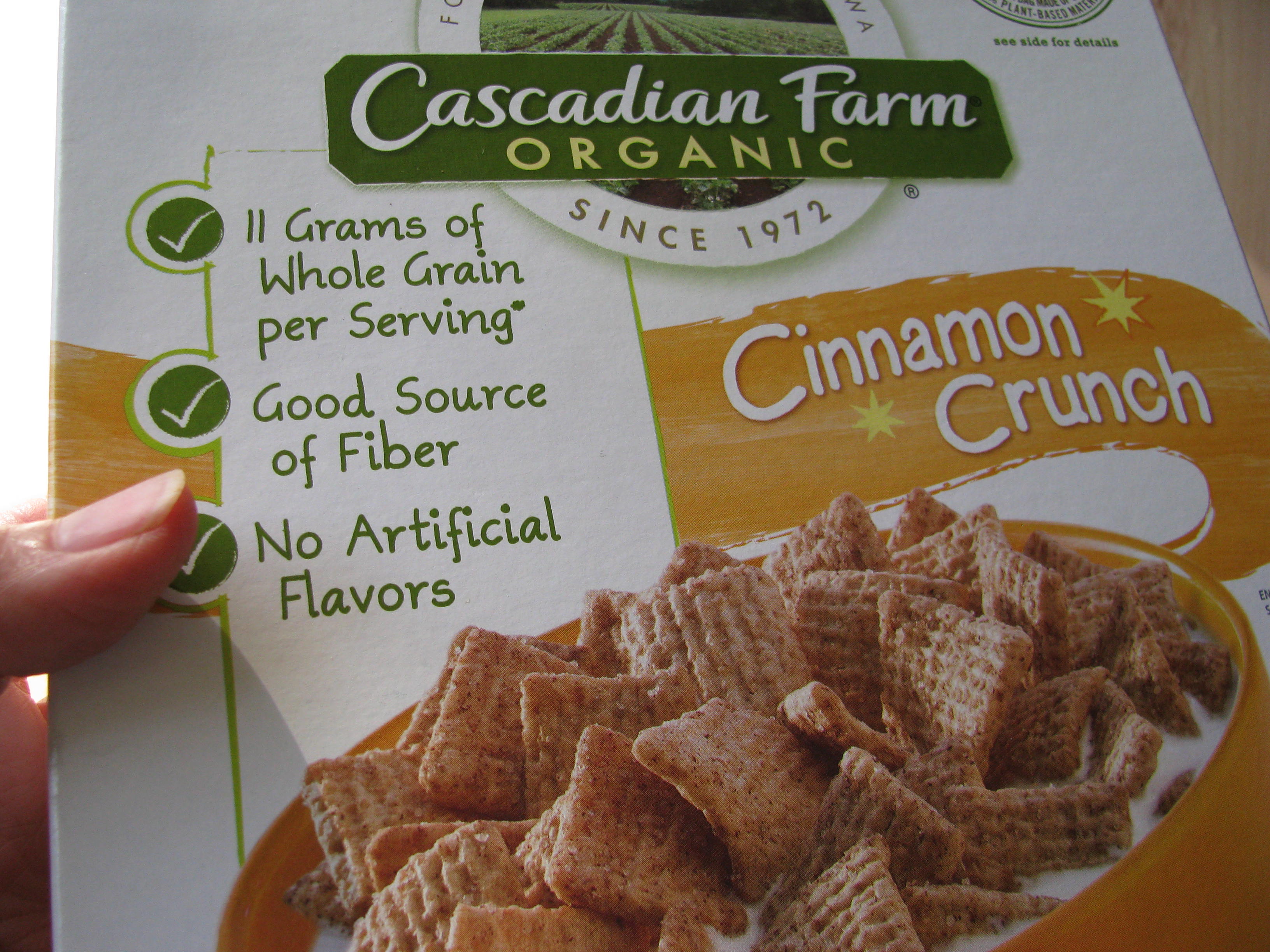
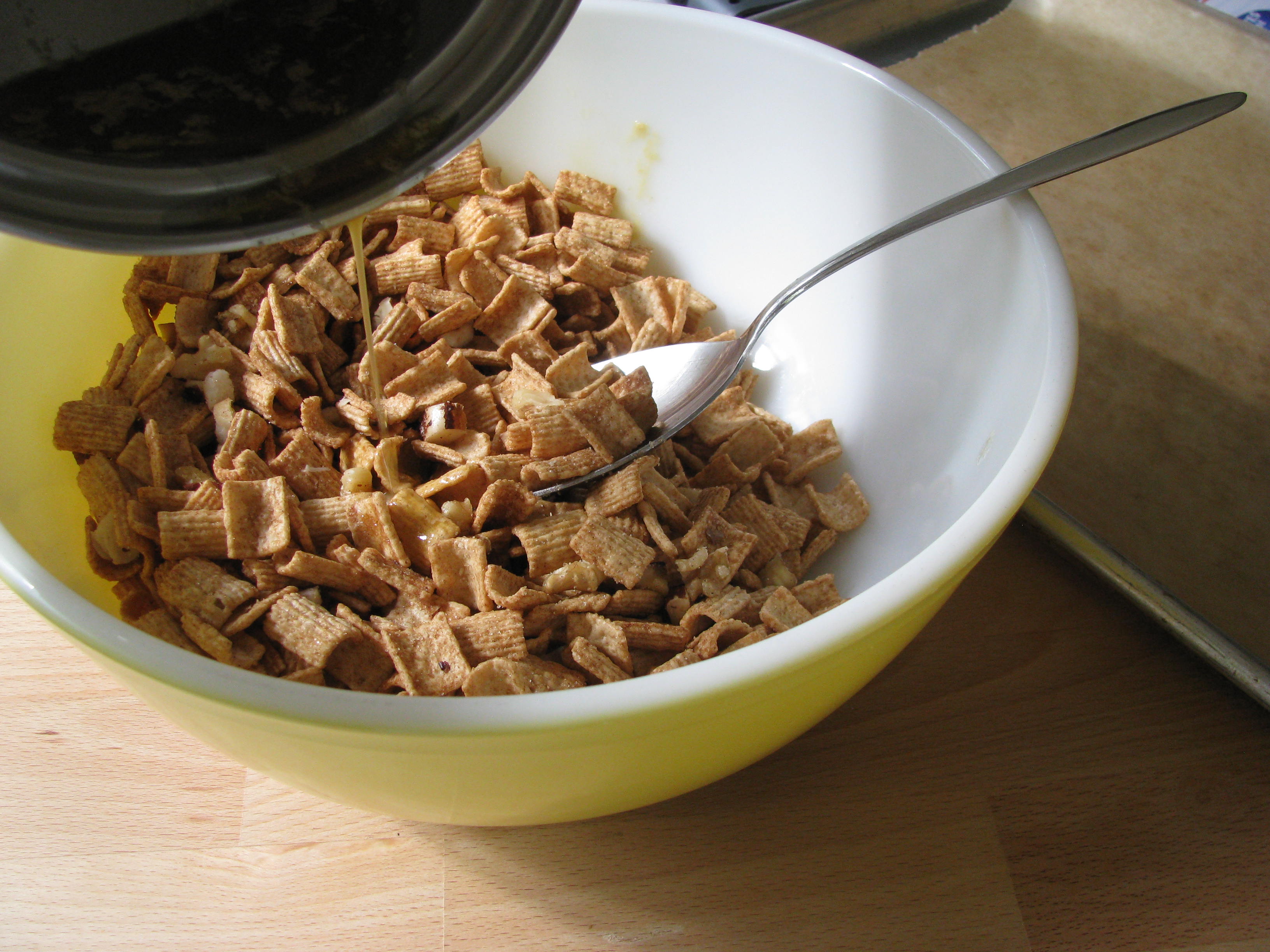
    Cinnamon crunch cerealCinnamon crunch syrup

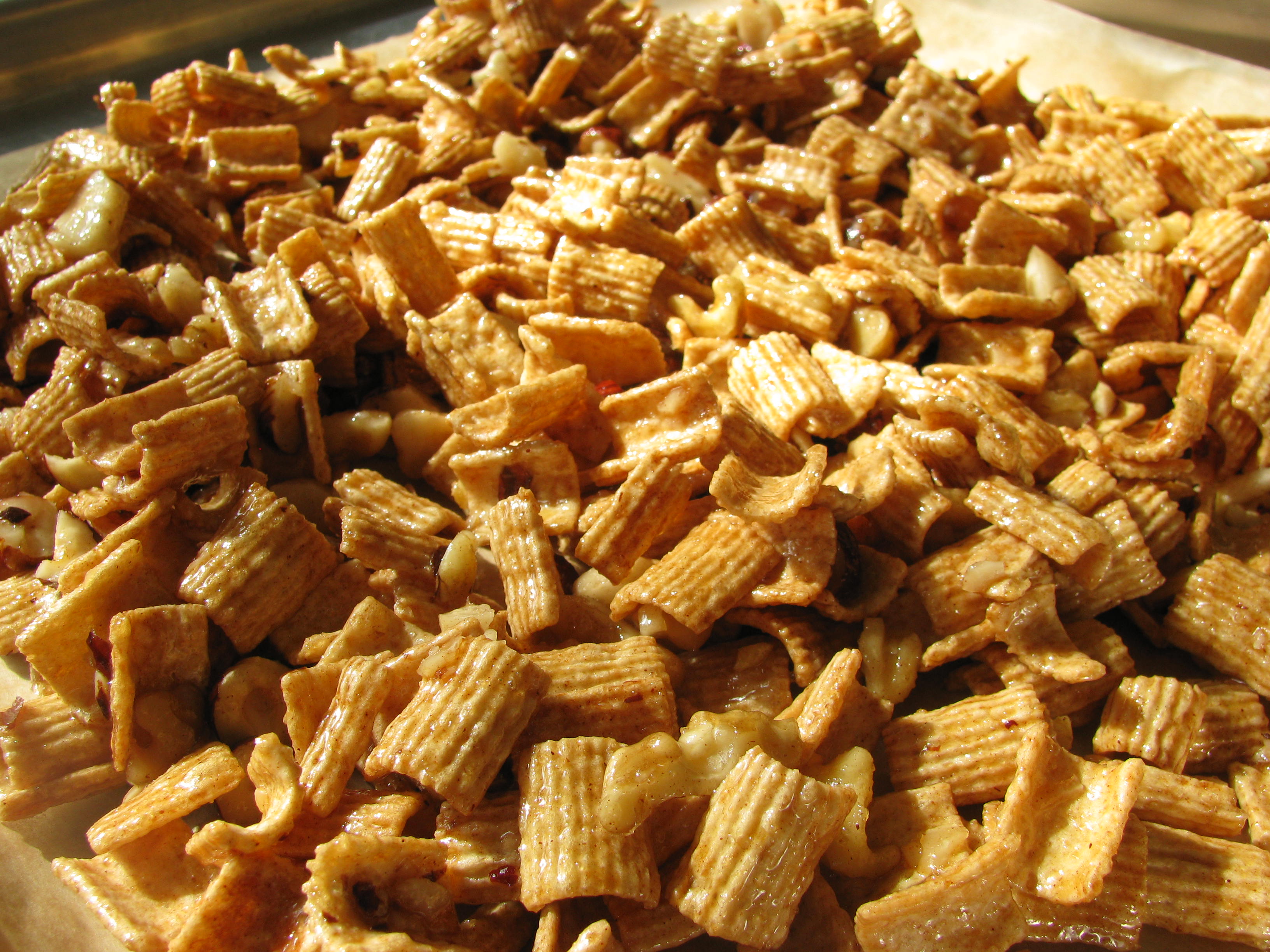
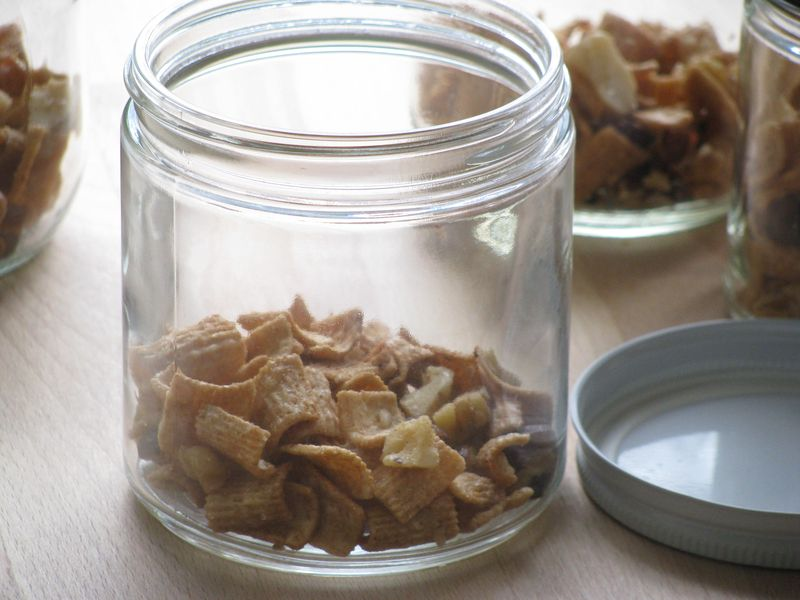
    Top Photos (L):The recipe called for a combo of Multigrain Cheerios and Rice Chex. I chose to use Cascadian Farm Cinnamon Crunch instead. (R):A syrup made of o.j. concentrate, br. sugar, and butter is drizzled over a cereal/nut mixture. Bottom Photos (L):The syrup-coated cereal/nut mixture is baked. (R):After cooling, the mixture is portioned into individual servings.

    Cinnamon crunch on trayCinnamon crunch portions

    Cinnamon Crunchies

    Makes eight 1/2 cup servings. Preheat oven to 300° with rack in middle position.

    4 ½ cups dry cereal (any combination – Recipe suggested Multigrain Cheerios and Rice Chex. I used Cascadian Organic Cinnamon Crunch.)

    ½ cup slivered almonds or pecans (I used ¼ c hazelnuts, ¼ c Brazil nuts,and ¼ c walnuts.)

    2 tbsp orange juice concentrate

    2 tbsp brown sugar

    2 tbsp butter

    ¼ cup sweetened dried cranberries (I omitted.)

    Place the cereal and nuts in a large ovenproof bowl or pan. (I used a jelly roll pan lined with parchment paper.) With clean hands, mix the cereal and nuts together until evenly distributed. In a saucepan, heat the orange juice concentrate, brown sugar, and butter until melted. Stir, then pour over the cereal/nuts mixture. Mix until thoroughly coated. Bake uncovered for 15 minutes. Remove from oven and mix in dried cranberries (if using). Cool, stir, and store in tightly covered container(s). Note: These amounts represent half of the original recipe’s quantities. Also, I renamed the recipe "Cinnamon Crunchies" because of the cereal I chose to use.


  • I have a notebook. A tattered, spiral notebook. It holds recipe clippings and handwritten "keepers" collected from the very early years of my marriage to Dick. There is a handwritten, vanilla splattered recipe written on a yellowed sheet of paper in that tattered spiral notebook. It is one that I've used countless times over the past 39 years to make cutout cookies for Valentines Day, Easter, Halloween, and Christmas.

    Cutout cookies tattered notebook

    Whereas, during my daughter's childhood, we would have used that recipe, my granddaughter and I chose a "Butter Cut-Out Cookies" recipe from Nigella Lawson's How to Be a Domestic Goddess because the cookbook was sitting on her kitchen counter… and it was beckoning us to peek inside. Sometimes cutout cookie dough is so fragile that it falls apart while transferring it from the rolling surface to the cookie sheet. This can be especially problematic when a young child is the baker. I can't be sure if it was Nigella Lawson's recipe, the extra thickness we allowed when rolling the dough, or my granddaughter's skill, but the process went so smoothly, and the cookies were devoured so rapidly, that we made a second batch a few days later. I chose to reduce the butter and sugar a bit and we used whole wheat pastry flour instead of cake flour.  

    Icing nigella's cut-out cookies

    Nigella Lawson’s Butter Cut-Out Cookies

     ¾ cup soft unsalted butter (I used ½ cup.)

    ¾ cup sugar (I used ½ cup.)

    2 large eggs

    1 tsp vanilla

    2 2/3 cups cake flour, plus more if needed (I used whole wheat pastry flour.)

    1 tsp baking powder

    1 tsp salt

    2 cups powdered sugar, sifted

    Preheat oven to 350°. Cream the butter and sugar together until pale and moving towards moussiness. Then beat in the eggs and vanilla. In another bowl, combine the flour, baking powder, and salt. Add the dry ingredients to the butter and eggs, and mix gently but surely. If you think the finished mixture is too sticky to be rolled out, add more flour, but do so sparingly as too much will make the dough tough. Halve the dough, form into fat discs, wrap each half in plastic wrap (or natural parchment or wax paper), and rest in the refrigerator for at least 1 hour. Sprinkle a suitable surface with flour, place a disc of dough on it (not taking out the other half until you’ve finished with the first), and sprinkle a little more flour on top of that. Then roll it out to a thickness of about ¼ inch. Cut into shapes, dipping the cutter into flour as you go, and place the cookies a little apart on the baking sheets. Bake for 8–12 minutes, by which time they will be lightly golden around the edges. Cool on a rack and continue with the rest of the dough. When they’re all fully cooled, you can get on with the icing. Put a couple tablespoons of just-not-boiling water into a large bowl, add the powdered sugar, and mix together, adding more water as you need to form a thick paste. Color as desired.

  • Are you longing for the juicy fruits of summer… watermelon, peaches, and pick-your-own berry patches? Are you dreaming of plucking sugar snap peas and string beans from your garden plot? Me, too. But, every season holds what our bodies need at the perfect time. During the summer months, in-season fruits have an abundance of water to hydrate and cool us in the heat. In the winter, in-season produce is heavier… denser to warm us. A winter's diet certainly doesn't need to be boring.

    Jerusalem artichoke

    These Jerusalem artichokes (aka sunroot, sunchoke, earth apple, or topinambour)… I have been crunching them raw like an apple. Unpeeled so as not to miss any of the nutrients that the skin holds. A crisp sweet treat that is a species of sunflower. Above the ground, a tall plant with a small sunflower blossom. Underneath the soil grows clusters of knobby tubers that become sweeter after a frost.

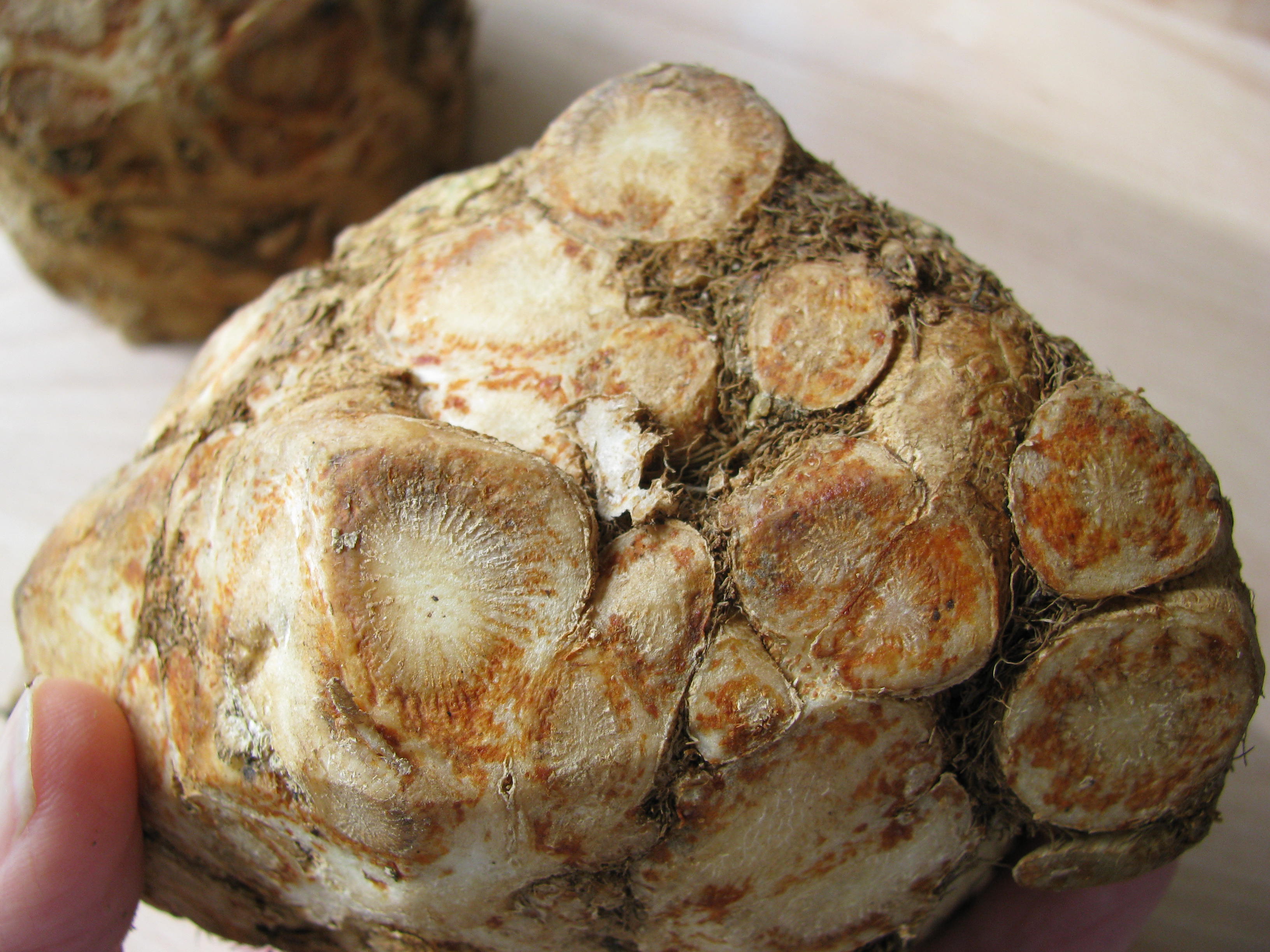
  • Celeriac. Celery root. Turnip-rooted celery. Knob celery. All names for the gnarly rooted winter vegetable that is a member of the same family as parsnips, carrots, chervil, parsley, and fennel. As roots reach deeper into the earth and celery-like stalks unfurl to provide beauty in the garden, a massive edible bulb grows under the soil. Like parsnips, harvesting celeriac after a frost enhances its flavor. Photos from my kitchen: (L) Bright green leaves sprouting from the celeriac's crown indicate that it is still very much alive. (R) The roots have been trimmed from the underside. Their diameter shows its strong root system. The following video http://youtu.be/-a4sIVAzhto demonstrates how to prep celeriac for a variety of uses like… 

    Celeriac sproutCeleriac root end

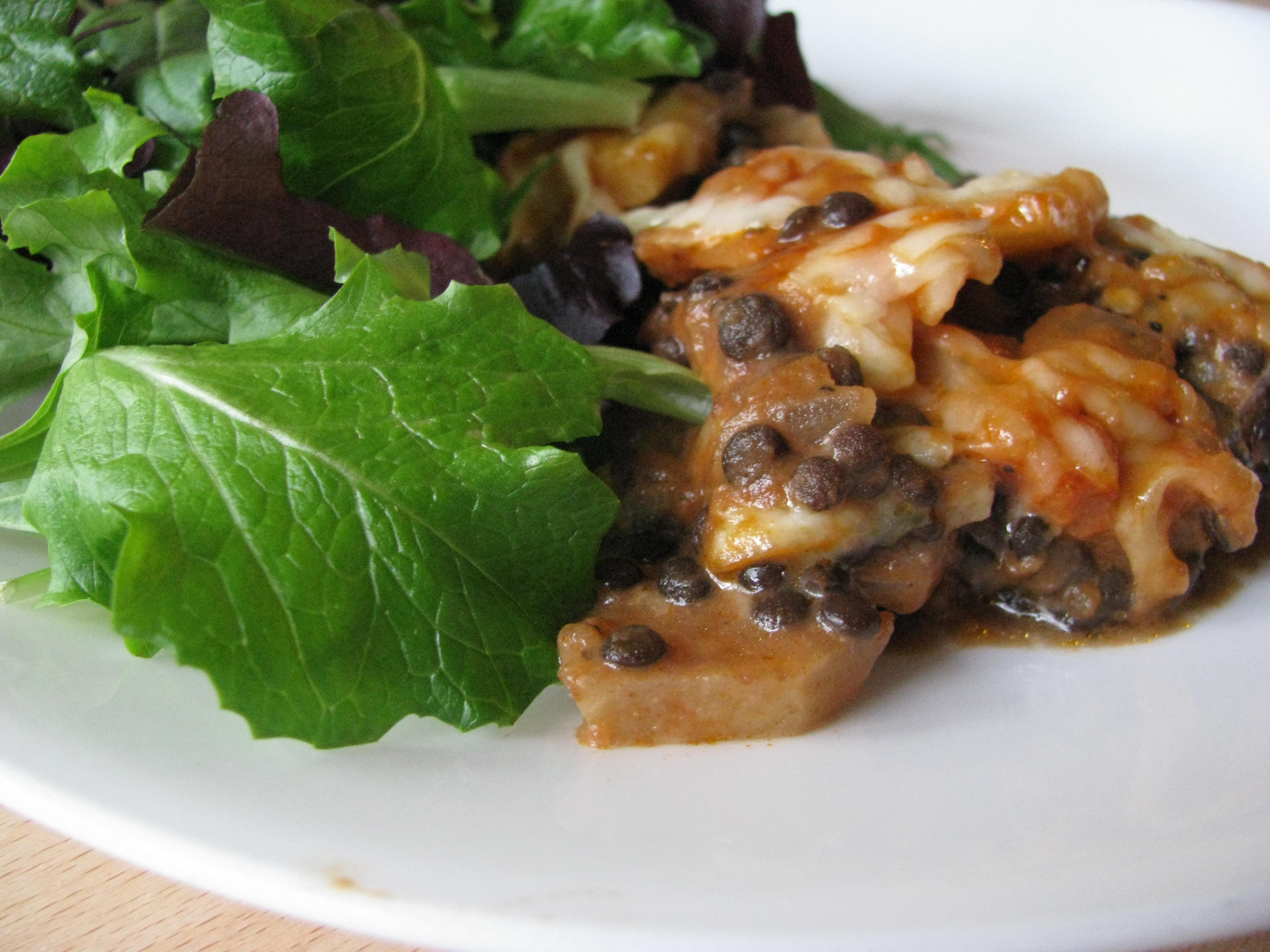
    Celeriac Lentil Gratin. I've returned to the casserole dish this evening for more helpings than any adult, who normally makes rational decisions, should. It's that good. Really. The recipe comes from the website of Crumbs Magazine, which is a UK publication, via a submission by Jenny Chandler. The quantities are in grams and milliliters, so I leaned on metric-conversions.org and a kitchen scale that measures in both grams and ounces.

    Black lentils weighed Newmans pasta sauce

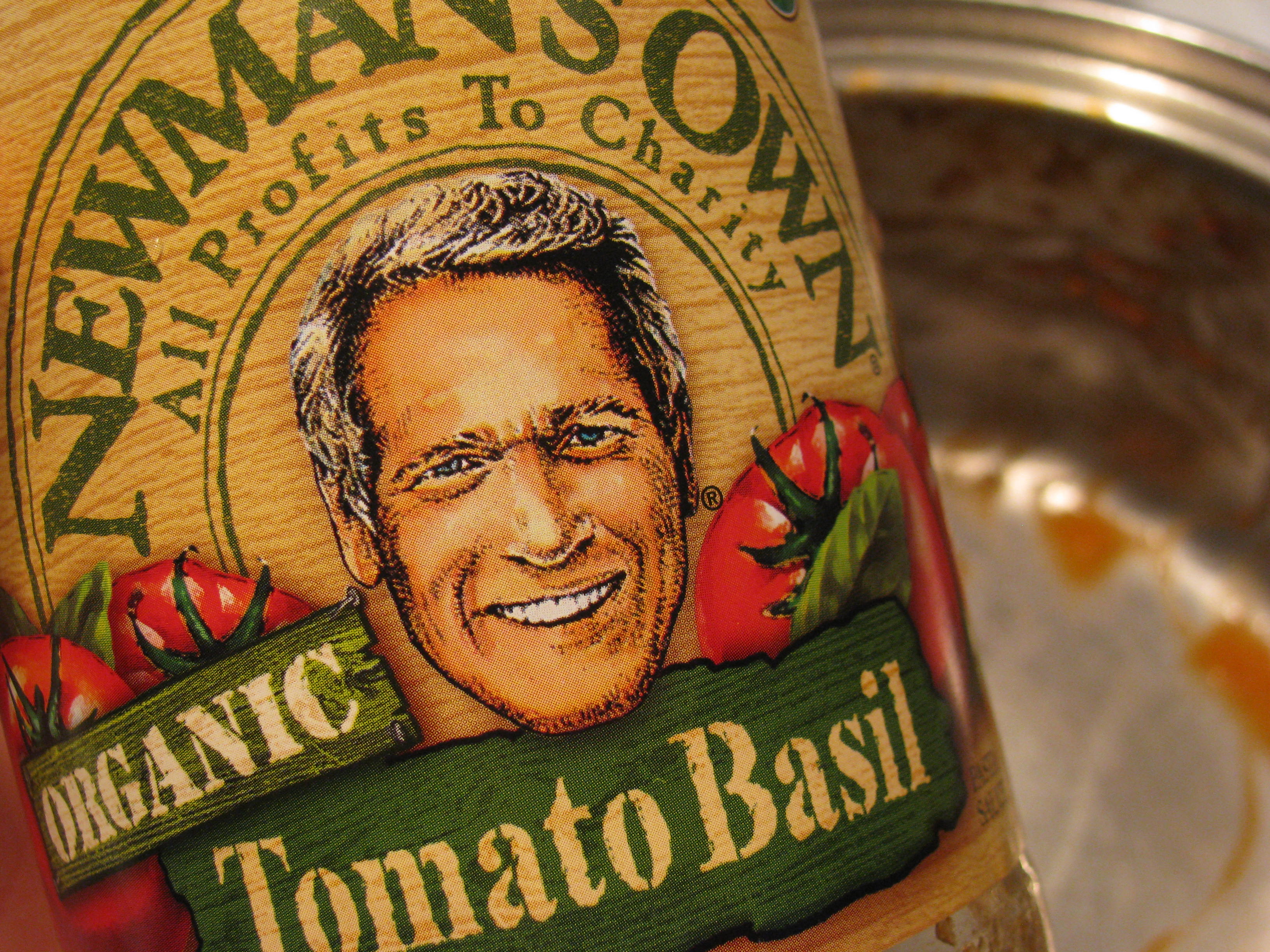
    The recipe called for Castelluccio lentils, which is a brown variety. I had none. But, I did have Shiloh Farms Black Beluga Lentils. After weighing 300 grams, I transferred the lentils into measuring cups and determined it was equivalent to approximately 1 1/2 cups. Instead of two 400-gram cans of chopped tomatoes, I subbed a 23.5 ounce jar of Newman's Own Tomato Basil Pasta Sauce. A perfect swap out in this hearty winter root vegetable casserole. Pair it with a side salad of baby lettuces -romaine, arugula, mizuna, tatsoi, chard, mustard, frisee, radicchio, spinach, mache, beet tops, and kale. A hunk of crusty bread. Some fresh fruit.

    Celeriac lentil gratin

    Celeriac and Lentil Gratin

    Serves 4-6. (With salad and a hunk of rustic bread, it will serve 6 nicely.)

    2 tbsp olive oil (I used a generous tbsp butter.)

    1 onion, finely diced

    4 garlic cloves, crushed (I minced finely.)

    2 x 400g cans chopped tomatoes (I subbed 1-23.5 oz jar Newman’s Own Tomato Basil Pasta Sauce.)

    300g Castelluccio (brown) lentils, rinsed (I subbed 1 ½ cups Shiloh Farms Black Beluga Lentils.)

    salt and pepper, to taste (I used 1 ½ tsp salt, divided and ½ tsp pepper, divided.)

    large handful parsley, roughly chopped (I had neither fresh nor dried, so I omitted.)

    225 ml double (heavy) cream, divided (This is approximately 1 cup. I subbed half & half by skimming 1/2 cup cream off the top of my nonhomogenzied whole milk then filling the remainder of the measuring cup with milk.)

    1 celeriac, about 1kg, peeled, quartered, and finely diced (1 kg=2 lbs 3.2740 oz. I used 2 celeriac which weighed 2 lbs 2 3/8 oz. After peeling, I sliced them into fried potato size slices.)

    zest and juice of ½ lemon (I omitted.)

    100g Parmesan cheese, grated (This amounts to 1 ½ cups grated cheese.)

    1)Preheat oven to 190C/375F/gas mark 5. (What is a “gas mark?”) Heat oil (or butter) in a large saucepan and saute the onion gently until soft and beginning to turn golden. Add garlic and stir until its wonderful smell wafts up from the pan. “Tip in” the tomatoes (or pasta sauce) and simmer for about 10 minutes. 2)Meanwhile, put the lentils in a pan, cover with about 5 cm/2 in of water and simmer for about 20 minutes until soft and creamy rather than al dente. Drain if necessary and then season well with salt and pepper. (I followed the cooking instructions on the lentils package. For 1 ½ cups lentils, add 4 ½ cups water. I simmered a little longer than 20 minutes until the water was absorbed, so there was no water to drain. I seasoned the cooked lentils with ½ tsp salt + ¼ tsp pepper.) Stir in the parsley, if using, and 3 tbsp of the cream. 3)Add the celeriac to the pan of tomato sauce, cover, and cook for about 15 minutes or until tender. (Depending upon the size of the celeriac slices, it may take a little longer. ) At first, there will not appear to be enough tomato sauce, but the celeriac will release plenty of moisture as it cooks. When the celeriac is tender (fork easily pierces it but not mushy-somewhat firm), add the remaining cream, the lemon zest and juice (if using) and season with salt and pepper. (I used ½ tsp salt + ¼ tsp pepper.) 4)Layer the celeriac and tomato mixture alternately with the lentils in a large, shallow ovenproof dish (like a glass 9X13 baking dish), finishing with a layer of celeriac. (I used approx 2 cups celeriac/tomato mixture on each of the 3 layers sprinkling ¼ tsp salt on each of the first two layers. I divided the lentils equally between 2 layers. Sprinkle the top with the grated Parmesan cheese and bake for about 30 minutes until nicely browned on top. (I removed it just as the cheese was barely beginning to turn golden.) Notes: This can be prepared ahead and even frozen. Thaw before baking for an extra 10-15 minutes, covering with foil if the top begins to get too dark. (I haven’t tried freezing it.) Try using any whole brown or green lentil for the dish. Not red lentils, though, as they will collapse into a mush.

  • It belongs to the umbelliferae family as do carrots, chervil, parsley, fennel, and celeriac. A hard frost develops its sweetness, so it is well suited for planting in Minnesota's climate. It provides vitamin C, fiber, folate, and potassium. It makes a tasty cookie. It's a parsnip.

    ParsnipsParsnips weighed

    To prep the parsnips, remove the peel. (A young parsnip's tender peel can be left intact.) Roughly chop into chunks… enough to make 1 cup cooked, pureéd parsnips. "How many chunks is that?" I queried. I guessed, weighed, cooked, pureéd. Perfect. 11 ounces raw parsnips = 1 cup cooked, pureéd parsnips.     

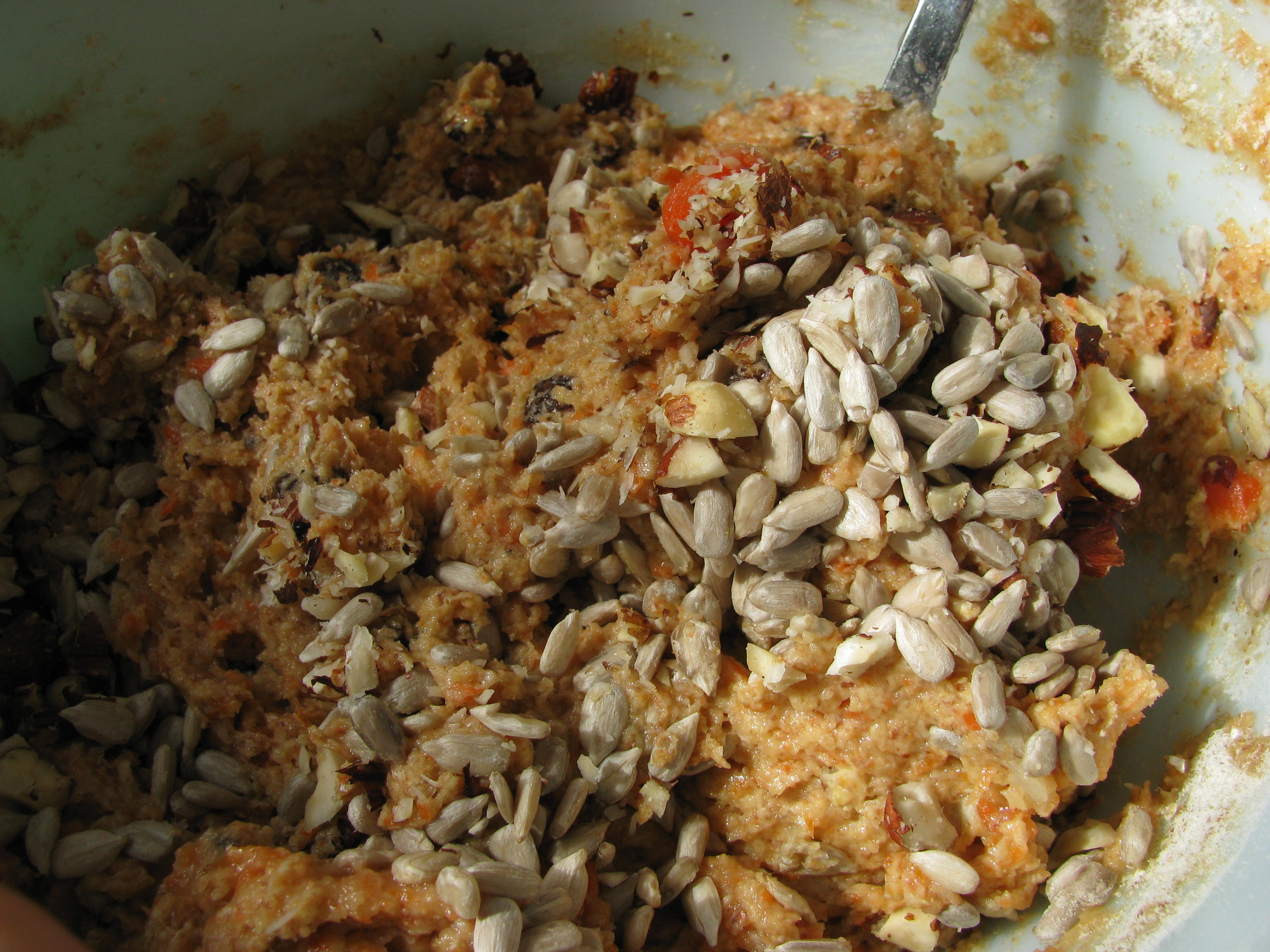
    Parsnips pureedParsnip cookie dough

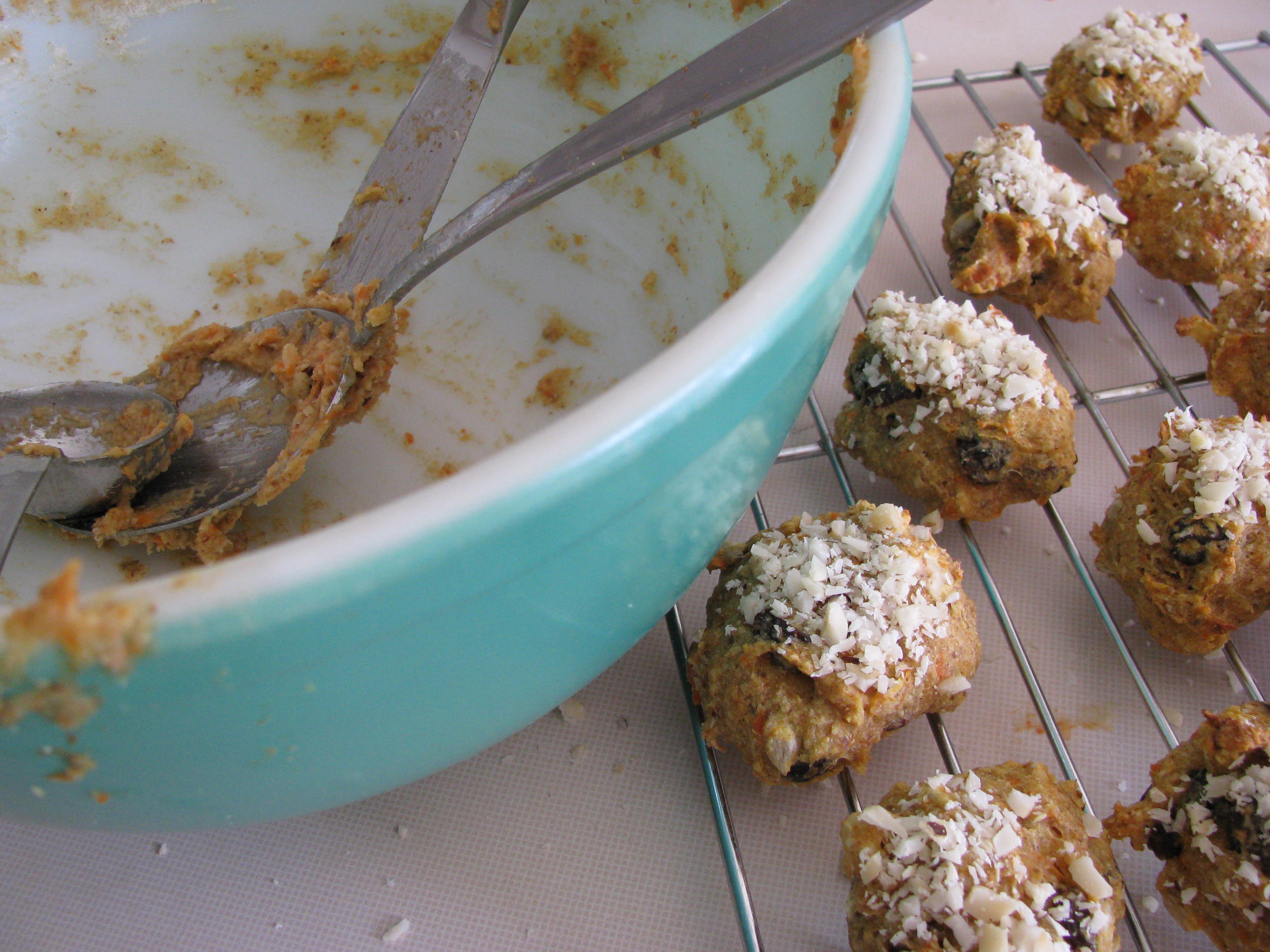
    Pureéd carrots and parsnips are added to the liquid ingredients then combined with the dry. Raisins provide sweetness while raw sunnies and hazelnuts add crunch. Finely chopped Brazil nuts sprinkled atop each cookie looks like a dusting of freshly fallen snow.

    Parsnip cookies baked

    Parsnip Carrot Cookies

    Source:  The Antioxidant Save-Your-Life Cookbook, Jane and Daniel Kinderlehrer p. 164 “Brazil Nut Cookies”

    Yield: 3 doz using level tbsp (or 2 doz using heaping tbsp)

    1 egg

    2 tbsp honey

    2 tbsp olive oil (I used coconut oil.)

    1 tsp vanilla

    1 cup cooked parsnips*, put thru a sieve (I pureéd using a food processor.)

    1 cooked carrot, put thru sieve (I pureéd using a food processor.)

    1 cup whole wheat pastry flour, less 3 tbsp

    3 tbsp soy flour

    ½ cup wheat germ (I subbed ¼ cup oat bran + ¼ cup ground flaxseed.)

    2 1 tsp baking powder

    ½ cup raisins

    ¼ cup raw sunflower seeds (my addition)

    ¼ cup chopped hazelnuts (my addition)

    4 Brazil nuts, grated (I chopped very finely instead.)

    Preheat oven to 350°. Combine egg, honey, oil, vanilla, and pureéd parsnips and carrot. In another bowl, whisk flour, wheat germ (or oat bran and flaxseed), and baking powder. Add to parsnip-carrot mixture and blend. Stir in raisins, sunnies, and hazelnuts. Drop the dough by tablespoonfuls on a cookie sheet lined with parchment paper. Sprinkle Brazil nuts on top of each cookie. Bake for 12 to 15 minutes or until lightly brown. (Don’t underbake or centers won’t be cooked through. May require add’l time.) *11 ounces raw parsnips = 1 cup cooked, pureéd parsnips