Whiteley Creek Homestead

LIFE AT THE END OF A DIRT ROAD IN CENTRAL MINNESOTA

organically grown triticale in our field
canoeing in our wetlands
raspberries growing wild on our property
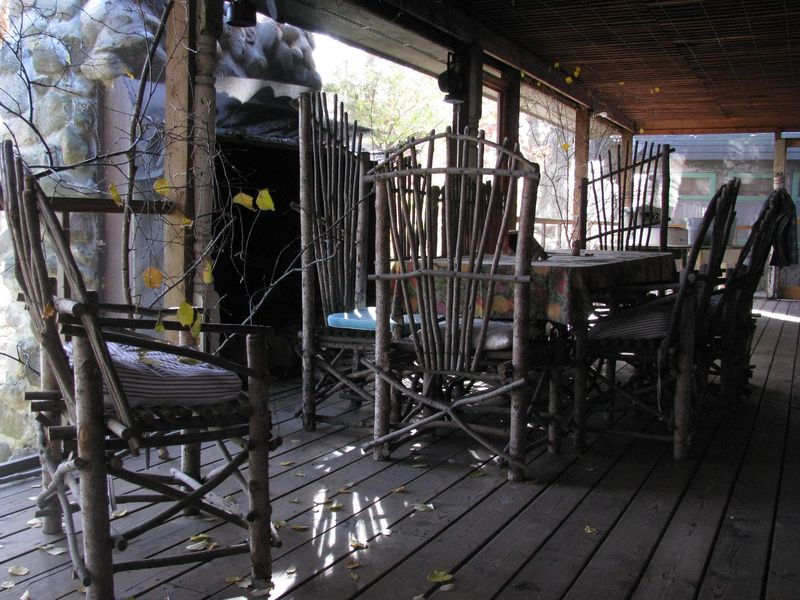
our back porch fieldstone fireplace
  • In the morning, I rearranged my twig furniture to create a banquet table.

    Game night banquet table a.m. setup

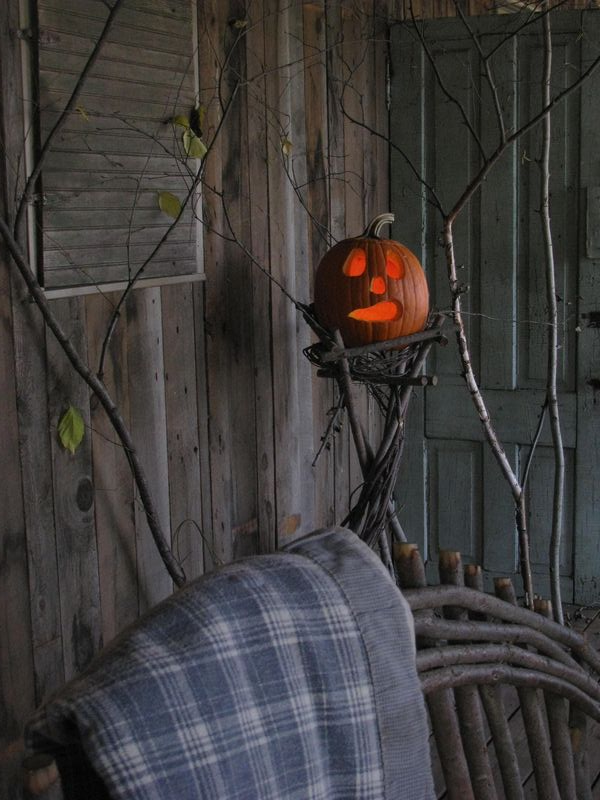
    Dick carved a jack-o-lantern after selecting a face from a printout that our granddaughter had sent us…

    Pumpkin faces Carved pumpkin

    and cut slabs from the trunk of a fallen tree to use for plate/bowl chargers.

    Wood slab charger

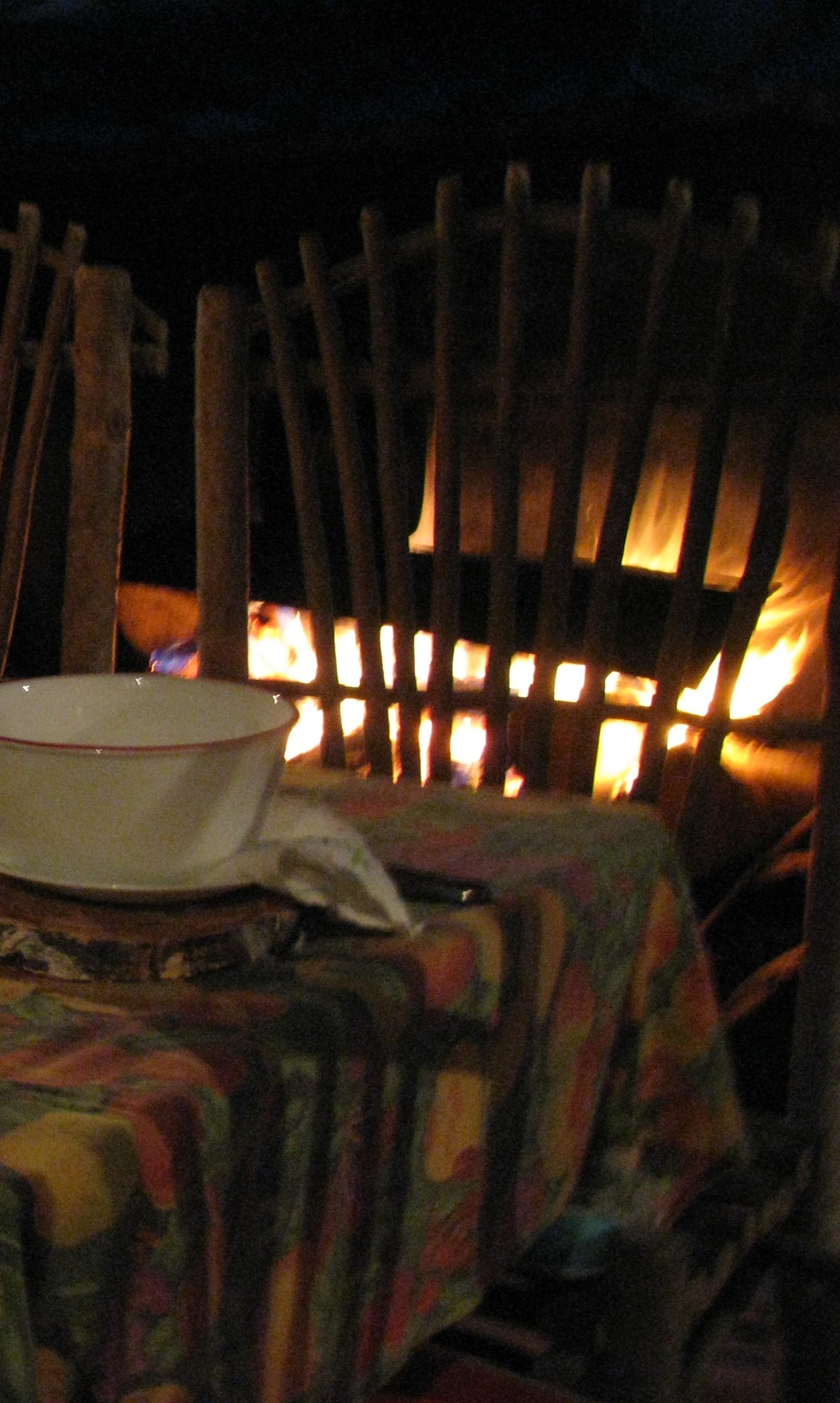
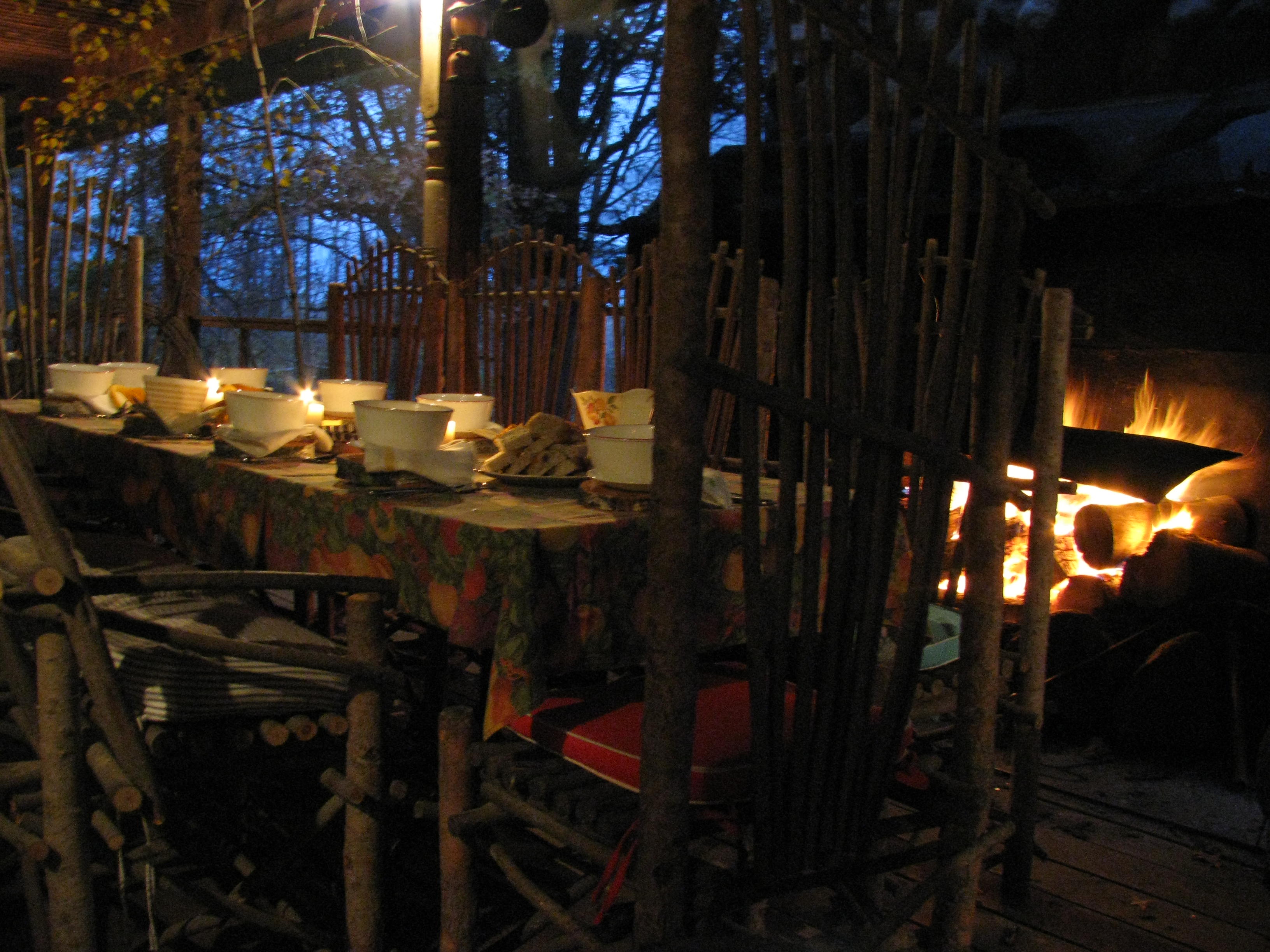
    In the cool evening, we gathered. Warmed by a wood fire on the backporch, we ate bowls of soup and chunks of rustic bread. Game night with my siblings. At our home. Our bed and breakfast.

    Game night banquet table evening

  • My garden blessed me with abundance. Heirloom potatoes that included white, red skin/red flesh, and purple skin/purple flesh varieties…

    IMG_1331[1]

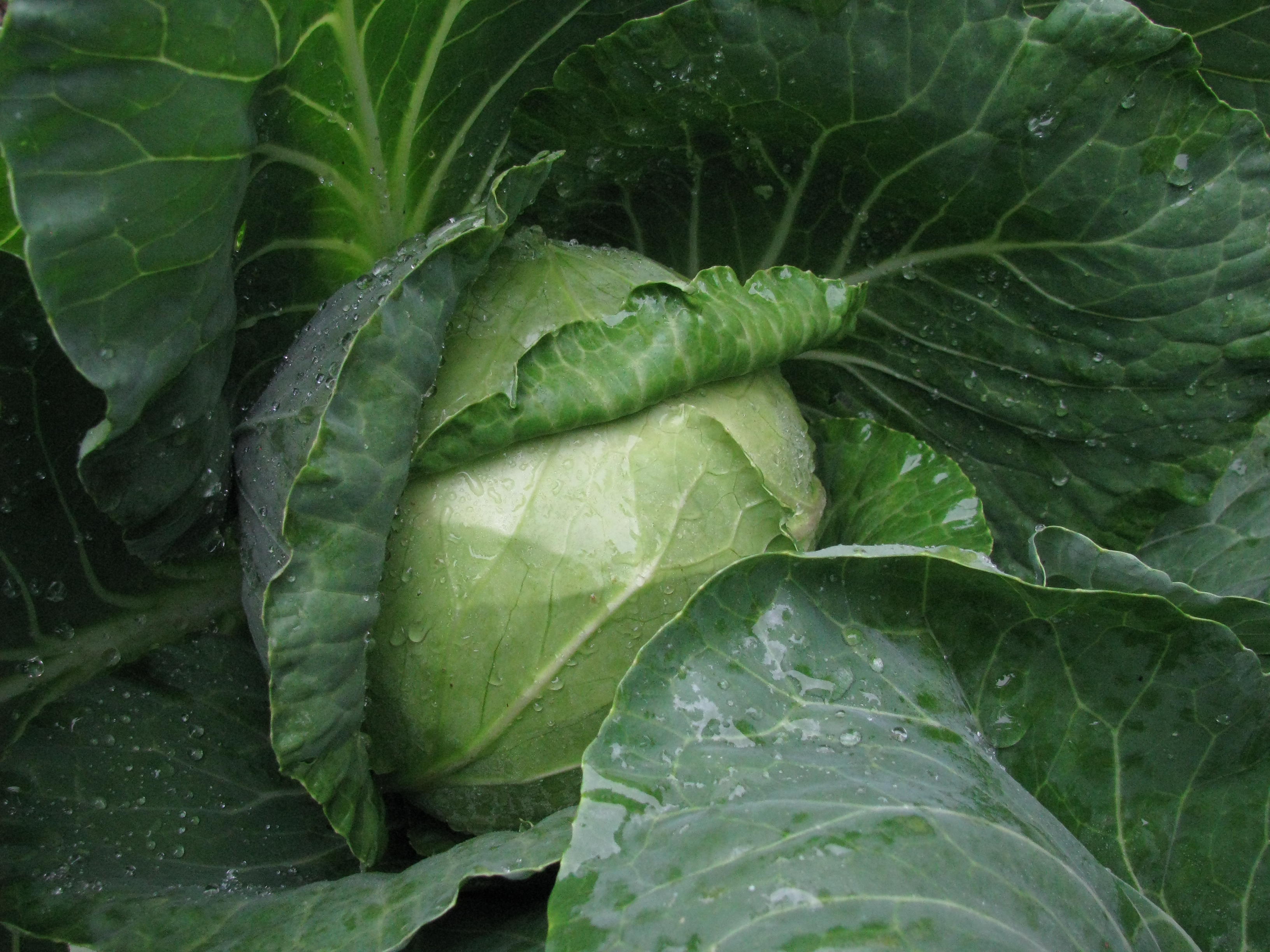
    and perfectly formed heads of cabbage.

    Cabbage head

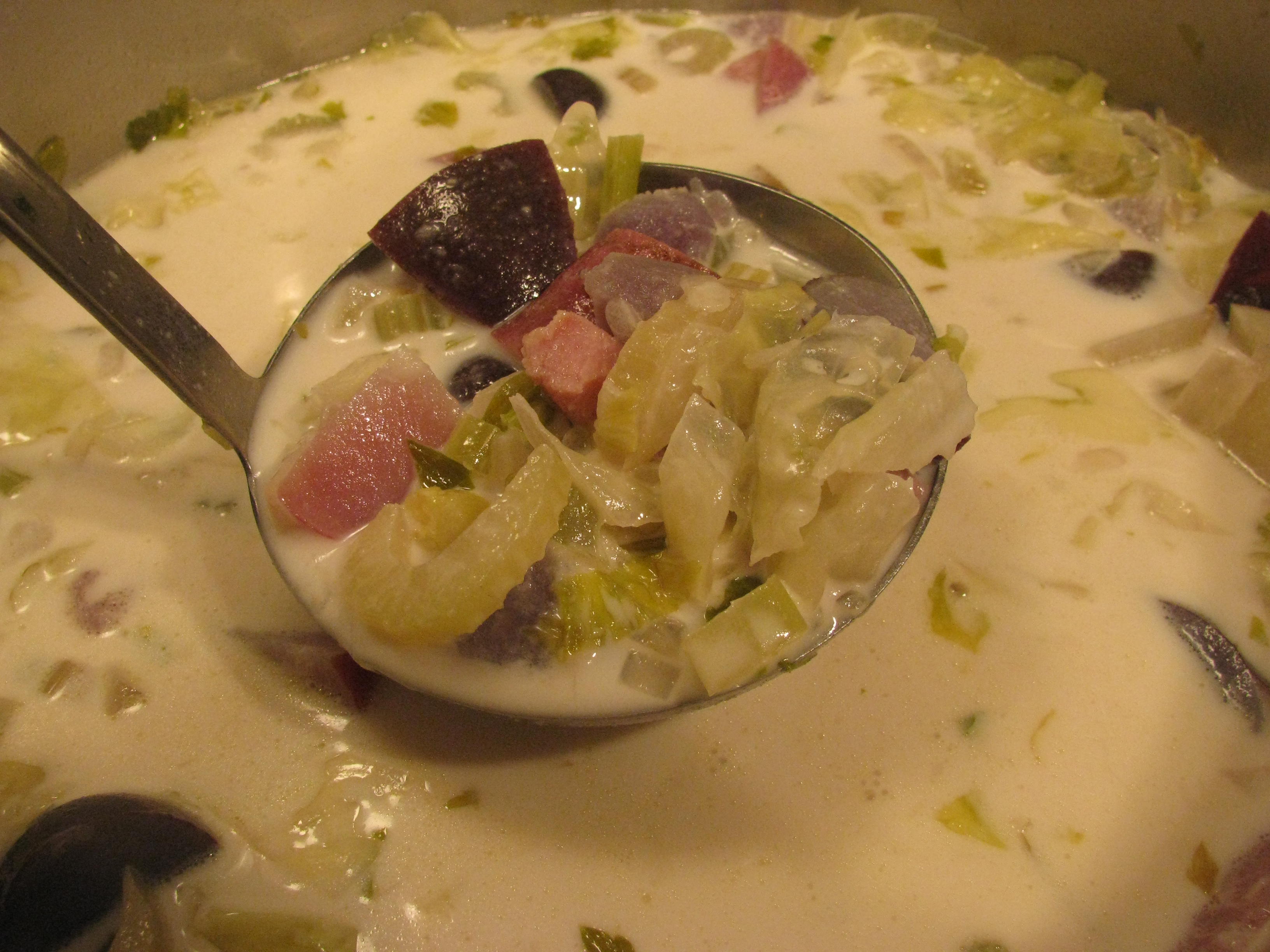
    To make soup. A simple Potato Cabbage Soup. To sip and savour the abundance with thankfulness.

    Potato cabbage soup

    Potato Cabbage Soup

    1 tbsp butter

    1 onion, chopped

    4 stalks celery, chopped

    32 oz chicken broth (or 4 c. water + 1 ½ tbsp Better Than Bouillon Chicken Base)

    1 lb potatoes, chopped into chunks

    ¼ head cabbage, chopped into chunks

    diced nitrite-free fully cooked ham, optional

    2 c. half and half

    1 1/2 tsp Johnny's Seasoning Salt without MSG (or to taste) 

    1/2 tsp pepper

    Optional toppings: chopped crispy bacon, grated cheese, sliced green onions

    In soup pot, saute onion and celery in butter. Add broth, potatoes, cabbage, and ham (optional). Simmer for 20 minutes until potatoes and cabbage are tender but still firm. Add half and half. Heat to warm. Season to taste with salt and pepper. Ladle into bowls. If desired, garnish with sliced green onions, chopped crispy bacon, and/or shredded cheese.  


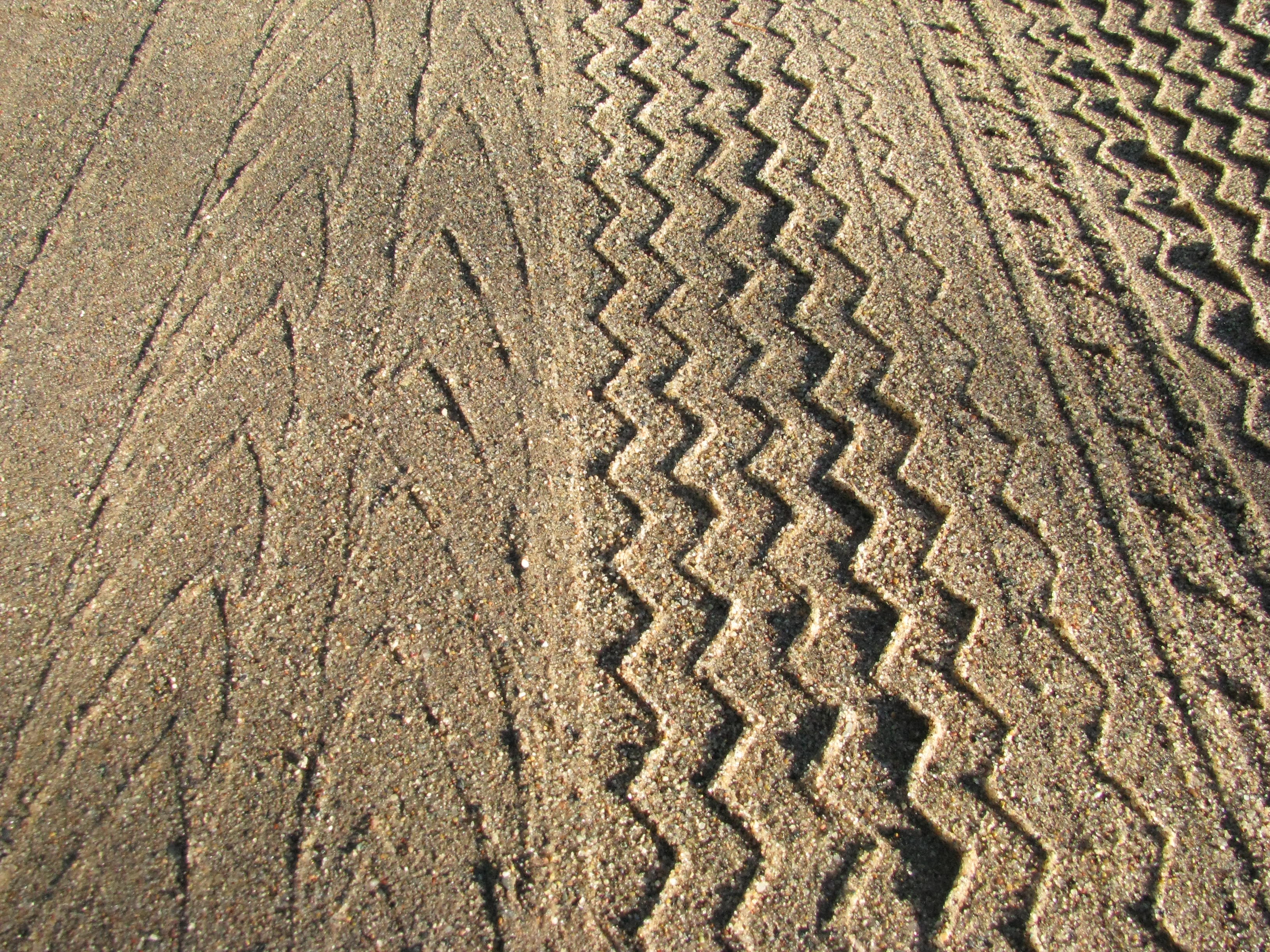
  • Zigzag. Rick rack. Chevron. Whatever name you choose to call it. There it was on my driveway after a rain shower had softened the dirt sufficiently to allow an imprint from tires to remain. Alongside… another pretty pattern. Rows of Indian teepees. A bonus.

    Tire treads

  • Upon returning from our 3-day hiking, biking, and camping adventure in northern Minnesota's Chippewa National Forest, a package awaited in my mailbox. Inside was a special birthday gift from my granddaughter. She had selected a recipe from a notebook I had given her… the pages filled with recipes handwritten by my mother years ago when I was a child. (She passed away in April 2011 at age 93.) Tucked into the box, alongside the cookies, was a copy of the Molasses Hermits recipe from the notebook… in my mother's old-fashioned style cursive writing. Take note of the uppercase S and lowercase t in the word "sift."

    Molasses hermits

    Raisins, molasses, a handwritten recipe passed down through generations, and a granddaughter's thoughtfulness provide perfect sweetness. There are no other sweeteners needed.

    Molasses Hermits

    Cream ¼ cup shortening (or butter), 1 egg beaten, and ½ cup light molasses. Sift 1 ½ cups flour, ¼ tsp soda, 1 ½ tsp baking powder, ½ tsp cinnamon, ½ tsp cloves, and ¼ tsp salt. Add alternately with ¼ cup sour milk. Stir in ½ cup raisins, chopped (or not). Drop by rounded tsp (or tbsp) on greased baking sheet. Bake at 400° for 10 min.


  • The morning began at a farmers' market in Grand Rapids where I paused to admire a vendor's lovely veggie scape that she had created to display her autumn garden's harvest. I purchased a locally-raised, pastured chicken to roast. Then, we packed sandwiches, purple carrots, honey crisp apples and water. And we were off…

    Grand rapids market veggie scape

    To hike down a three mile trail through dense woods to the Joyce Estate.

    Joyce estate hiking trail

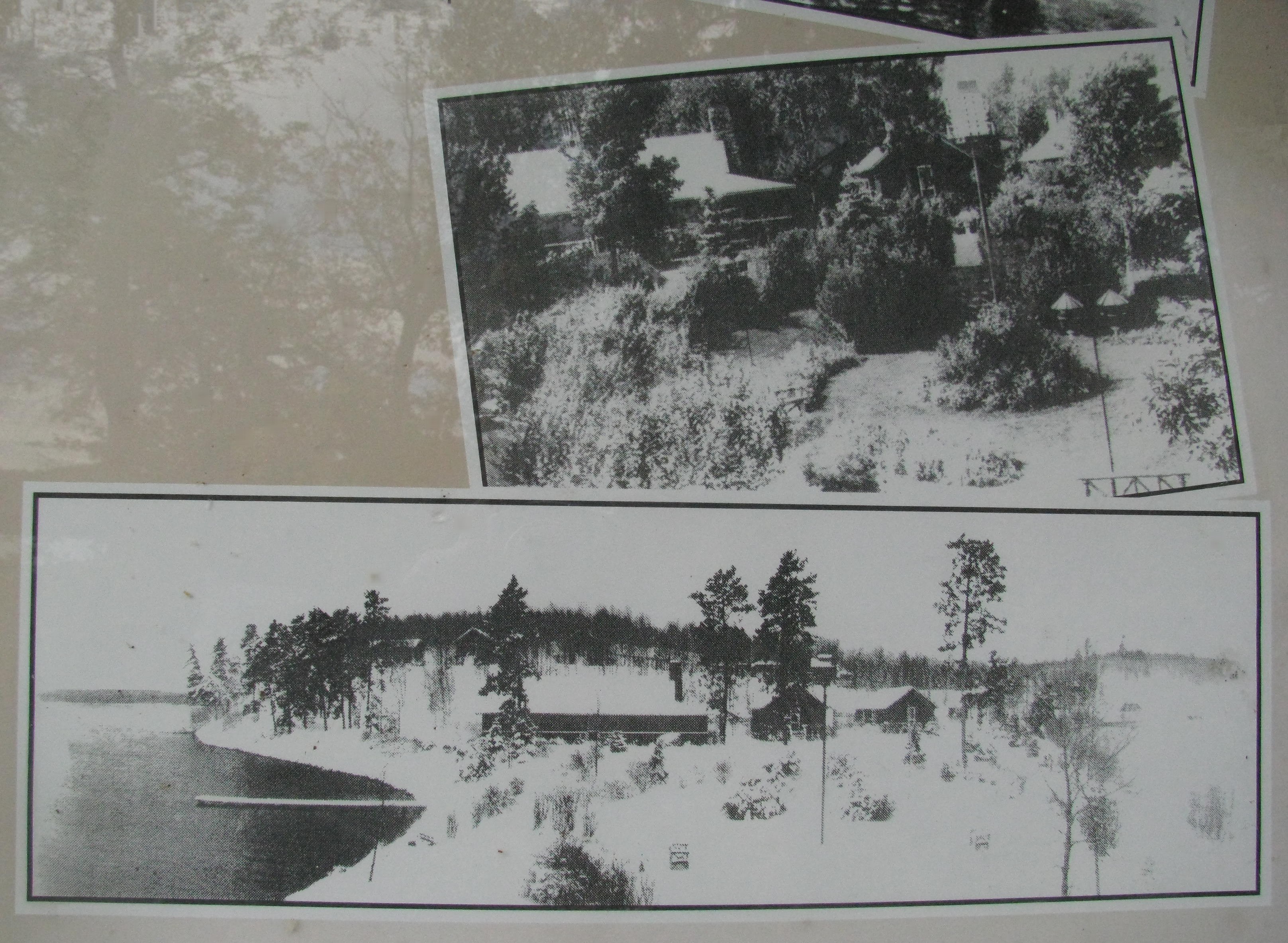
    David Joyce, who was an heir to his family's lumber industry fortune, built the isolated Joyce Estate or "Nopeming" (place of rest in Ojibwe) from 1917-1935 on a peninsula extending into Trout Lake north of Grand Rapids, Minnesota. The resort encompassed 4,500 acres with forty buildings including a golf course, telephone line, and airplane hangar.

    Joyce estate old photos

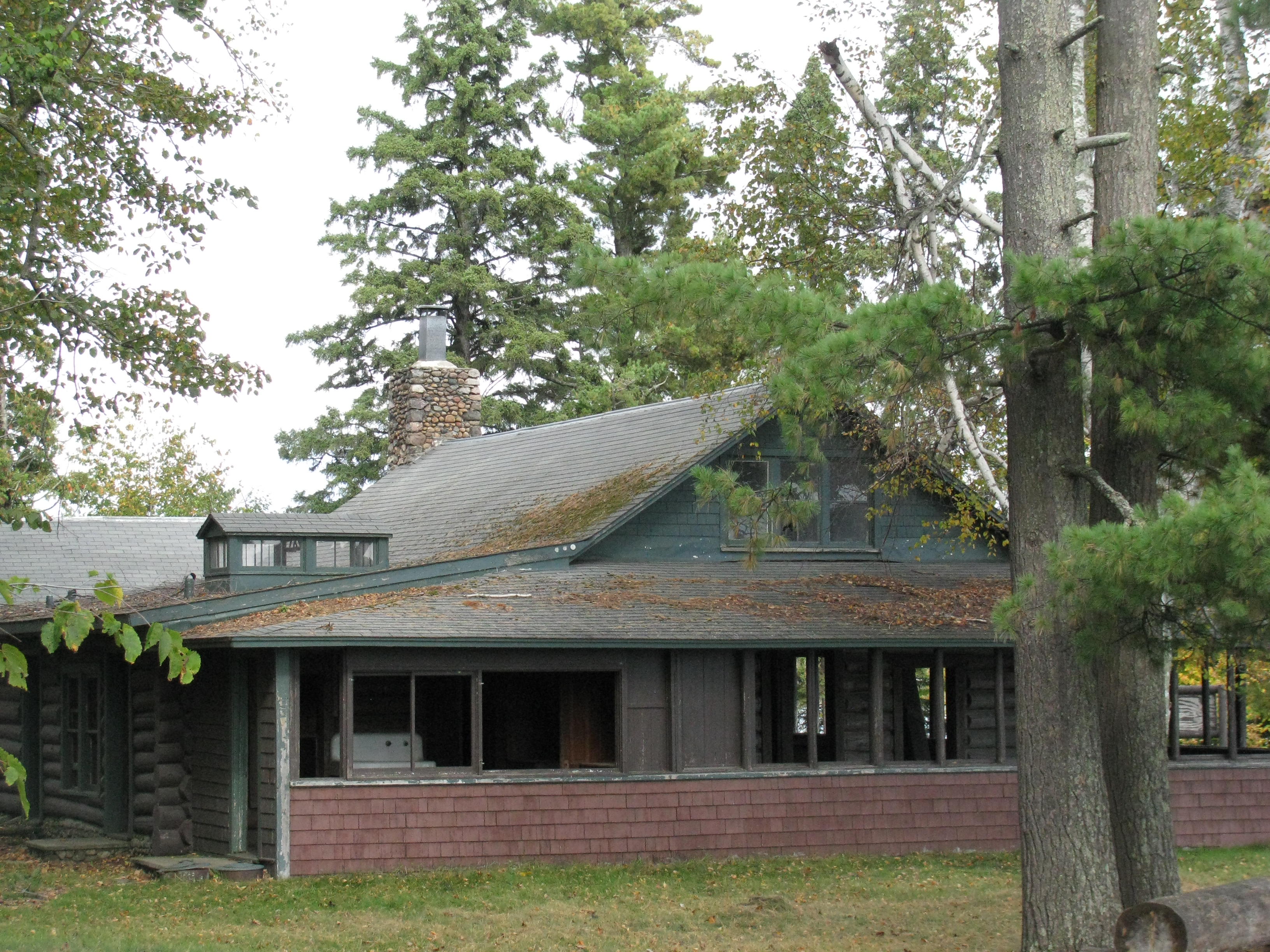
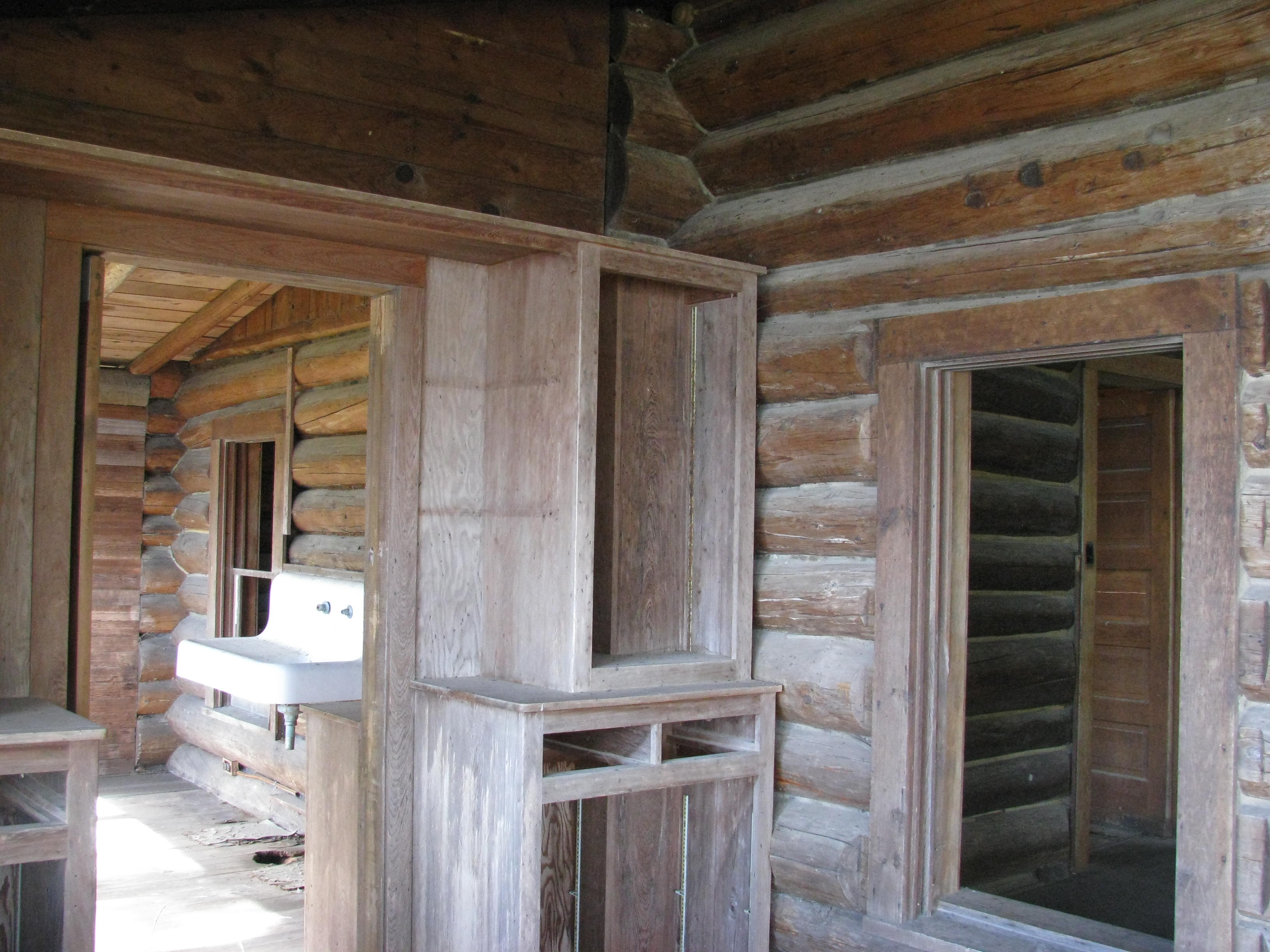
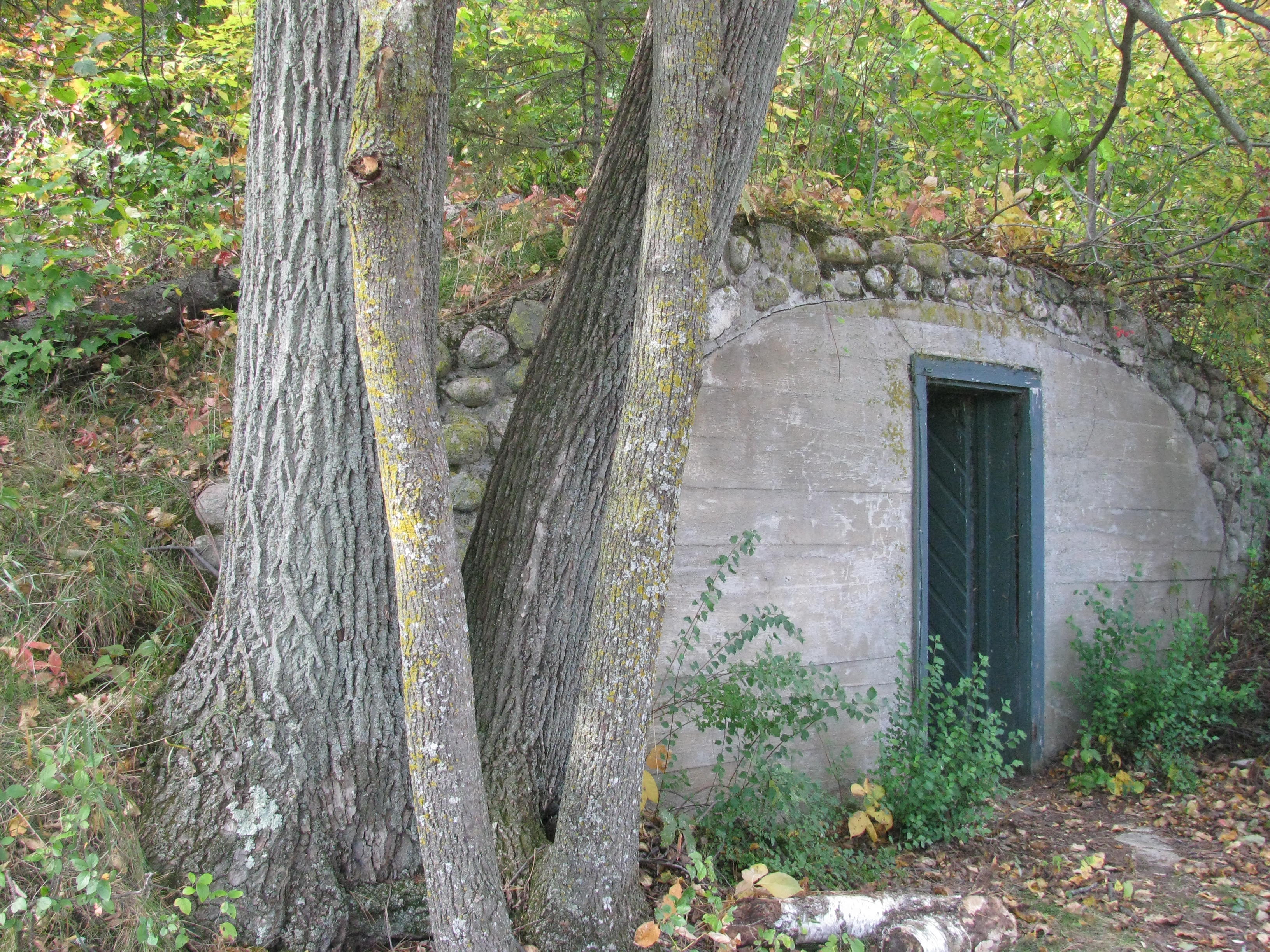
    (Photo source: Joyce Estate self-guided trail marker) The property was used by the Joyce Family until 1972 and a caretaker lived on site year round until 1986. The USDA Forest Service presently manages the site which is eligible to be placed on the National Register of Historic Places. Many buildings have deteriorated, or are nonexistent, but their locations are identified with markers. The main lodge and root cellar, pictured below, are a stoic reminder of an era that encompassed the roaring twenties, prohibition, and women's suffrage… and memories that span several generations of families.  

    Joyce estate main lodge exteriorJoyce estate main lodge interior

    Joyce estate root cellar

    Pop into the Grand Rapids Chamber of Commerce to pick up a brochure. It'll provide directions to a parking area where you can access the hiking trail to the Joyce Estate and a map of the grounds to aid navigation and landmark identification.


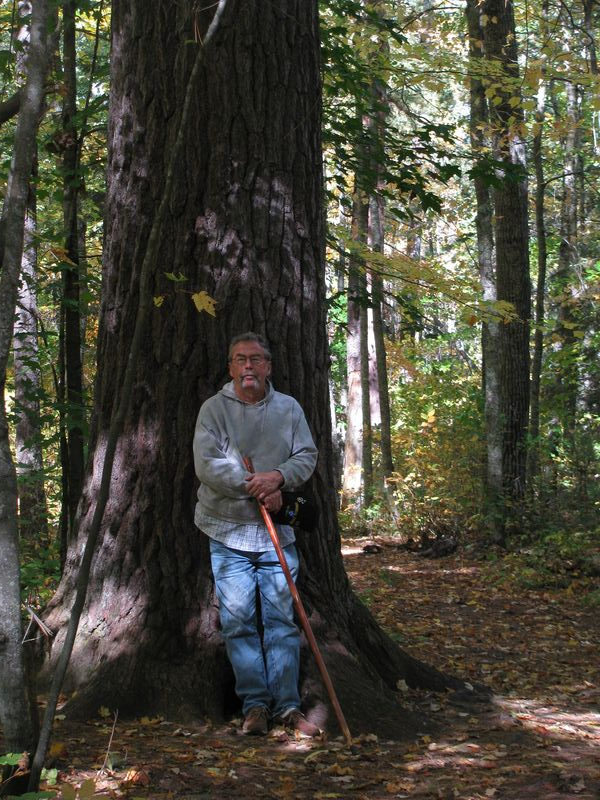
  • My brother, Cliff, gave us the idea. He had heard tell of it from someone but had not ventured there. We set out to find it. The Lost Forty. It began with a mistake. In 1882. During the height of Minnesota's logging days, a survey crew mistakenly plotted a lake 1/2 mile further northwest than it actually lies. Thinking that the area was underwater, loggers left 144 acres of trees untouched.

    Lost forty white pine Lost forty white pine dick

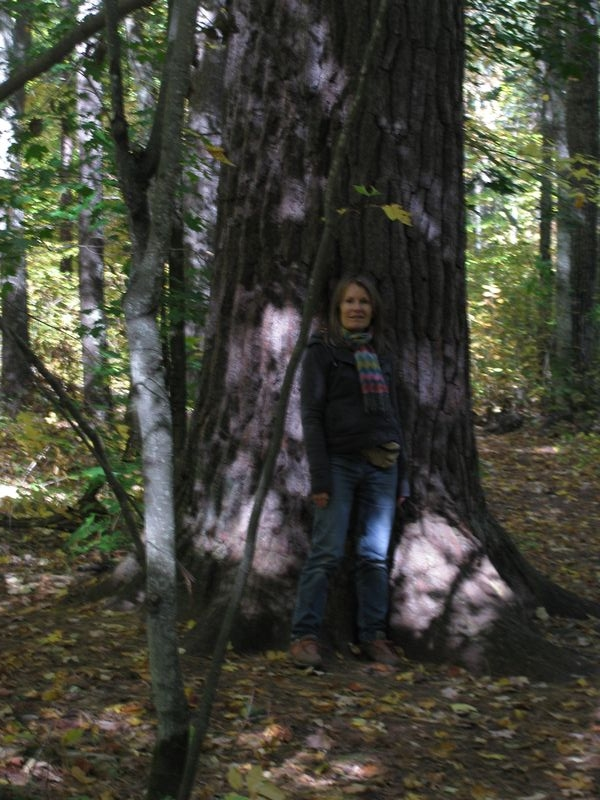
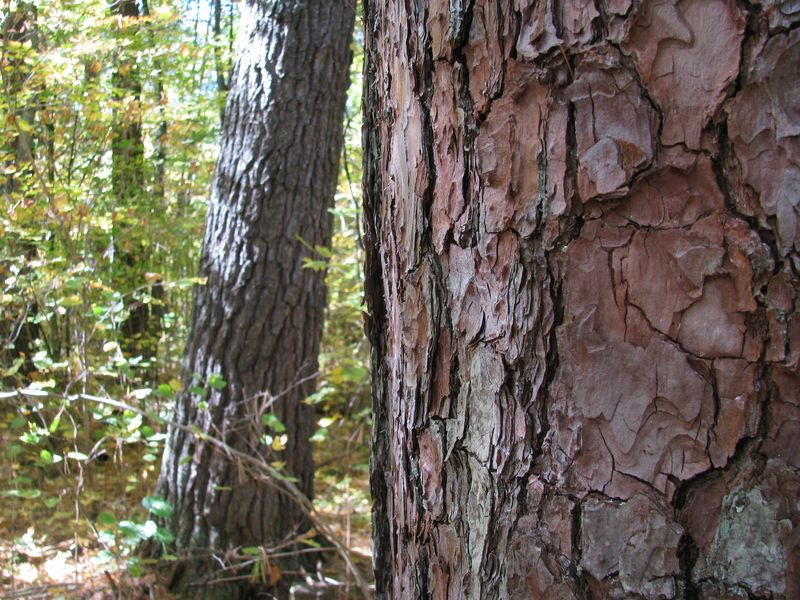
    A one-mile trail now winds through stands of 300-400 year old towering white and red pines with massive girth that originate from when the Pilgrims came to America. Markers along the self-guided trail provide historical information as well as draw attention to such things as the characteristic bark that differentiates white and red pine trees.

    White and red pine

    Located in the Chippewa National Forest, the Lost Forty is a challenge to locate if you set out thinking signs will direct you… or a GPS… or you will just stumble upon it. No. Follow these directions. Easy peasy. From the town of Blackduck (Minnesota), take County Road 30/13 to Alvwood, travel north on State Highway 46 for 1/2 mile to County Road 29. Follow 29 east for about 11 miles to Dora Lake and County Road 26. Travel 2 miles north on 26 to Forest Road 2240. About 1 1/2 miles west of this intersection you will find a sign for the Lost Forty. (Source: USDA Forest Service)  


  • A birthday comes around but once a year. I wanted mine to be memorable. What would make it so? I pondered ever-so-briefly… and knew. It must be outdoors. Hiking. Biking. It should include a food co-op and a farmers market. And a few unexpected twists and turns to make a perfectly orchestrated adventure.

    Backus to hackensack bike trail abandoned farm

    We began a 3-day camping adventure by biking a 7.5 mile stretch of the Paul Bunyan Trail from Backus to Hackensack and back again where we passed an abandoned farmstead happily basking in the cool sunshine of the final days of September… as were two bikers. Happily basking. The next day, we biked the 18-mile Mi-Gi-Zi Trail which circles Pike Bay in the Chippewa National Forest near Cass Lake. The autumn season's gentle solitude was in sharp contrast to the bustle that is characteristic of this area in the summer months.

    Harmony co-op bemidji

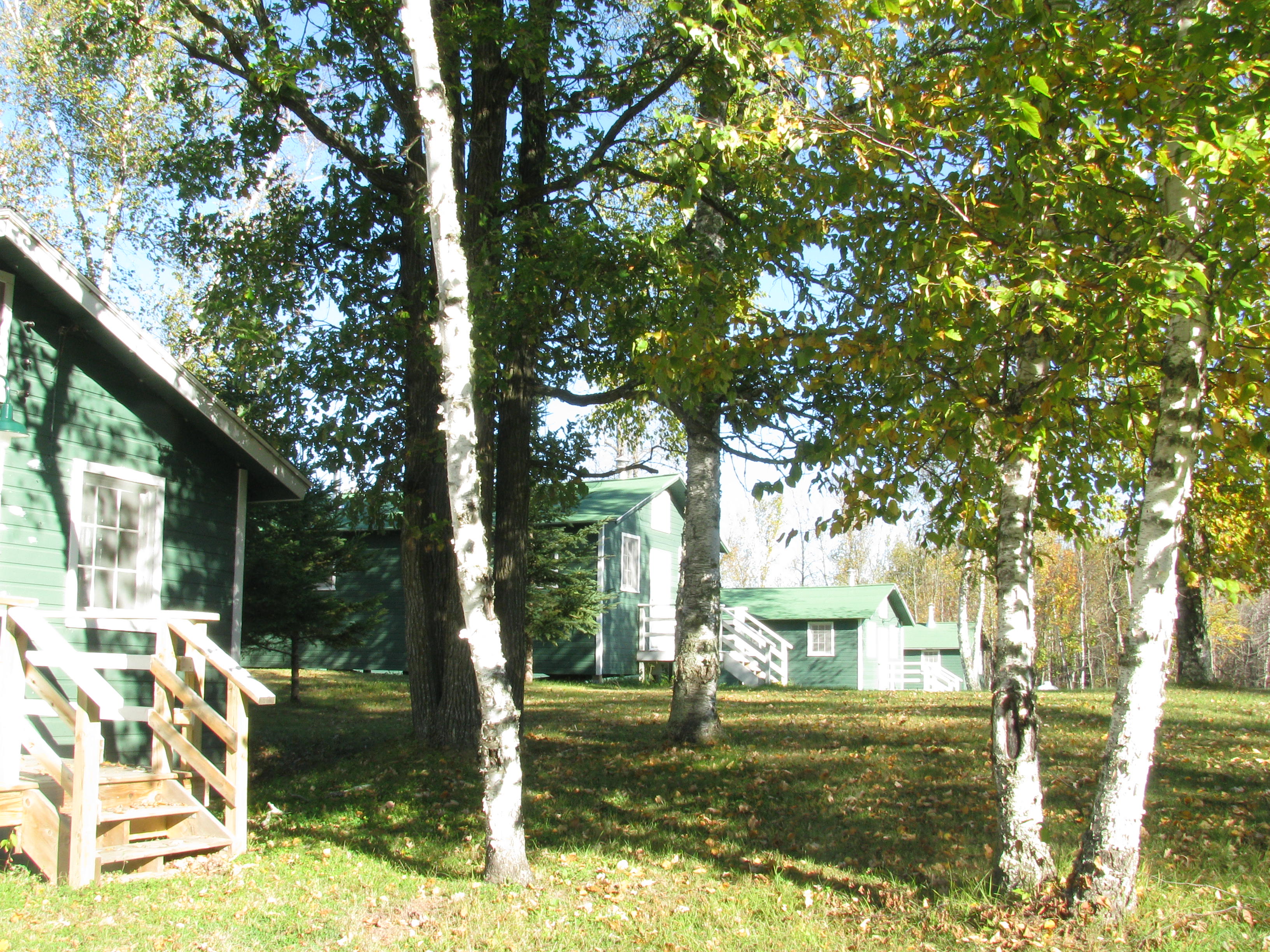
    After sharing a large bowl of borscht (soup made of beets, cabbage, tomatoes, potatoes, carrots, celery, onions, garlic, olive oil, bay leaf and tumeric) and buying some locally grown purple carrots and energy snacks for hiking from the Harmony Natural Foods Co-op in Bemidji, we headed northeast on Hwy 71 to the town of Blackduck, then six miles south on County Road 39. Our destination was Camp Rabideau, which is one of three Civilian Conservation Corps (CCC) camps remaining in America.

    Camp rabideau

    I have a close connection to CCC camps because my father was enrolled in this program at a camp in Ely, Minnesota. Established by Franklin D. Roosevelt in 1933, it is considered "the single most productive conservation program in the history of the U.S." Its purpose was to revitalize the economy and end the depression by putting unemployed, unmarried, 17 to 25 year-olds from families on relief to work in camps run by the Army. Most CCC camps were dismantled when the program ended in 1942, but Camp Rabideau was leased by the University of Illinois in 1945 for their forestry and engineering students. Their lease agreement required that the students install sewer and water and update wiring and heating. The college's 27 year occupancy ended when their lease expired in 1973. In June 1976, Camp Rabideau was placed on the National Register of Historic Places and in February 2006, it was designated as a National Historic Landmark. Restoration of the 15 original buildings that still remain is ongoing.


  • The Sneaky Chef Simple Strategies For Hiding Healthy Foods in Kids' (and adults) Favorite Meals copyright 2007 by Missy Chase Lapine. You need this book. Now. Packed to the brim with brilliant strategies to increase a meal's nutrient density, the former publisher of Eating Well Magazine uses homemade purees and juices of varying colors… purple, orange, green, white, and red in her recipes. I chose to prepare her "Maxed Out Meatloaf" which uses Green Puree made of spinach or collard greens, broccoli, and green peas. 
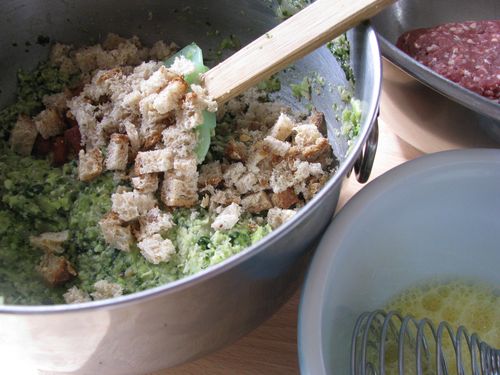
    Green puree meatloaf

    O.K., so the green flecks in the baked meatloaf may not escape the most scrutinizing skeptics. BUT, I tossed in the entire 2 cups of green puree instead of 1/4 cup as the recipe states which created the increased visiblity. My rationale is that Dick would not balk at an abundance of greens and balancing the veggie:meat ratio would be a good thing. Using a Barefoot Contessa meatloaf recipe, I made minor adjustments to accommodate the puree. This demonstrates that once the sneaky chef strategies are learned, they can be easily applied to your own recipes.      

    Green puree meatloaf baked

    Green Puree Meatloaf

    ½ cup chicken stock, broth, or water   

    green puree – 2 cups raw baby spinach leaves or coarsely chopped collard greens (I used 1 cup spinach + 1 cup kale.), 2 cups coarsely chopped broccoli florets, and 1 cup frozen sweet green peas (I subbed edamame cuz I had no peas.)

    1 tbsp olive oil

    1 cup chopped onion

    2 cloves garlic, minced

    ½ tsp dried thyme

    scant 1 tsp salt

    ½ tsp black pepper

    1 ½ tbsp Worcestershire sauce (I used Bragg Liquid Aminos.)

    1 tbsp tomato paste (I used mild salsa.)

    1 lb ground chuck (I used grass-fed ground beef.)

    ¼ cup dry bread crumbs (I used small chunks of wholegrain bread.)

    1 egg, beaten

    ¼ cup ketchup (For spreading atop loaf.)

    Preheat oven to 325°. In a pan with the ½ cup liquid, simmer the spinach, kale or collard greens, and broccoli for about 10 minutes adding peas the final minute or two. Sauté onions and garlic in oil, then add thyme, salt, pepper, Worcestershire or Bragg, tomato paste (or salsa). Mix well. Using food processor, puree onion mixture and cooked veggies along with their cooking water. Combine 1/4 cup pureed mixture with ground meat, bread crumbs, and egg. (I used the entire 2 cups pureed mixture.) Lightly press into a 4 ½ x 8 ½ loaf pan. Spread the ketchup evenly on top. Bake for 1 to 1 ¼ hours, until the internal temperature is 160°F and the meatloaf is cooked through.  (A pan of hot water in the oven, under the meatloaf, will keep the top from cracking.)


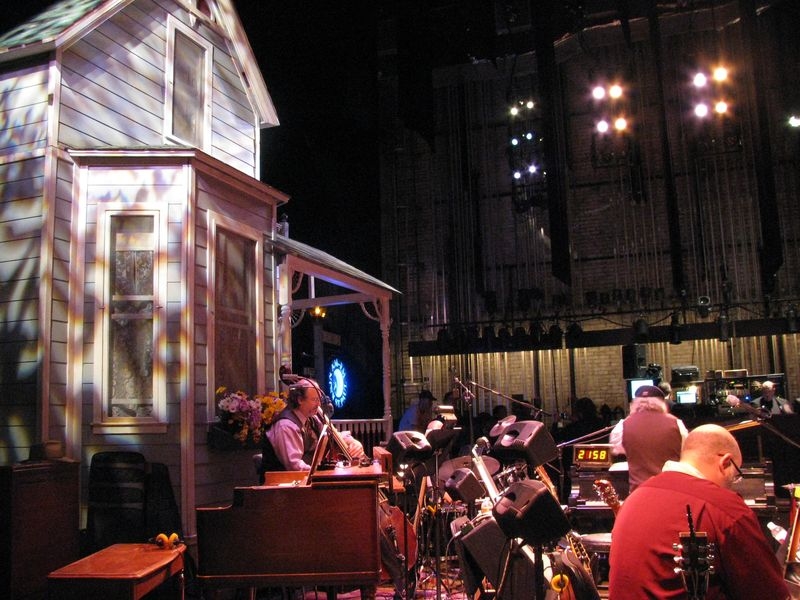
  • The clock positioned centerstage counts down the minutes (21 minutes 58 seconds) when Garrison Keillor's live performance of Prairie Home Companion will be simultaneously broadcast on the radio Saturday, the 14th of September 2013. Dick and I are seated stage right (house left) so close to the musicians, radio script actors, sound effects man… and Garrison Keillor… that we didn't dare sneeze lest it would be heard over the air waves.   

    Prairie home companion stage

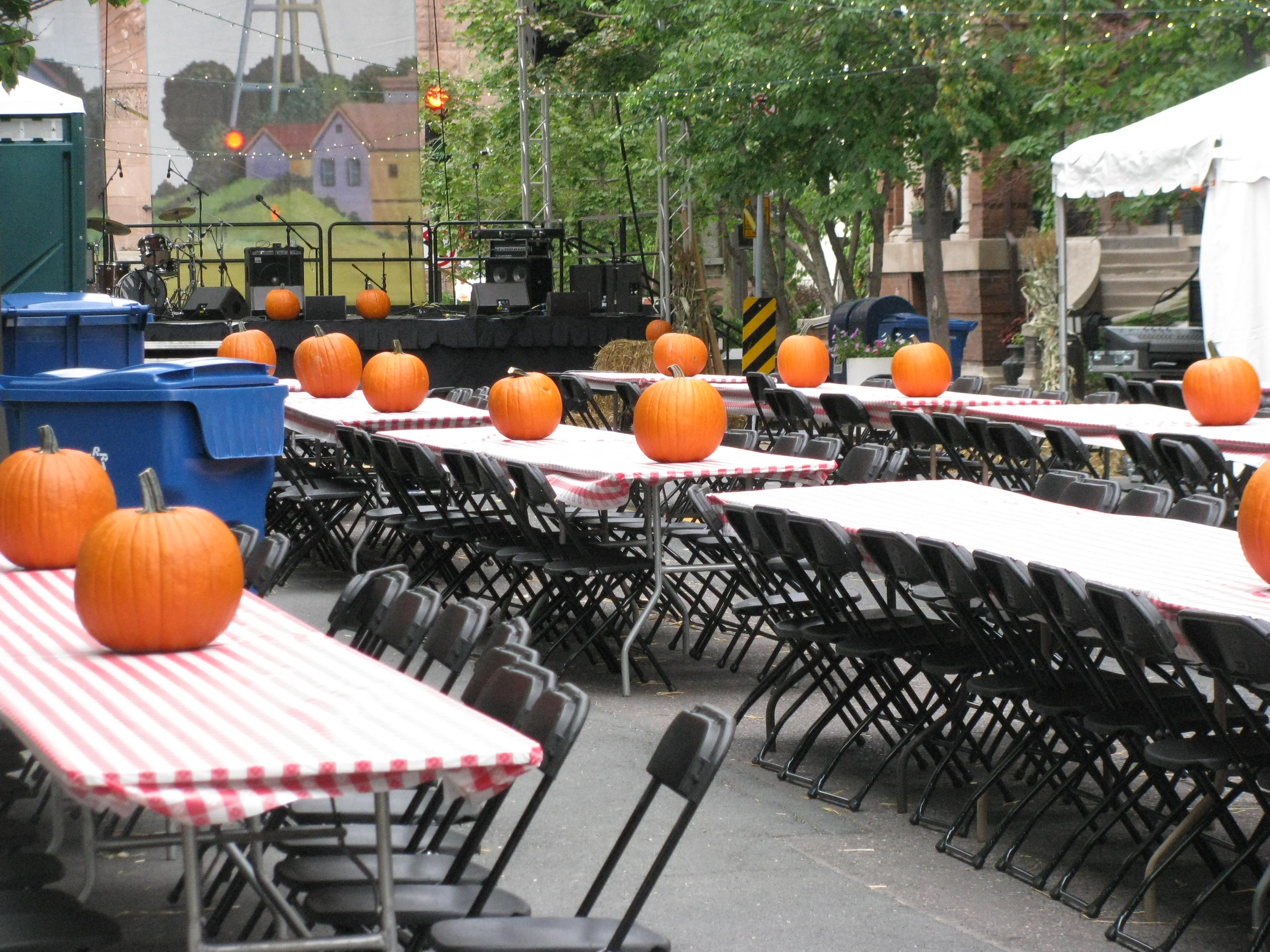
    This particular performance was the season opener, so an annual $5.00 meatloaf supper and a free, open-to-the-public street dance capped off the evening. I snapped a photo of the outdoor dining area and Lake Wobegon stage backdrop set up on Exchange Street in front of downtown St. Paul's Fitzgerald Theater before we filed in to attend Garrison Keillor's performance…  his 39th season.  

    Prairie home companion meatloaf supper

    Keillor, a Minnesota native who resides in St. Paul, captures the heartbeat of small town America. He makes me proud to stake my claim as a born and raised Minnesotan.

  • There sits a permanent structure on the grounds where the Albany (Minnesota) Pioneer Days is held every year in mid-September. A one-room schoolhouse. It could be the one that I attended in first grade fifty-five years ago. But it's not. It looks the same. They all do.

    One-room schoolhouse cloak room window
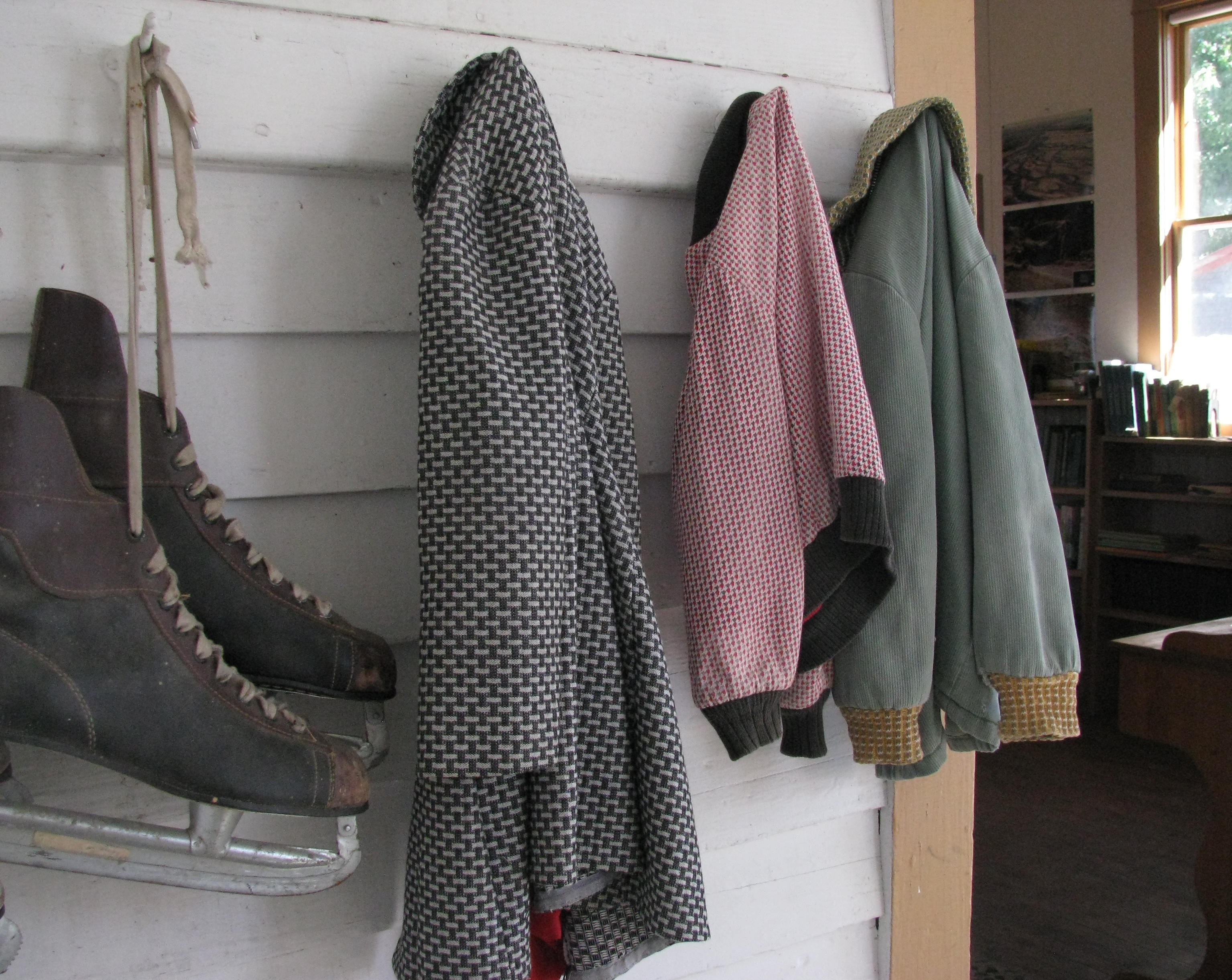
    One-room schoolhouse cloak room coats

    The warm September afternoon breeze drifting through the cloak room window, alongside the jackets worn during the crisp morning walk to school, illustrates the gentle transition between the summer and autumn seasons. The beginning of another school year. A cycle that marks the passing of time… movement of life.

    One-room schoolhouse pencil sharpener
    One-room schoolhouse desk

    The sun streaming through the window by the pencil sharpener may have caused students to linger longer than necessary… mesmerized by the leaves gently fluttering to the ground… remembering summer's carefee days.