Whiteley Creek Homestead

LIFE AT THE END OF A DIRT ROAD IN CENTRAL MINNESOTA

organically grown triticale in our field
canoeing in our wetlands
raspberries growing wild on our property
our back porch fieldstone fireplace
  • During the month of November, I participated in an online writing workshop taught by a brilliant, highly skilled, former English high school teacher. A lesson and assignment each day. Thirty days. As is the way of things, life got busy. Really busy. In November. So, I printed all of my lessons and assignments to work on as time allows… and I do. In one of Amy's lessons, our assignment was to write an essay that tells a story about a recipe. A memory associated with that food. Recording personal history. My seventh grade home economics class immediately came to mind. Our assignment, so many years ago, was to plan and cook an entire meal for our family… a topic for another blog post, however. In my recent writing class, Amy referenced a page in a book titled, Dinner a Love Story It all begins at the family table by Jenny Rosenstrach, which I borrowed from the local public library. It's about making meals to share with someone you love. Children, spouse, friends. Strategies and recipes to make it happen. Within the pages of the book, there was a recipe for Zucchini Fries. I began prepping my "dredging stations," as the recipe stated, and my mind wandered… thinking of my children who are grown and scattered across the country with families of their own. I am proud to see the importance that they place on mealtime. Together time.  

    Zucchini fries dredging stations

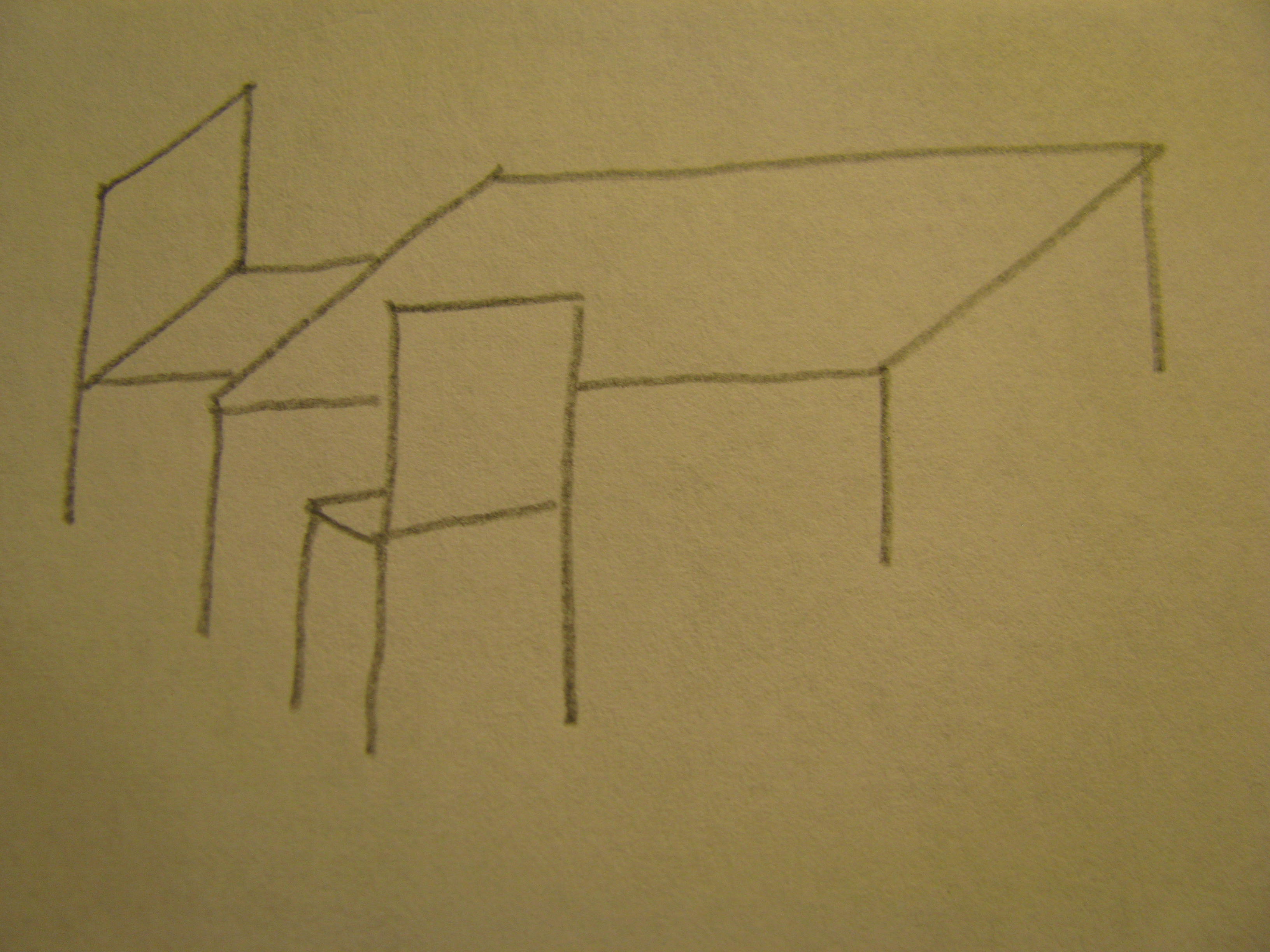
    Mealtime should be a special event if eating alone, with another… or many, so today I positioned two chairs close together at one corner of our small rectangular kitchen table spread with a tablecloth.

    Table and chairs sketch

    It was there that Dick and I ate our lunch, chatted, and laughed. Huddled together. Remembering. Our simple lunch of fish and fries… crunchy coated baked zucchini fries.  

    Zucchini fries baked

    Zucchini  Fries

    1 cup all-purpose flour (I omitted.)

    2 eggs, whisked (1 egg would have been sufficient.)

    1 cup bread crumbs (I used Panko All Natural Breadcrumbs.)

    1/8 tsp cayenne

    ½ tsp garlic salt

    ¼ tsp paprika

    2 medium zucchini, cut into French fry wedges

    Preheat oven to 400°. Set up the dredging stations: one rimmed plate for the flour (if using), one for the eggs, and one for the bread crumbs. Add the cayenne, garlic salt, and paprika to the bread crumbs and mix. Dip the zucchini sticks first in the flour (if using) until lightly coated, then in the eggs. Roll them in the bread crumbs until well coated. Transfer the zucchini to a baking sheet lined with foil (or natural parchment paper) and bake until the coating is crispy and golden (and the zucchini is tender but still firm and not mushy), 20 to 25 minutes. Season to taste with salt and pepper.

  • From my January/February 2013 Whole Living Magazine, comes Banana-Apple Buckwheat Muffins. The recipe is included in a 21-day "eating clean" challenge that includes weekly menus for breakfast, lunch, and dinner plus snacks. The plan focuses on cruciferous vegetables, whole grains, and lean proteins. Processed foods, sugar (small amounts of honey are used), alcohol, coffee, and common allergens such as dairy and gluten are eliminated. Susan Blum, M.D., founder of the Blum Center for Health in Rye Brook, New York, oversees the cleanse. Each week, a different well-qualified guru in the nutrition arena provides the recipes. The week three menu, where this muffin recipe came from, was created by Louisa Shafia, author of Lucid Food Cooking For an Eco-Conscious Life. I have a copy in my kitchen. She also documents her life through recipes on her lovely blog lucidfood.com.  

    Banana apple muffins

    Banana-Apple Buckwheat Muffins

    Makes four muffins (or six if you double the flour, as I did). Heat oven to 350°. Place four paper liners in a regular-size muffin tin. In a bowl, whisk together ¼ cup buckwheat flour (I used ½ cup… perfect), 1 tsp baking powder, ½ tsp ground cinnamon, and 1/8 tsp sea salt. In another bowl, whisk together 2 large eggs (I used 1 egg), ½ mashed banana, and ¼ cup honey (I used 2 tbsp). Mix the wet ingredients into the dry, then fold in ½ finely diced peeled and cored sweet apple (I used 1 whole small apple and did not peel it), and ¼ cup chopped walnuts. Fill the batter to the top of the lined cups and fill the remaining cups halfway with water. Bake 25-30 minutes, or until tester comes out clean. Let cool on wire rack. Note: To make 12 muffins, I used 1 cup flour, 1 egg, 1/4 cup honey, and doubled the measurements of the remaining ingredients.

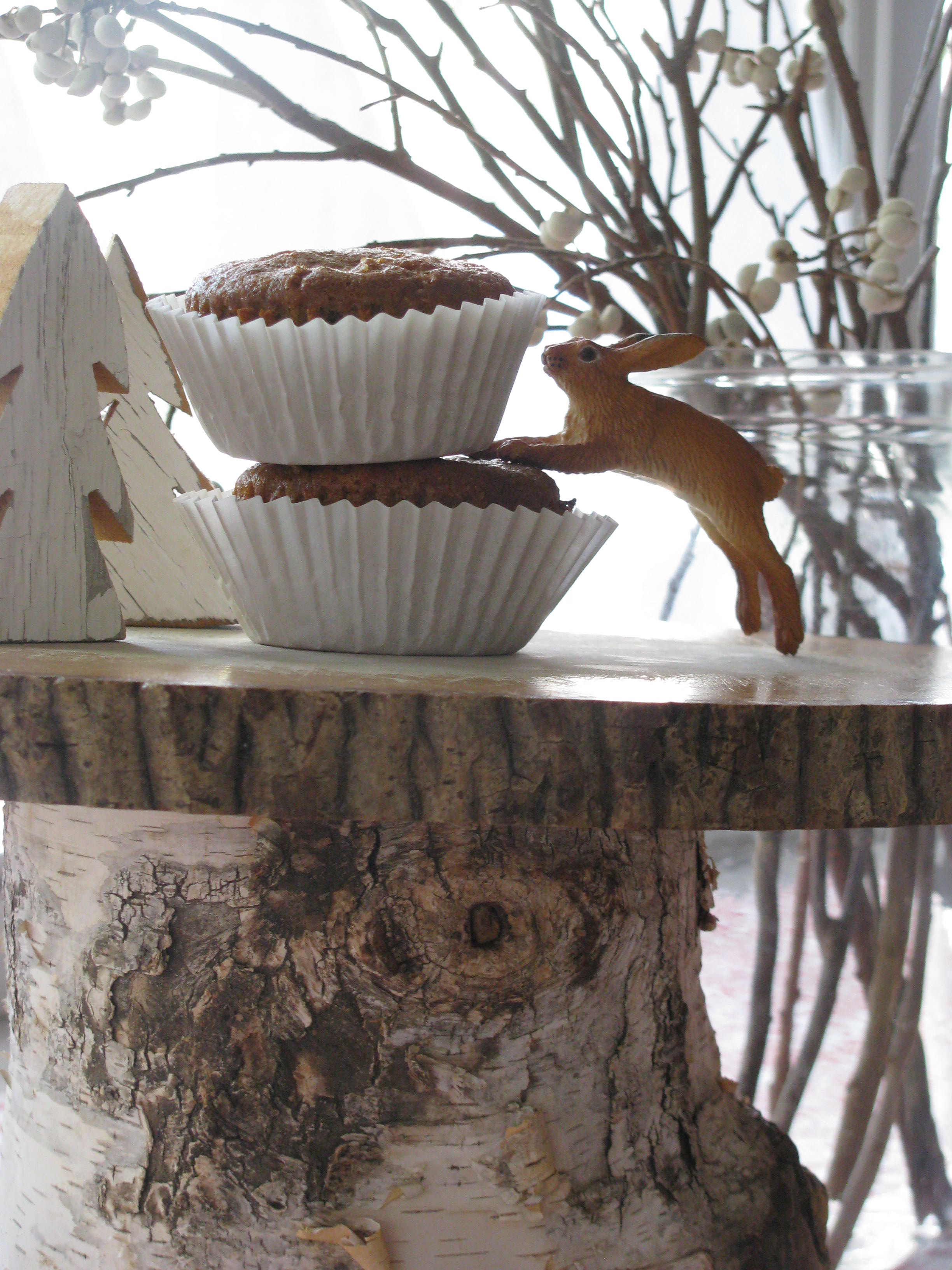
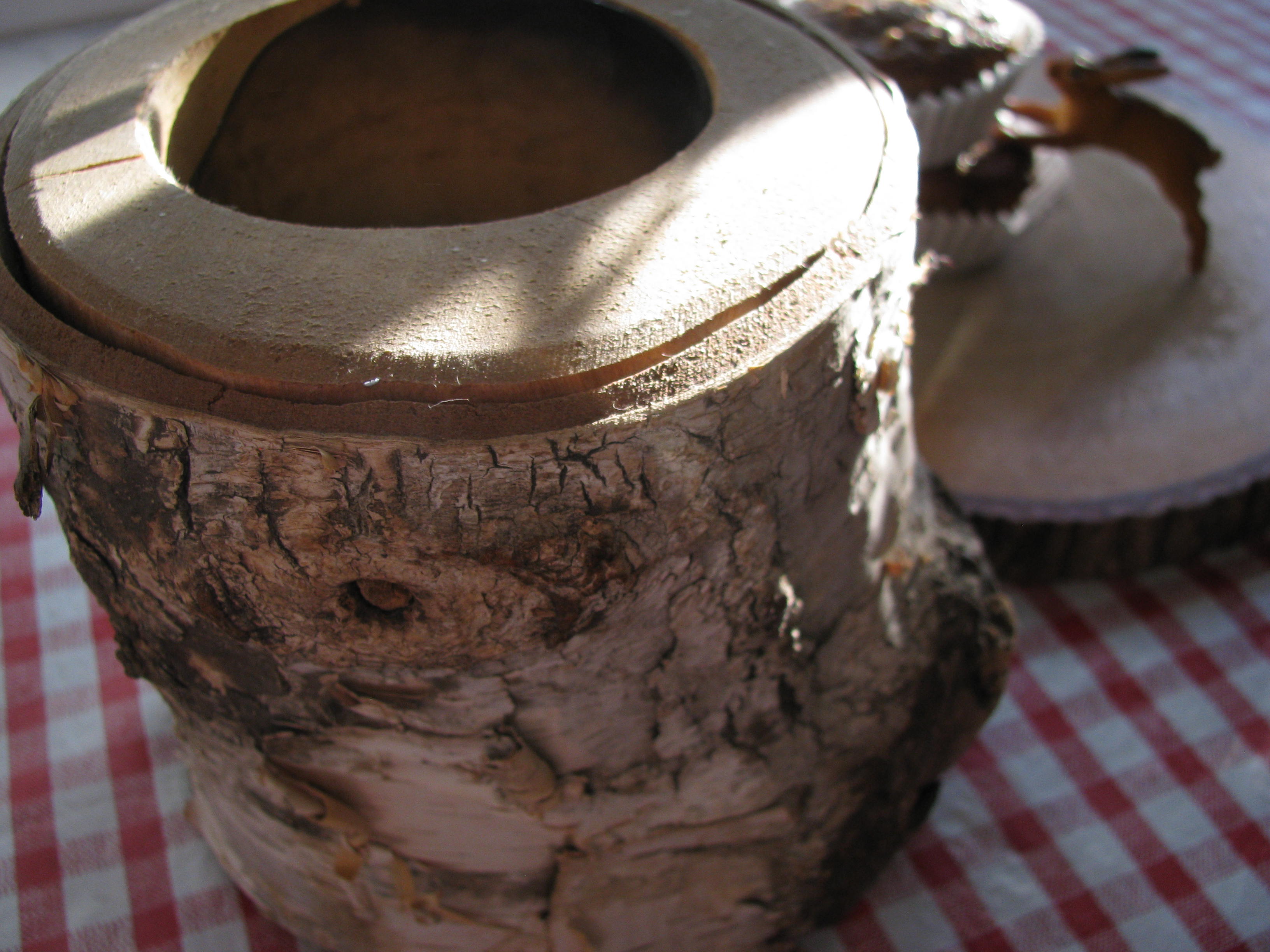
    Log pedistal + platter

    The idea for the log pedistal cake stand came from one of my daughter Jessica's fort & field Pinterest Boards. Her link led me to an instruction page on bhg.com (Better Homes and Gardens). Just type Nature Crafts For Your Winter Table into the search box. For my log pedistal, I used a log that had been hollowed out to hold a candle. It was a gift that we received from our friends, Brad and Terri, years ago. For the platter… my cutting board. A cross section cut from a tree. A purchase from a shop in Beaver Bay, Minnesota north of Duluth while enroute to Silver Bay where we visited Dick's Aunt Evelyn. Repurposing. Using items one already has… especially meaningful ones. Pure genius. Pure love.  


  • In the December 2012 issue of Taste For Life, a free magazine available at natural food stores, I found a Quinoa Protein Brekkie Bowl recipe and learned a new slang term. "Brekkie" means breakfast. The recipe comes from The Karma Chow Ultimate Cookbook by Melissa Costello. I chose to sub half of the quinoa called for in the recipe with wild rice. Not just any wild rice. This wild rice is hand-harvested the old-fashioned way in Northern Minnesota. As one person guides a canoe through a bay where tall wild rice plants grow, another "holds two cedar sticks called knockers—one to bend the plants over the canoe's hull and the other to gently tap the grains from the seed heads, a labor-intensive technique that has hardly changed over hundreds of years." (Axelson, Gustave. "Native Harvest: Ojibwe Wild Rice Gathering in Minnesota." MidwestLiving Sept./Oct. 2012) Hand harvested wild rice readily plumps and softens in 20-25 minutes, unlike the wild rice that comes from cultivated (farmed) paddies which requires 1 hour or more. The Native Americans joke "that you know commercial rice has finished cooking when you drop a rock in the pot and the rock turns soft." This eloquently and accurately describes my experience. If reduced cooking time is not reason enough to purchase hand harvested wild rice, pesticides and fertilizers are applied to the genetically modified, machine harvested wild rice commonly sold in grocery stores. Hand harvesting promotes the continuation of the Native American culture and resists an industrialized food system that disregards environmental impact and the health of consumers. Enough said.      

    Wild rice package 

    Wild rice is one of only two cereal grains that are native to North America. It is the state grain of Minnesota. (Note: Wild rice is technically a grass seed, not a grain.) I am blessed to live in Minnesota where hand-harvested, naturally organic wild rice may be purchased at local shops. However, it may also be purchased online from such sources as Northwoods Best that sells the one depicted in my photo above (shop carefully as cultivated rice is sold alongside hand harvested in this online storefront) and Native Harvest's White Earth Land Recovery Project. To support the White Earth Nation's efforts, I ordered some wild rice and fry bread mix today from their site. A trip to the Black Hills of South Dakota, where Dick and I had our first fry bread tacos, spawned a desire to make them in my own kitchen. Additionally, my research regarding wild rice uncovered the Minwanjige Cafe that serves traditional Ojibwe foods in a log cabin along a country road in Ogema, Minnesota near Detroit Lakes. The menu includes hominy and wild rice soup, buffalo chili, squash soup, and whitefish chowder. Wild rice pancakes (served with chokecherry syrup and locally harvested maple syrup), rhubarb bread, and sage biscuits are made with organic flours milled 100 miles north. An upcoming summer adventure, I think. 
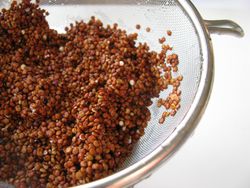
    Rinsed quinoa
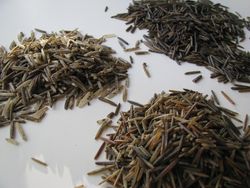
    Wild rice varieties

    Red (left photo) and golden quinoa are the most common colors sold in grocery stores, but there are also black, orange, pink, and purple varieties. Red quinoa has a higher protein content than golden. Quinoa is coated with saponins, a bitter tasting, naturally occurring coating that repels birds during its cultivation. It produces soap-like foaming when quinoa is shaken in water. Most boxed/pre-packaged quinoa has been pre-rinsed for convenience, and cooking instructions suggest only a brief rinse before cooking, if at all. If quinoa has not been pre-rinsed, the first step is to remove the saponins, which requires either rinsing the quinoa under running water for several minutes in either a fine strainer or cheesecloth or soaking the grain in water for a few hours. Soaking causes the quinoa to germinate which boosts its nutritional value. Germination activates its natural enzymes and multiplies its vitamin content. Quinoa has a very short germination period. Soaking in a glass jar of clean water for only 2 to 4 hours is enough to make it sprout. The colors of wild rice (right photo) vary, as well. These were three that I had in my pantry. The Ojibwe would be proud of this use of their hand harvested wild rice. Quinoa Wild Rice Brekkie Bowl. I am appreciative of their efforts.  
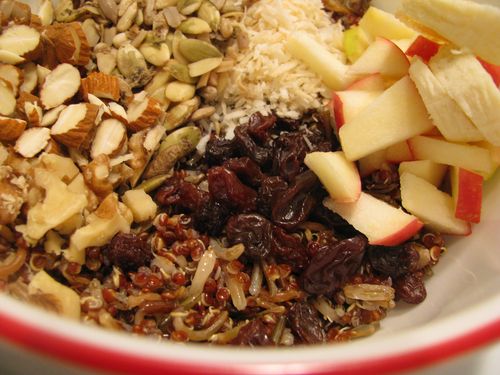
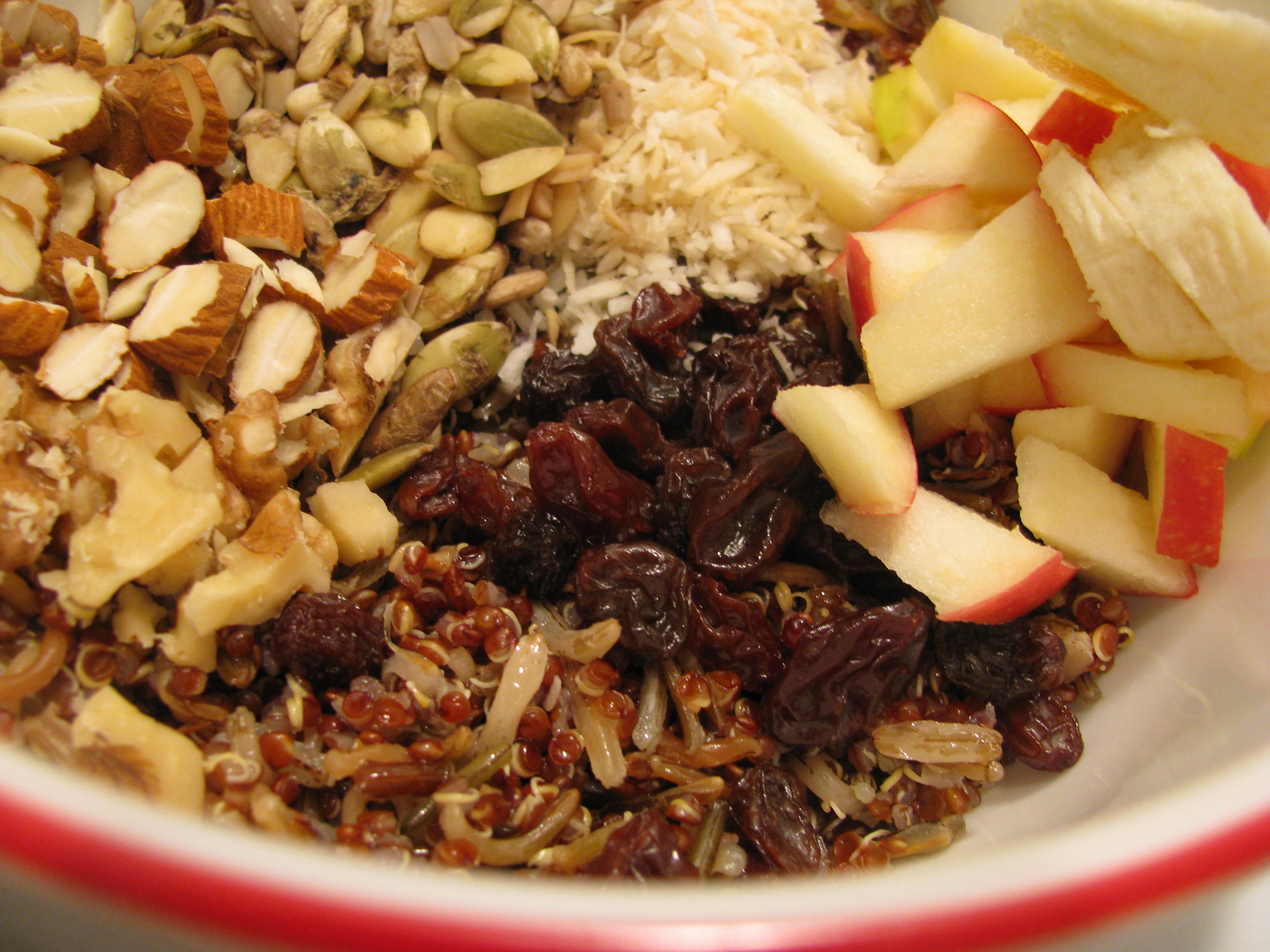
    Quinoa wild rice cooked

    Quinoa Wild Rice Brekkie Bowl

    Makes four ¾ cup servings.

    1 cup rinsed quinoa (I used ½ cup quinoa + ½ cup hand harvested wild rice.)

    ¼ c toasted, unsweetened coconut flakes (I didn’t toast.)

    ¼ cup toasted slivered almonds (I sliced raw, unpasteurized whole almonds-untoasted.)

    1 tbsp coconut oil (My addition. Fat aids nutrient absorption and helps liver remove toxins.)

    pinch cardamom

    1 tsp cinnamon

    dash sea salt

    1 tbsp agave nectar or maple syrup (I used maple syrup.)

    ¼ cup golden raisins (I used regular raisins.)

    2 tbsp hemp seeds (I subbed sprouted, dehydrated sunflower
    and pumpkin seeds.)

    variety of fresh and dried fruit, nuts, and seeds

    unsweetened almond milk or coconut milk (or your milk of choice)

    Cook quinoa and wild rice in 1 ½ cups water simmered for 15 to 20 minutes until water is absorbed. Remove from heat. Let stand 5 minutes, then fluff with fork. While quinoa and wild rice is cooking, toast coconut and almonds by spreading on an ungreased, rimmed baking sheet. Bake at 350° for 5 to 10 minutes stirring once or twice, until golden brown. Remove from oven. When quinoa and wild rice is done cooking, add coconut oil, cardamom, cinnamon, sea salt, and agave nectar or maple syrup and mix together. Scoop into cereal bowls and top with coconut, almonds, raisins, hemp seeds (or sprouted, dehydrated sunflower and pumpkin seeds), and milk. (Additionally, I chose to top with diced apples, banana slices, chopped walnuts, and freshly ground flaxseed. Fresh blueberries, strawberries, pears, and peaches would be good, too. Oh, yum.)

    Basic Wild Rice Cooking Directions:

    In a large saucepan, add 1 cup rinsed wild rice to 3 cups water. Cover and simmer until tender 20-25 minutes. Yield: four ¾ cup or three 1 cup servings.

  • Three days ago, I donated a pint of blood. The phlebotomist, who performed the blood draw, informed me that it would take 24 hours to regain my white blood cells and 56 days for bone marrow to replenish all of the red blood cells. What is the purpose of white and red blood cells? White blood cells protect the body by fighting infection and attacking foreign material. Red blood cells transport oxygen from the lungs to the body's tissues and take carbon dioxide from the tissues back to the lungs. Don't allow loss of these cells to deter you from giving blood. I took one nap 24 hours post donating because I was tired, but that's it. Life is normal. To aid red blood cell production, I was instructed to consume protein and water. My research uncovered the power of pistachios. Among many other reasons to include them in our diet on a regular basis, they are a rich source of vitamin B6 which helps the body make white and red blood cells. So, from Nadia Petrova's blog Nature Insider, a raw pistachio treat. So simple. So good. So good for you. 
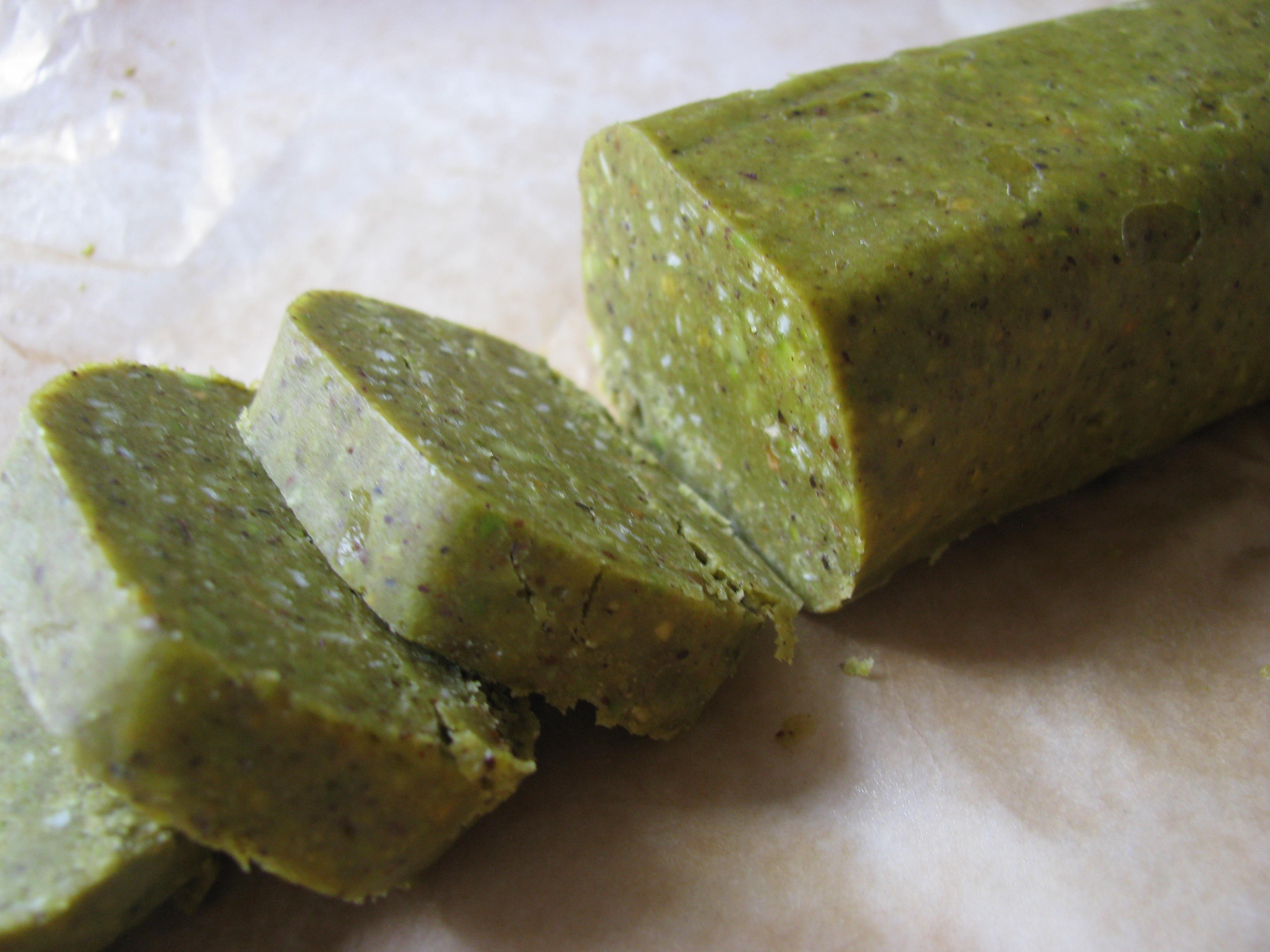
    Coconut oil meltingPistachios azurePistachios ground1Pistachio cookie dough log

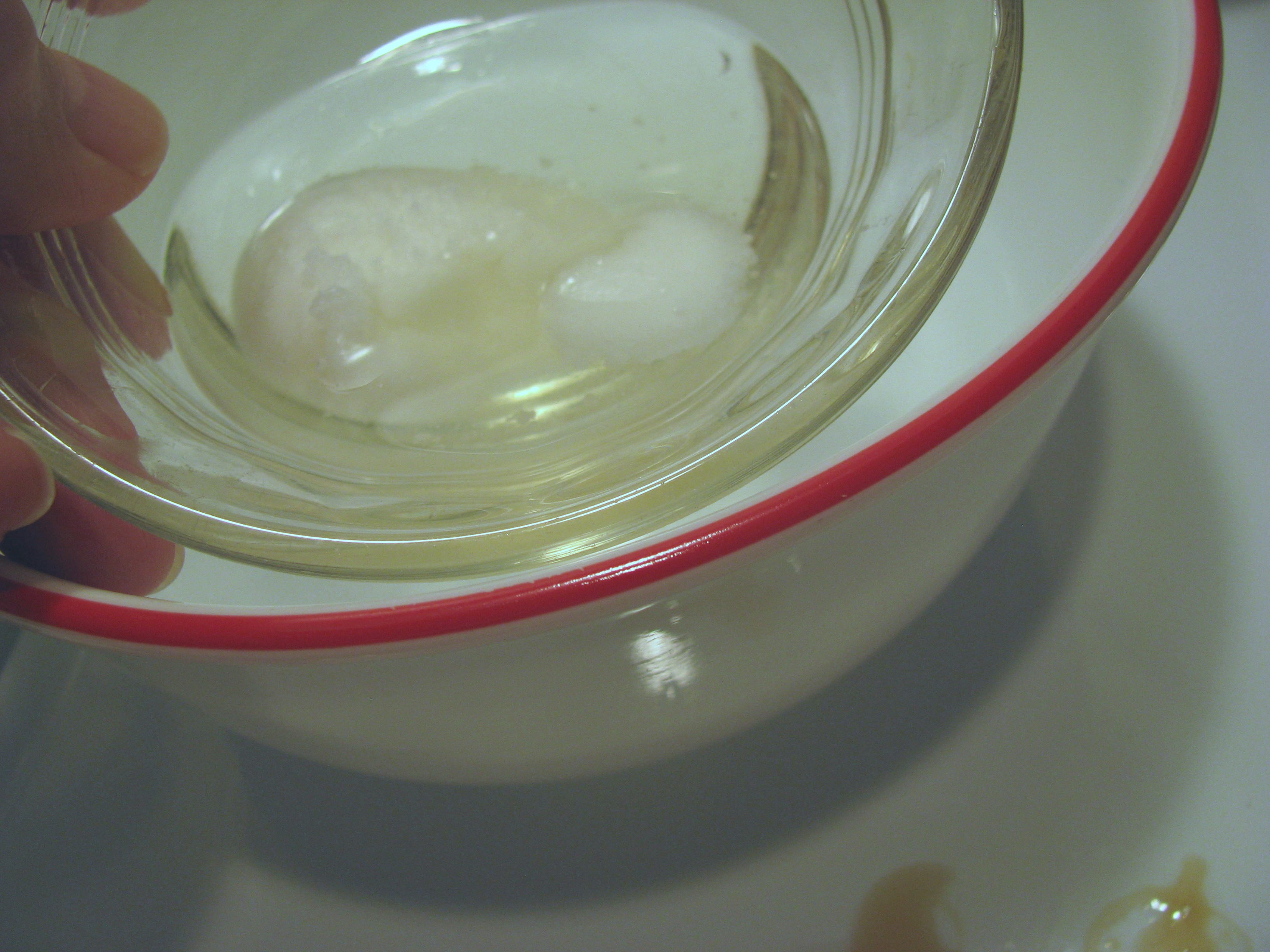
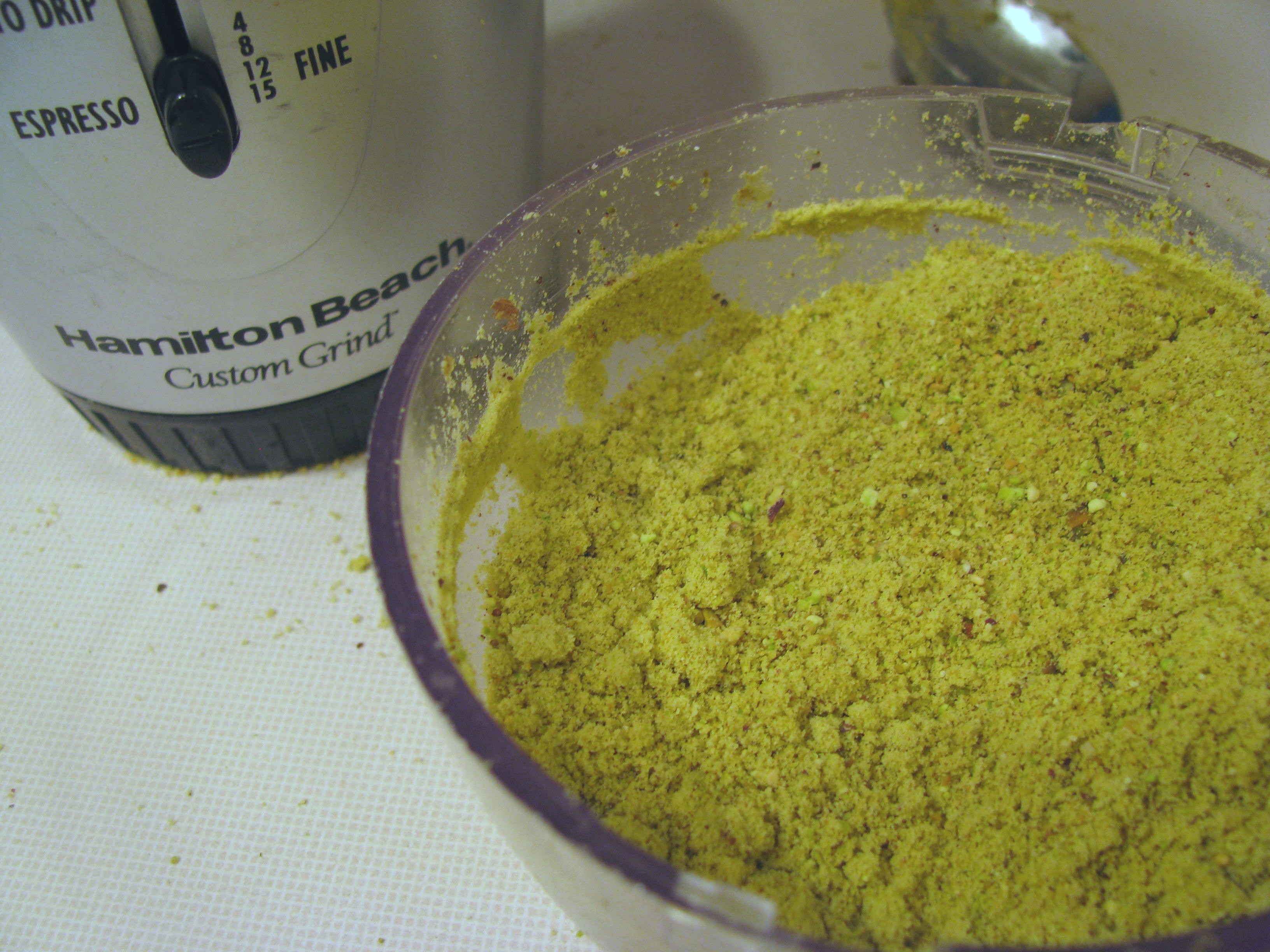
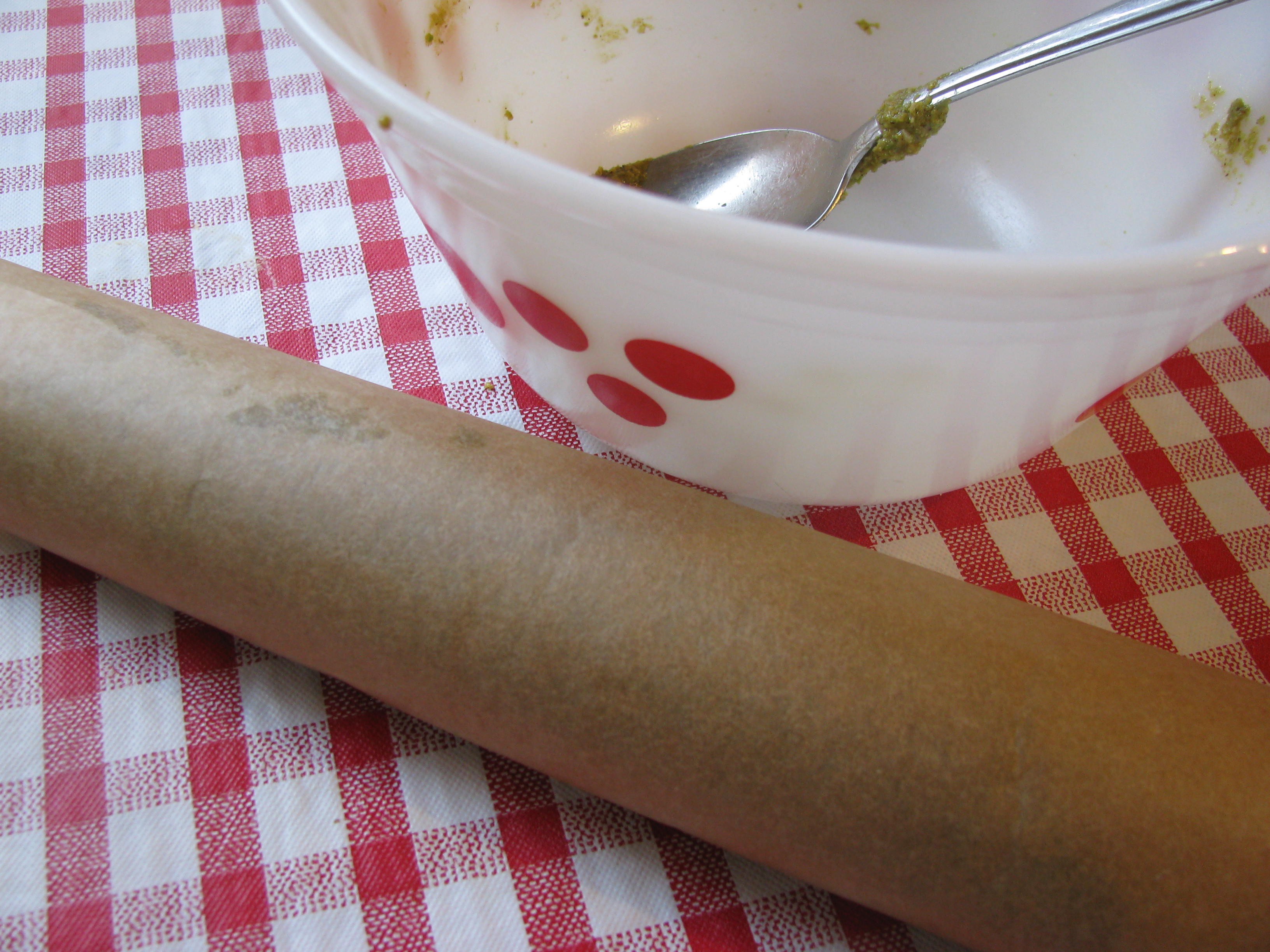
    1)coconut oil, melting 2)raw, shelled pistachios from Azure Standard 3)pistachios ground 4) pistachio cookie dough log

    Raw pistachio cookies

    Raw Pistachio Cookies

    1/3 cup melted coconut oil (I used 3 tbsp.)

    1 ¼ cup raw (unroasted) pistachios

    2 tbsp unsweetened coconut flakes

    ¼ tsp salt

    1/3 cup honey or agave (I used 2 tbsp raw buckwheat honey.)

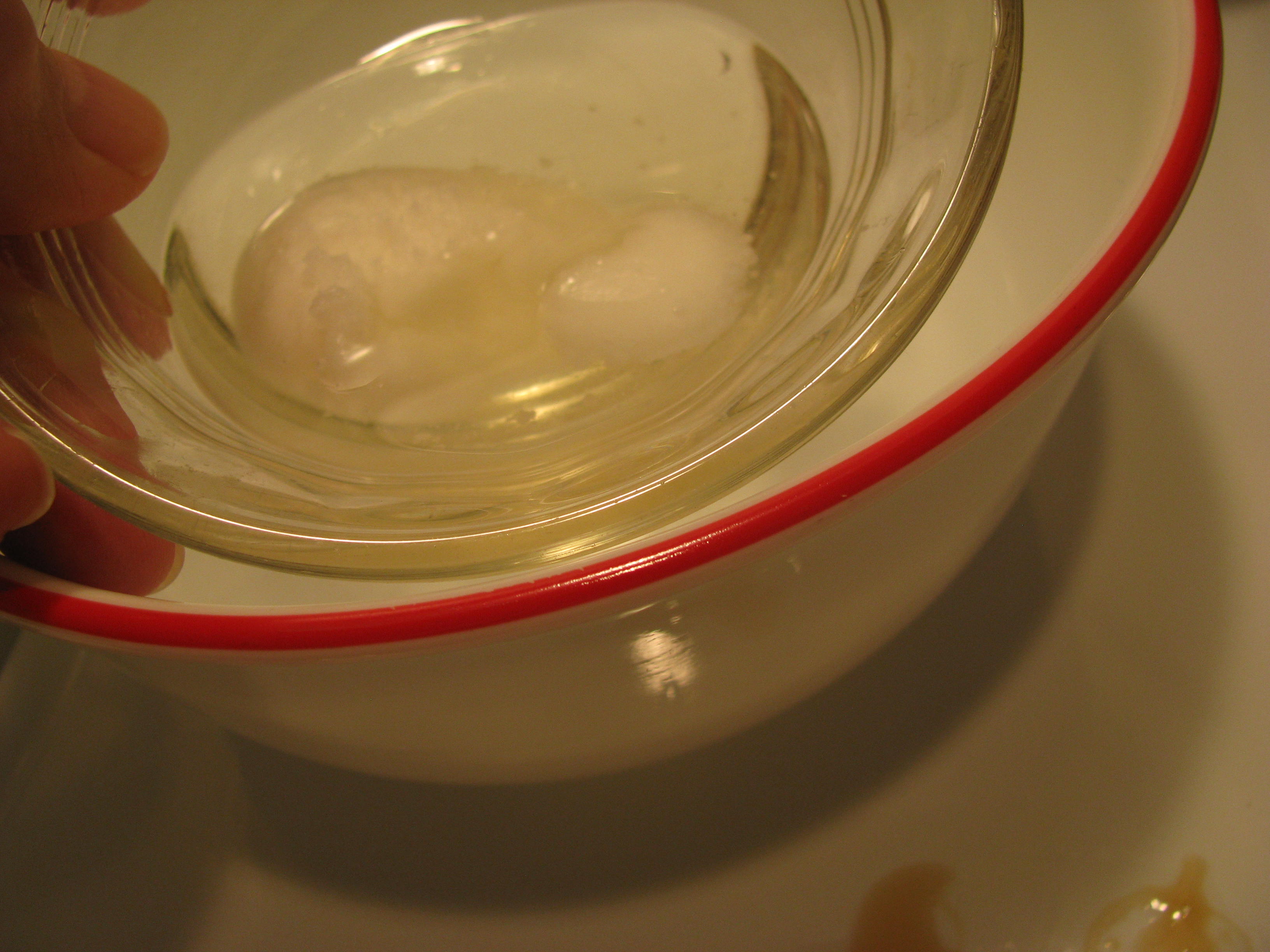
    Melt coconut oil. (I put it in a custard cup and set it in a bowl of hot water. It’ll be liquefied by the time other steps are completed. Pleeeeeeease… no microwave.) Remove outer shell from pistachios (or purchase ones already shelled). Blend into flour and place in a mixing bowl. (I ground ¼ cup at a time in a coffee grinder.) Whisk in coconut and salt. Stir in coconut oil and sweetener. Roll into a log form using plastic wrap. (I chose to use natural parchment paper instead.) Chill in fridge for 24 hours. (It only takes maybe 2 hours for cookies to become firm.) Using a sharp knife, slice into cookies. Eat. Note: Nadia Petrova, a Canadian registered holistic nutritionist and Nature Insider Blogger, stacked the sliced cookie rounds to form an evergreen tree, then sprinkled coconut flakes on the boughs to simulate snow. To add a Christmas flair to her "Raw Christmas Cookies," she scattered bright red pomegranate arils on the branches then positioned a cutout cookie dough star atop the tree. Sweet. (View photo at natureinsider.com.)

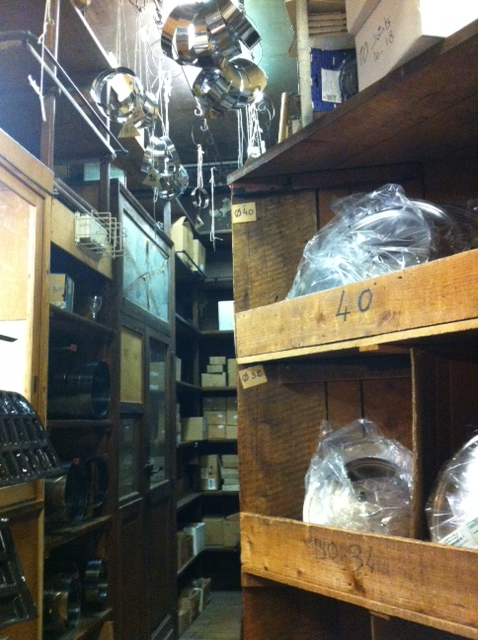
  • My daughter, Lisa, recently visited Paris. She took a photo of the store where Julia Child shopped for her bakeware.   

    Julia child paris bakeware shop

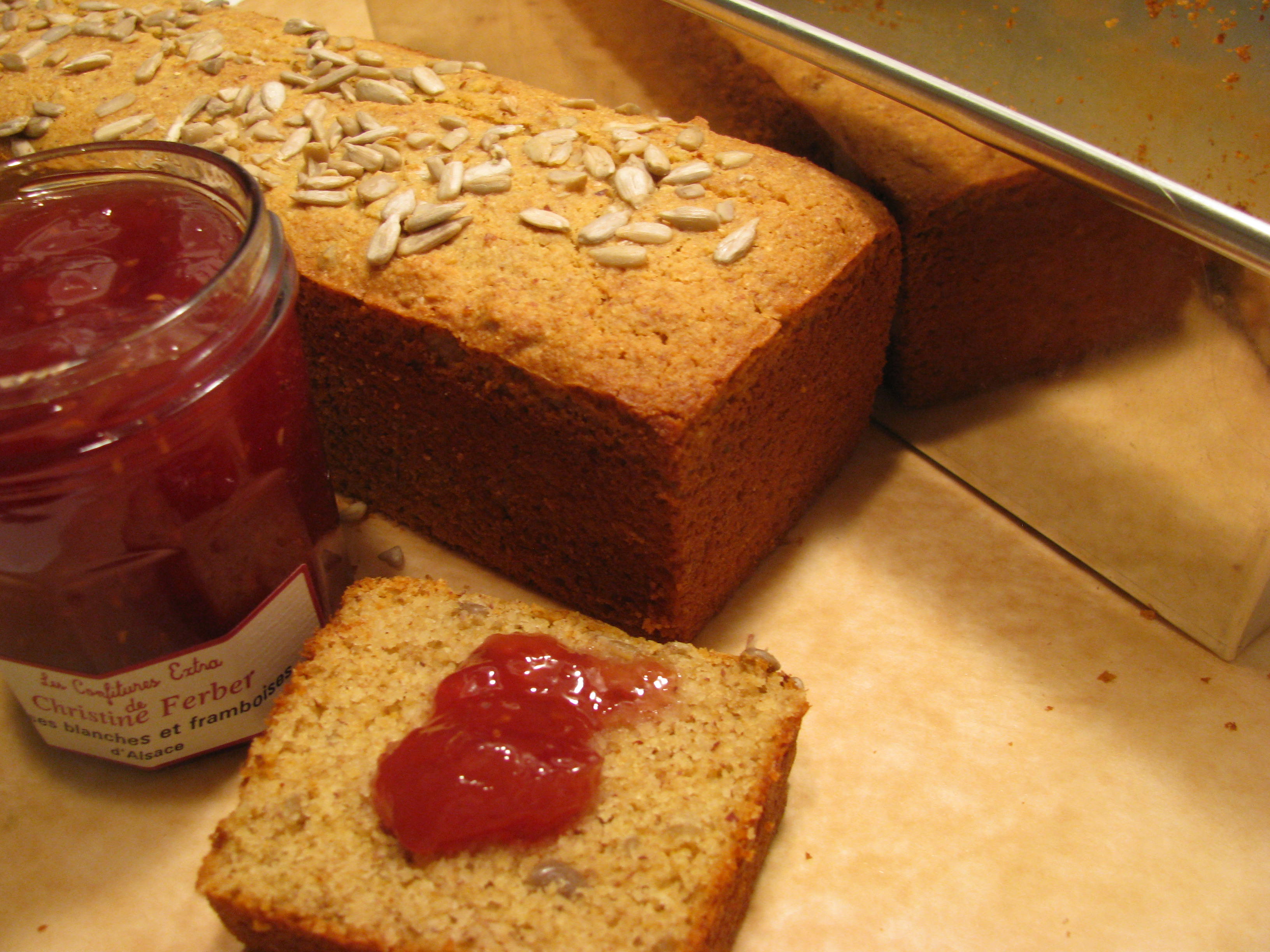
    She returned with a shiny, long, narrow baking pan to replicate the bakery goods she saw in Paris bakeries… and a jar of jam. For me. Sweet. The jam's jar is labeled with the words cerises blanches et framboises. I do not read French. I wish I could. It is a beautiful language. Google Translator rescued me. The French to English translation is white cherries and raspberries. All I can say is that the chunkiness of the halved white cherries combined with the smooth raspberry puree is far and above the best jam that has touched my lips. I envision an apron-clad French woman running her little cottage business in the countryside of France. As the sun is barely rising above the horizon, she slips into her garden clogs then walks across the morning dew-covered grass to her raspberry patch where she plucks freshly ripened berries for me. For my jar of jam.  

    French pan label
    French jam jar label

    My precious jar of jam is the perfect spread for a cake-like, gluten-free Honey Almond Sunflower Loaf that I made today from a recipe in my January/February 2010 Clean Eating Magazine. Sweetened with just 2 tbsp honey, this nutrient dense bread made with almond, buckwheat, and quinoa flours is tender and earthy with a cake-like, soft crumb. Spread with white cherry and raspberry jam. Oh, my.

    Honey almond sunflower loaf

    Honey Almond Sunflower Loaf

    1 cup almond meal

    ¾ cup buckwheat flour

    1 ¼ cups quinoa flour

    3 tsp baking powder

    1 egg

    2 egg whites

    1 cup milk (e.g., cow, goat, unsweetened almond or rice milk)

    1/3 cup olive oil (Try half unsweetened applesauce.)

    2 tbsp raw organic honey

    ¼ cup + 1 tbsp unsalted sunflower seeds (raw or toasted),
    divided

    olive oil cooking spray

    Preheat oven to 350°F. In a medium bowl, whisk together
    almond meal, flours, and baking powder. In a small bowl, whisk together egg,
    egg whites, milk, oil, honey, and ¼ cup seeds. Add wet ingredients to dry
    ingredients and combine. Do not over-mix. Mist a 9- or 10-inch loaf pan with
    cooking spray. Pour batter into pan and sprinkle remaining 1 tbsp sunflower
    seeds over top of loaf. Bake 40 to 45 minutes or until a toothpick inserted in
    the middle comes out clean. Cool bread before removing from pan. Option: Loaded
    with heart-healthy monounsaturated fat, fiber, vitamins and protein, this bread
    can also be made into muffins for an on-the-go nutritious snack. Simply reduce
    baking time to 15 to 20 minutes for a standard 12-cup muffin pan.


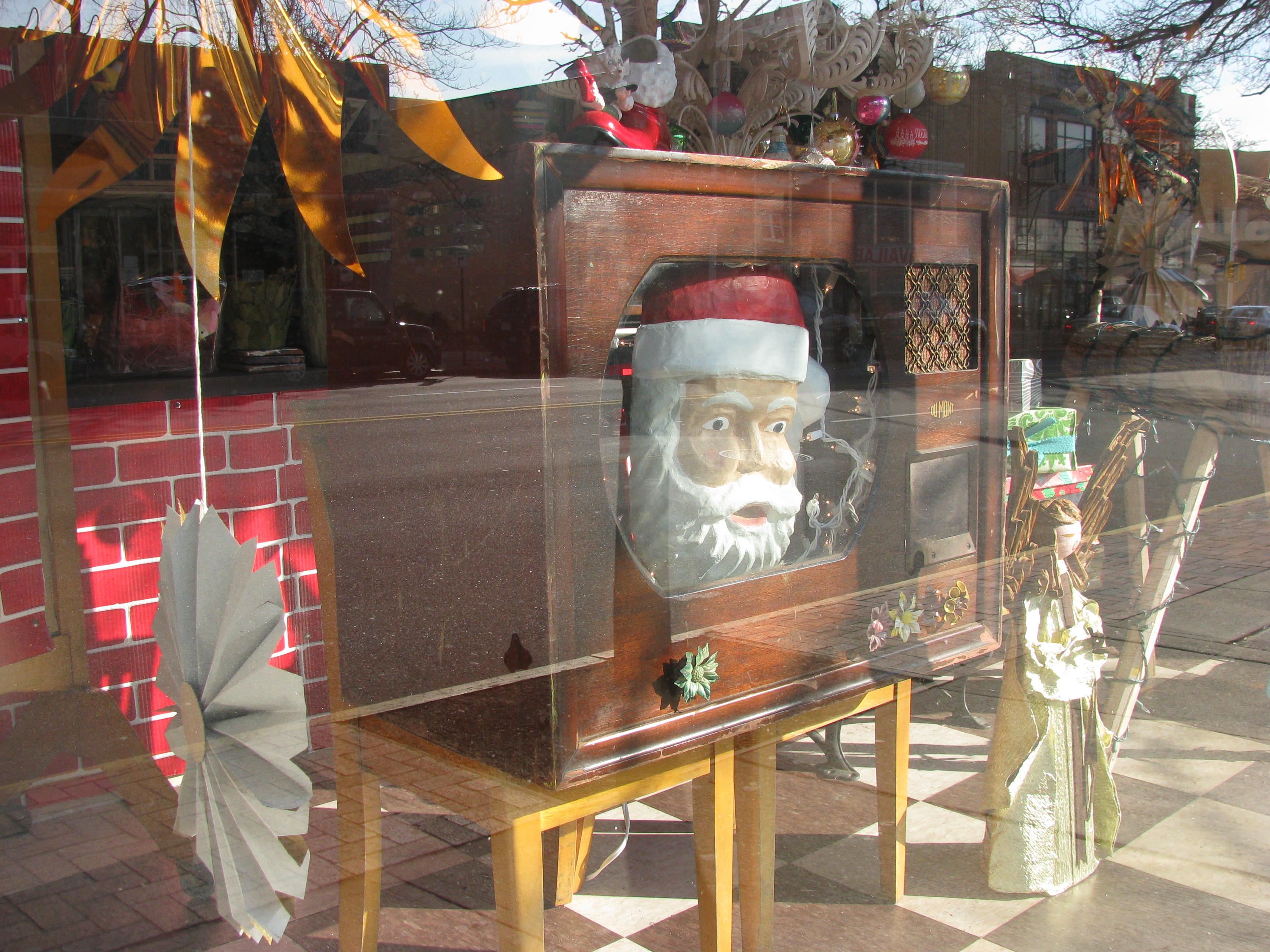
  • A trip to our daughter Lisa's home in New Jersey wouldn't be complete without a stop at Parcel, a precious little shop in the city of Montclair. One look at this Christmas window display… well, need I say more? A vintage television console housing a Santa. How sweet.

    Parcel exterior

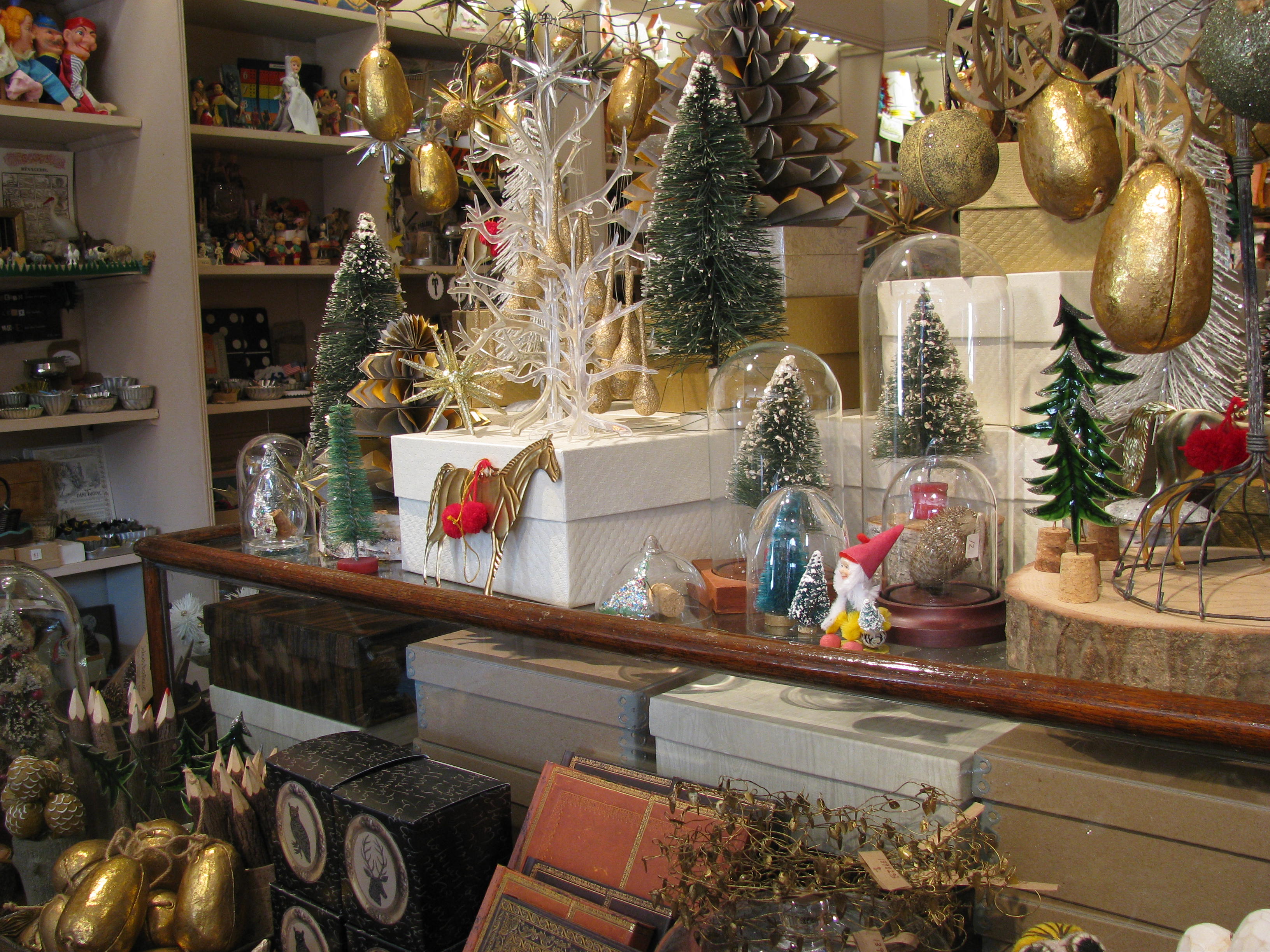
    The sweetness spills over into the shop's interior. 

    Parcel interior

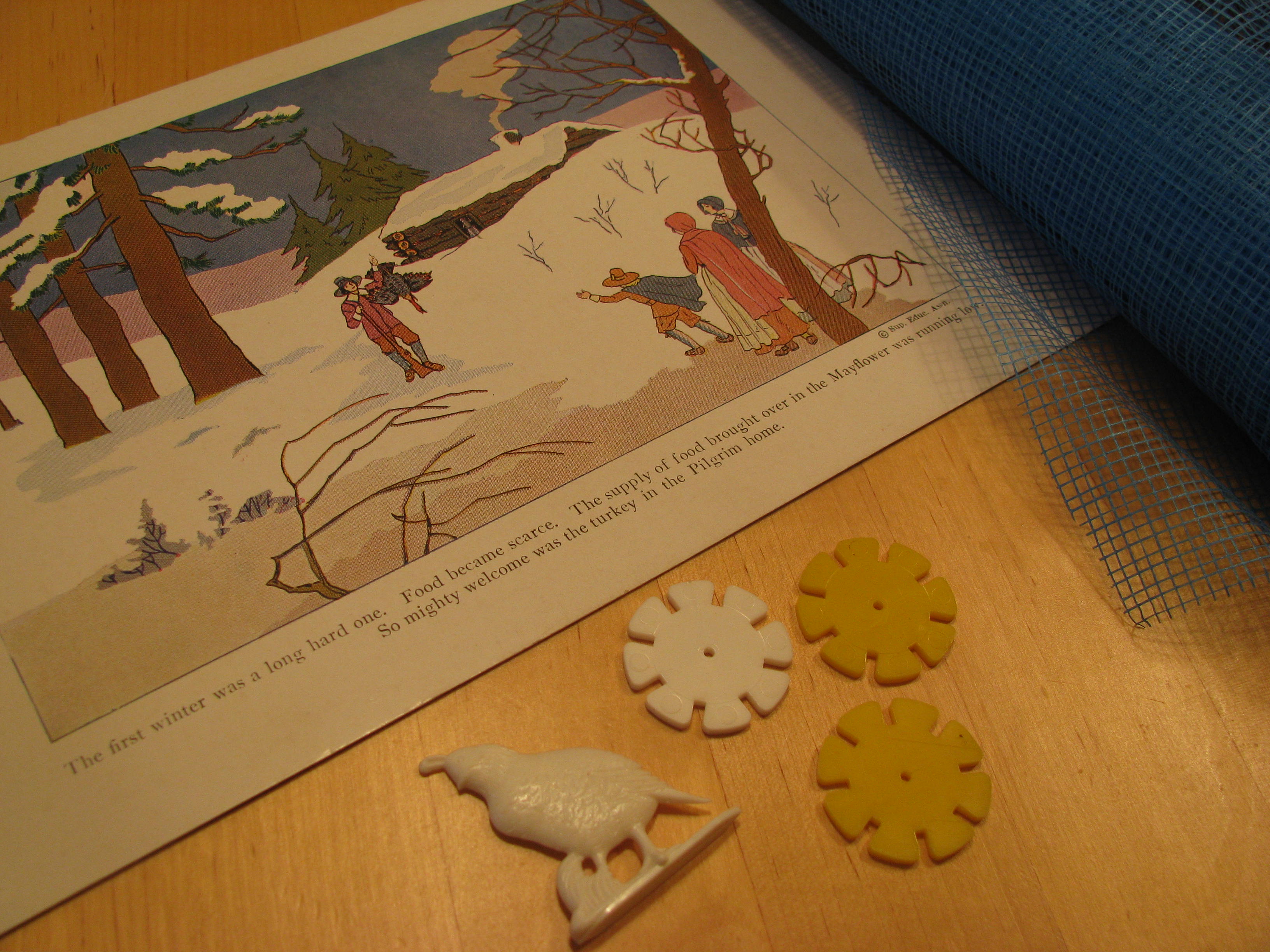
    My purchases this year included a 1930s Thanksgiving teacher's lesson card and a tiny plastic quail (to use in a November-themed shadow box?), plastic disks (for flowers or a miniature farm windmill?), a yard of blue mesh cloth (for window screen in a little cardboard house?)…

    Pilgrims mesh screen quail

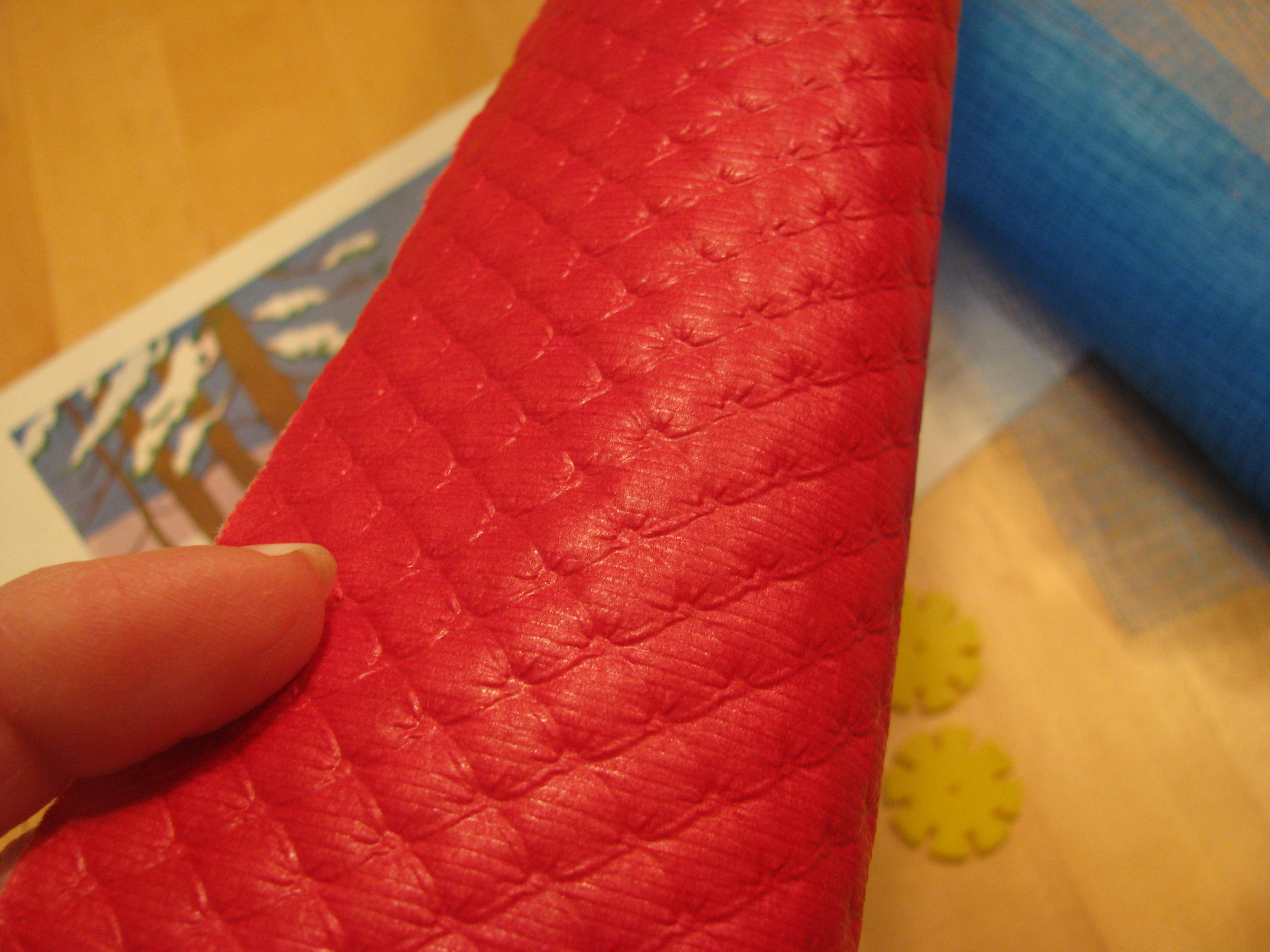
    and a yard of textured paper (for the roof on a little cardboard house?).  

    Textured red paper

  • Dick and I are camped out in our travel trailer just feet away from our daughter's house outside a little village in New York. We are lightening her work load post baby delivery by transporting her other three children to and fro. Here and there. Yonder and beyond. Three separate schools… middle, elementary, and preschool. Three different schedules. During the 2 1/2 hours that preschool is in session, we explore the area. Today, our meandering led us to a natual food store where I picked up a free issue of Natural Awakenings Magazine November 2012. After school, as my granddaughter flipped through the pages, a recipe for Raw Vegan Chocolate Truffles caught her attention. It had few ingredients and simple steps. Perfect for a quick snack before bedtime on a school night. So we got busy and gathered ingredients.

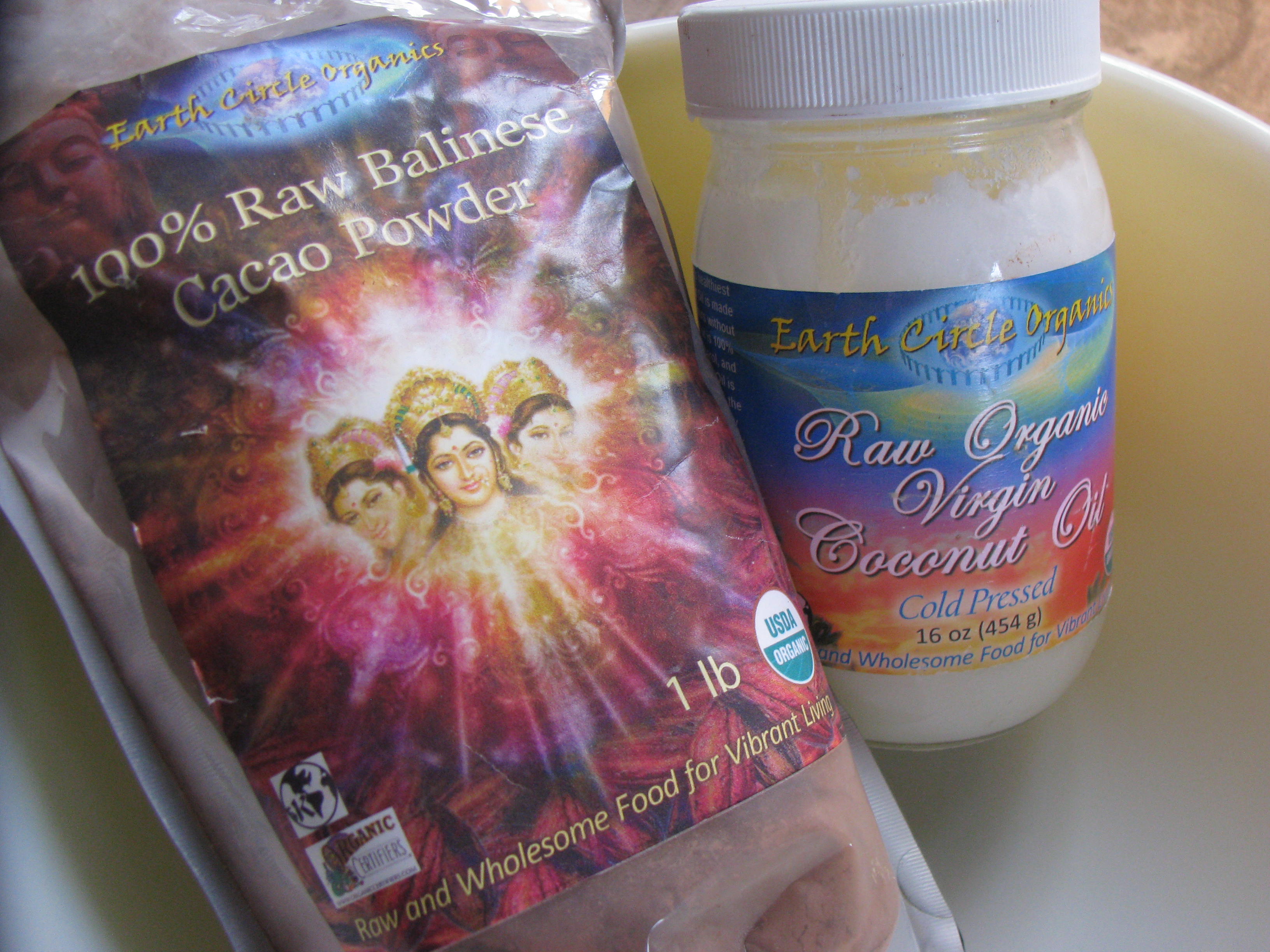
    Earth circle raw cacao + coconut oil

    Nuts, pitted dates, cacao* powder, and coconut oil. *Cacao is the bean that comes from the cacao tree. Cocoa is what the bean is called after it has been processed (roasted). Cacao is raw – it hasn't undergone heat processing, so its antioxidants are preserved. Cacao is the highest whole food source of magnesium, an important mineral that is often deficient in our diet. Cacao powder is interchangeable with cocoa powder in recipes.   

    Raw vegan truffles

    Raw Vegan Chocolate Truffles

    1 cup raw nuts

    ¾ cup pitted dates

    1/4 cup raw cacao powder

    Small amount of water, almond milk, or unmelted coconut oil

    Optional: Roll the truffles in ground nuts or unsweetened coconut flakes.

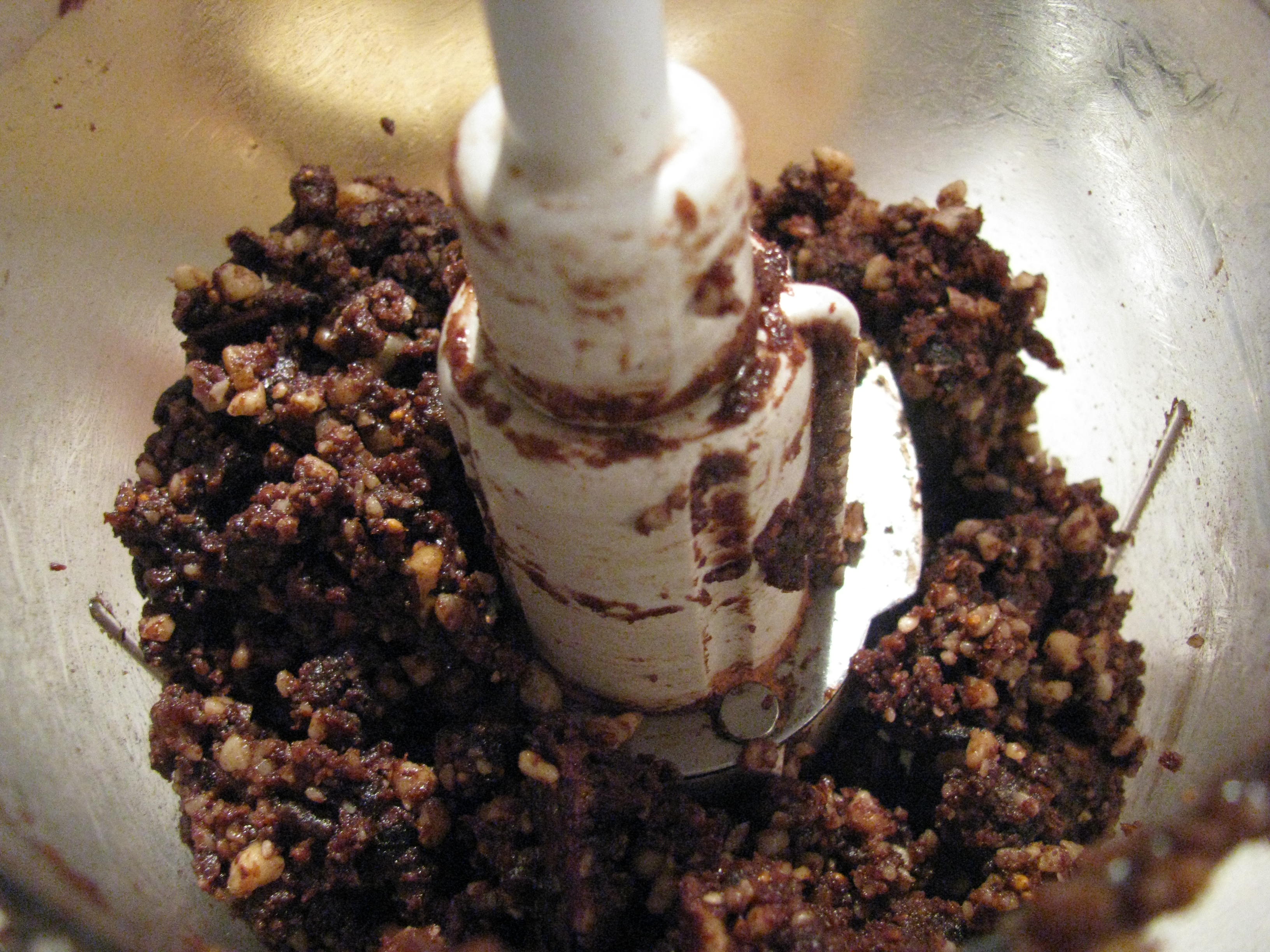
    In a food processor, blend the nuts, dates, and cacao powder. If the mixture is too dry to form into balls, add a little water, almond milk, or unmelted coconut oil starting with 1 tsp and possibly adding more to get a thick paste consistency. (I used 1 tbsp unmelted coconut oil. Perfect.) Roll into ½ inch balls, then optionally coat with ground nuts or unsweetened coconut. To modify the chocolate’s intensity, adjust the amount of cacao.   

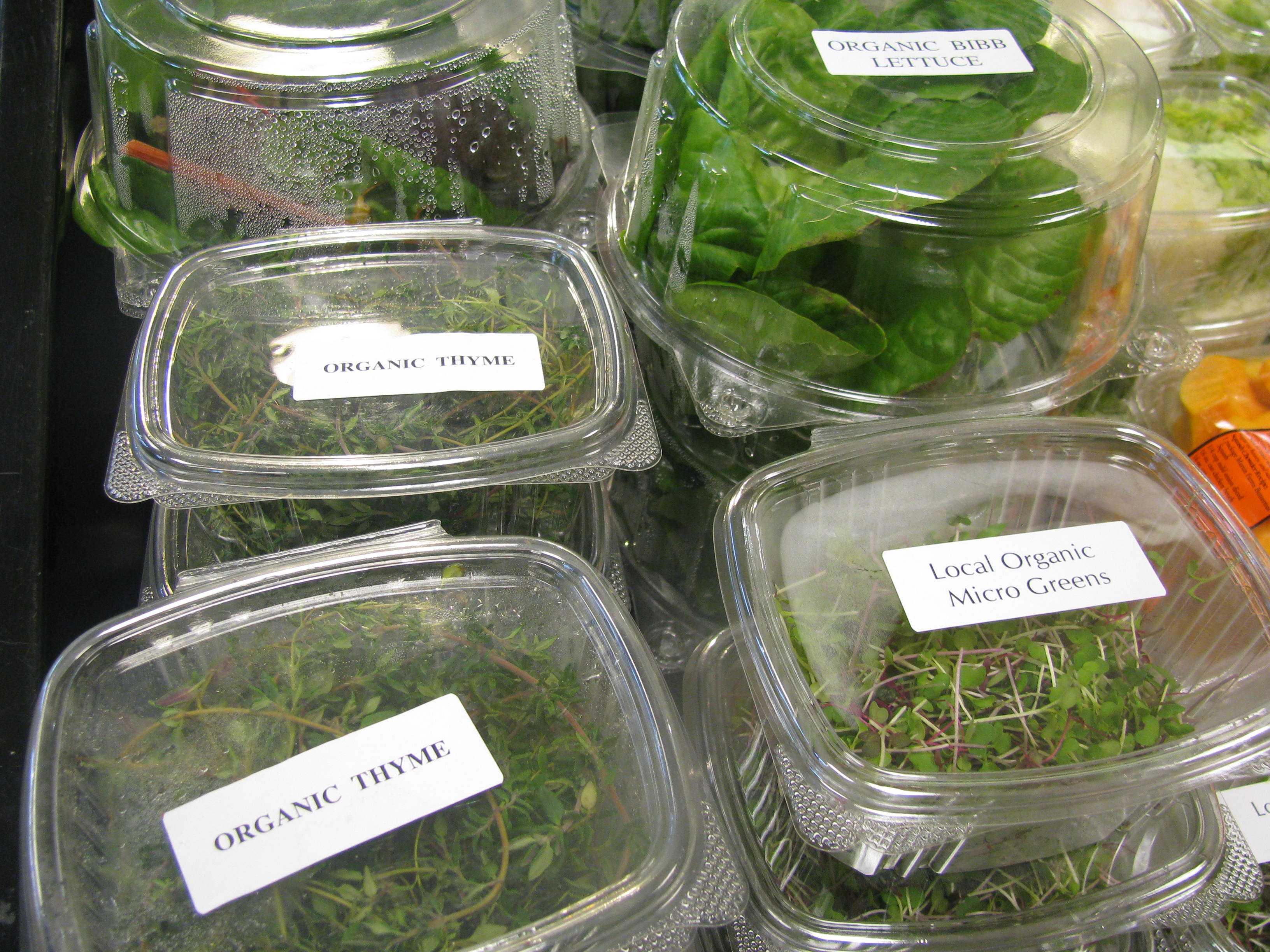
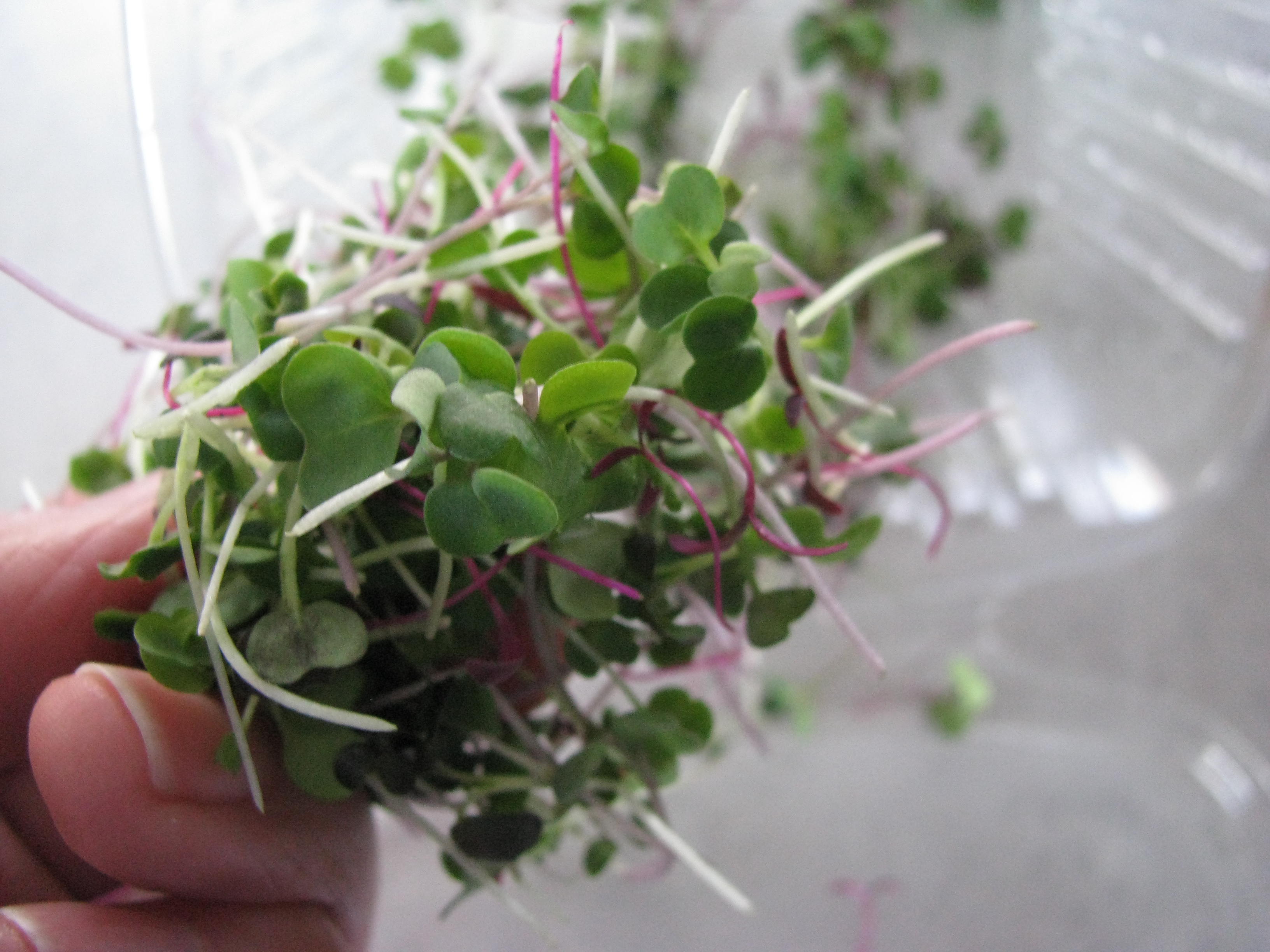
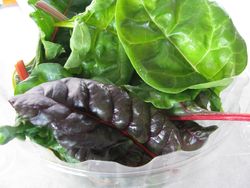
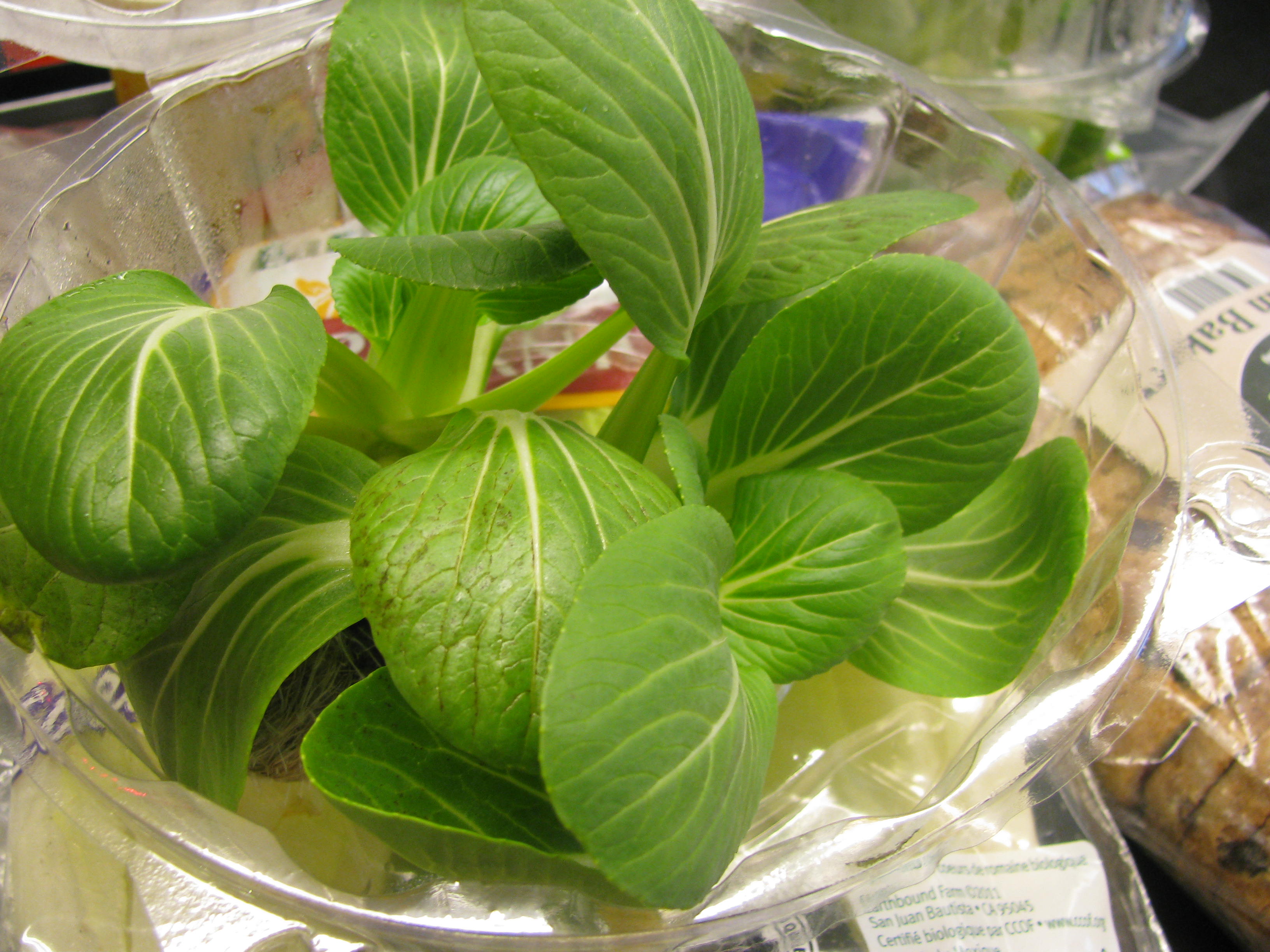
  • When I'm at home, I have all of my unadultered, unprocessed, non GMO, humanely raised, organic, local, raw product sources in place. When I travel, they are there. I just have to search… or visit my daughters who are like-minded and know where to find the good stuff. Adams Fairacre Farms in Newburgh, New York is my favorite grocery store for their stocking of organic, locally grown, tender, crisp greens from Continental Organics in New Windsor, New York. The herbs and veggies are grown using aquaponics, a sustainable, highly productive method of agriculture that is well suited for "densely populated areas or in regions of the world with poor soil and little fresh water. It uses 90% less water than traditional agriculture." (Visit their web site to learn where the plants' nutrients come from. Interesting.) 

    Locally grown greens adams farms
    Locally grown microgreens

    Arugula, thyme, bibb lettuce, and microgreens…

    Locally grown greens
    Locally grown bok choy

    Swiss chard and baby bok choy.    

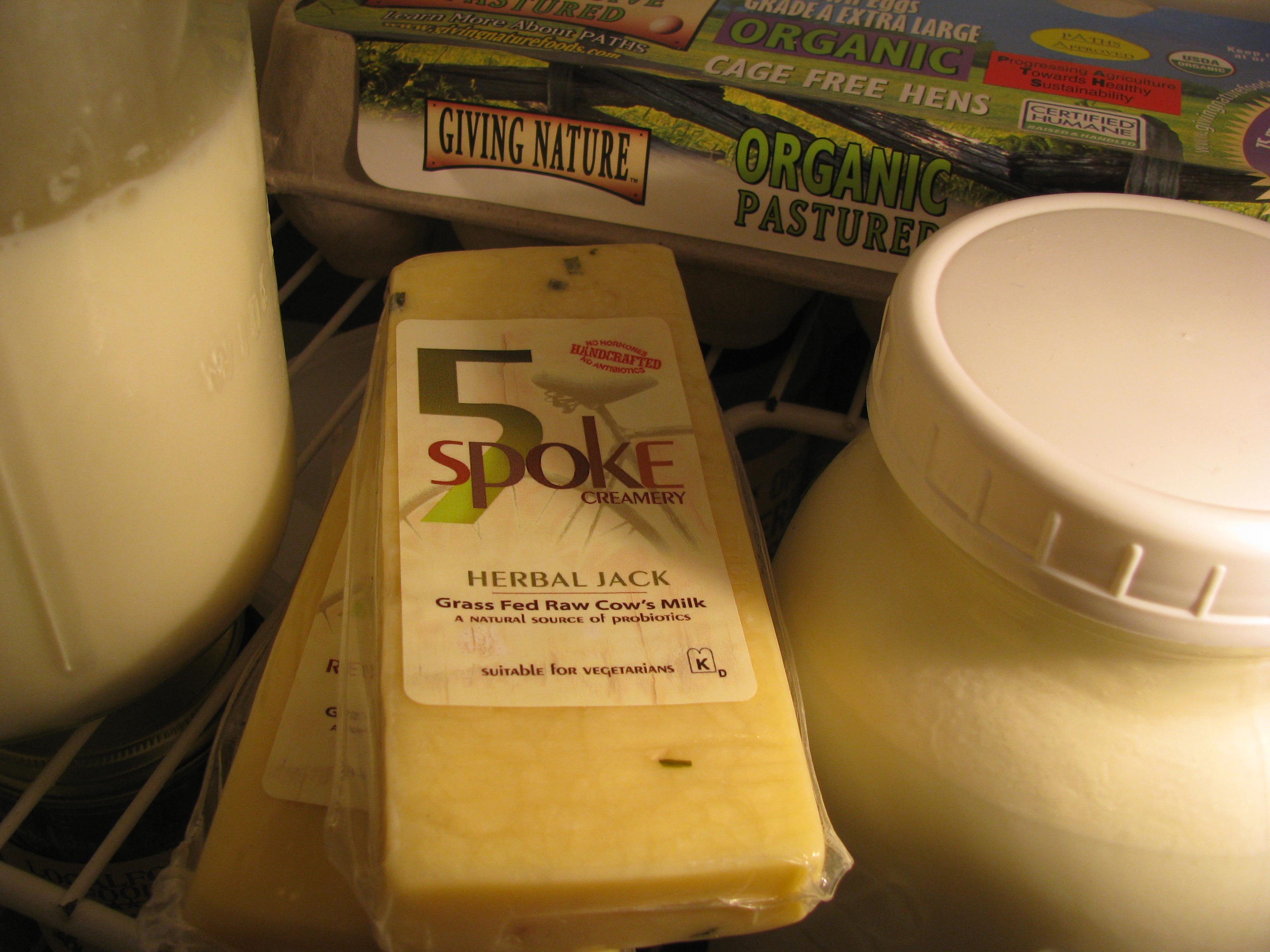
    5 spoke raw cheese raw milk

    Grass-fed raw cow's milk cheese from 5 Spoke Creamery in Goshen, NY. (Check out their web site to learn the benefits of raw vs. pasteurized milk.) Glass two-quart jars of raw cow's milk from Stap Family Dairy Farm in Pine Bush, NY. Eggs down the road from Stap's Dairy. Know thy farmer. Support your neighbors' efforts. A side note: The run each Saturday with my son-in-law to purchase raw milk straight from the dairy was a special time. Just the two of us. Our time. 

  • With Heather and Patrick's three kids in tow and their newborn discovering the big world for her meer second time, we ventured out to New Paltz, New York. There we attended a Winter Faire at the Waldorf School where their eldest daughter had been a student. Musicians melodies provided a calming backdrop as kids busily crafted at stations set up in classrooms throughout the massive three-story house. One of my granddaughters chose to sew a dove, so I made one too.

    Peace dove completed

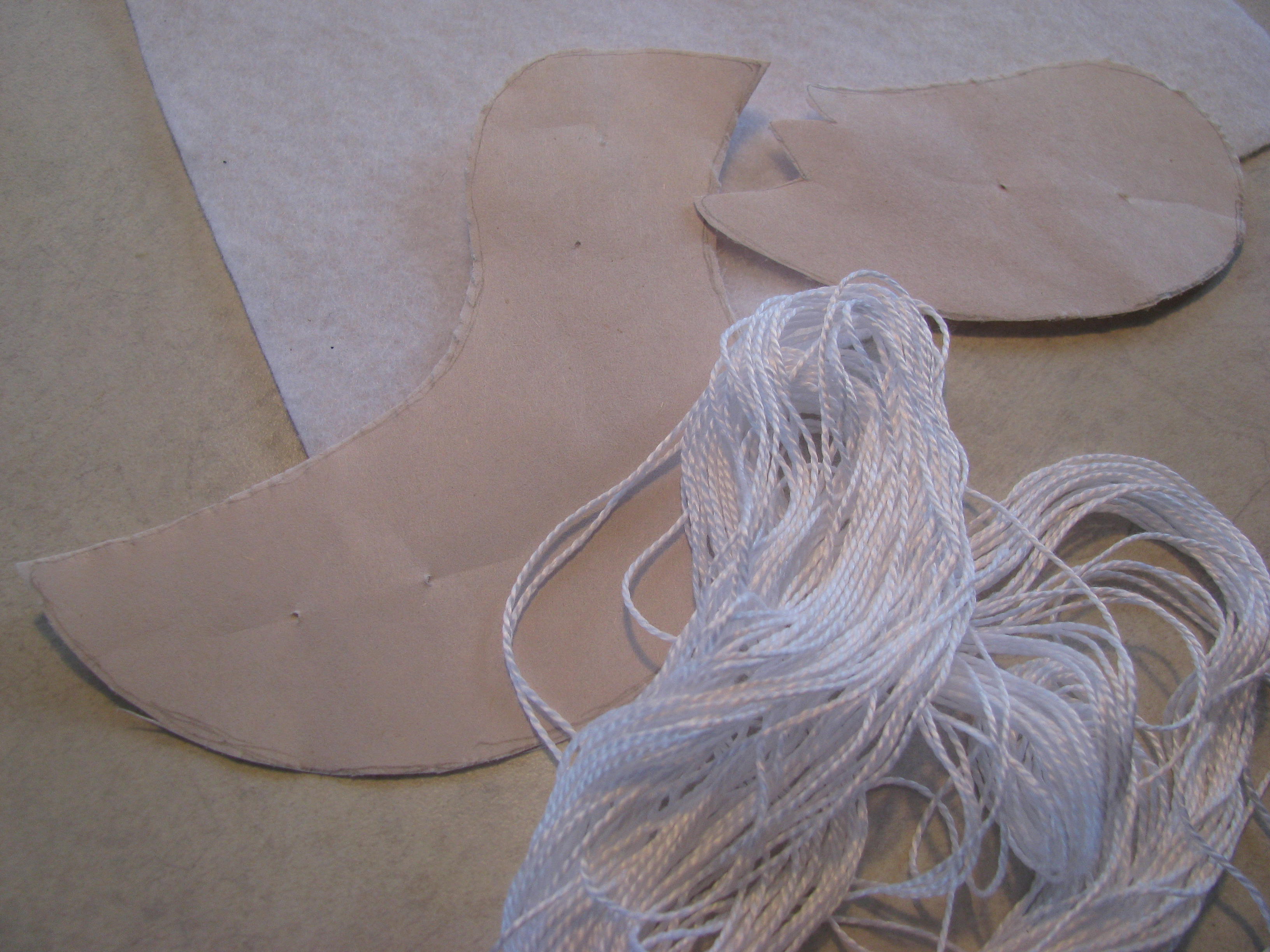
    The supplies are very few. A piece of felt, scissors, large eyed needle, a pattern for the body and wings (click to enlarge the left photo below and sketch a quick pattern based upon mine), a stuffing material to give poof to the dove's body, and pearl cotton size 5. In the Michael's store display photo below, you can see what the string looks like in its package. Here's a detailed tutorial if you haven't ever done a blanket stitch or if your skill has grown rusty. It is used to stitch together the two halves of the body.

    Peace dove supplies
    Pearl cotton display

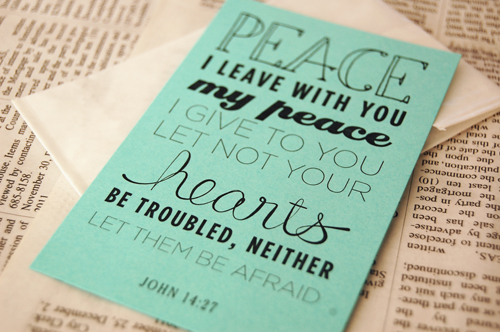
    As my eyes fall upon the gently swaying dove on the Christmas tree branch, it is a reminder of God's comforting words from John 14:27. 

    Peace i leave with you

    When I find one, my dove will have an olive branch. To represent the Biblical account in Genesis of Noah and the Ark. Of a dove returning to the ark with an olive branch in its beak to let Noah know that the floods had receded. The dove and olive branch symbolize the Holy Spirit and the hope of salvation. A symbol of peace.

  • Today, a miracle. Our daughter brought forth into this world a sweet baby girl. 

    Dqm 12.03.12

    A small lamp casting a soft glow in the upstairs bedroom of a home tucked into the mountains of New York. Two skilled, seasoned midwives. A family gathered round. And then the long awaited moment. Heather giving birth. Our eldest grandchild cutting her little sister's umbilical cord. We were there. All of us. Heather's husband Patrick, their three children ages 4 1/2, 8, and 11 and Dick and I. And then a special, unexpected gift. One of the midwives crossed the room where I stood and, with our baby's vernix on her fingertips, massaged my temples ever so briefly as I closed my eyes to accept her special gesture. Vernix, which is the waxy, cheese-like substance coating a newborn that provides antibacterial protection and is an emollient to prevent skin from drying out, feels like butter. I believe her spontaneity was spawned by a brief conversation we had earlier in the evening regarding a yoga class my granddaughter and I attend. At the conclusion of the class, as we lie prostate on our mats with our eyes closed in a room illuminated only by the flickering light of votive candles and a little lamp, our yogi gently massages the temples of each of her students with essential oil. Calming. Vernix or essential oil. A simple human touch. Profound meaning in the context of the serenity of a home birth and yoga alike.