Whiteley Creek Homestead

LIFE AT THE END OF A DIRT ROAD IN CENTRAL MINNESOTA

organically grown triticale in our field
canoeing in our wetlands
raspberries growing wild on our property
our back porch fieldstone fireplace
  • The chorus in Lee Greenwood's God Bless the USA sums up what Memorial Day represents. "And I'm proud to be an American, where at least I know I'm free. And I won't forget the men who died (or were wounded), who gave that right to me." Dick's Memorial Day commemoration began with s stop at the Holiday Gas Station in Little Falls (Minnesota) for an iced donut topped with patriotic sprinkles. Oh, yes… he was happy. 

    Donut patriotic iced 
    Our destination was Harriet Island, which is located on the Mississippi River across from downtown St. Paul. Harriet Island is named after Harriet Bishop, St. Paul's first school teacher. The Padelford Boat Company offered a free 2 1/2 hour paddleboat ride down the Mississippi River for veterans and their families. Dick and I sat outside on the lower deck.  

    Paddleboat lake harriet 

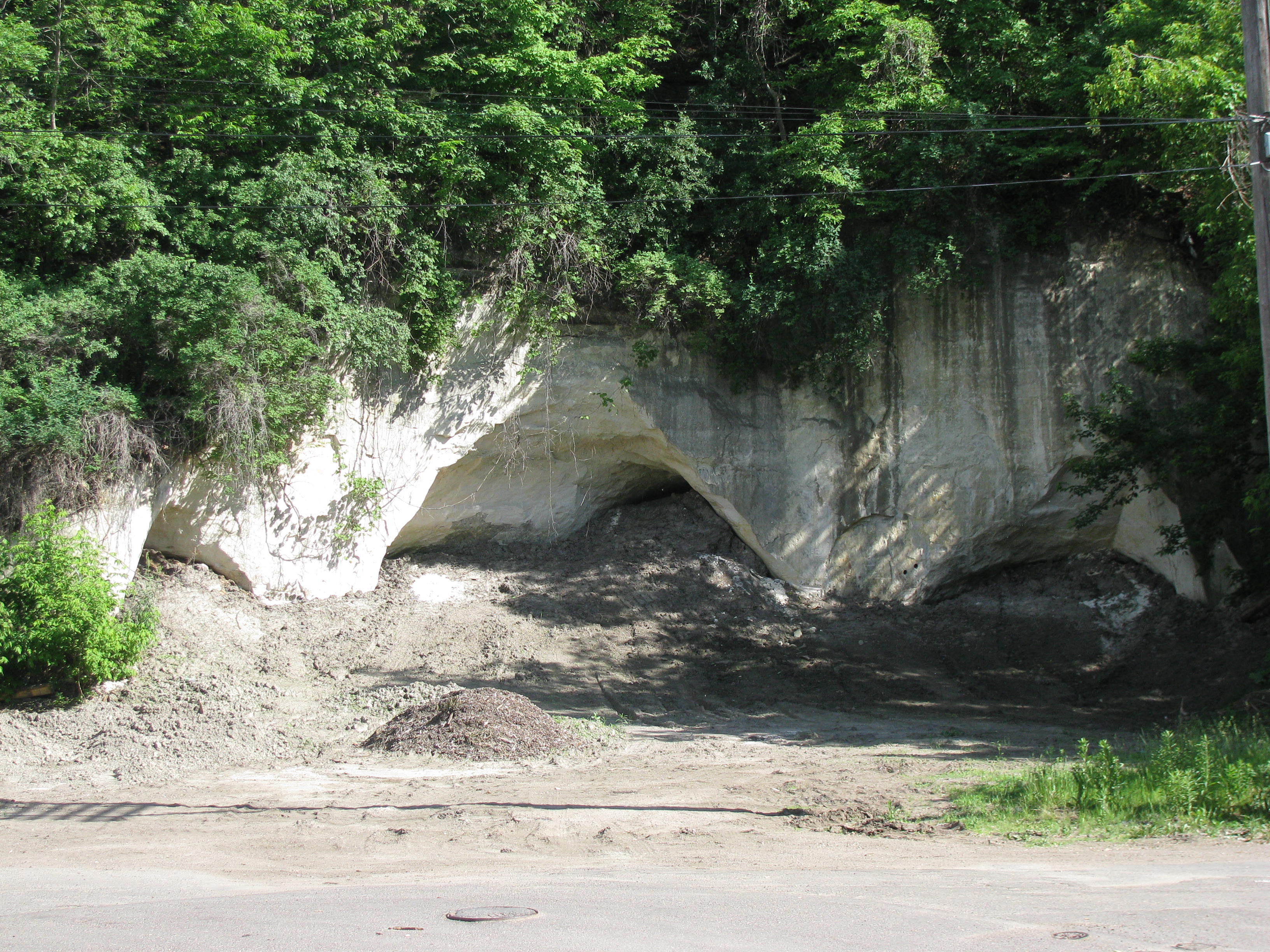
    On the narrated tour, our guide explained the significance of caves that dot the bluffs along the river. I snapped a photo of some as we pedaled our bikes along the river after our boat ride. Originally, the caves were dug to mine fine silica sand used in making glass. When the mining ended, it was discovered that the atmosphere inside the approximately fifty caves was ideal for growing mushrooms, so they were grown there for nearly 100 years. Now the caves are sealed for safety purposes. 

    Mushroom caves 
    After our bike ride, we drove to Lake Nokomis and it was there that we stumbled upon the Nokomis Beach Coffee Cafe where we ordered bowls of homemade split pea soup. It was the very best kind… like you'd make in your own kitchen. While we sat at an outside table eating our soup, I scanned a little Minneapolis newpaper… the ones you find at coffeeshops advertising yoga classes, opinions regarding global warming, registration info for an autumn bike tour, a Lady Gaga concert at the Excel Energy Center in Minneapolis, and the first performance in a free summer concert lineup at Minnehaha Falls… just a short distance from where we sat eating our soup. The concert featuring acoustic pop music was about to begin, so off we went… with a stop at the falls as we walked through the park to the amphitheater. The falls tumble into Minnehaha Creek which flows into the Mississippi River.   

    Minnehaha falls 
    A perfect Memorial Day that started out planned, then it took on a life of its own… 

  • For three days, Dick has been feeling a bit under the weather… that phrase could be the topic of a blog post… its origins… why it means not feeling well. We think his malaise is from a tick bite. It wasn't a deer tick that causes the bacterial infection Lyme Disease, but we have learned that regular ticks sometimes cause achiness, headache, and diarrhea, too. His appetite has been slim to nothing, but this morning he thought he felt like eating a little something. I asked him what he'd like and, without hesitation, he blurted out, "Tapioca pudding." I can't even remember the last time we had tapioca pudding. He never requests it. We don't eat it when we go out. All I could respond was, "You want what?? Where did that come from?!" Surprisingly, I had just purchased a bag of tapioca granules (quick cooking tapioca) to have on hand for thickening peach crisp that I make with fresh or frozen peaches during the summer. I sat down at my computer to find a tapioca pudding recipe. I chose one from chefmd.com because its ingredients included coconut milk, banana, and nuts… an added boost to the pudding's nutritional quotient. As it cooked, I researched the source and nutritional value of tapioca. Now I understand why Dick asked for tapioca pudding… or rather his body was asking for it. According to www.magazine.ayurvediccure.com, tapioca is a root vegetable like a potato. It is low in nutritional value, as the presence of essential vitamins and minerals is minimal. However, it is easily digestible, so it is stomach-friendly. It is a brilliant source of starch and thereby supplies energy. The tapioca pudding didn't place stress on Dick's digestive system and it supplied energy in Dick's weakened condition. Our body knows what it needs. We just need to listen and respond. If he isn't feeling markedly better in the a.m., I'm taking him to the doc for some antibiotics. Update: Doc wasn't sure that a tick caused his issues, but he does have a red area near the bite, so he prescribed antibiotics. The pharmacist recommended consuming yogurt and kefir to provide the digestive tract with beneficial flora that is wiped out along with the bad when taking antibiotics. I put my stamp of approval on that. He's on the mend. All is well once again. (Note: Scientists say that the cassava plant, from which tapioca is derived, may help cure cancer.)

    Coconut tapioca pudding1 
     
    Coconut Tapioca Pudding

    Serves 4.

    1-14 oz can light unsweetened coconut milk

    ¾ cup milk of your choice (e.g., almond, cow/goat milk, soy, rice)

    ¼ cup quick cooking tapioca

    1/8 tsp salt

    2 tbsp brown sugar

    2 ripe bananas, sliced lengthwise in half and crosswise into ½ inch chunks

    ¼ cup chopped nuts (e.g., raw almonds, Brazil nuts, walnuts)

    In a medium saucepan, combine coconut milk, milk, tapioca, and salt. Slowly bring to a simmer over low heat, stirring once in a while, until mixture just begins to thicken. Mixture will be thin. Remove from heat; stir in sugar until melted. After mixture has cooled and thickened, stir in bananas or garnish along with chopped nuts.

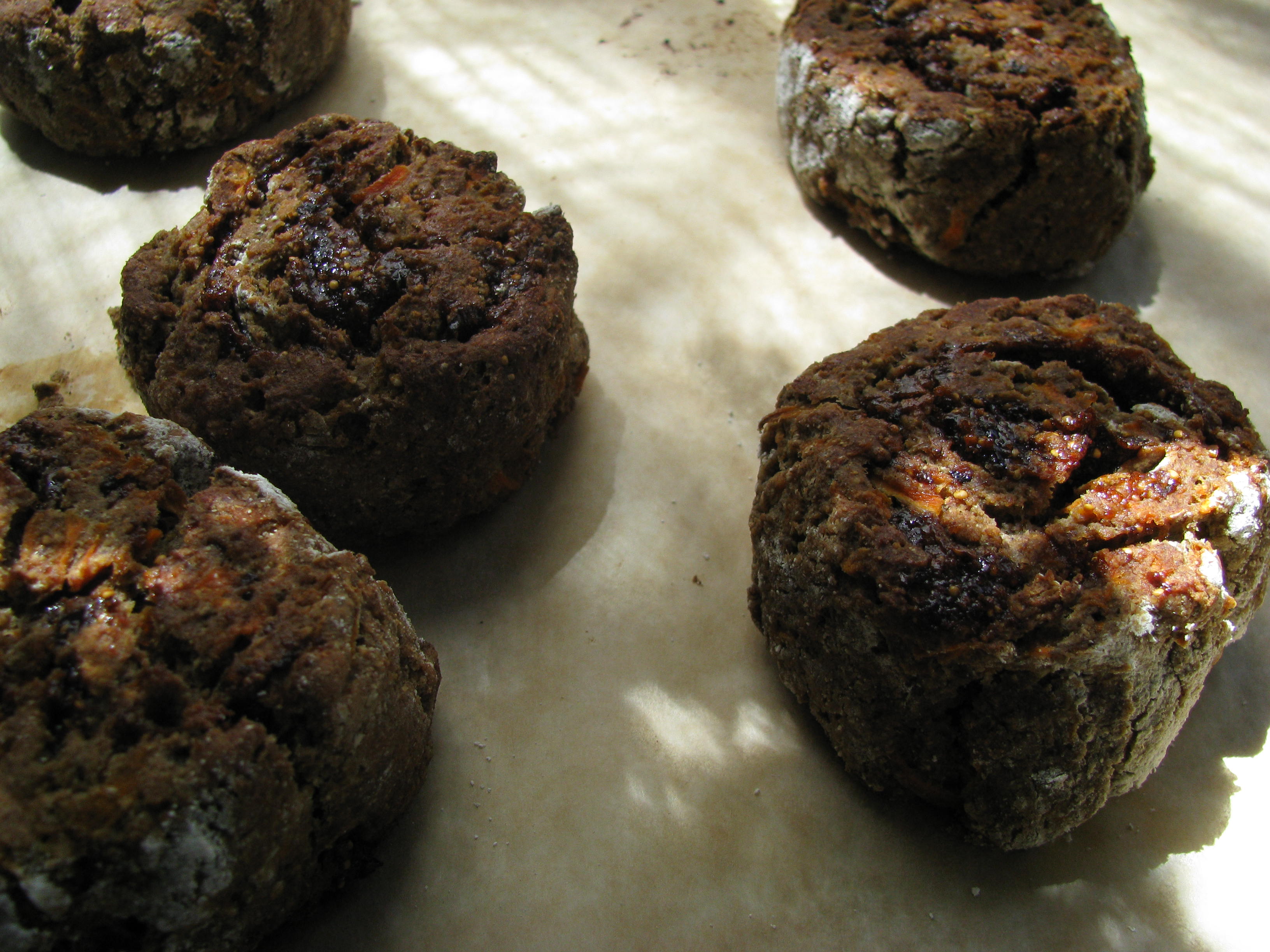
  • Tonight is the final episode of "24", a weekly series featuring the show's main character named Jack Bauer, who is played by Kiefer Sutherland. Tonight's two-hour presentation is the very last episode with no new shows ever to be seen again. That makes me sad. Dick and I spent one entire winter watching Netflix DVDs of "24" to bring us up to speed, then we didn't miss a single episode on T.V. after that. A double whammy is that this is the final week of American Idol, that we also faithfully watch, until it resumes in 2011… and Simon Cowell, one of the Idol judges, is leaving the show after 9 seasons. I thrive on change, but some things I like left alone… to remain as they were. What treat could we nibble while watching "24" that would make our last evening with "Jack" a special one?  Fig Buckwheat Scones, I think. Yes, a recipe I found on 101cookbooks.com that came from Good to the Grain: Baking with Whole Grain Flours by Kim Boyce. The scones taste like Fig Newtons but bursting with nutrition. With a little glass of grass-fed, unhomogenized, unpastuerized, or low-temperature pasteurized milk… perfect.  
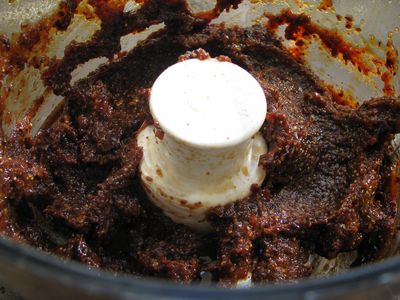
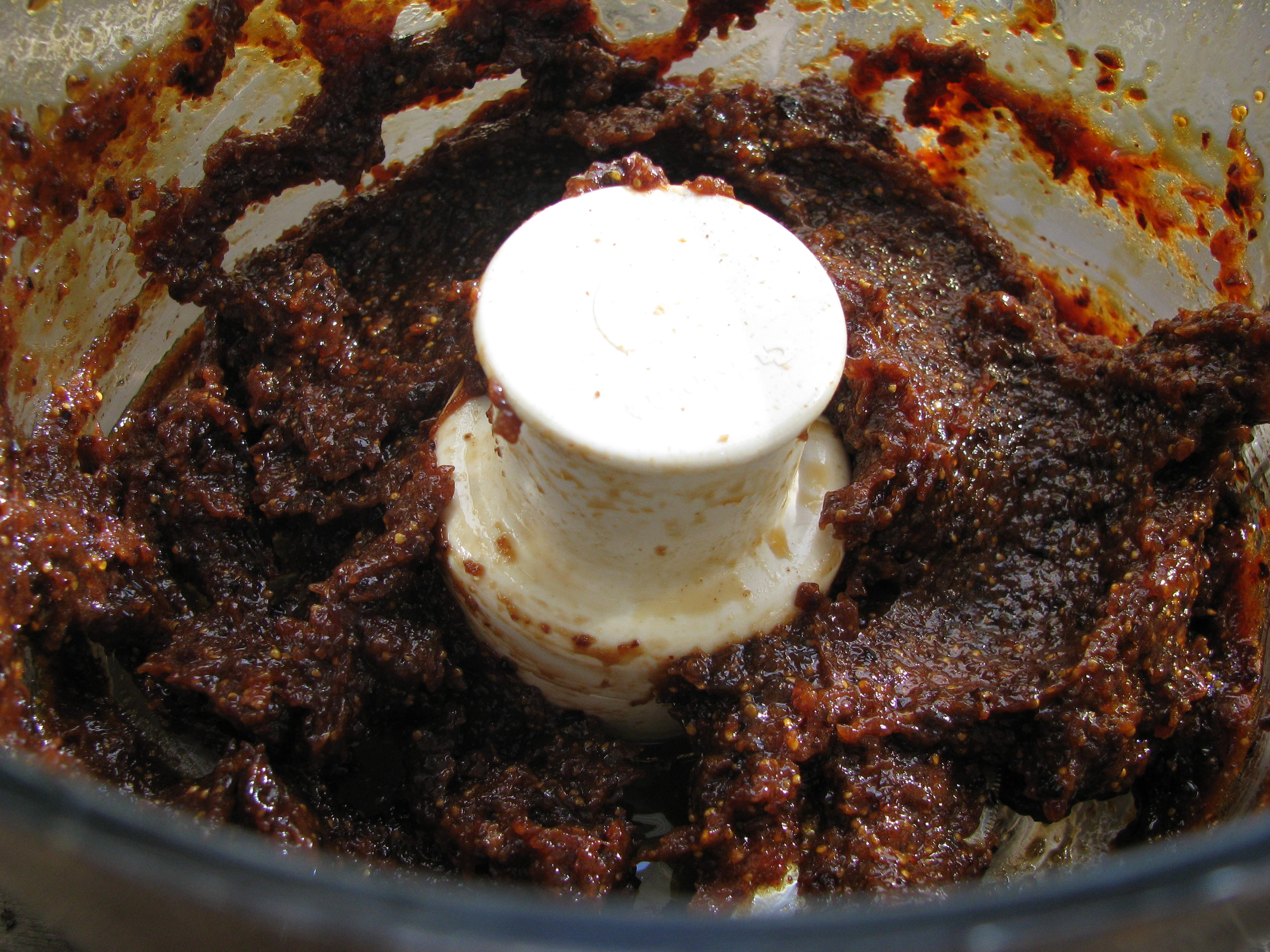
    Fig jam1 
    This is the fig jam for the scone's filling. I subbed orange juice for the wine. I do not have an aversion to cooking or baking with wine. I just didn't have any wine. O.J…. I did. It was a perfect switchout. Due to figs having a high fiber content, they nourish and cleanse the intestines. Because they are a good source of potassium, they are effective in helping to control blood pressure. Figs are among the most highly alkaline foods, so they are beneficial in supporting the proper pH of the body. In addition to potassium, figs are an excellent source of calcium, phosphorus, magnesium, copper, iron, and manganese.   

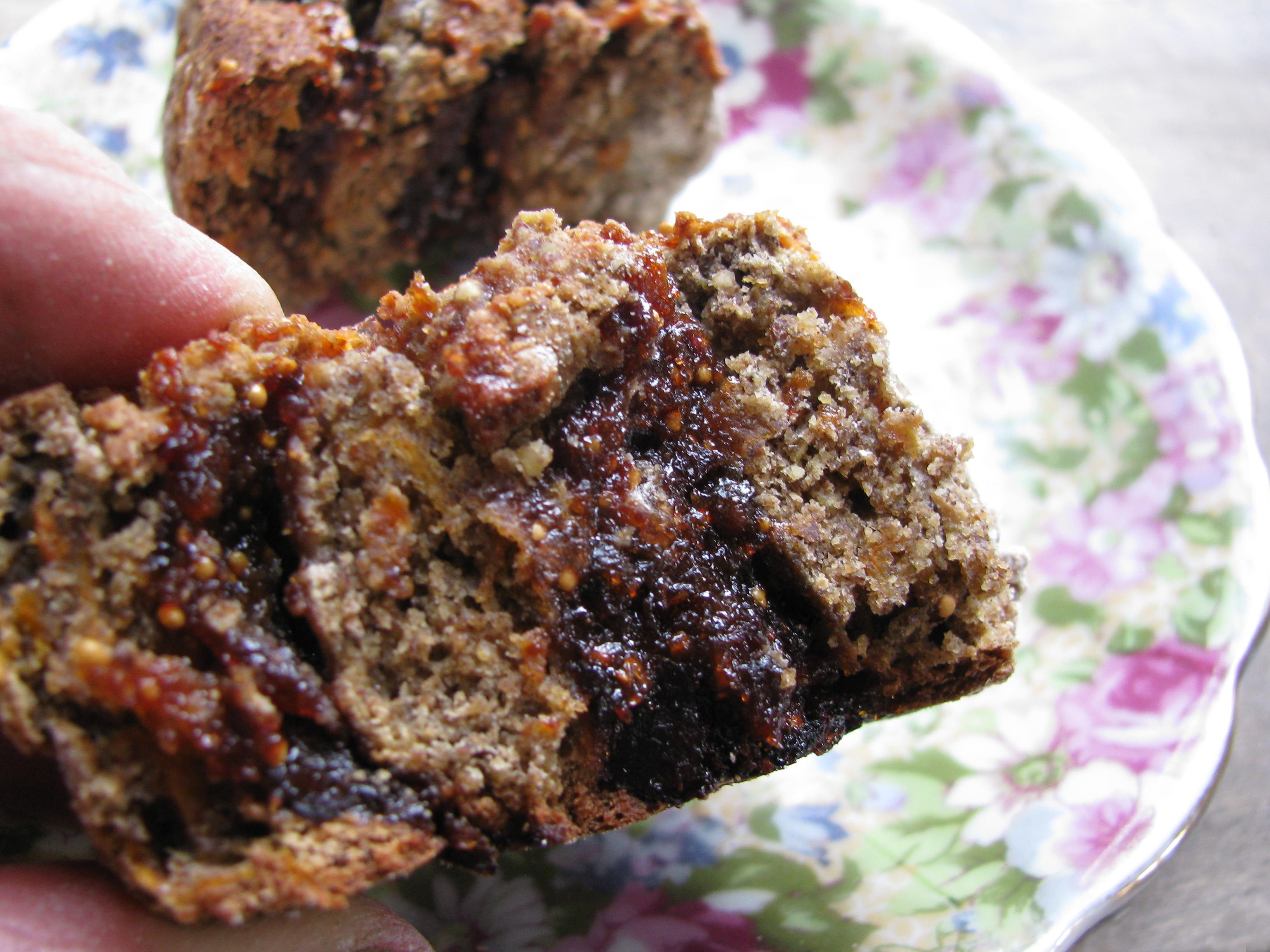
    Fig buckwheat scones1 

    Fig Jam Filling

    Makes enough filling for 12 scones.

    ¼ cup water

    ½ cup sugar

    2 whole cloves + 1 star anise (I had no anise, so I used 3 whole cloves.)

    1 cup red wine + ½ cup port (I used 1 ½ cups orange juice instead.)

    12 ounces dried Black Mission Figs, stems removed (Instead of weighing the figs, I measured out 1 ½ cups. The original recipe states that it makes 2 cups jam filling. When I made the filling, I got 1 cup. Maybe you end up with more figs when you weigh them. No matter. The scone recipe only uses 1 cup anyway and, with the amount of figs that I used, the consistency was perfect.)

    ¼ tsp cinnamon

    4 ounces unsalted butter, softened (I omitted.)

    In a heavy-bottomed saucepan, gently mix the water and sugar together with a wooden spoon without splashing it up the sides, otherwise crystals will form on the sides of the pot during the cooking process. If crystals do form, you can use a clean pastry brush dipped in water to wipe them off.  Add the cloves and star anise. Bring the mixture to a boil over a medium flame and cook for 7 to 10 minutes, until the syrup is amber-colored. For even coloring, the flame should not come up around the outside of the pot. Watch the time, as the mixture can go from a beautiful caramel color to burnt very quickly. The syrup is hot so stand back a bit when adding the red wine and port (or orange juice), figs, and cinnamon. The syrup hardens when the liquids are added to it. Don’t panic. Continue cooking the mixture over a medium flame for 2 minutes until the sugar syrup and the liquid blend. Reduce the flame to low and simmer for 30 minutes, stirring occasionally. Remove the pan from the stove and cool to room temperature. Discard the cloves and star anise. Pour the cooled figs, along with their liquid, into a food processor and purée until smooth, about 1 minute. Add the softened butter (if using) to the fig mixture and process until smooth. The fig jam can be spread immediately onto the buckwheat scone dough or stored in the refrigerator for up to 1 month. If it is refrigerated, bring it to room temperature before using.    

    Fig Buckwheat Scones

    Makes 12 scones.

    Note: The recipe from 101cookbooks.com called for ½ cup sugar, ½ cup butter, and 1 ¼ cups heavy cream. I chose to use my recipe for Sweet Potato Scones instead, with some minor flour variety adaptations. Instead of sugar, butter, and heavy cream (typical scone ingredients), it uses small amounts of maple syrup, olive oil, and yogurt with sweet potato for added nutrition. It rolled out nicely creating a perfect surface on which to spread the fig jam.  

    1 cup buckwheat flour

    1 cup oat flour

    ¾ cup barley flour

    4 tbsp flaxseed

    4 tbsp wheat germ

    2 tsp baking powder

    ½ tsp baking soda

    ¼ tsp cinnamon

    1/8 tsp nutmeg

    1 egg, lightly beaten

    1 tbsp canola or olive oil

    2 tbsp real maple syrup

    1/3 cup plain organic yogurt (I used homemade yogurt.)

    1 cup raw shredded sweet potato, yam, or carrots

    Preheat oven to 350°. In a large bowl, whisk the dry ingredients. In a separate bowl, combine the remaining ingredients. Stir wet ingredients into dry until just combined. Do not overmix. Transfer the dough onto a well-floured surface. It will be sticky, so flour your hands and pat the dough into a rectangle. With a floured rolling pin, roll the dough into an 8-inch X 16-inch rectangle that is 3/4 inch thick. Use your hands to square the corners and pat it into shape. As you’re rolling, periodically run a pastry scraper or spatula underneath to loosen the dough, flour the surface, and continue rolling. This keeps the dough from sticking. Flour the top of the dough if the rolling pin is sticking. Spread 1 cup of the fig jam on top of the dough in an even layer. Roll up the long edge of the dough, patting the dough as you roll so that it forms a log 16 inches long. Roll the finished log so that the seam is on the bottom and the weight of the roll seals the edge. Use a sharp knife to slice the log in half, then cut each half into 6 equal pieces. (I found it helpful to wet the knife periodically in a glass of water to keep it from sticking.) Line a baking sheet with natural unbleached parchment paper. Place each scone, with the spiral of the fig jam facing up, on the baking sheet. Give the scones a squeeze to shape them into rounds. Bake for 38 to 42 minutes. The scones are ready to come out when their undersides are golden brown.   


  • My father, who died five years ago, was born May 20, 1910 so he would be 100 years old today. I always plant potatoes on his birthday in honor of him because when I was a kid growing up in a family of 14, we planted huge crops of potatoes that we stored in our root cellar to carry us through the long, cold winter months. May 20th was also when we began planting our vegetable garden because it was an appropriate date for our central Minnesota's northern climate. My chitted seeds that I soaked yesterday sent out roots in record time, so I had more than enough to get started with my spring veggie garden planting today… potatoes, onion plants, beans, peas, radish, and leaf lettuce. I planted my "chitted" (presprouted) cuke seeds in newspaper pots because the soil hasn't warmed enough. In the early part of June, I will transplant the seedlings into the garden. The zucchini seeds have begun to sprout inside the folds of the moistened paper towel, but they're not far enough along to plant. I will plant them in newspaper pots as I did the cuke seeds because they need warmer soil temps, too.

    Scarlet runner bean and dwarf gray sugar pea
    scarlet runner beans and 'dwarf gray' sugar peas

    Pink beauty radish
    'pink beauty' radish

    Encore lettuce mix
    'encore' lettuce mix

    Diva cucumber
    'diva' cucumber

  • A funny term… but so very useful. "To chit" means to presprout seeds or potatoes so they have started making a root prior to planting.  

    Chitting 

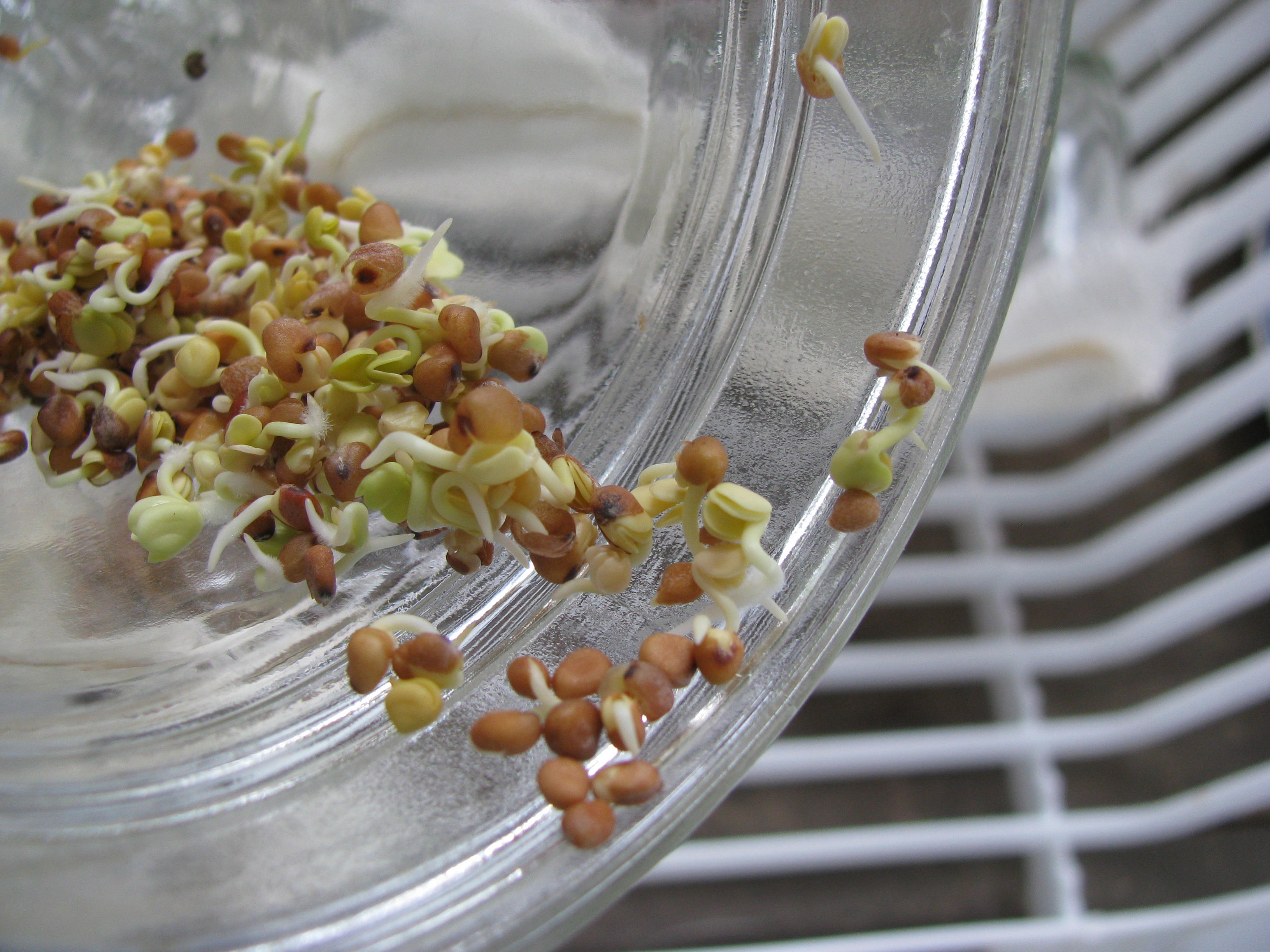
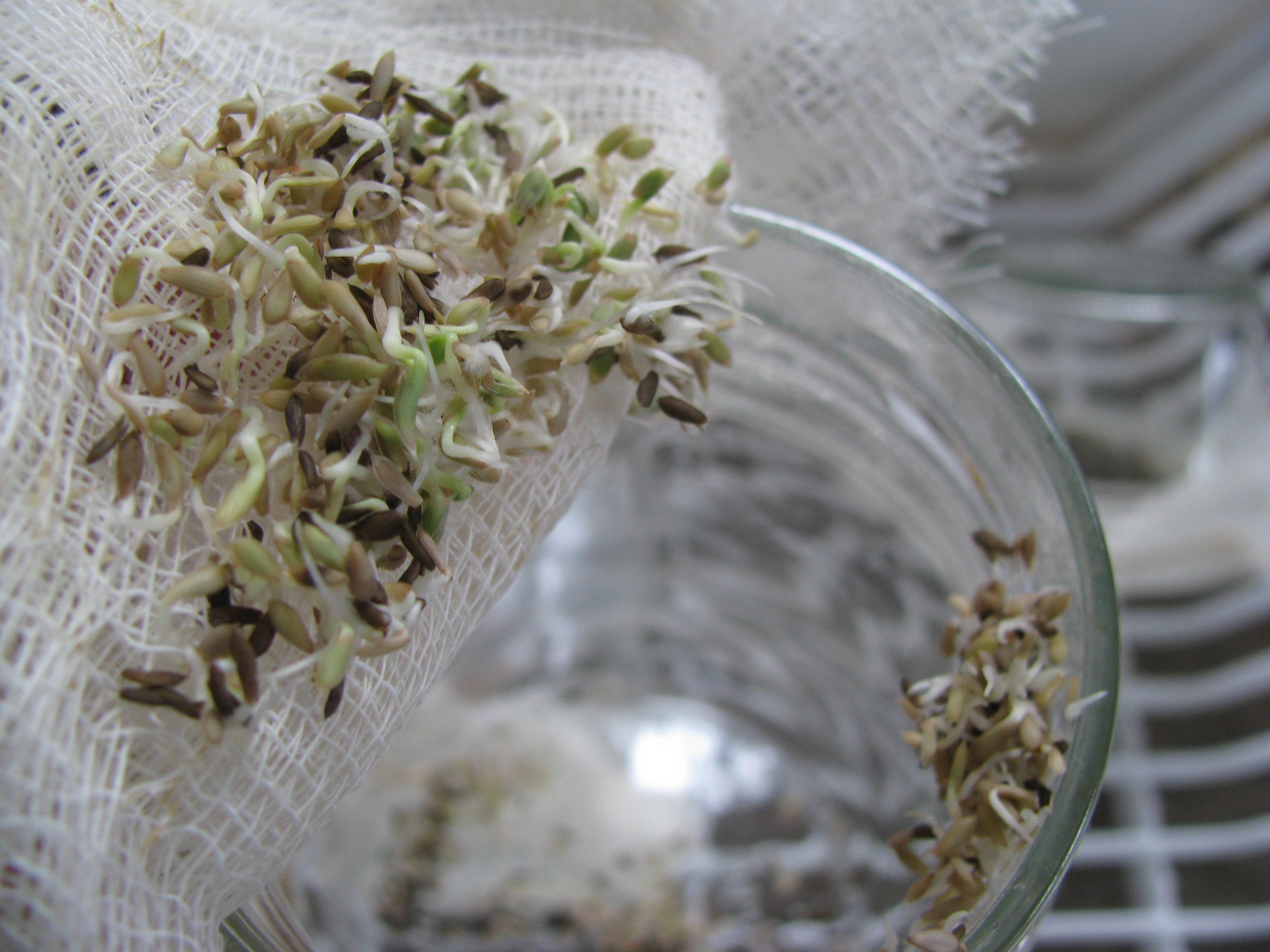
    To chit peas and beans, soak the seeds in lukewarm water. In this photo, I am soaking 'old spice mix' sweet pea, 'dwarf gray' sugar pea, and scarlet runner beans in wide-mouth quart jars fitted with plastic sprouting drainage lids. Alternatively, you can attach a piece of fine-mesh, fabric-type window screen or natural unbleached cheesecloth to the mouth of the jar with a rubberband. After 6 to 8 hours, drain the water, rinse, and drain again. Set the jars at an angle in a dish draining rack to finish draining. The room temperature should be at least 65°. Gently rinse and drain the seeds twice a day. Roots will emerge in 3 to 4 days and they are ready to be planted in the ground with the root pointing down. Plant before the root grows longer than the seed.

    Here is my "chitting station". A textbook in my Gardening For Good Nutrition class, an elective course I chose to take last term as I work toward earning my Bachelor's Degree in Holistic Nutrition, suggested chitting smaller seeds as well, so in the dish drainer I have jars containing lettuce mix, tatsoi, spinach, radish, and buttercrunch lettuce.

    Chitting station

    To chit cucurbits, which include melons, cucumbers, squash, gourds, and pumpkins, dip a paper towel in lukewarm water and allow excess water to drip out. Place seeds in between layers of the paper towel and slip into a plastic storage container with a lid or a sealed plastic bag and put in a warm place. I slipped a plastic bowl cover that looks like a shower cap over top of a plate. Cucurbits need a temperature of 70° to 85° to sprout, so place the seeds in a warm place. Monitor to be sure the paper towel doesn't dry out. After 3 days, check the seeds 2X/day for signs of roots emerging. Plant before the root grows longer than the seed with the root pointing down in the soil. In this photo, I am sprouting zucchini and cucumber.

    To chit seed potatoes, spread them out on a tray in a brightly lit room that is not too well heated for about 6 weeks before planting to encourage shoots to emerge from the eyes. (Over time, mine sprouted left inside the bag they were shipped in from the seed company.) Prior to planting in the ground, cut the potatoes so that each chunk has two sprouts. Plant with the shoots pointing up. Note: Large potato farms use machinery to plant the potatoes, so the surfaces of the potato chunks are usually treated with fungicide so they don't rot in the ground before the sprouts emerge from the eyes. The home gardener is able to hand plant the sprouting potato so there is no need for fungicide.

    Because chitted seed is already growing when it is planted, there are several advantages over planting seed directly in the ground. Seeds require moisture to germinate, so ones planted in the ground are dependent upon the gardener diligently keeping the soil moist or upon rainfall. It's easier to monitor moisture level in a jar on paper towel. Secondly, chitting allows control over germination temperature. Spring soil is slow to warm, so seeds often fail to germinate or they rot in the ground. Another advantage of chitting is that you can observe the germination before planting so that you aren't putting dead seed in your garden.   


  • This morning, I stopped by Twiggy's Treasure Market, a reasonably priced shop filled with a delightfully eclectic mix of new and old in downtown Brainerd (Minnesota). Since I didn't have an overabundance of time and I was making a sincere effort not to be distracted from my list of errands, I slipped in ever so briefly. My eyes were immediately drawn to this cheerfully bright gingham-edged plate.

    Red gingham plate
    When I got home, I filled the plate with quick and easy chewy nut treats using a recipe from thefitnessfreak.blogspot.com. They are so delectable, I made two batches but varied the second batch just a touch as indicated in the recipe below. 
    Chewy nut treats (2)

    Chewy Nut Treats

    Yield: 12 balls

    ¼ cup raw almond butter

    1 tbsp unsweetened baker’s cocoa powder (I use Ah!Laska organic nonalkaline.)

    2 tbsp honey or agave (I used brown rice syrup for the 1st batch and honey for the 2nd batch.)

    ¼ cup 2 tbsp raw cashews, chopped

    ¼ cup 2 tbsp raw sunflower seeds

    ¼ cup 2 tbsp raisins

    1 tsp sea salt (I omitted in the 2nd batch and I didn’t miss it at all.)

    Stir first three ingredients together, then stir in remaining ingredients. (I tossed it all together then stirred.) Using a tablespoon-size measuring spoon, form into balls and place on a sheet of natural unbleached parchment paper. Refrigerate, if you like, to make them more firm. Note: The first time I made this recipe, I used ¼ cup each of nuts, seeds, and raisins as the recipe stated. However, the 2nd time around I chose to cut the quantities of those three ingredients in half so that the wonderful flavor of the chocolate mixture would take center stage. I also found that the original amount of nuts, seeds, and raisins was too much to incorporate into the chocolate mixture and coat the balls’ exterior.

  • Flossie olga phoebe 
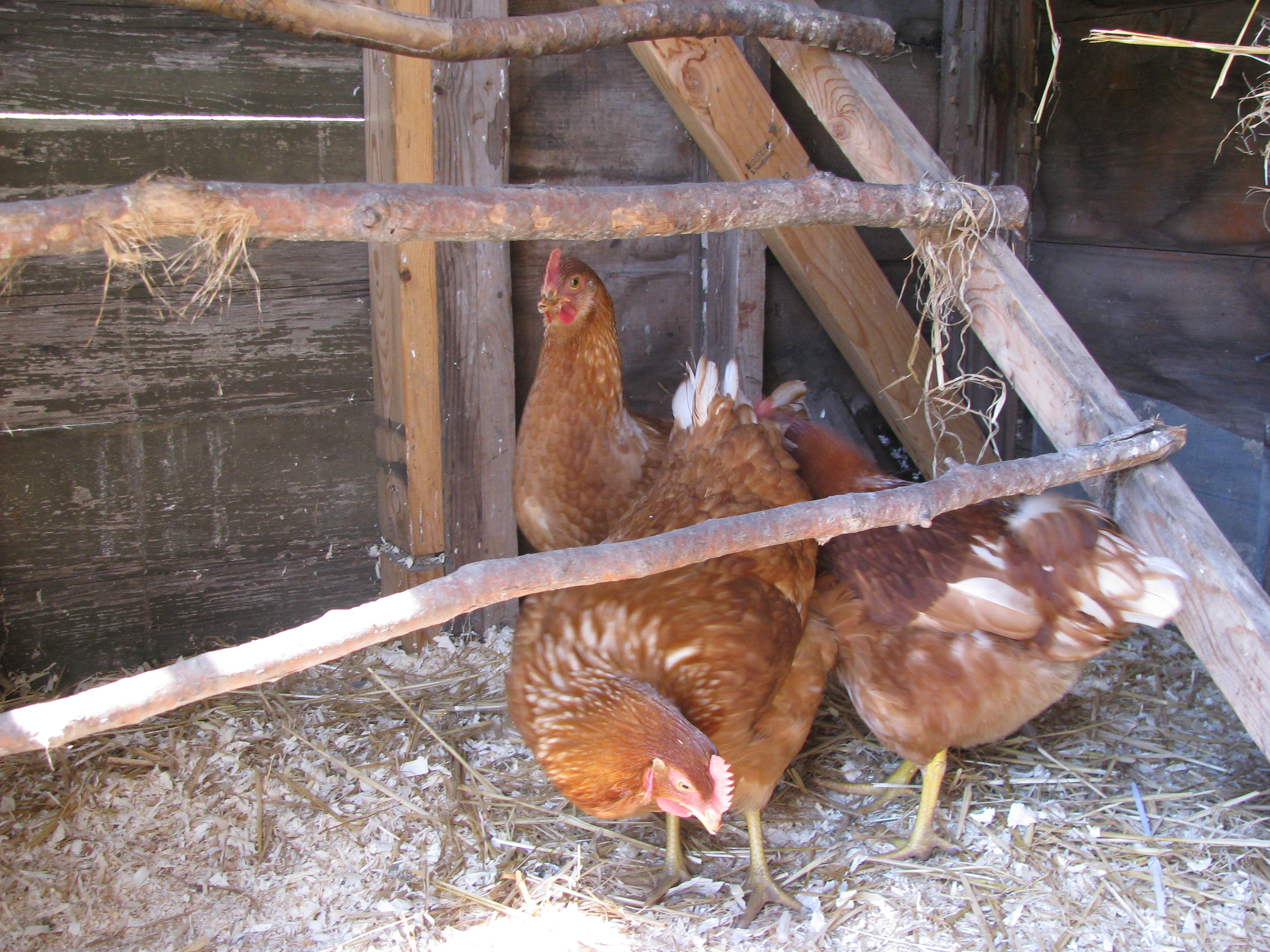
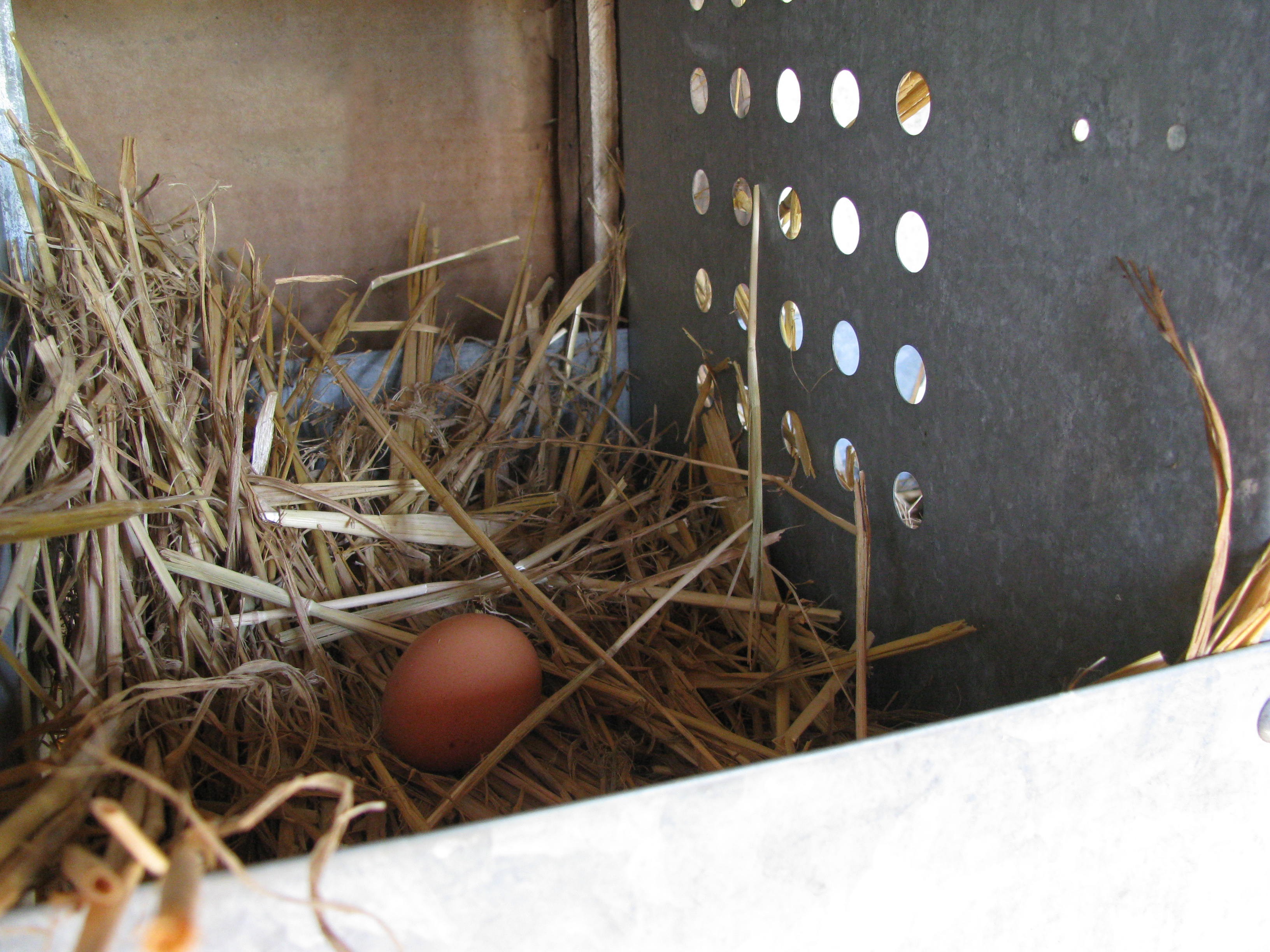
    In the words of Gary Puckett and The Union Gap, "This girl is a woman now. She's found out what it's all about. She would never be the same again." One of my three 19 1/2 week-old hens (Flossie, Olga, and Phoebe) laid its first egg this morning! It is small. as first eggs are, but I am more than thrilled because there will be more to follow and it was plopped right where it should be… in one of the nesting boxes.

    First egg

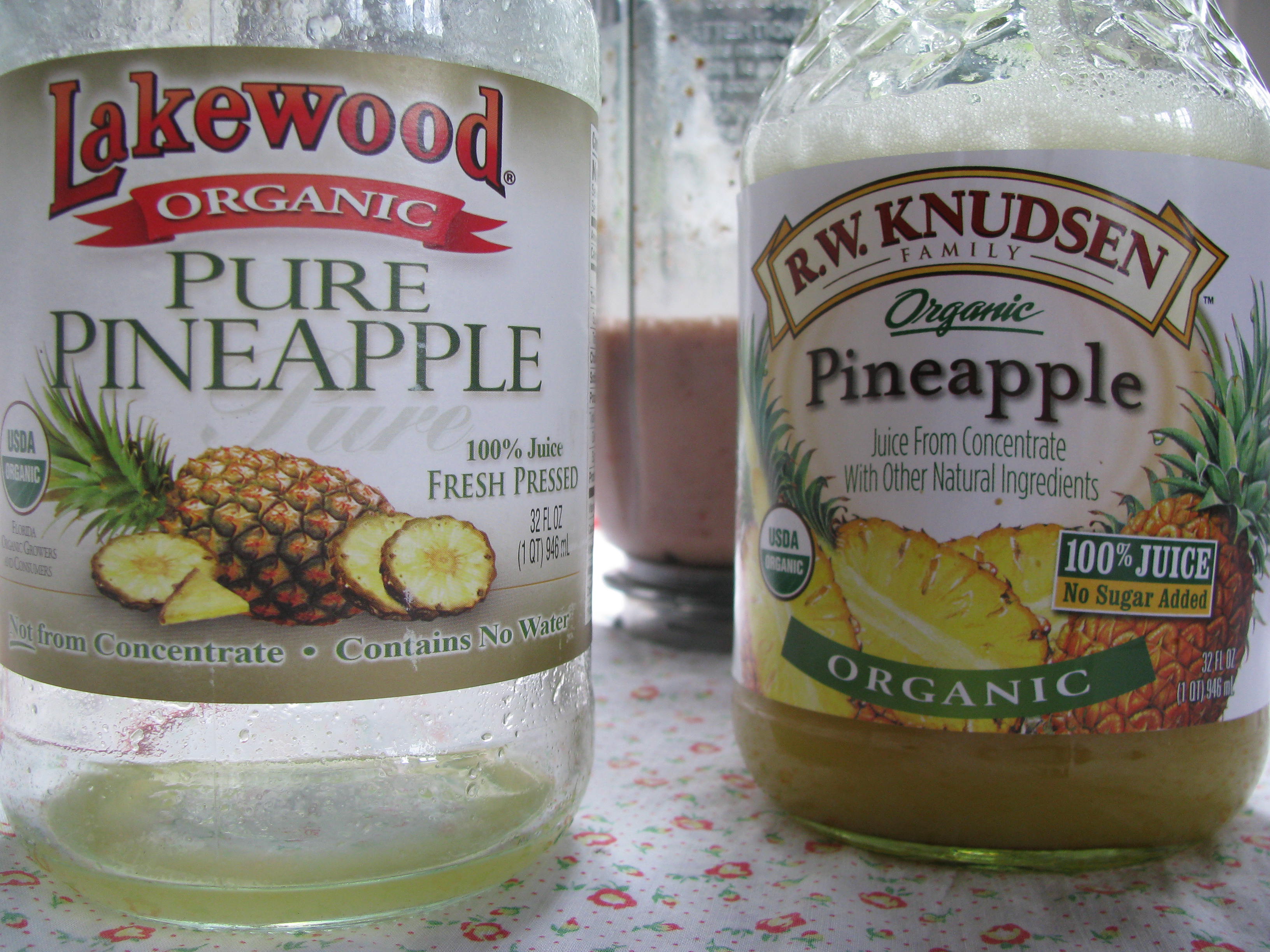
  • Not all pineapple juice is created equal. I discovered that when I gathered my ingredients to make a Coconut Milk Smoothie this afternoon.

    Pineapple juice 

    As you hurriedly grab a jar of pineapple juice off the grocery store shelf, you read organic 100% juice on the label and off you go… as I did. Now look more closely. The R.W. Knudsen brand states Juice From Concentrate and its ingredients include: FILTERED WATER (SUFFICIENT TO CONCENTRATE), ORGANIC PINEAPPLE JUICE CONCENTRATE, NATURAL GUMS (GUAR, XANTHAN AND SODIUM ALGINATE GUMS). The Lakewood brand states Not from Concentrate and its ingredients are plain and simple: FRESH PRESSED JUICE AND PUREE (FIBER) FROM WHOLE RIPE CERTIFIED ORGANIC PINEAPPLES. Lakewood has my vote with less processing and no extra ingredients.  

  • I made this dense, yeast-free, super hearty bread from a recipe I found on Heidi Swanson's 101cookbooks.com blog. It's easily adaptable to whatever ingredients you have on hand. The color will vary depending upon what flour you choose to use. Mine gets its dark color from buckwheat flour. 

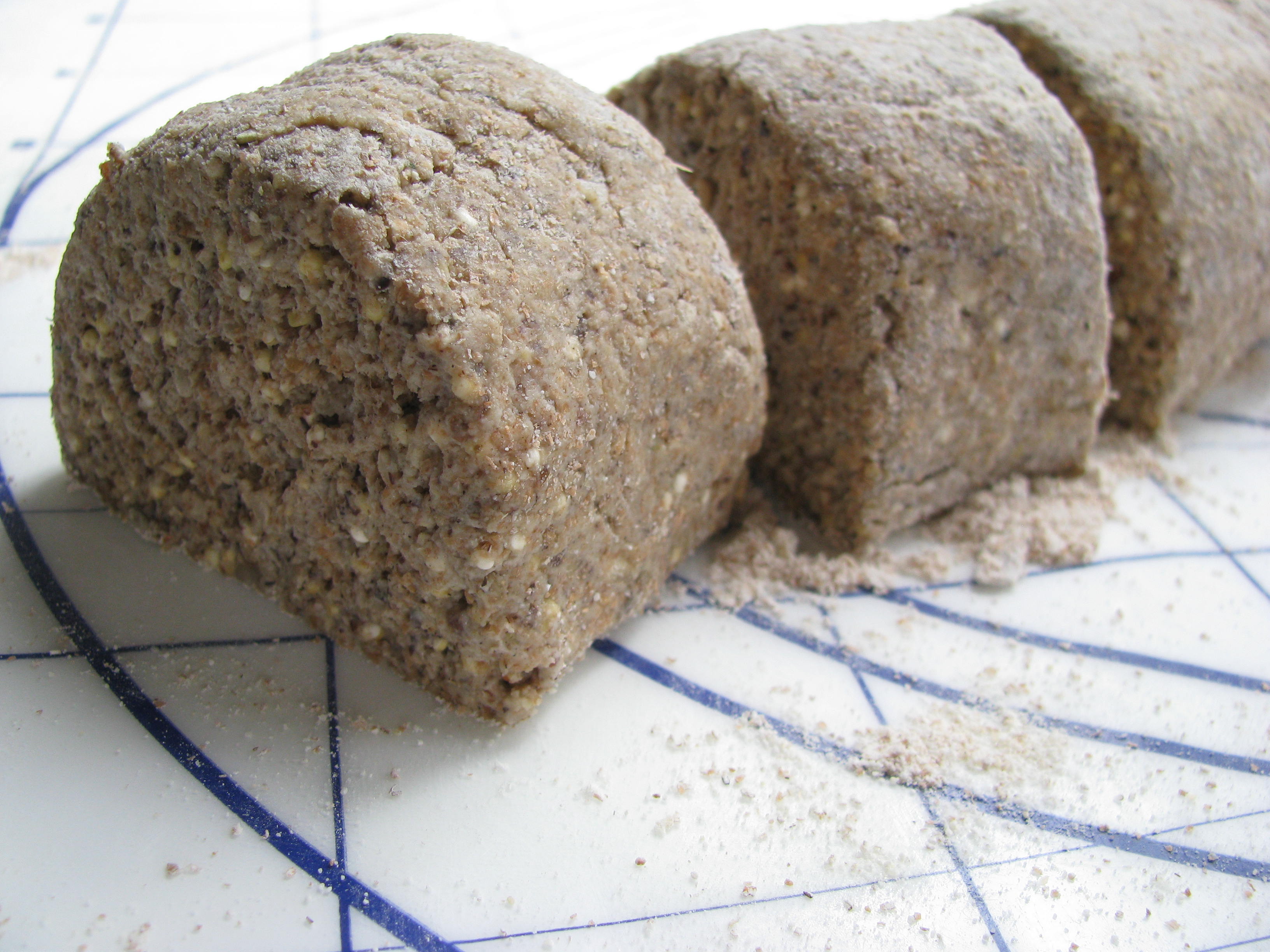
    Hearty grain buns dough 
    The dough, that is chock full of a variety of grains and seeds, is formed into a log, sliced, then formed into patties before baking.

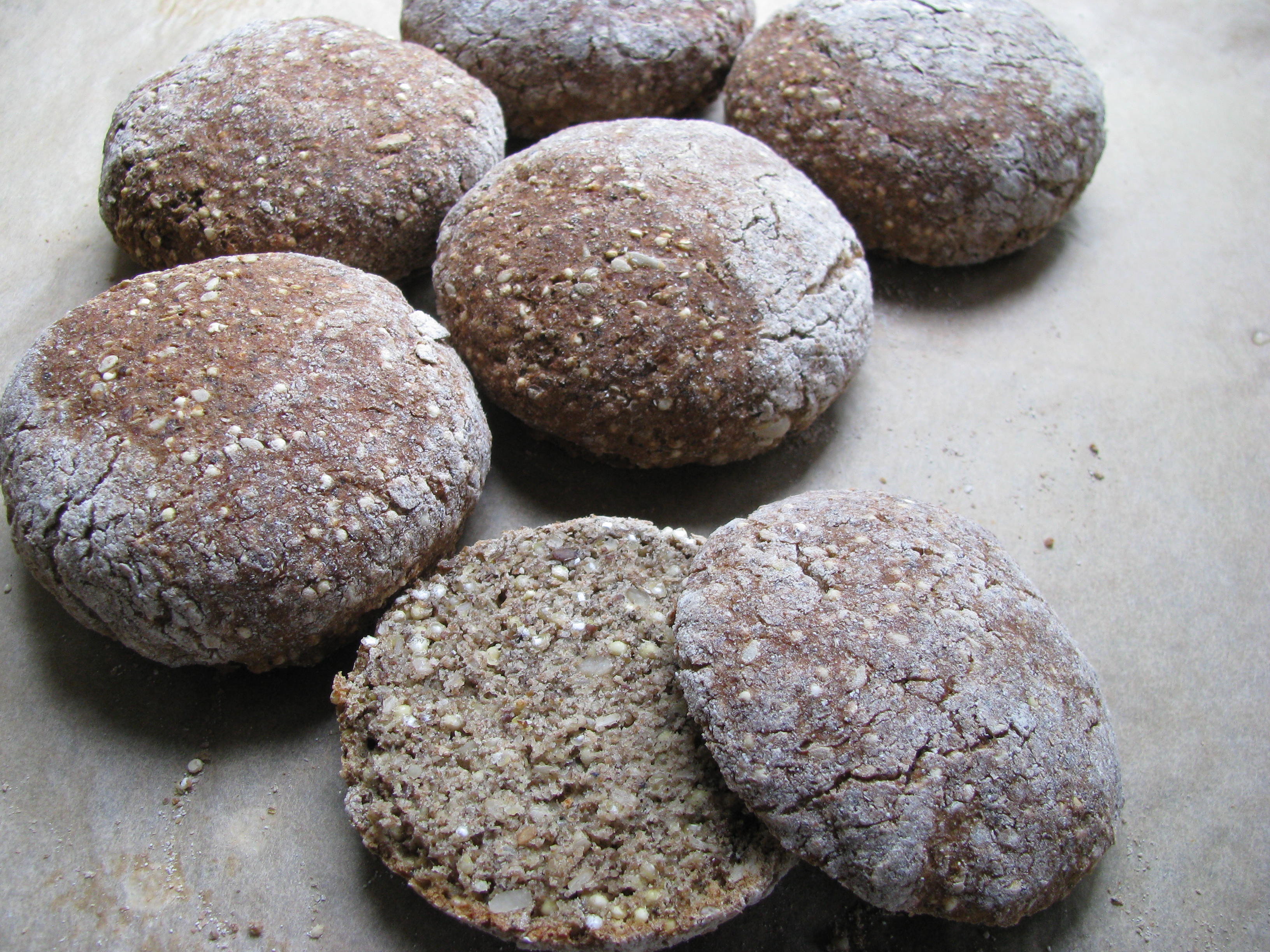
    Hearty grain buns baked 

    Hearty Grain Buns

    Makes 8.

    2 1/2 cups all-purpose flour, plus extra flour for dusting (I used 1 ½ cups spelt flour, ½ cup buckwheat flour, and ½ cup oat flour.)

    ¼ cup ground flax seeds

    ¼ cup sesame seeds

    1 cup oat bran (I used ½ cup wheat germ + ¼ cup whole millet. I know this is only ¾ cup total, but the end-product was a perfect consistency.)

    2 tbsp sunflower seeds

    ¼ cup amaranth, quinoa, millet, or poppy seeds or any combo of these (I used quinoa.)

    1 tbsp dulse flakes or ½ tsp sea salt (I used both.)

    ½ tsp baking soda

    3 tbsp beer (I used pineapple juice because it’s what I had.)

    1 ¼ cups buttermilk, half-and-half, milk, or water (I used buttermilk.)

    Preheat oven to 375°. Line a baking sheet with unbleached parchment paper. Place dry ingredients in a large mixing bowl. Whisk together, make a well in center, and add the liquid ingredients. Mix with a wooden spoon. It will be a thick, wet batter. Turn the batter onto a floured surface and form into a loose log about 2 inches in diameter. Cut into 1 ½ inch thick slices then shape into patties. Place the patties onto the baking sheet and bake for 45 minutes, until golden brown. Let cool. Serve as you would an English muffin by slicing patties in half, pop into toaster, and smear with butter.  


  • My nearly 93 year-old mother saved this recipe for me from her April 2010 Guideposts Magazine because the ingredients "sounded like me." It is from the issue's The Healthy Cook feature written by Rebecca Katz, senior chef-in-residence and nutritional director at Commonweal Cancer Help Program in Bolinas, California. She is also author of The Cancer-Fighting Kitchen. I made a batch of these Anytime Bars, which I renamed Nutty Fruity Bars because nuts and dried fruit dominate the mixture, and brought some to my mother. A nutritious delicious treat on this Mothers Day 2010. 

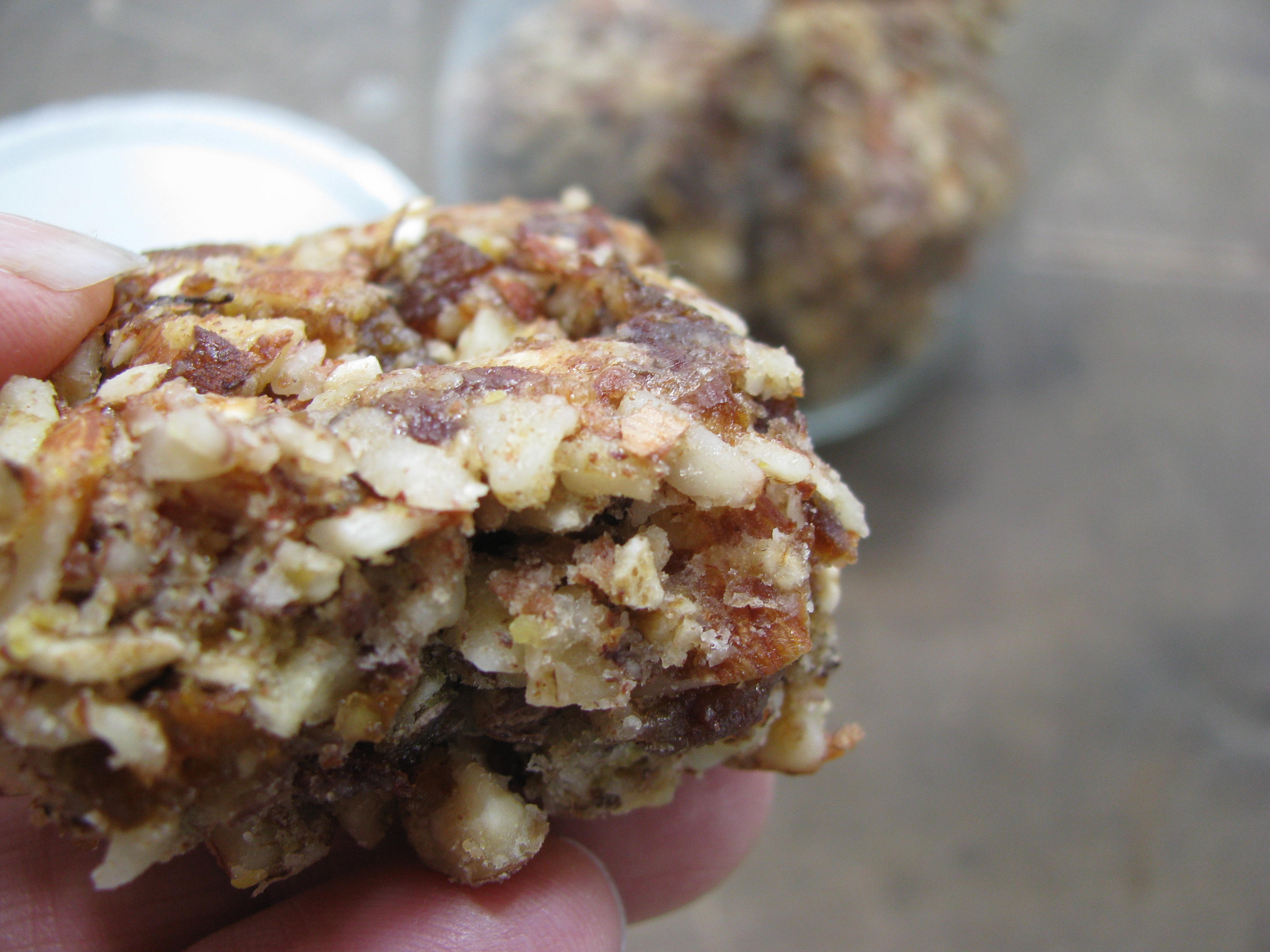
    Nutty fruity bars 

    Nutty Fruity Bar

    1 cup raw pecan halves (I substituted hazelnuts.)

    1 cup whole raw almonds

    2 tbsp spelt flour

    2 tbsp unbleached all-purpose flour (I used buckwheat flour, but you could use any flour.)

    2 tbsp finely ground flaxseed

    ¼ tsp sea salt

    1/8 tsp baking powder

    1/8 tsp baking soda

    ¼ cup old-fashioned rolled oats

    1 ½ cup pitted dates, quartered (preferably Medjool) I used 5 Medjool dates.

    1 ½ cup unsulfured dried apricots, cut in half

    1 pastured egg

    5 tbsp real maple syrup

    1 tsp vanilla

    Preheat oven to 350° and line a baking sheet with parchment paper. Spread pecans in a single layer on baking sheet and toast for 7 to 10 minutes, until aromatic and slightly browned. Watch carefully, as they burn easily. Repeat this process for almonds. Turn oven down to 325°. (I didn’t toast the nuts.) Lightly oil a 9-inch square pan. (I lined the bottom of the pan with unbleached parchment paper instead.) Combine spelt flour, all-purpose flour, flaxseed, salt, baking powder, and baking soda in a food processor and process for 5 seconds to combine. Add pecans and almonds; pulse 5 times to coarsely chop. Add oats, dates, and apricots. Pulse 10 to 15 times, till mixture is well chopped but coarse. In a large bowl, whisk together egg, maple syrup, and vanilla until combined. Add fruit and nut mixture and mix well, being sure to spread any clumps of fruit. Spread mixture in pan in an even layer and bake for 25 to 30 minutes, until set and golden brown. Don’t overbake or bars will be too dry. Let cool on wire rack for 5 minutes, then cut into 25 squares. (I cut mine into 16 squares.) Leave bars in pan until completely cool so they’ll hold together when you remove them.