Whiteley Creek Homestead

LIFE AT THE END OF A DIRT ROAD IN CENTRAL MINNESOTA

organically grown triticale in our field
canoeing in our wetlands
raspberries growing wild on our property
our back porch fieldstone fireplace
  • Dick and I had a few days' gap in our bed and breakfast schedule, so we headed for Ely (Minnesota) near the Boundary waters Canoe Area with a stop in Grand Rapids to tour a logging camp. My goal in Ely was to research the CCC Camp where my father spent time in 1933 when he was 23 years old. (He died in 2004 at the age of 94 and was afflicted with alzheimers for the final two years of his life.) Since there were several CCC Camps in the northwoods at that same time, I wanted to discover which one he served in by locating a roster listing his name and then determine the camp's site. I had no reason to think that I would be successful… I just knew I must try.

    A brief history lesson… The Civilian Conservation Corps (CCC) was a program established by President Franklin D. Roosevelt, in 1933 at the height of the Great Depression, to put unemployed men to work so they could support their families. Their task was to replant trees and grass in heavily logged areas because, at that time, the lumber industry was under no obligation to restore lands after harvesting lumber. In addition, the program's goal was to develop and improve the state parks system, which was in its infancy, by building picnic shelters, campgrounds, fireplaces, beaches, parking areas, log cabins, fire lookout towers, bridges, roads, hiking trails, canals, ditches, and dams. Their work provided the rustic look of parks that we know today. Most CCC Camps were abandoned when the U.S. entered World War II. In 1942, the CCC was officially disbanded and the buildings were dismantled and hauled away to be reassembled as Army barracks. 

    Back to my research… My first stop was the Ely Chamber of Commerce where I was given a list of all the CCC Camps in the Ely area and their location designated by dots on a hand-drawn map. The Chamber personnel suggested I stop at the Ely-Winton Museum of Mining for further information. Enroute to the museum, I phoned my sister Marlene, who has done extensive family geneology, to ask her if she knew the camp's number. She told me that she seemed to recall the number 17 from an old photo. I ran through the list of camps… There were 10 in all, I think. Could it possibly be No. 711 since the other numbers weren't vaguely close to the number 17? She thought so. Upon arrival at the museum, an employee helpfully retrieved a well-worn paper bound compilation of information on all CCC Camps in Minnesota. Upon leafing through the book, I discovered a most wonderful treasure. There before my eyes was a "Roster of Company No. 711 Ely, Minn."  There was my father's name, Andrew L. Waltz Canby, Minn. (his birthplace), at the bottom of the 3rd column! (Click on the page to enlarge it and then reduce it to 75%.) 

    CCC Roster of Company No 711 Ely Minn 

    So I now knew the name of his group. This provided the stepping stone I needed to search for the camp's location. Information uncovered at the Ely-Winton Museum of Mining showed that Company 711 was also known as "Portage River" and "F-8" on the map from the Ely Chamber of Commerce pinpointed the location in a gravel pit approximately 23 miles from Ely on a road that is still named the Echo Trail. The pieces were coming together. It was late afternoon when we set out on the 23-mile journey to find where my father had spent time as a young man. The map didn't prepare us for the snake-like curves that lay ahead and the hour it took us to get there. The pavement turned into dirt and the road less maintained. It seemed symbolic of turning back time as we drew closer to our destination. Our research indicated that we should look for a gravel pit. Sadly, we were so intent on searching for a "Portage River" sign, which we missed, and watching our odometer that we never saw the gravel pit. In hindsight, we do slightly remember passing a gravel pit, but it didn't register at the time. The sun was beginning to dip below the tree line when we concluded that we definitely were beyond where the camp might have been. We didn't want to risk being stranded after dark on that desolate road, so we decided not to back track but instead continue on down the Echo Trail where it intersected with a somewhat more travelled road. 

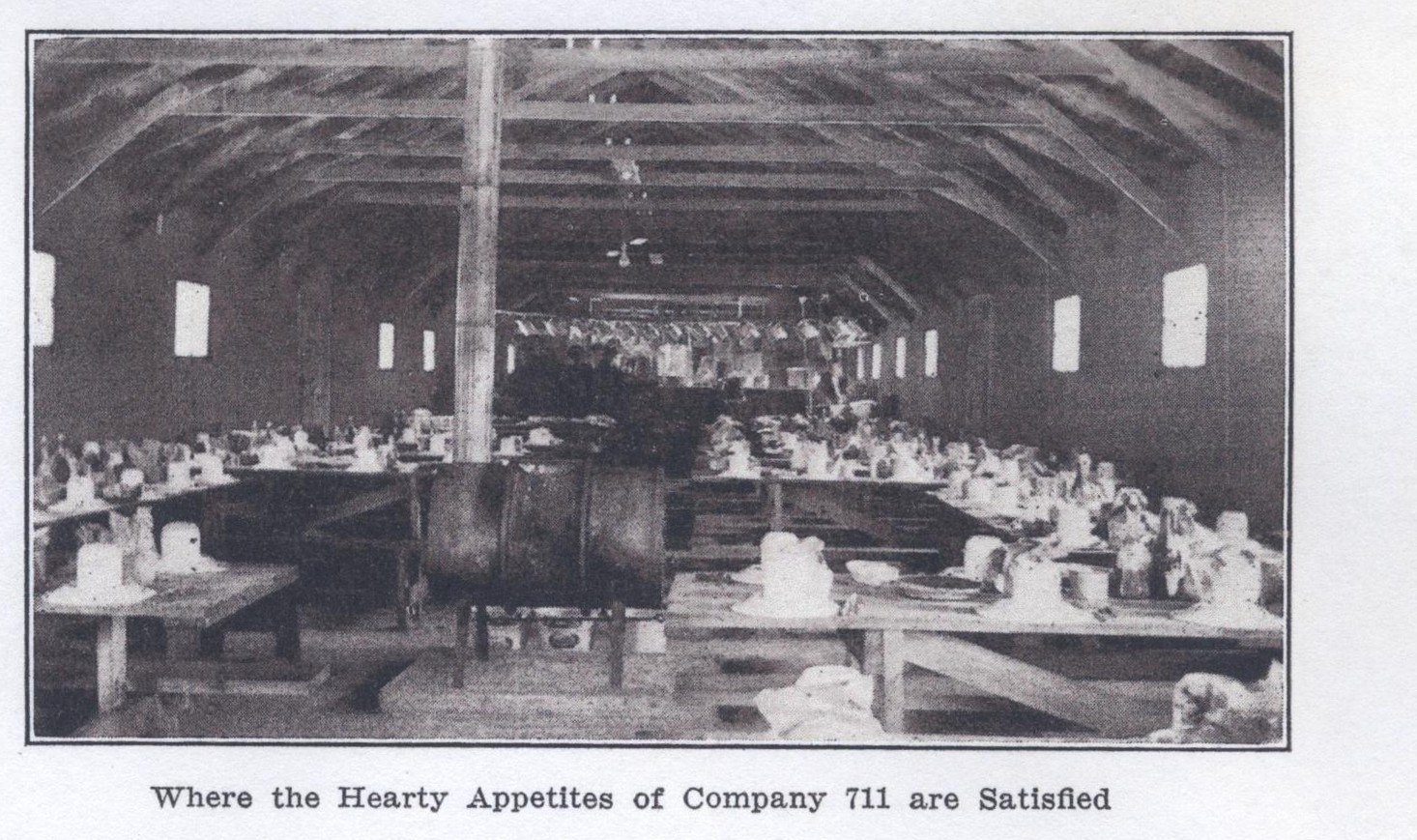
    Seeing the gravel pit would have probably made me sad… much like returning to my grandparents' farmhouse 1/2 way between Brainerd and Pierz, after they both had died and new owners had abandoned the house to build a new structure next door. However, I will more than likely attempt to locate the gravel pit again… to stand where my father spent his early years so long ago. For now, I will remember what the camp looked like through old photos copied from the museum's tattered book that captured a short chapter in the lives of men who developed and preserved the park system that we know and enjoy today.

    CCC Camp No 711 Buildings     

    CCC Camp No 711 Mess Hall


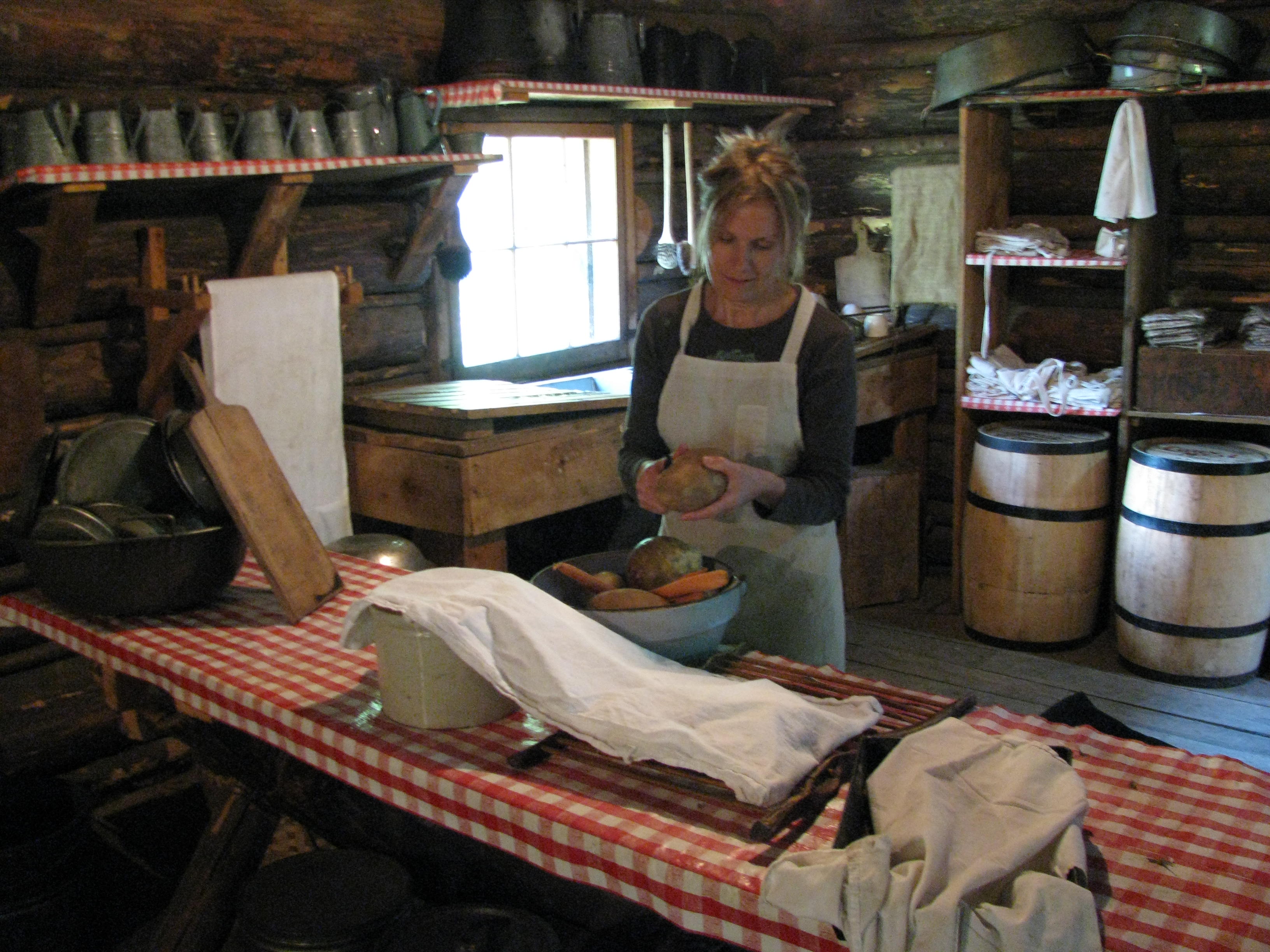
  • Yesterday Dick and I spent the afternoon at the Forest History Center in Grand Rapids (Minnesota), which is run by the Minnesota Historical Society. We toured a 1900 northern Minnesota logging camp that included a bunkhouse with rows of beds on each side and a potbelly wood stove in the center of the room, a blacksmith shop, horse stable, small general store where lumberjack clothing could be purchased, and my favorite… a large food prep/dining hall building. I think I've found my niche. The rows of wooden picnic-style tables are situated in front of where I am standing in the logging camp kitchen preparing potatoes, carrots, and onions for venison stew.    

    Forest history center logging camp kitchen grand rapids 

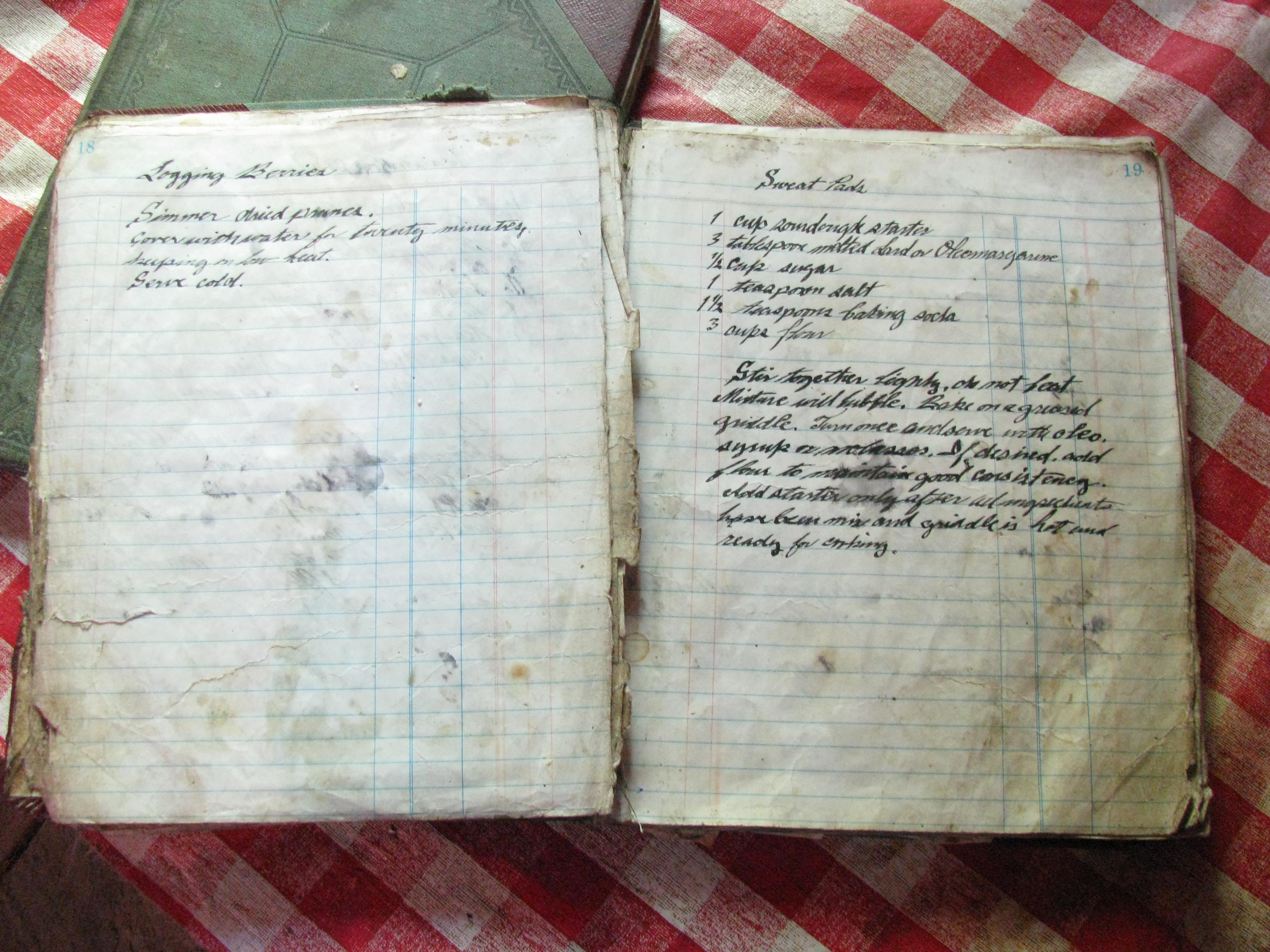
    Next comes prep for tomorrow's breakfast… "logging berries" (prunes) that are served each day and "sweat pads" (pancakes). 

    Forest history center logging camp cookbook grand rapids

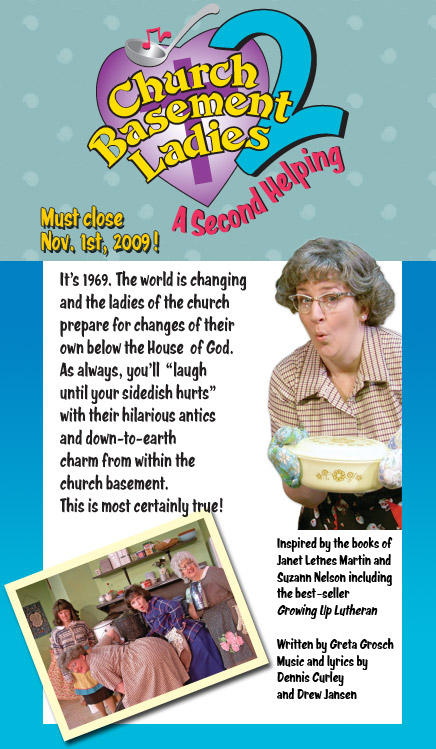
  • Maybe it was the flashbacks of the Plymouth Playhouse "Church Basement Ladies A Second Helping Musical" we attended last Wednesday…

    Church basement ladies musical  

    Maybe it was because it is so small town… so Minnesotan that, when I saw an ad announcing a hotdish competition at Prairie Bay Restaurant in Brainerd, I knew I wanted to participate. Win or not, it was such a novel idea that I wanted to support and be part of the fun.  

    Prairie bay hotdish competition 

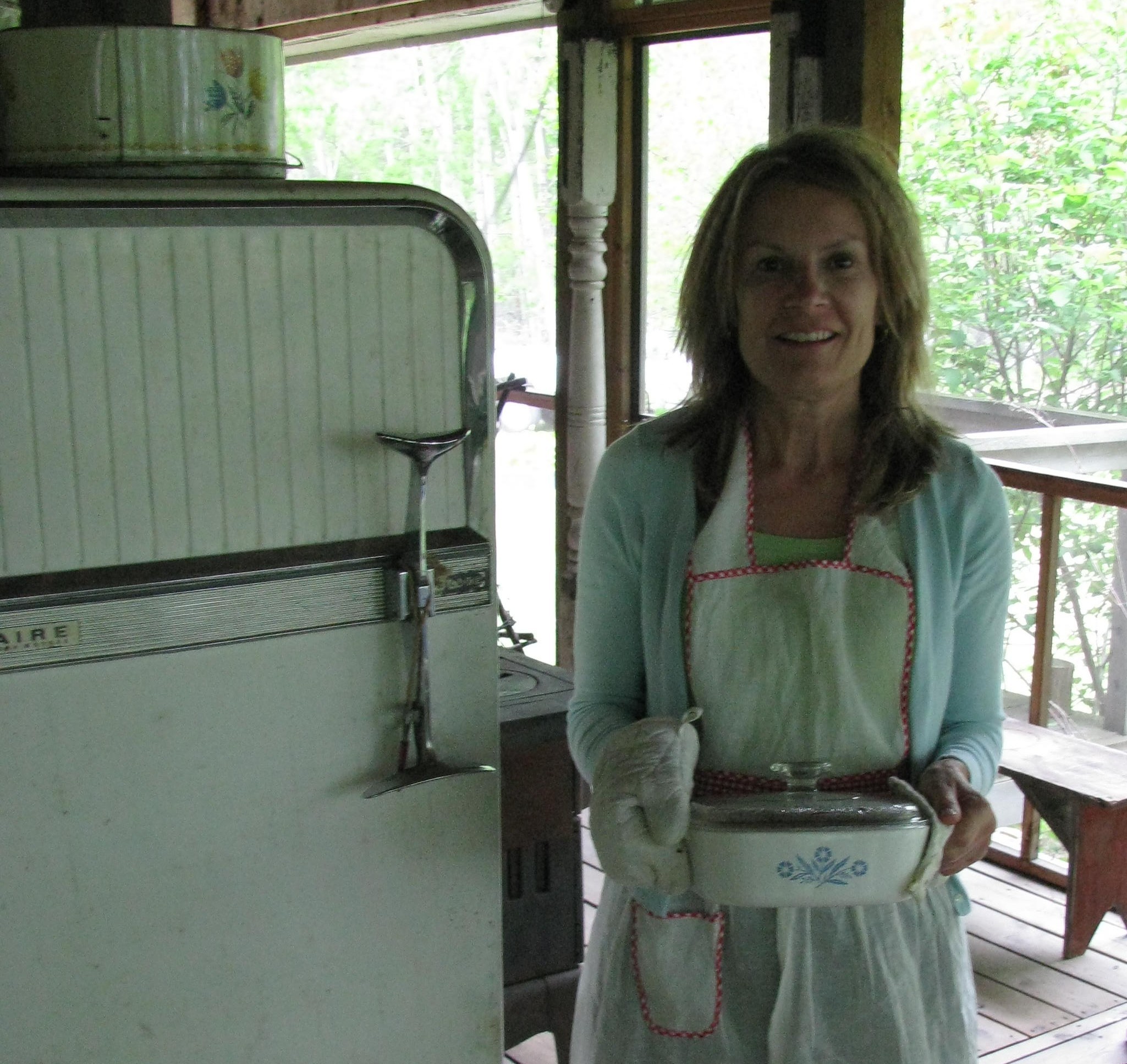
    Last night I browned ground buffalo from A & J's Up North Buffalo Ranch in Pequot Lakes (Minnesota), cooked Canoe White 'n Wild Rice from Mille lacs Wild Rice Corp. in Aitkin (Minnesota), boiled eggs from my free-roaming organically-fed laying hens Olga, Pearl, Flossie, Opal, Henny Penny, Cora, and Phoebe, and shredded, chopped, diced, and simmered the remaining ingredients so that this morning I could assemble my hotdish to pop into the oven after serving breakfast to my B&B guests.  Here I am with hotdish in hand excitedly on my way to Prairie Bay. I thought the 1956 fridge on my backporch, that we use for guests' evening desserts and beverages, enhanced the nostalgia of the hotdish theme so I chose to have my photo taken there.

    Hotdish competition prairie bay  

    No… my Beef & Cabbage with Rice Hotdish wasn't chosen by the panel of five judges consisting of 4 chefs and the father of another chef, but the waitresses were rooting for me because of my overall presentation… apron and vintage casserole dish. They thought I looked authentic… that I looked the part. The winning entry was a chicken wild rice  hotdish. If I had been judging, it would have been my 1st choice, too. It was colorful with julienned carrots and the chunks of chicken breast created a striking contrast to the darkness of the wild rice. It had a nice crunch from slivered almonds and it was very tasty. (After the judging was completed, all participants were invited to sample the hotdishes.) The restaurant's owners stated that they are planning monthly competitions with salads and desserts coming up next. I had better start planning. Note: Since today is the 31st and my hotdish event took center stage, I will share my recipe for May's Cake-of-the-Month (Almond Rhubarb Coffee Cake) in June. 

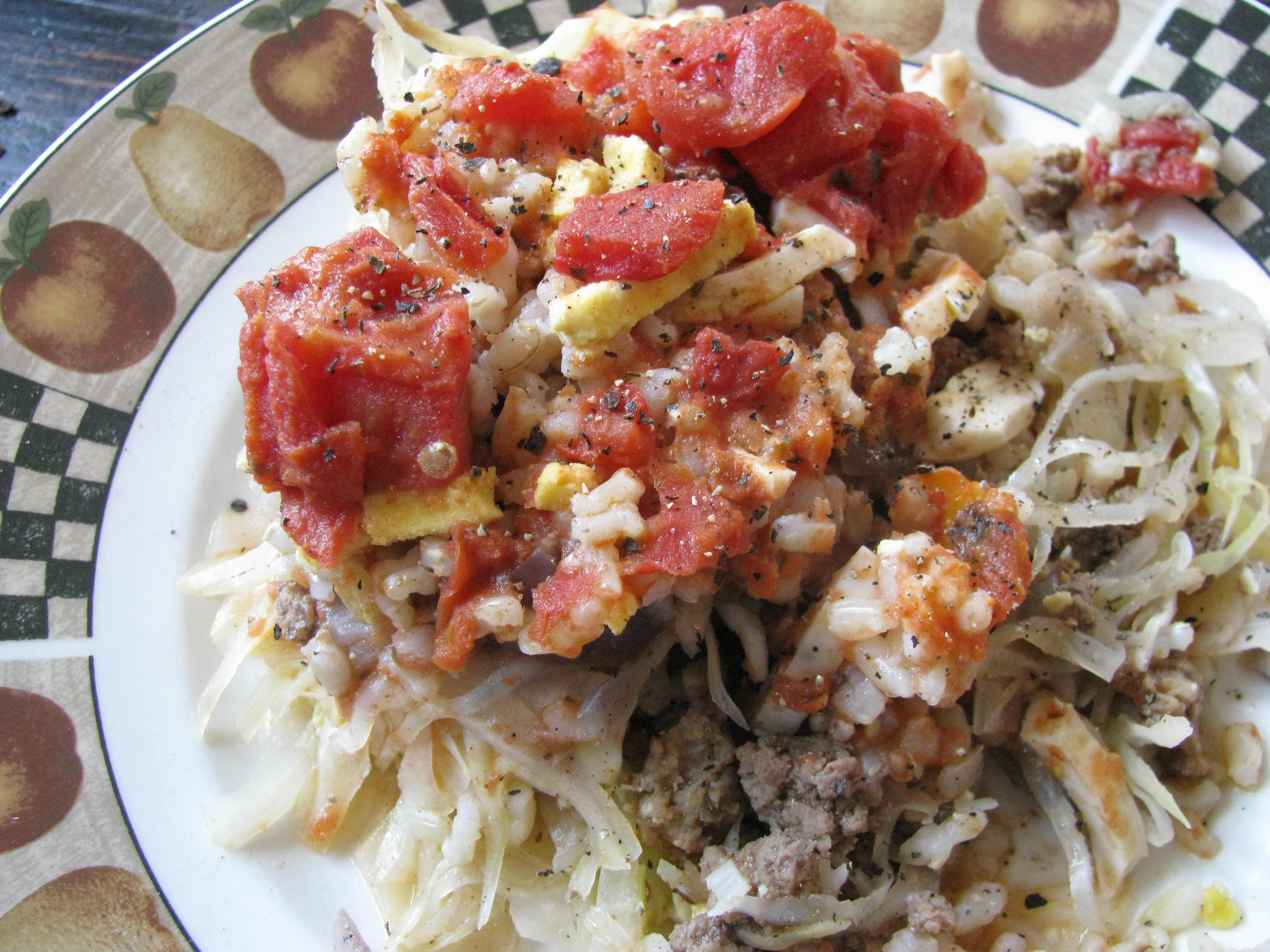
    Beef & cabbage with rice
      

    Beef & Cabbage with Rice Makes two casseroles or one 9×13 baking dish..

    1 lb ground beef or ground buffalo

    2 med. onions, chopped

    2 cloves garlic, diced

    1 ½ cups cooked white ‘n wild rice (Bring ¾ c rice + 1 ½ cups water or broth/stock to boil. Simmer for 20 min. until water is absorbed and rice is tender. Remove from heat, fluff with fork, then let sit for 5 min.)

    4-6 hard cooked eggs, chopped 

    2 tbsp butter

    2 tbsp flour

    1-14 ½ oz can stewed tomatoes with Italian herbs

    2 tbsp catsup

    1 ¼ cups water

    ½ tsp garlic salt

    1 small head cabbage, shredded

    1 tsp salt

    coarsely ground pepper

    Brown ground beef with onions and garlic. Cook rice. Prepare hard boiled eggs. Melt butter in saucepan and add flour. Stir to mix. Add canned tomatoes, catsup, water, and garlic salt. Heat to a simmer. Shred cabbage. Butter casserole. (You need two casserole dishes or a 9×13 baking dish.) Add rice and chopped eggs to browned ground beef. Spread half shredded cabbage in (each) casserole then top with half meat mixture. Sprinkle with 1/2 tsp salt and some pepper. Spread another layer of cabbage then remaining meat mixture. Sprinkle with 1/2 tsp salt and some pepper. Pour tomato mixture over the top. Cover with a lid or aluminum foil. Bake in 350 degree oven for 45 minutes to 1 hour. Season at table with Johnny's Seasoning Salt or your own favorite. 

  • My first asparagus of the season… not from my garden, but freshly cut from a local garden and sold at Brainerd's food co-op. It's pretty just to look at, but it's destined for the soup pot.

    Asparagus 1st of the season 2009

  • Yesterday morning, after I served my guests breakfast and cleaned up afterwards, Dick and I grabbed a few overnight essentials and headed for Minneapolis/St. Paul to attend a 7:30 p.m. performance of "Church Basement Ladies A Second Helping" last evening at the Plymouth Playhouse. It was equally as entertaining as the original "Church Basement Ladies" we attended a year ago. The setting is 1969… three years later. It closes Nov. 1, 2009, so don't delay making plans to see it.

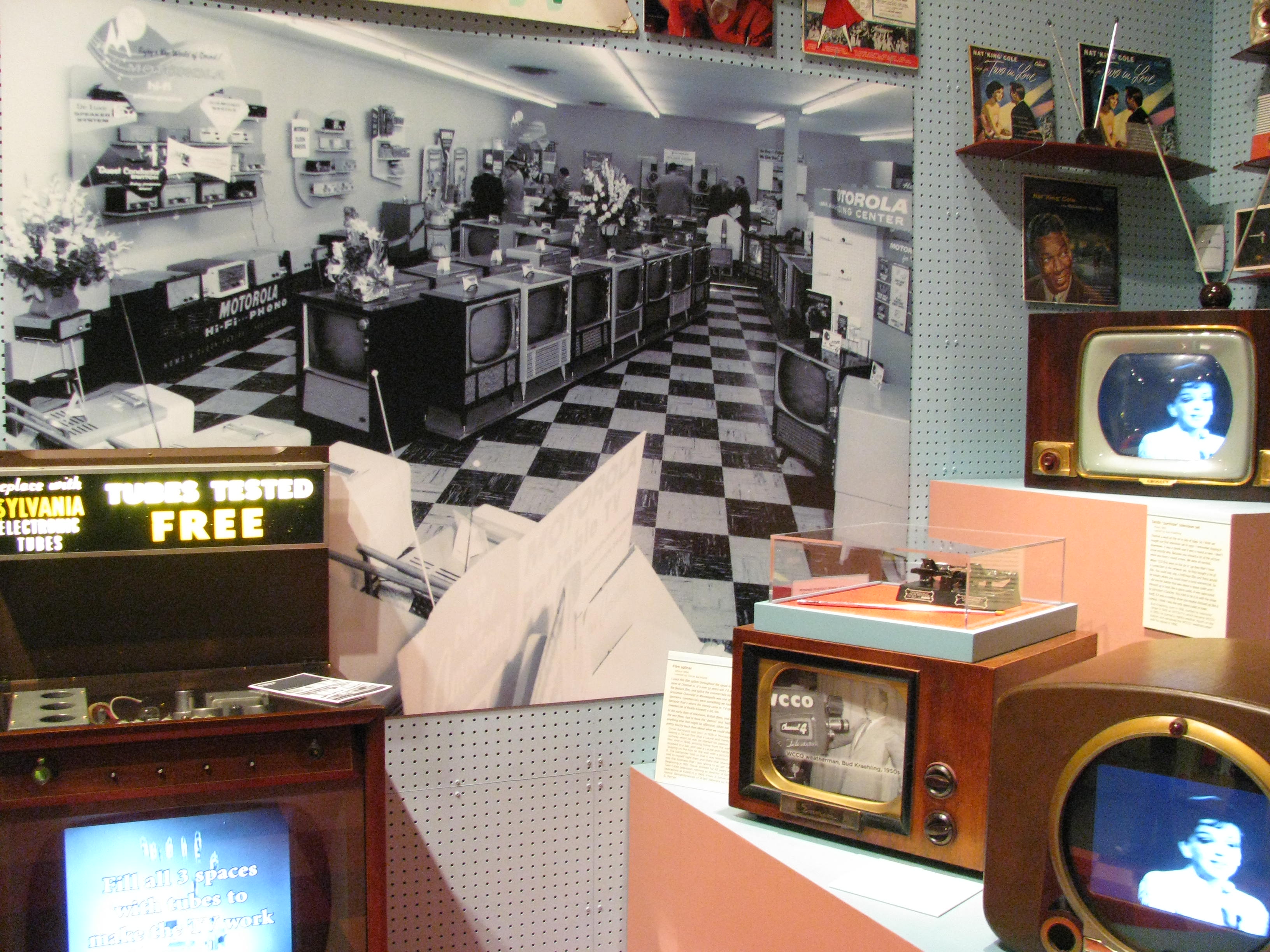
    This morning, we headed to the Minnesota History Center in St. Paul near the Minnesota State Capitol to see "Minnesota's Greatest Generation" which is an exhibit that opened May 23, 2009 featuring stories of people during the Depression, World War II, and the post-war boom. Although all of the exhibits were so creatively, artistically, and professionally arranged and bursting with interesting information, I was especially drawn to ones that evoked childhood memories such as this store selling black and white TVs and offering "tubes tested free".

    Mn history ctr 1950s tv store 

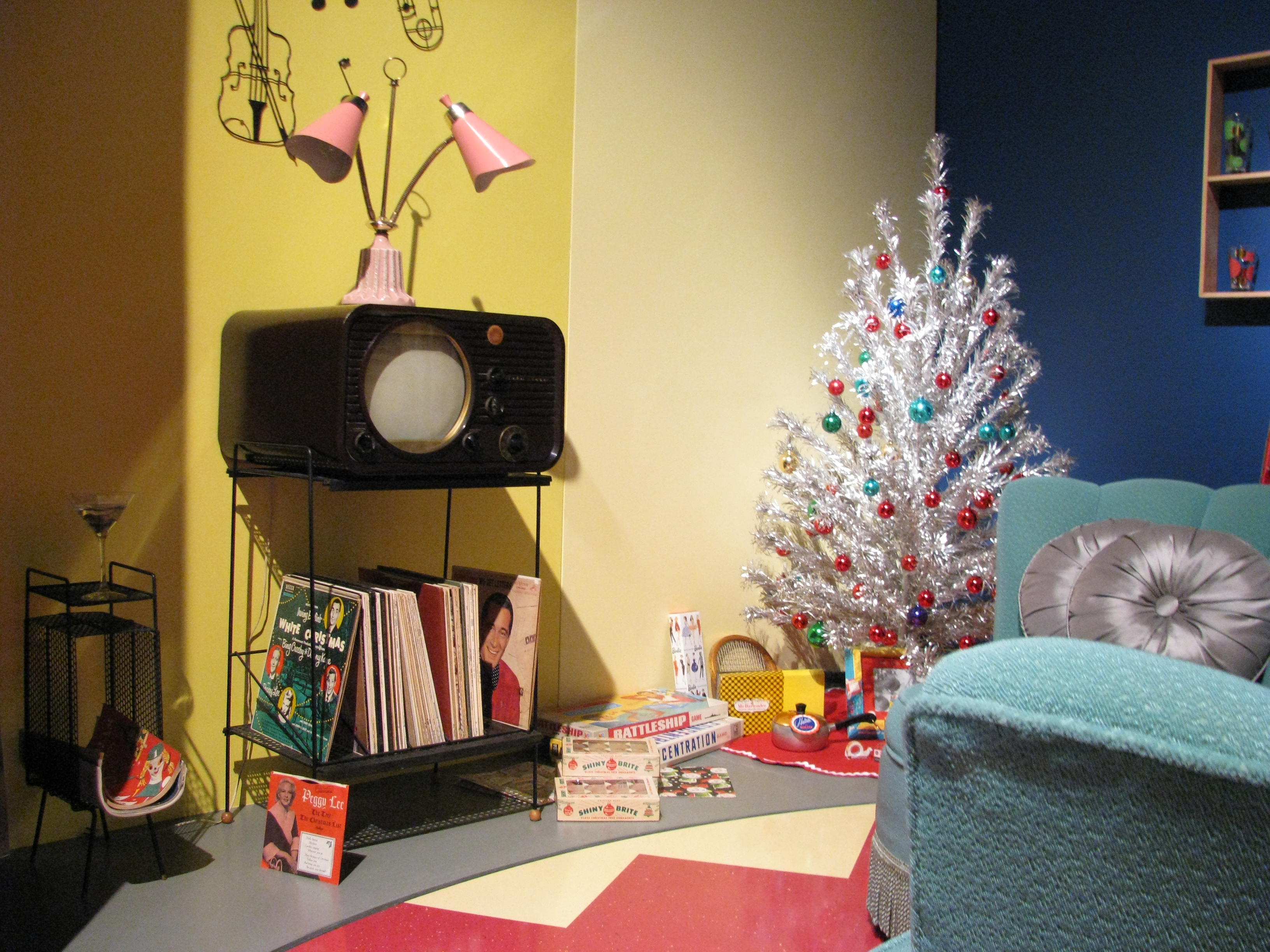
    Wouldn't you love to recreate this colorful living room in your own house? The exhibit's floor is built to spin in a lazy susan turntable fashion to show the 1950s era kitchen on the other side of the wall, but it apparently wasn't working so I was only able to peek behind to see the the room that is just as sweet as the living room.

    Mn history ctr 1950s living room 

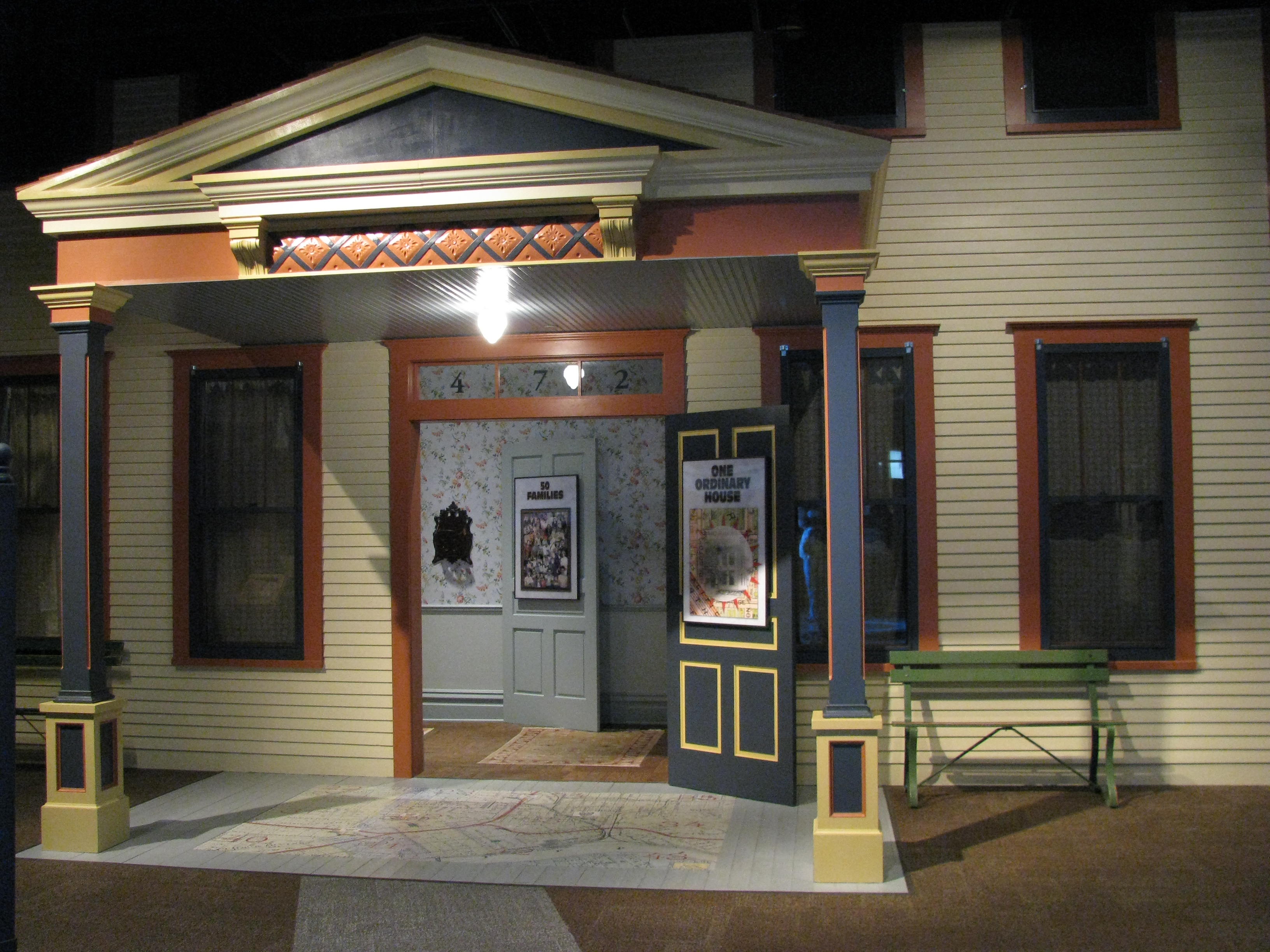
    Besides "Minnesota's Greatest Generation", there are nine other exhibits at the Minnesota History Center that are equally as interesting so plan to spend the day there. The house in the photo below is part of the "Open House: If These Walls Could Talk" Exhibit. It follows 5o different families that lived in a St. Paul house over the span of 118 years. It seems like a huge number of families to have lived there but, after the original family moved across the street, they transformed the house into three rental apartments so three families resided there at the same time. As you walk through the home, the decor and furnishings change to reflect the passing decades and recordings of actual residents tell the story of the families who lived there. It was easy to imagine the birthday parties, the family dinners, the everyday bustle of activity that made it home for so many people.   

    Mn history ctr house tenants 118 yr span 

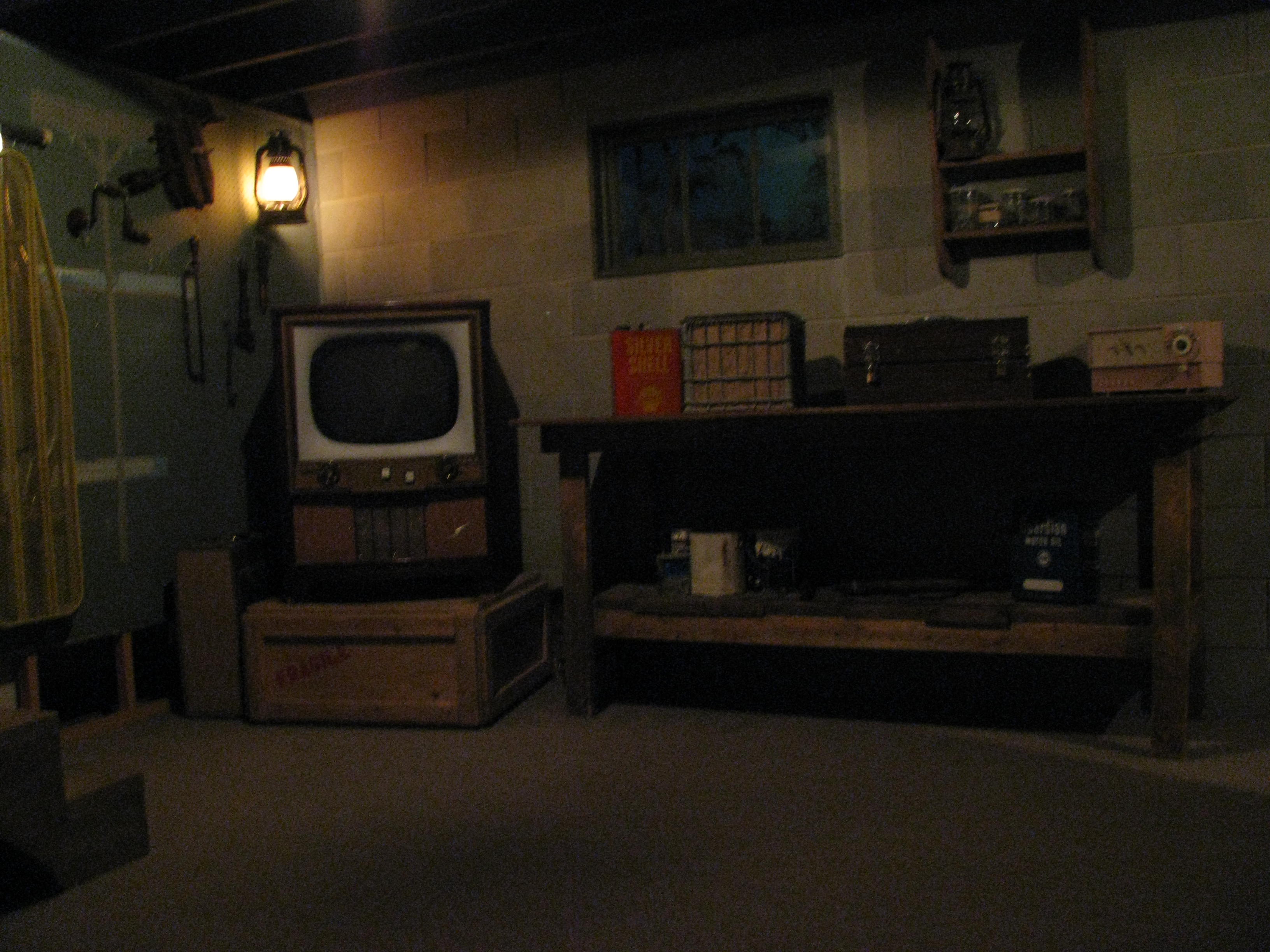
    This "basement", where we sat through a simulation of one of two F4 tornadoes that hit Fridley, Minnesota on May 6, 1965 just over an hour apart, is one part of  the "Weather Permitting" Exhibit. It was a devastating storm that destroyed or damaged one out of every four homes in this Minneapolis suburb. The sounds of the howling roaring wind, breaking glass, and debris flying about outside were so realistic that it took every ounce of self-control to not claw at Dick sitting beside me and to supress a blood-curdling scream. The color of the "sky" outside the basement window turned a green color typical of severe storms and a tornado siren wailed. The walls shook and the radio sitting on the workbench came on with an announcer urging residents to take immediate cover. The oldtime television turned on after the storm had passed with actual footage of the tornado and residents retelling stories of the harrowing experience. It was the closest to experiencing the real thing as I care to ever relive.   

    Mn history ctr fridley tornado 

    Adult admission is only $10.00 for access to all of the 10 exhibits. If you have a "Blue Sky Guide" Community Coupons Book, which offers grocery, dining, entertainment, health and style, travel and recreation, yard and garden, and home coupons for destinations in the Twin Cities Area, there is a coupon for 2 for 1 admission to the Minnesota History Center. (I received a Blue Sky Guide free at the Living Green Expo earlier this month since they are given out to the first 100 or so in line for the event. They normally sell for $20.00.) Pack a lunch, as there are tables to eat outside. The entire experience was such a fun way to spend an inexpensive day!

  • Each Memorial Day, Dick and I attend an outdoor ceremony honoring men and women presently serving in a branch of the armed forces and those who have been injured or killed protecting our country and freedom. A speaker at this year's event reminded us that "freedom is not free". It comes at a cost. He shared Eleanor Roosevelt's Wartime Prayer. "Lest I keep my complacent way, I must remember somewhere out there a person died for me today. As long as there must be war, I ask and I must answer was I worth dying for?" This quote has resonated so clearly in my mind since the words echoed from the podium to where we stood under a mature stand of oaks and pines at the edge of a crowd of people gathered at the cemetery. It has caused me to consider how I choose to spend each day… to make my life matter. 

    Flag salute

  • Today Dick and I went on a field trip to Seven Pines Farm in Verndale (Minnesota) 45 miles from Brainerd accompanied by about 20 other members of our local food co-op. The tour was hosted by owners Kent and Linda Solberg whose focus is grass-based agriculture and pastured egg production. They use New Zealand-style swing parlors to secure their cows for milking in their immaculately sanitary dairy operation. To provide fresh grazing, animals are rotated to different grassy acreage to provide maximum nutrition. To facilitate the moves, the two chicken coops are built on top of boat trailers to provide portabilty and a large fenced protective enclosure is transported and set up again in the new locations. This is an exterior photo of the portable chicken coops.

    Portable coop exterior 

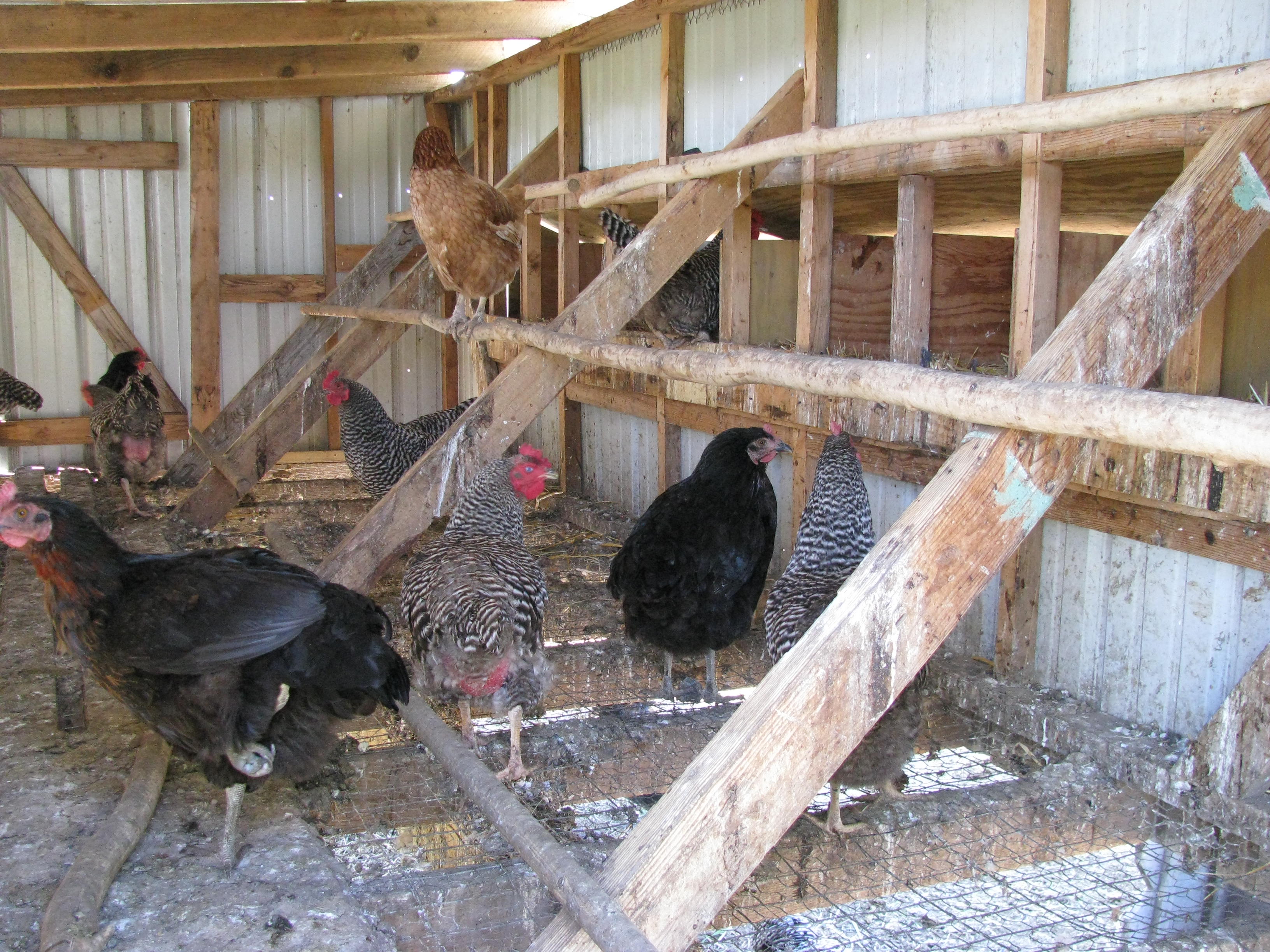
    This is an interior view of one of the portable chicken coops. Eggs are collected by lifting the hinged lid on the box attached to the side of each coop.

    Portable coop interior 

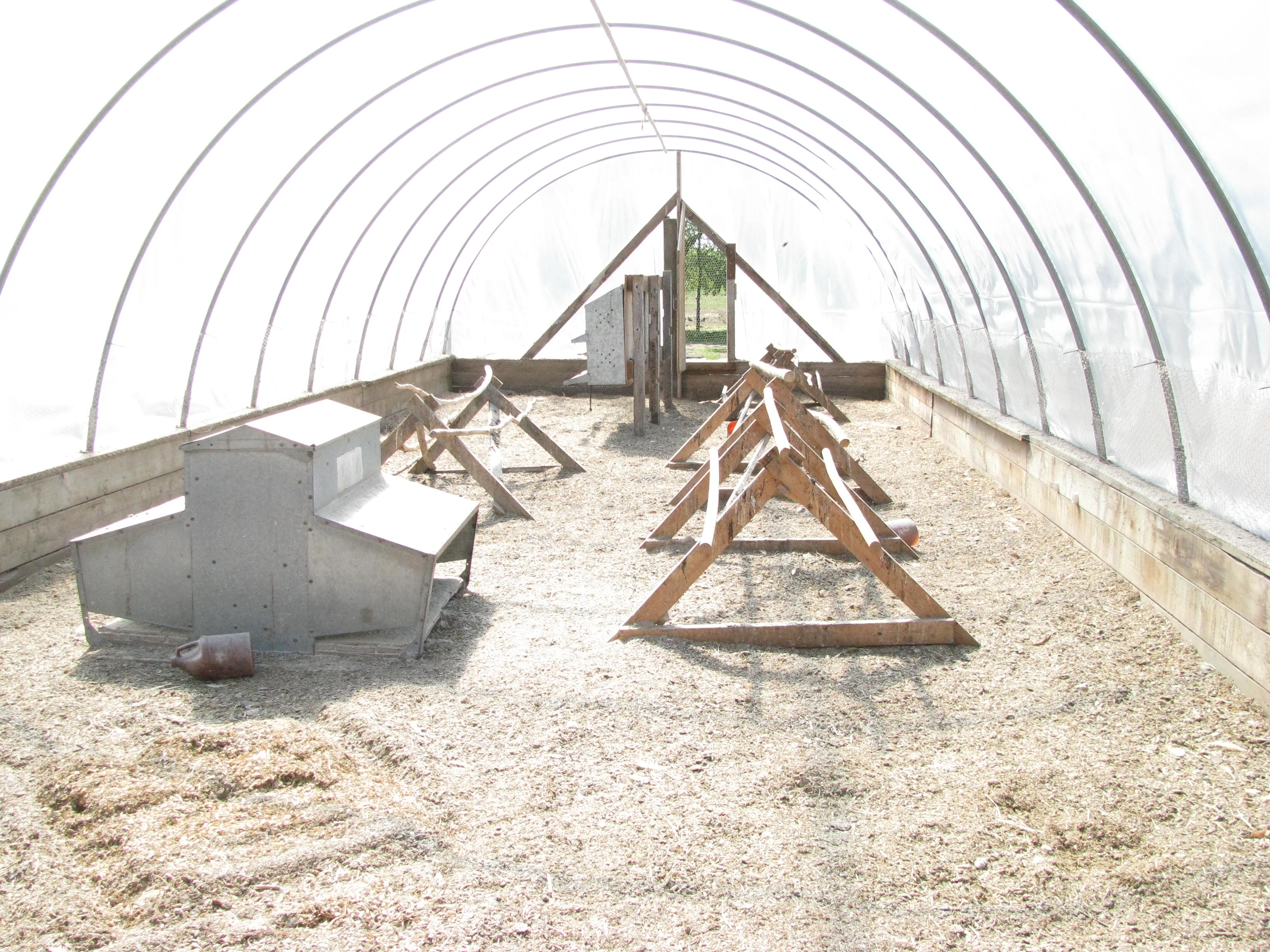
    This is a photo of the chickens winter living quarters. It is a greenhouse so no artificial heat source is needed. You can see one set of nesting boxes near the door at the far end. There is another set near the door where I was standing to shoot the photo. Think about it… In the spring, when the chickens return to their portable coop, the structure could be used as a greenhouse to start garden plants. Does this make perfect sense or what?! 

    Winter chicken coop

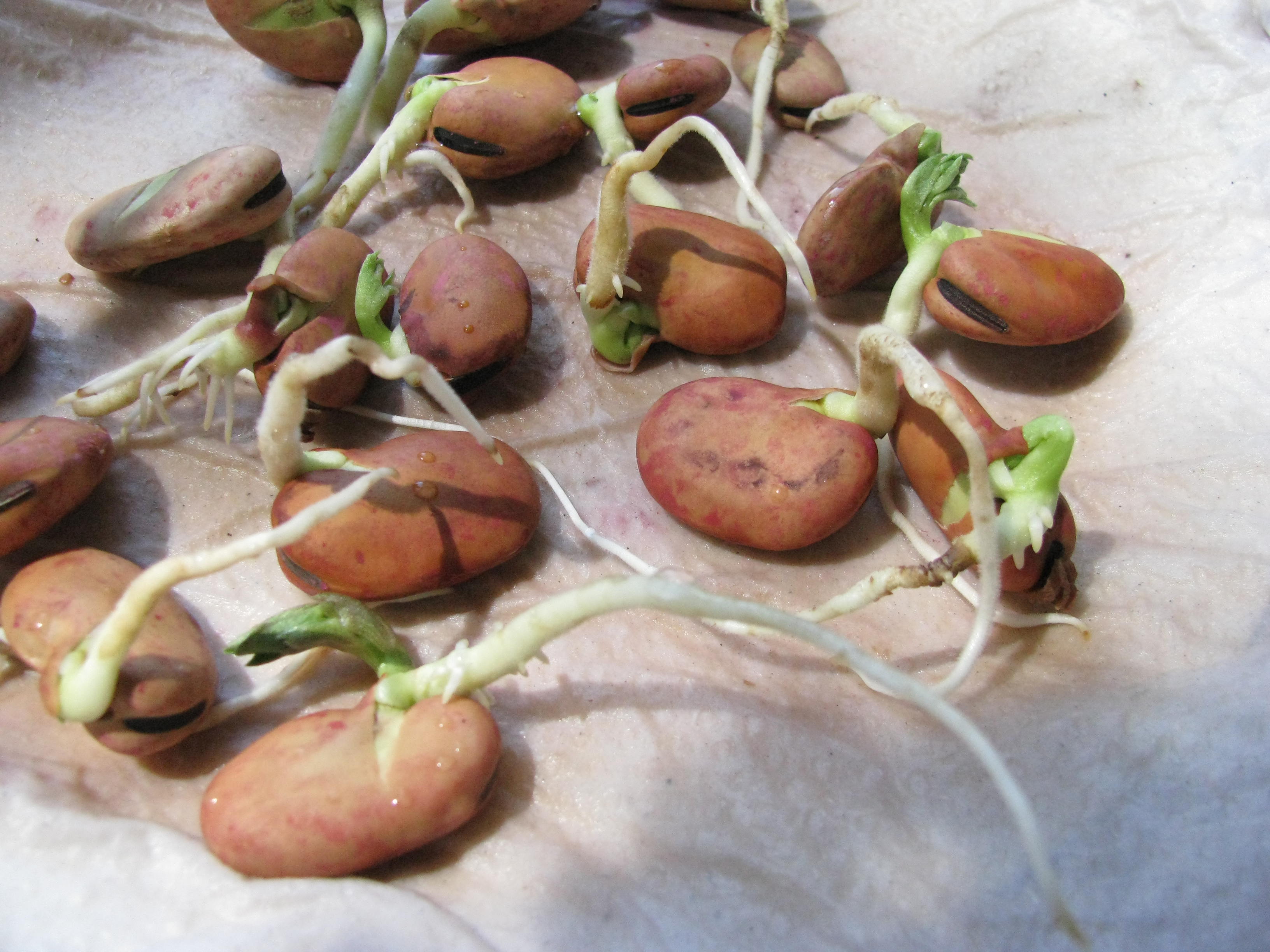
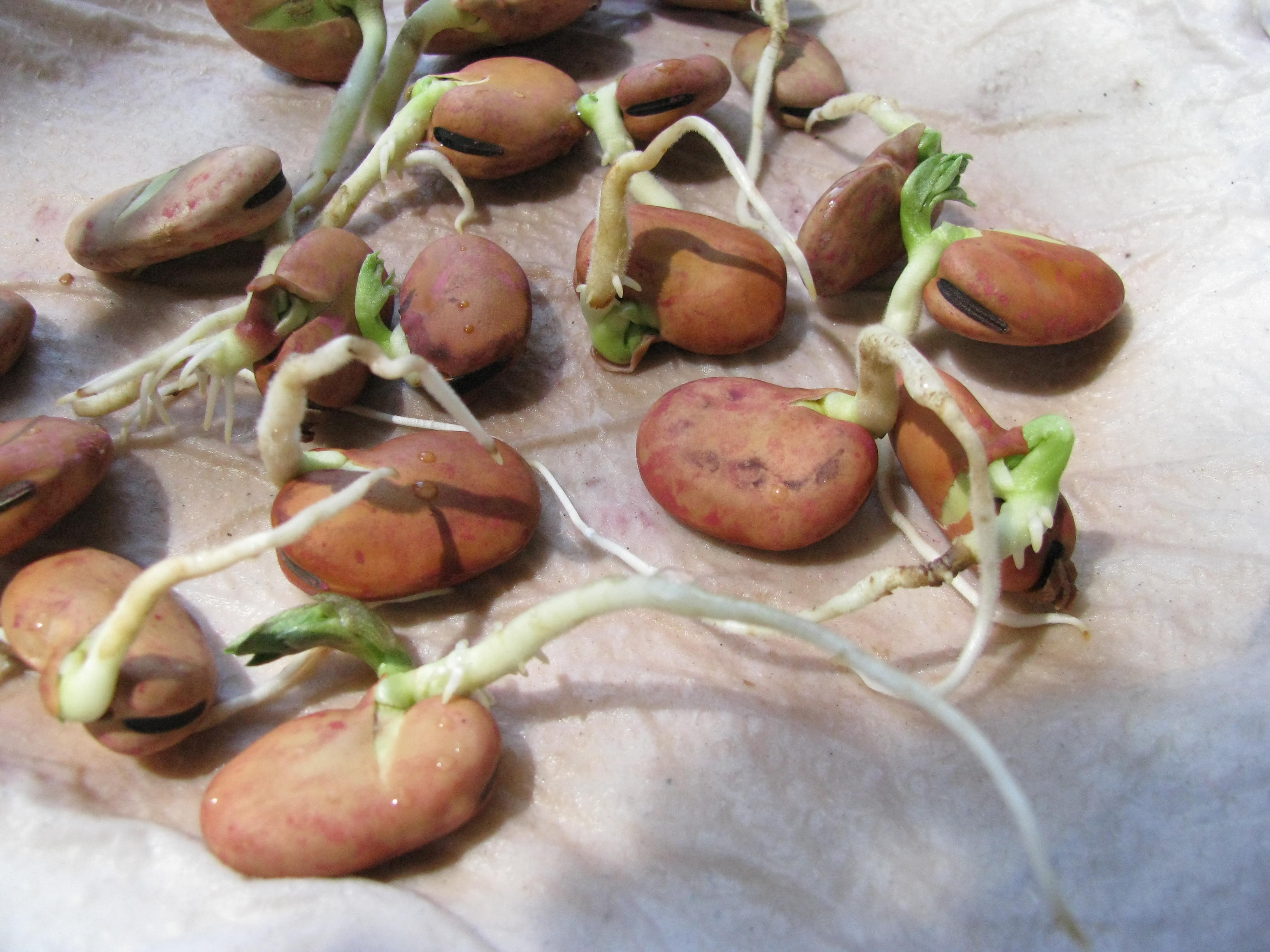
  • Today I planted presprouted fava beans. My research indicates that they are similar to lima beans and they add a large amount of beneficial of nitrogen to the soil. Look at the sturdy tap root the seed sends out! These are Windsor Fava Beans, which are an heirloom variety from England that grow 48" tall. I also transplanted several varieties of heirloom tomatoes… some that I started from seed and others started from seed saved by the owners of Brambling Rows, a farm south of Brainerd where I pick raspberries July through September. They sell the tomato plants at Ace Hardware, which is one of my two favorite small town stores yet remaining from my childhood. (Little Farm Market, where I purchase seed potatoes, onion sets and transplants, and a few filler seeds to round out ones I've mail-ordered, is my other fav store.)  

    Fava beans presprouted 

    Today's planting was in honor of my father's May 20th birthday. When I was growing up on a 160-acre farm 10 miles southeast of Brainerd, it was tradition to plant on his birthday since we could generally assume that it was the beginning of frost-free nights and soil that had warmed sufficiently for seeds to germinate. My father died at the end of January 2004 at age 94, so each year on this day I spend time with him… just the two of us digging in the soil… tenderly remembering his walk on this earth and his "graceful exit". Journalist Ellen Goodman says, "There's a trick to the Graceful Exit. It begins with the vision to recognize when a job, a life stage, a relationship is over – and to let go. It means leaving what's over without denying its value." As my father let go of this world, I too have let go of him. I have released him, but he is still close… especially when I garden.   

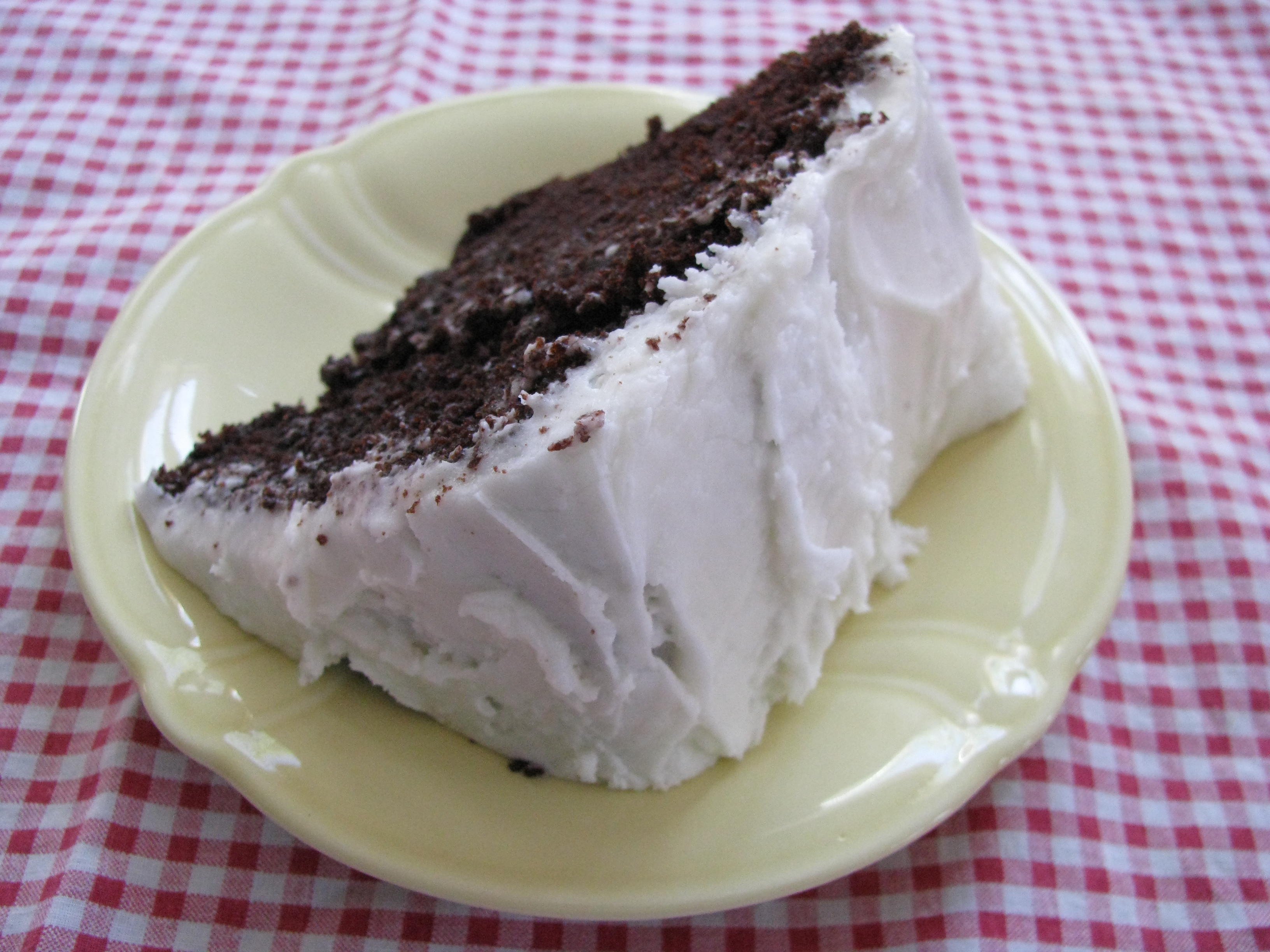
  • Each evening, our B&B guests enjoy a snack or dessert set out on our inn's porch. Today I decided to bake a cake using a Chocolate Buttermilk Cupcake Recipe with Light Cream Cheese Icing Recipe from Martha Stewart which yields 24 light, moist cupcakes. By doubling the recipe, I had enough batter to make a two-layer 6" round cake. The icing recipe, without doubling it, makes enough to frost between the two layers as well as the cake's outside.  

    Chocolate two-layer cake  

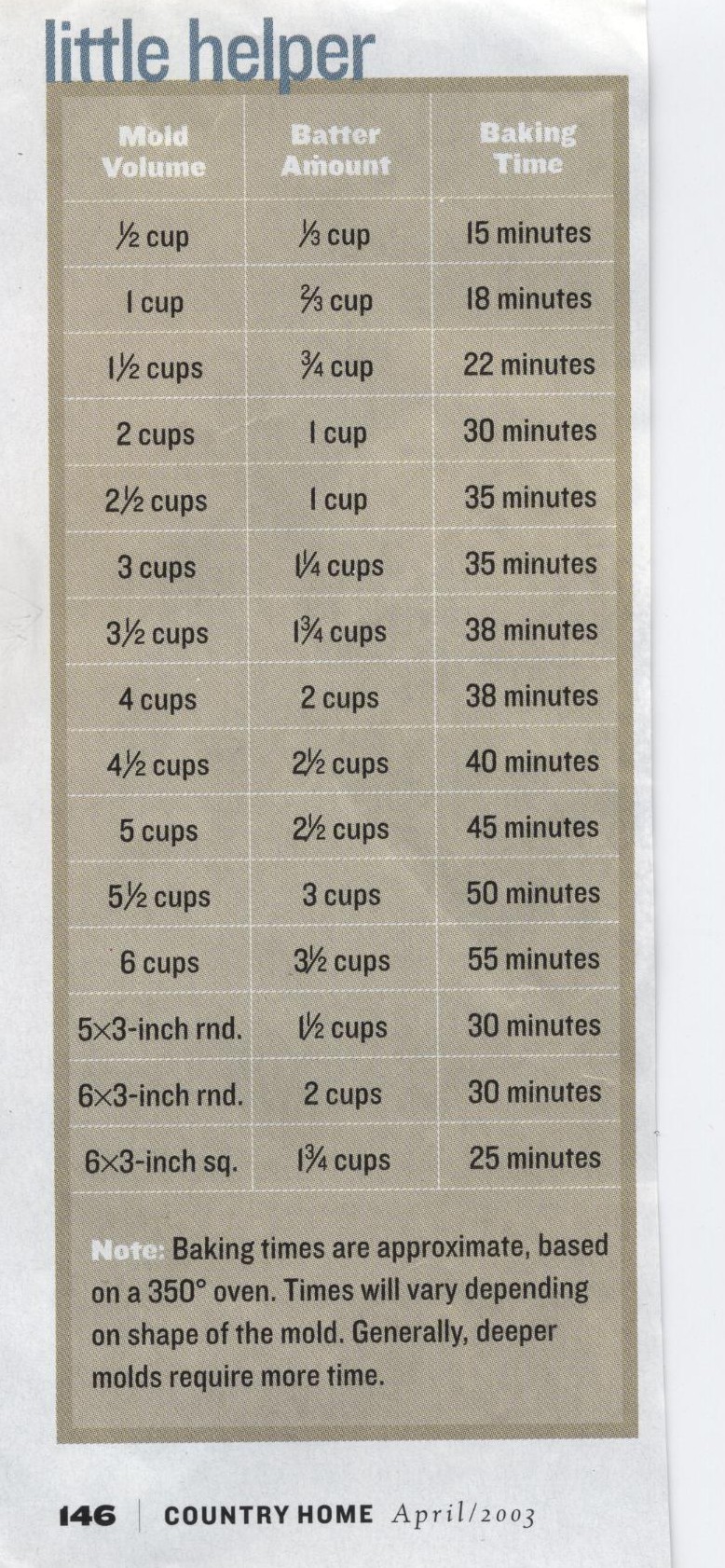
    A clipping titled "little helper" from an April 2003 issue of Country Home Magazine came in handy. It  is a chart showing mold (cake pan) volume, batter amount needed to fill the cake pan, and baking time. To find the volume of my pan, I filled it with water and determined that the pan held 3 1/2 cups. Of course, you wouldn't put 3 1/2 cups batter in the pan because there needs to be room for rising. Referring to the chart, a 3 1/2 cup baking pan requires 1 3/4 cups batter. However, the chocolate buttermilk cupcake recipe (before doubling) makes 2 cups batter. I had a really tough decision to make. Do I eat the extra 1/4 cup of batter or pour it in the pan and hope it didn't overflow? The batter is seriously so good that I was tempted to sit down and gorge myself, but I didn't. I poured it into the pan after first lining the bottom of each pan with a circle cut from natural unbleached parchment paper. (Spreading a little oil in the bottom of the pan before laying the paper down helps it stay in place. I also spread a little oil onto the top of the paper, too, to ensure that it can be easily removed from the baked cake.) At the conclusion of the baking time, it had risen level with the top of the pan. Perfect… (I did need to add an additional 5 minutes to the baking time because of the added depth.) The chart is so useful, so I've included it in this post for you to print off and place in your cake recipe file for that moment in time when you'll be glad you had it too.

    Cake pan little helper chart