Whiteley Creek Homestead

LIFE AT THE END OF A DIRT ROAD IN CENTRAL MINNESOTA

organically grown triticale in our field
canoeing in our wetlands
raspberries growing wild on our property
our back porch fieldstone fireplace
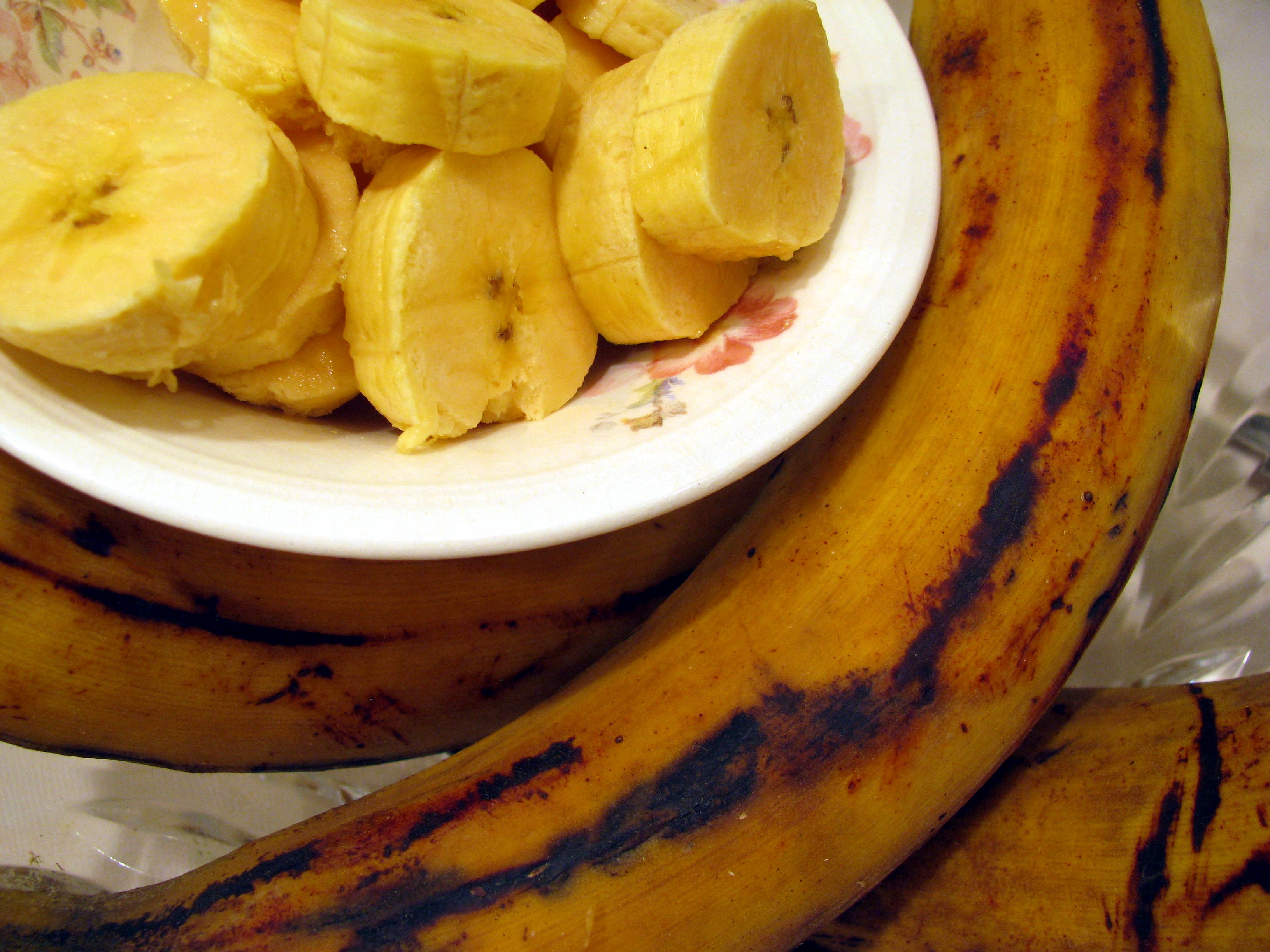
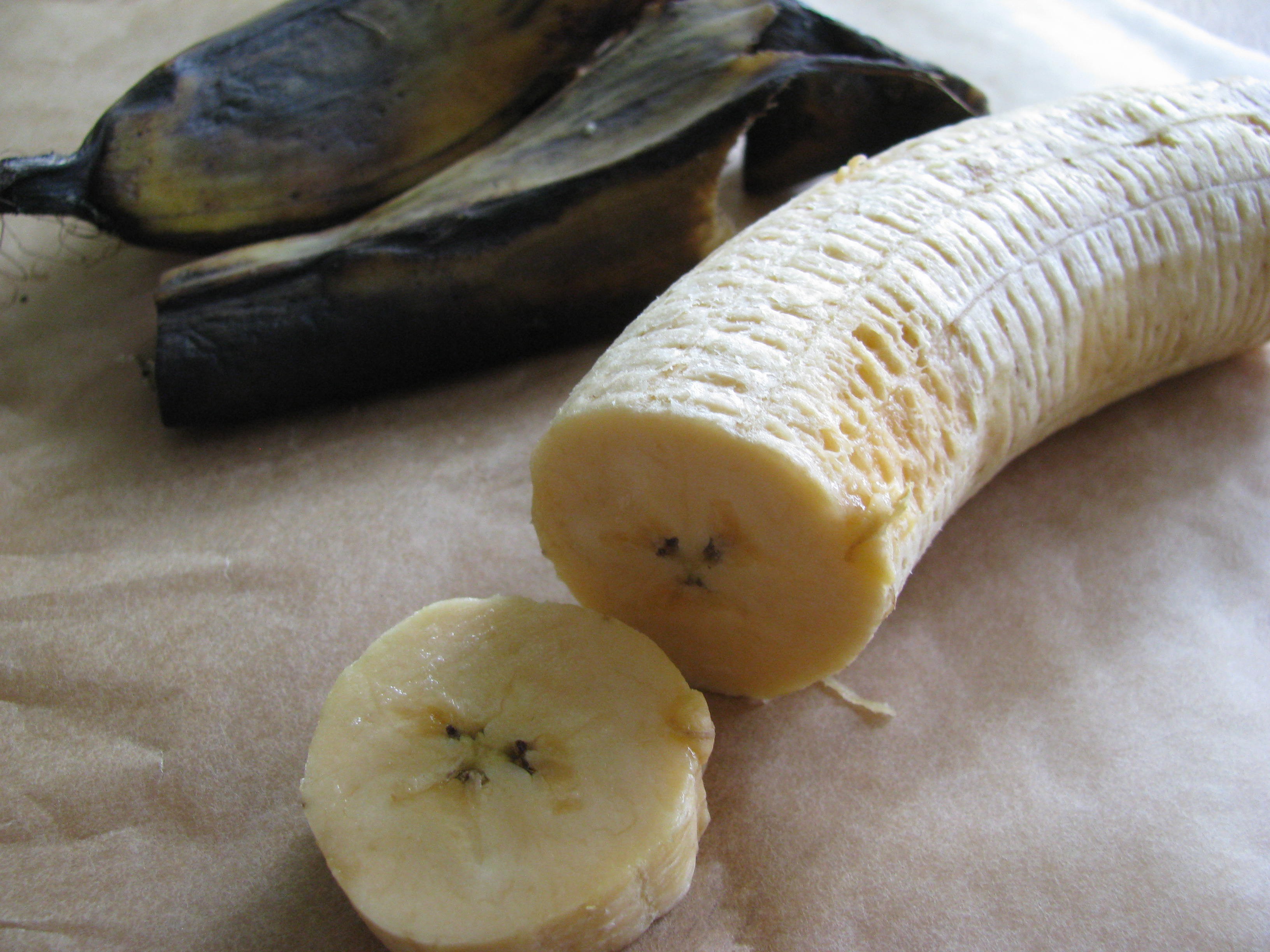
  • Don't shy away from what looks like a rotten banana that is too far gone for even banana bread. I did. Until now, when I tried a plantain for the first time. It looks like an oversized banana and tastes similar, but different. What a treat lies within the less-than-appealing wrapping!

    Ripe plantains Ripe plantain

    A plantain's peeling is green when it is unripe. At this stage, it is firm and starchy and can be prepared like a potato (fried, boiled, baked). Over several days, the peeling will turn a yellow color. It is still somewhat firm and starchy, but its sweetness is beginning to develop. It can be grilled, caramelized, and baked. As the plantain continues to ripen, its peeling will get black blotches. Eventually it turns entirely black. Now, it is very ripe with a pink to pale yellow hue and has reached its peak sweetness… perfect for eating raw like a banana.

    Plantains are considered a super food. Compared to bananas, they have more than 20x the amount of Vitamin A, about 3x the Vitamin C, double the magnesium, and almost 2x the potassium.

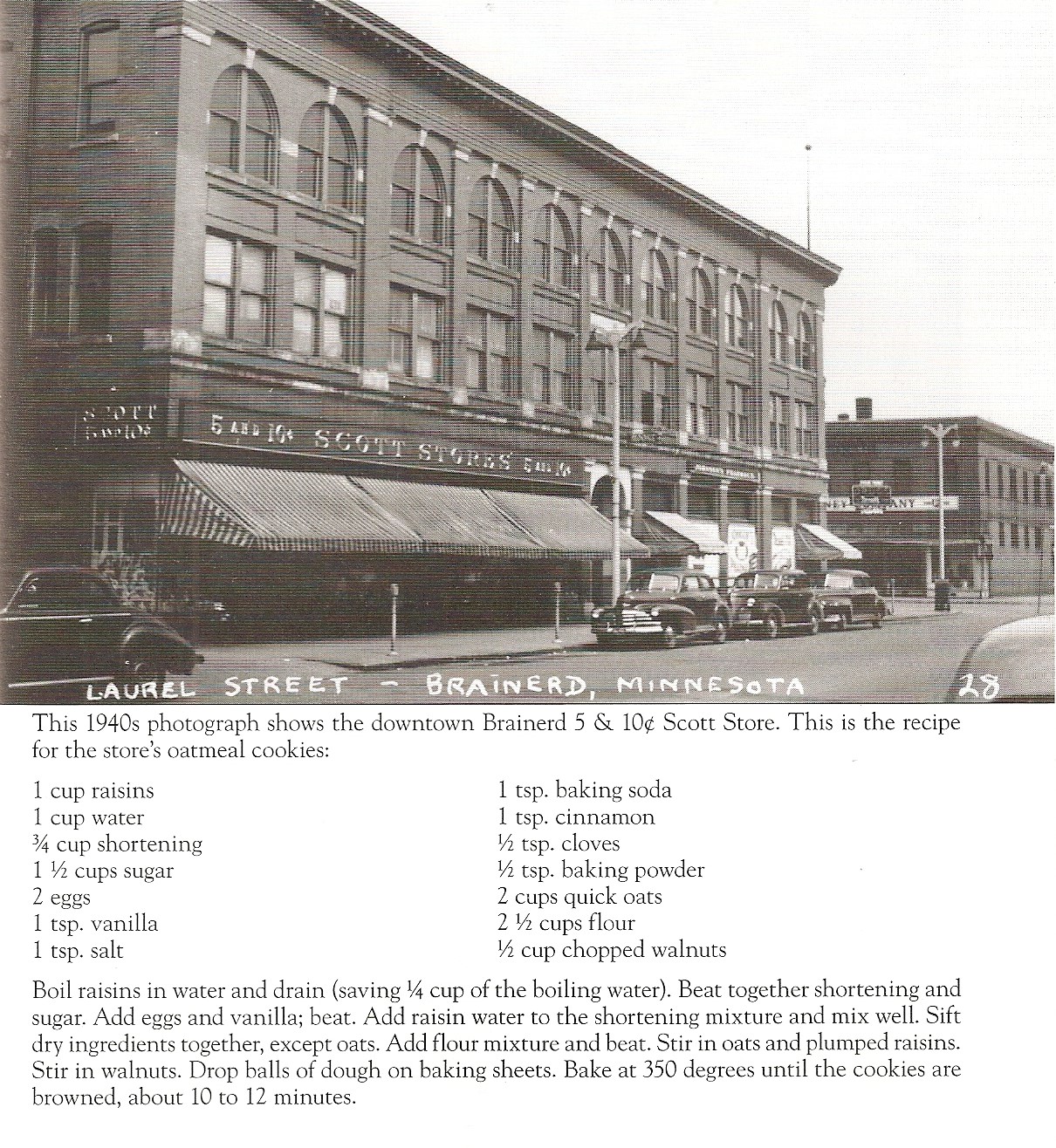
  • I grew up on a 160-acre farm ten miles southeast of Brainerd (Minnesota). Our life was in the country, so trips to town on Saturday mornings were an adventure. We bought groceries that couldn't be grown in our vast gardens or provided by our livestock. If there were no shoes to pass down, an occasional pair was purchased at S&L Department Store. Mine were purchased from Paul's Shoe Store because they stocked narrow AA width. From fabric we had ordered from the Sears mail order catalog, my mother sewed dresses for my sisters and I and plaid shirts for my brothers, so a spool of thread was occasionally needed. Often, my dad would give my younger siblings and I each a quarter to spend however we chose. Having entrances on both Laurel and Seventh Streets, we headed straight for the downtown 5 and 10¢ Scott Store, which was similar to Woolworth's (aka F.W. Woolworth Company). We pored long and hard over the wide array of candy choices… Bit·O·Honey, Slow-Poke Suckers, Sugar Babies, Milk Duds, rolls of Life Savers, and plump red Wax Lips, then considered more practical items like pocket-size Kleenex, ChapStick, and travel-size almond-scented Jergen's Lotion.

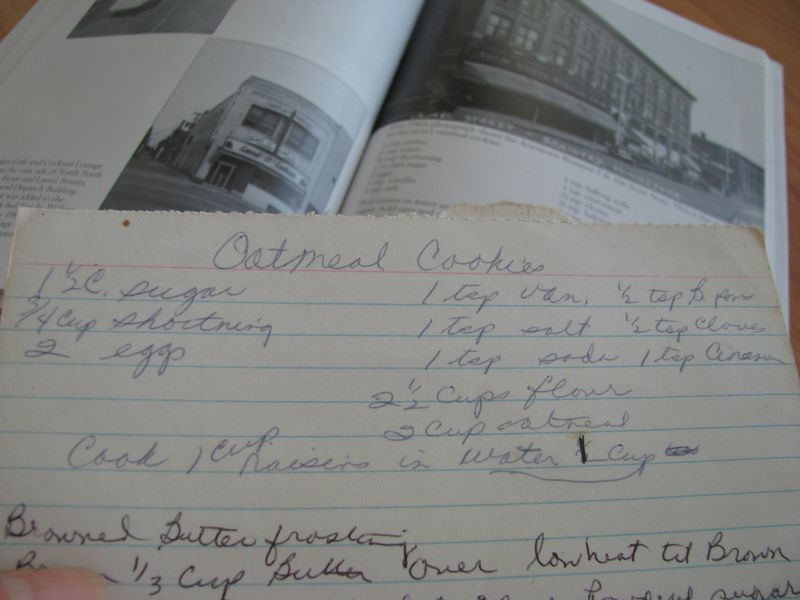
    Scott store's oatmeal cookie recipe

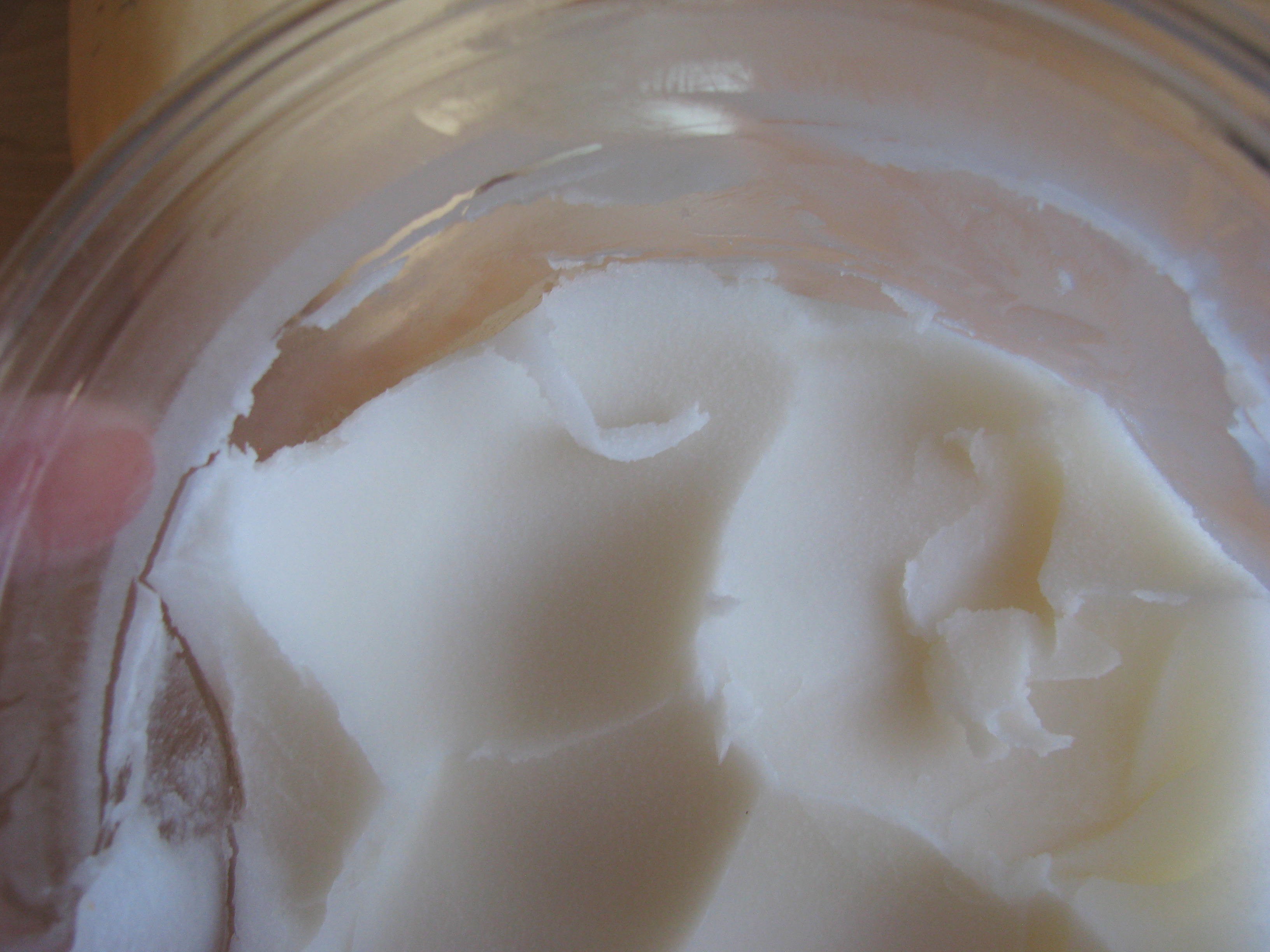
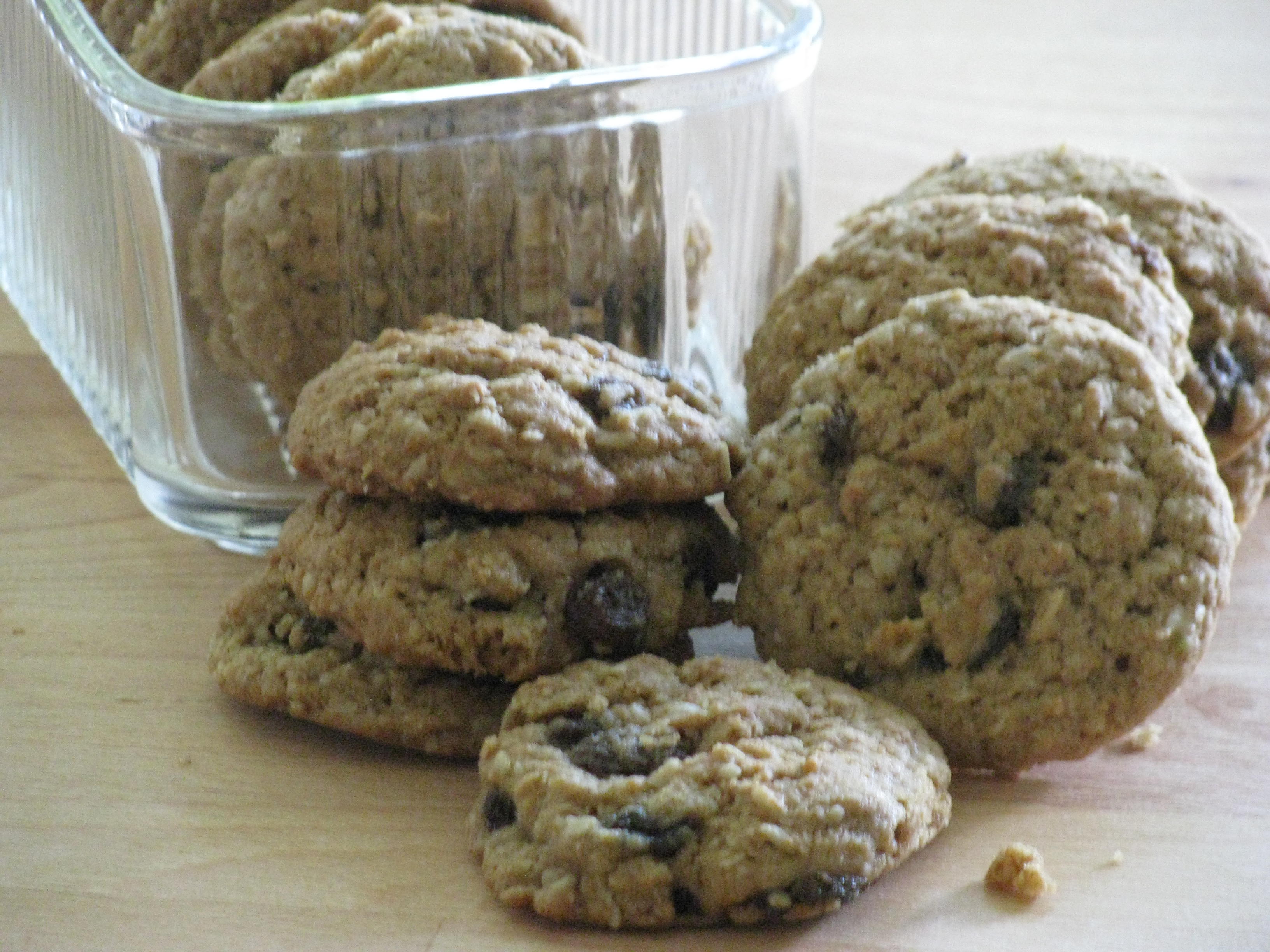
    During the week of June 16-22, 2014, which was designated "Brainerd History Week," I reconnected with my past. Each day, activities were planned that highlighted and celebrated the people, buildings, events, and businesses that formed our community. I selected at least one activity from the "Schedule of Events" to participate in each day. On Monday morning, the court house bells (carillons), ringing simultaneously with city-wide church bells, announced the commencement of the special week. I participated in a guided downtown Brainerd history walk then purchased a book, Images of America Brainerd copyright 2013 by Crow Wing County Historical Society. It was in this book on p. 63 that I saw the photo of the downtown 5 and 10¢ Scott Store that is so vividly embedded in my memory… and the recipe for their trademark oatmeal raisin cookies. Today, I baked a batch. Very seldom do I follow a recipe as is. I slash its sugar and fat content, sub whole sprouted or soaked grains, and add veggies and soaked and dehydrated nuts and seeds. I could have subbed prunes, pureed black beans, applesauce, mashed bananas, or avocado. I was tempted. But, I didn't. I was baking a memory, so I followed the recipe as it was written. Well, except… I subbed lard for shortening. Not just any lard. Lard from Fox Farm Pork in Browerville, Minnesota where animals are "raised the old-fashioned way."

    Fox farm pork lard Scott stores oatmeal raisin cookie

    Secondly, I wasn't sure what kind of sugar was intended, so I used equal parts white and brown. Brown sugar would provide the chewiness that I remember. Lastly, I omitted the walnuts because the cookie of my memory had no crunch. For the skeptics thinking, "How can anyone possibly remember from childhood a cookie's chewiness that lacked crunch?" Granted, the memory I have been recollecting occurred in the early 1960s, however the cookie recipe was shared with me when I married and began life anew ten miles from where I grew up. Adjacent to the property I have shared with Dick since 1974, there lived Bob and Barb Johnson, who would become friends that lasted a lifetime. Barb managed the downtown Scott Store lunch counter for four years. I know, right? Upon telling her of my special memory of the store, she shared the oatmeal raisin cookie recipe that she had imprinted into her memory after having made it so may times. Over the years, that recipe, which I carefully wrote on a recipe card and slipped into a clear plastic sheet to protect it from spills, made many batches of cookies. Then…

      Barb johnson's oatmeal raisin cookie recipe

    Last September, Barb gave me the most special gift of all. In her handwriting, on a yellowed index card, was the oatmeal raisin cookie recipe from the downtown Scott Store. She explained that the from-scratch cookies were a lunch counter offering long before she was hired as manager. I was holding a piece of history in my hands. And were there walnuts in Barb's recipe? There were not. Just an amazingly chewy moistness accented by the sweetness of plumped raisins.


  • It's good to continue learning. One new thing each day is an easily attainable goal. Today, for me, it was coconut flour. Coconut flour is very high in fiber, gluten-free, a good source of protein, and has a low glycemic index. Two things I noticed when I began baking with coconut flour. 1)The small quantity of coconut flour used in a recipe. This is because it absorbs a substantial amount of liquid. 2)The large number of eggs used in a recipe. Gluten is absent, so eggs are needed to bind the ingredients together. The takeaway, then, is that coconut flour cannot be subbed for traditional flours cup for cup and more eggs are needed. I decided that it would be best to make a few tried-and-true coconut flour recipes before I attempted to adapt recipes. I headed straight for Elana's Pantry. This chocolate cupcake recipe from her site has few ingredients, but they are well-chosen to pack a powerful nutrient-dense punch. The recipe has found a coveted corner in my keeper recipes file.

    Sifting coconut flour Melting coconut butter

    Elana uses a food processor for mixing these cupcakes. I chose instead to sift the dry ingredients to remove the chunks in the coconut flour and cacao powder and blend in the salt and soda. The recipe calls for coconut oil. I made one batch with coconut oil and another with coconut butter. Both versions were tender, very moist, and equally yummy. Using coconut butter results in a denser texture which is not a bad trait, just different. The difference between coconut oil and coconut butter (aka creamed coconut) is the fiber content. Coconut oil has no fiber. Suited for high temperature cooking such as sauteing, it is a clear liquid when warmed. Coconut butter is pureed coconut meat with roughly 60% oil, so the fiber remains. Its solids will burn, so it is not suited for sauteing. When warmed, it is thick and creamy. When you first open a jar of coconut butter, it will be thick because the solidified oil forms a layer separate from the pureed coconut meat. Set the jar in a bowl of hot water to soften, then stir like you would a jar of natural peanut butter to incorporate the two again. To liquify for a recipe, put measured coconut oil/butter in a custard cup set into a deep bowl.  Pour hot water into the bowl being careful not to splash any into the coconut oil/butter. Stir to hasten the softening. I have concluded that coconut butter and coconut oil each have a purpose. It's good to have both on hand.

    Paleo chocolate cupcakes chocolate frosting Paleo chocolate cupcakes pnut butter frosting

    Paleo Chocolate Cupcakes

    ¼ cup coconut flour

    ¼ cup cacao powder (Cacao vs cocoa?) A couple times, I mistakenly used 1/4 cup cinnamon instead of cacao and it is VERY good, too. Really!

    ¼ tsp sea salt

    ¼ tsp baking soda

    4 large eggs

    ¼ cup coconut oil (or coconut butter) liquified/softened*

    1/3 cup honey (I reduce to 1/4 cup and it's still pleasantly sweet.)

    Pulse together dry ingredients in a food processor (or sift in a flour sifter). Pulse in wet ingredients (or incorporate with a quick stir. Batter will appear runny, but it quickly thickens as the coconut flour absorbs the liquid.) Line a muffin pan with paper liners (or for muffins that slip out easily, use an unlined King Arthur Flour muffin pan). Scoop ¼ cup batter into each muffin well. (My scoops were overly generous, so I ended up with 6 cupcakes versus 8.) Bake at 350° for 15-18 minutes. (Mine required 20 minutes.) Cool and frost. *To liquify/soften, put measured coconut oil/butter in a custard cup set into a deep bowl.  Pour hot water into the bowl being careful not to splash any into the coconut oil/butter. Stir to hasten the softening. Recipe source: http://elanaspantry.com Note: I used powdered sugar in my chocolate frosting (left photo) and peanut butter frosting (right photo). To adhere to paleo guidelines, top the cupcakes with Elana's chocolate frosting (recipe on her site). Or, instead of frosting, I sometimes spread the tops with fig preserves.


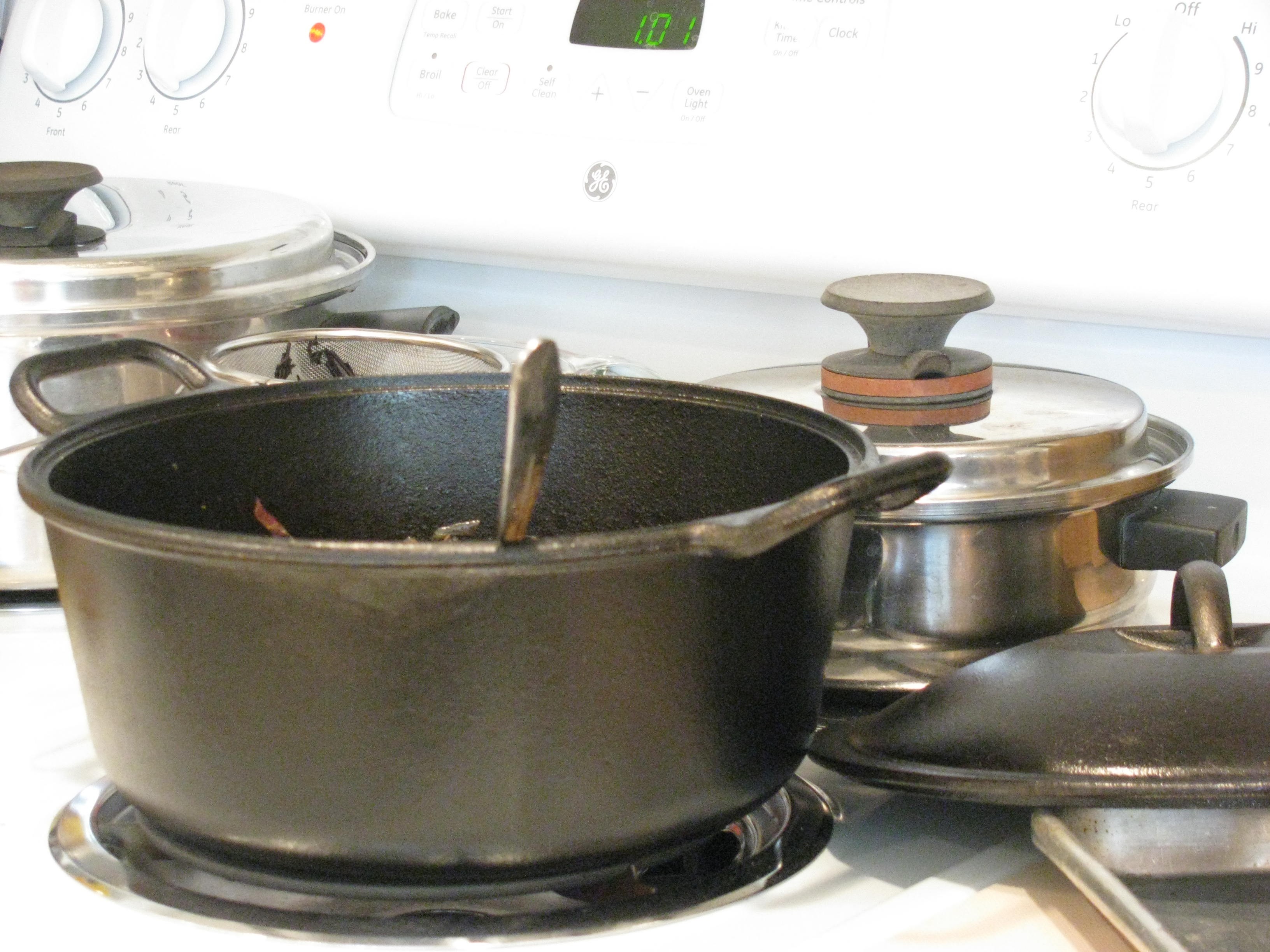
  • I have a new love. My Lodge Pro-Logic P10D3 pre-seasoned Cast Iron 4-quart Dutch Oven from Amazon. The capacity is perfect for Dick and I. For my eldest daughter, her husband, and four children, the Lodge Pro-Logic P12D3 Cast Iron 7-quart Dutch Oven is an appropriate size.

    Cast iron dutch oven

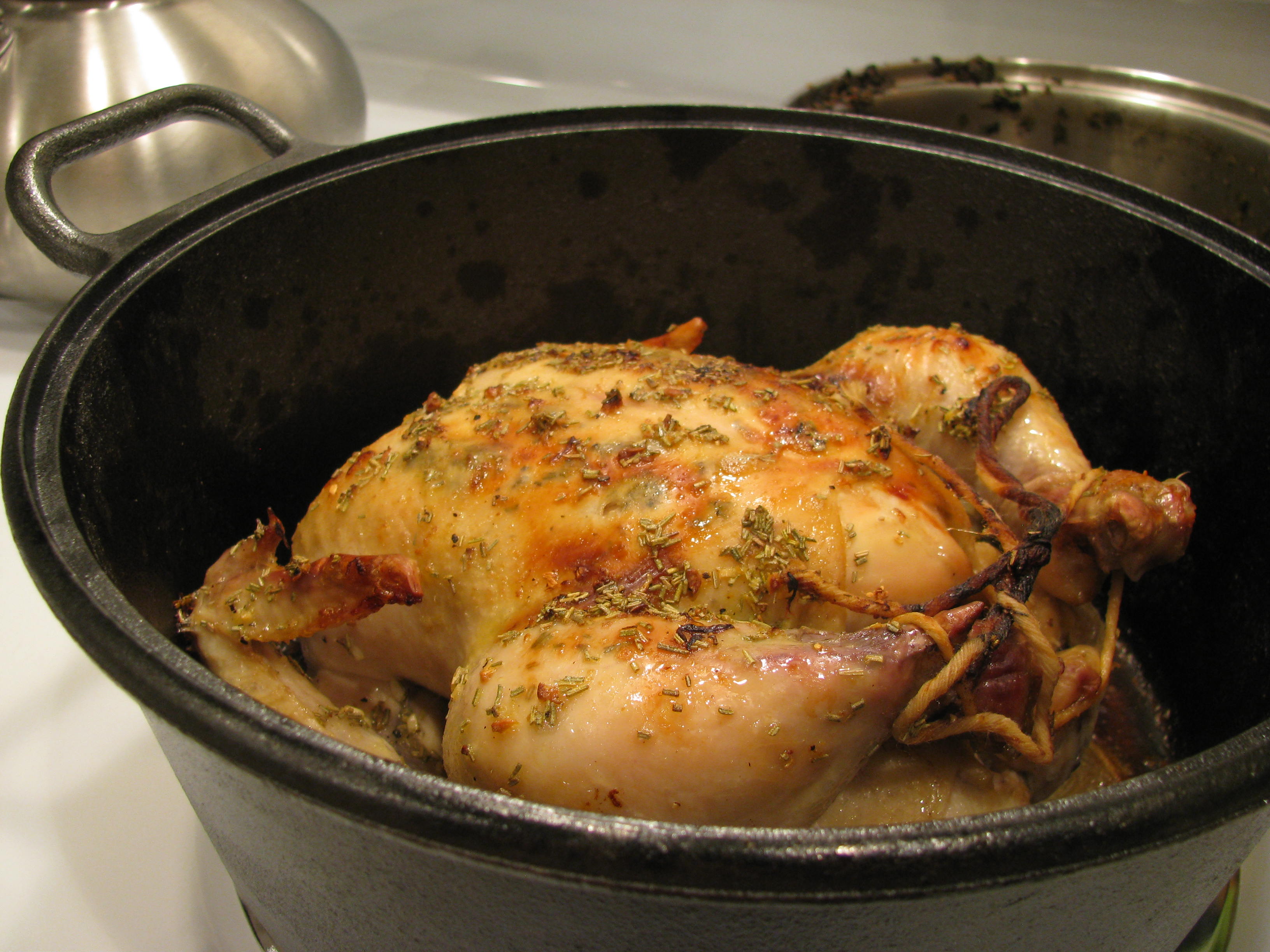
    The first meal I chose to prepare in my Dutch oven was a whole chicken. (Pay no mind to my trussing. Go here for a proper how-to.) After we had consumed every bit of tenderness, I put the bones in my slow cooker to simmer low and slow for a long while to make bone broth.

    Dutch oven roast chicken Dutch oven hamb veg soup

    My pot does not sit idle. For lunch today, we ate the last two bowls of ground bison veggie soup to warm us on a chilly winter's day.


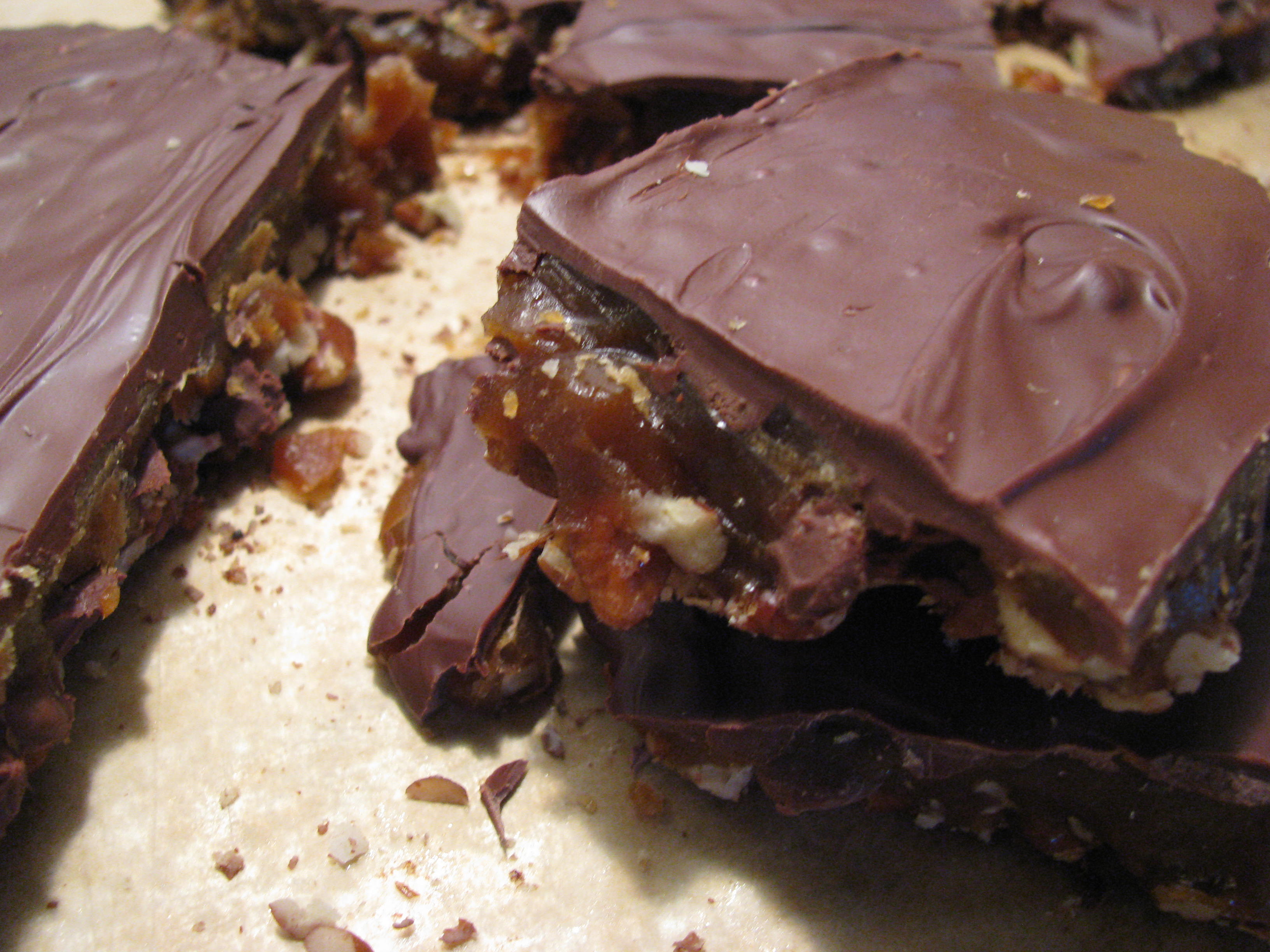
  • This recipe for Dark Chocolate Buttercrunch from King Arthur Flour tastes like a Heath Bar. It requires close monitoring of the candy's temperature using a thermometer, but otherwise it is so simple. I made some to tuck alongside the Star Provisions' Chocolate Chip Meringue Cookies that I mailed to my youngest daughter. Packaged in a little red partitioned box, the dark chocolate looked so pretty alongside the white meringue cookies. I made a few minor changes, which I noted in the recipe below.

    KAF dark chocolate buttercrunch

    King Arthur Flour’s Dark Chocolate Buttercrunch

    1 cup = 2 sticks butter* (I used ¾ cup = 1 ½ sticks.)

    1 ½ cups sugar

    3 tbsp water

    1 tbsp light corn syrup

    2 cups diced pecans or slivered almonds, toasted (I used 1 ½ cups pecans.)

    1 lb semisweet or bittersweet chocolate, finely chopped or 2 2/3 cups chocolate chips (I used 1-12 oz bag semisweet chocolate chips.)

    *If using unsalted butter, add ½ tsp salt.

    In a large, deep saucepan, melt the butter. Stir in the sugar, water and corn syrup, and bring the mixture to a boil. Boil gently, over medium heat, until the mixture reaches hard-crack stage which is 300° on an instant-read or candy thermometer. The syrup will bubble without seeming to change much for awhile, but be patient; all of a sudden it will darken, and at that point you need to take its temperature and see if it’s ready. (If you don’t have a thermometer, test a dollop in ice water; it should immediately harden to a brittleness sufficient that you’ll be able to snap it in two, without any bending or softness.) This whole process should take about 10 to 12 minutes. Pay attention; too long on the heat, and the syrup will burn. While the sugar mixture is gently bubbling, spread half of the nuts, in a fairly closely packed, even single layer, on a lightly greased baking sheet. Top with half the chocolate. When the syrup is ready, pour it quickly and evenly over the nuts and chocolate. Immediately top with remaining chocolate, then the remaining nuts. (I used all of the nuts on the bottom layer.) Wait several minutes, then gently, using the back of a spatula, press down on the chocolate-nut layer to spread the chocolate around evenly. While the candy is still slightly warm, use a spatula to loosen it from the baking sheet. When cool, break into uneven chunks. Yield: about 24 big bite-sized pieces.

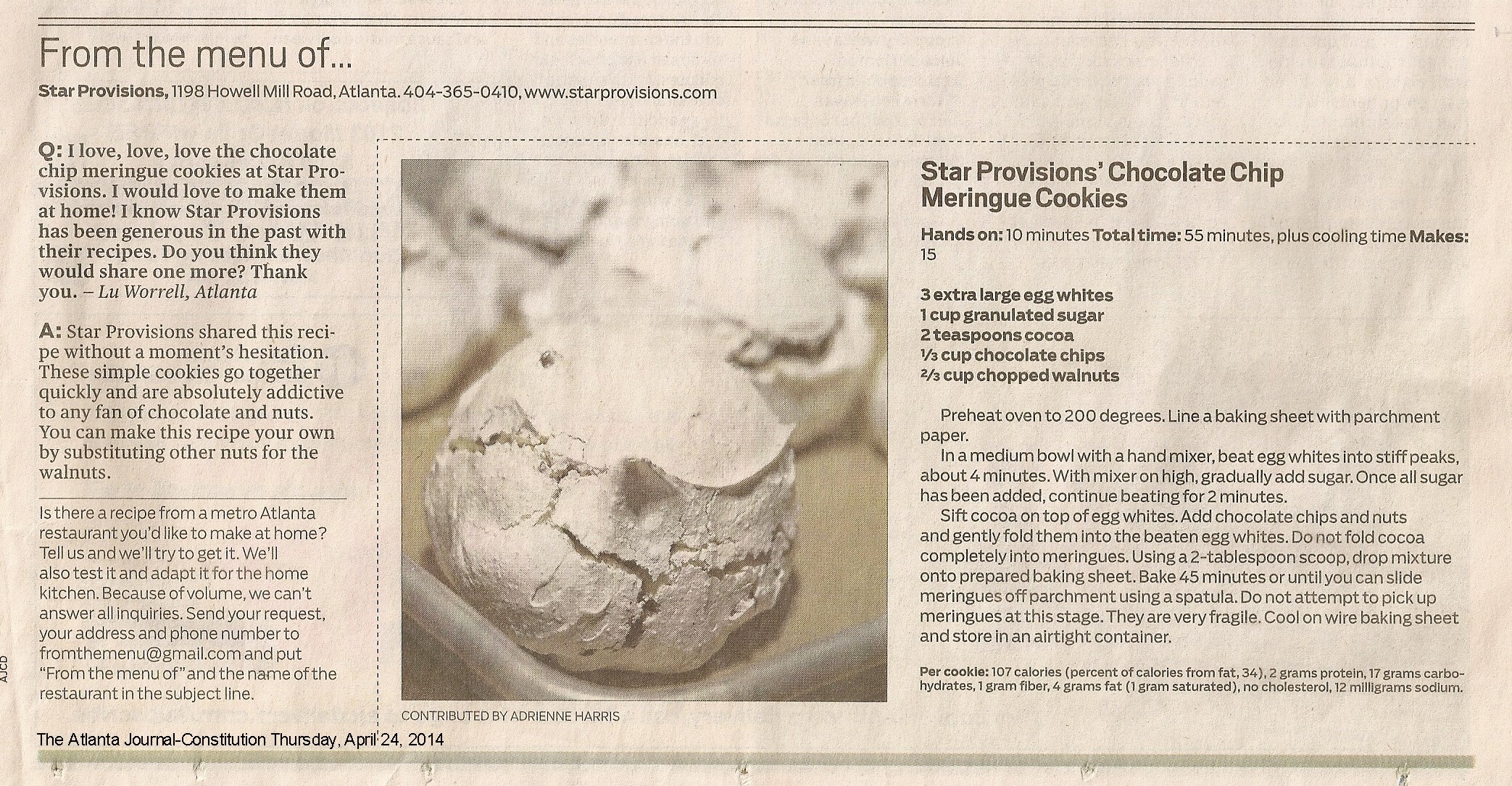
  • On November 29, 2013, our youngest daughter took Dick and I to lunch at Star Provisions at Westside Urban Market 1198 Howell Mill Road Atlanta. When we returned to Atlanta the following spring, I flipped through the pages of a newspaper left behind on a bench outside a coffee shop. Featured in the food section of The Atlanta Journal-Constitution Thursday, April 24, 2014 was a recipe from Star Provisions. I saved it. Fast forward eight months to December 2014. Christmas is a week away. I remembered the Star Provisions' recipe that I had saved from the newspaper… Chocolate Chip Meringue Cookies. Reminiscent of fluffy mounds of snow, it would be a perfect winter cookie to send to my daughter in Atlanta… to remember the times we had spent together there. I got busy in my kitchen. She loved the cookie and the minimal ingredients and simple prep were a bonus.

    Star provisions' meringue cookies ingredients Star provisions' meringue cookies

    Chocolate chip meringue cookies

    The recipe makes 15 cookies using a two-tablespoon scoop. (I made 32 cookies using a one-tablespoon measuring spoon.) The recipe says to bake the cookies for 45 minutes at 200 degrees. I found that it took 1 hr 45 min for the egg whites inside the cookie to get done. Later, when I compared Star Provisions' directions to King Arthur Flour's Meringues, my baking time jived with KAF's recommendation. Here are KAF's baking instructions: "Place the meringues in the oven. After 30 minutes, reduce the oven heat to 225°F, and continue to bake for another 1 to 2 hours. For a meringue that's chewy on the inside after cooling (when you break it open, it will still be soft) bake for the shorter time (about 1 hour). When the cookie is finished its center will measure 165°F on an instant-read thermometer. For crunchy-all-the-way-through meringues, bake them for the longer time (about 2 hours). To test if they're done, pick one up; it should feel very light. Tap the bottom; it should feel hollow. Break one open; it should be dry. Taste the broken one while it's still warm; it should melt in your mouth. When the meringue is finished it should be almost white, with just a hint of color around the bottom. Turn off the oven, prop the door open and allow the meringues to cool on the pan in the oven for 30 minutes."

  • Imagining a little gnome waiting to greet me on the other side of the door, I reach for the handle on the oversized entrance door. Then I stop. The magical window display takes my breath away. Anthropologie is an adventure before even entering the shop.

    Anthropologie entrance door Swan anthro window

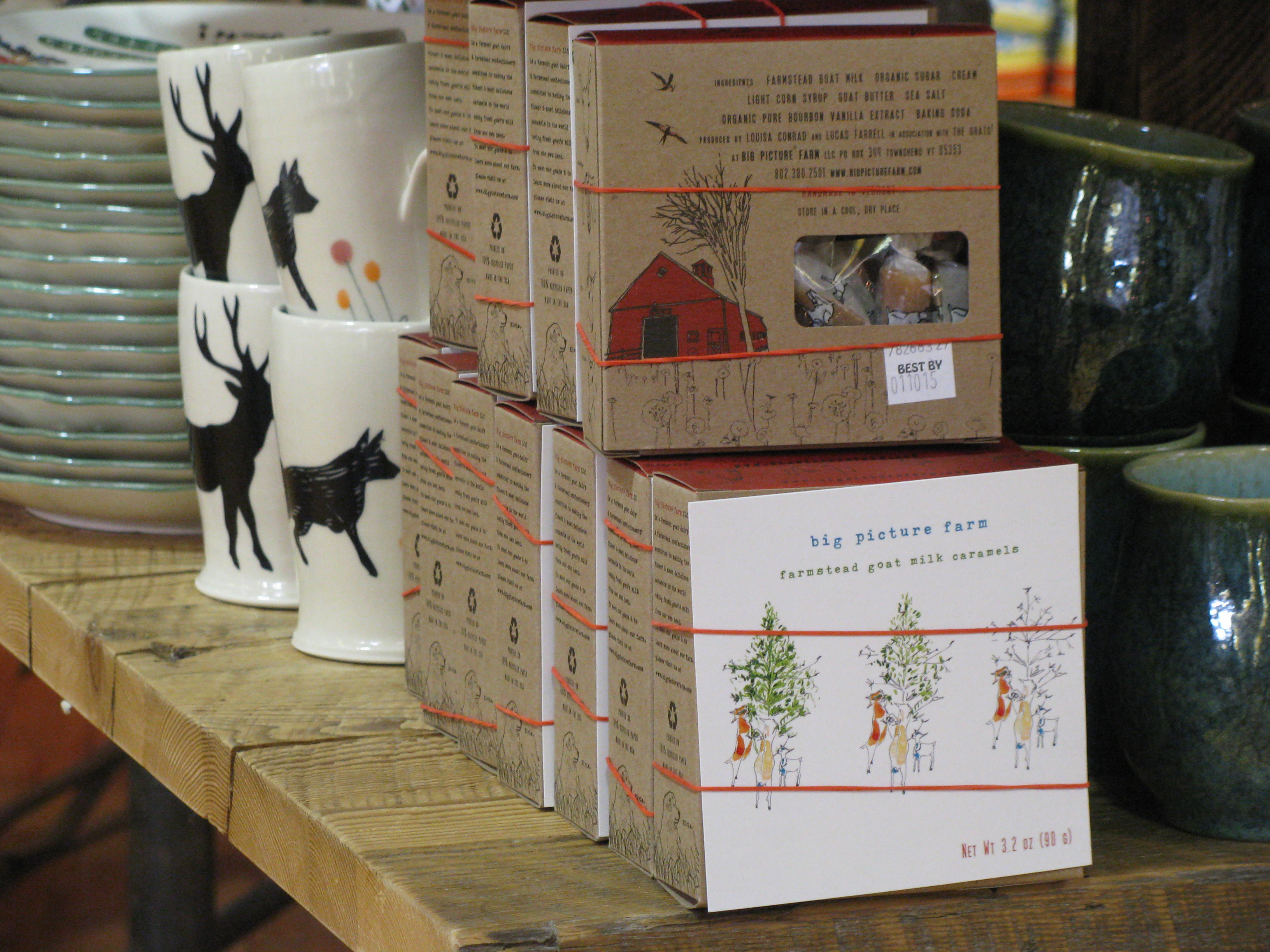
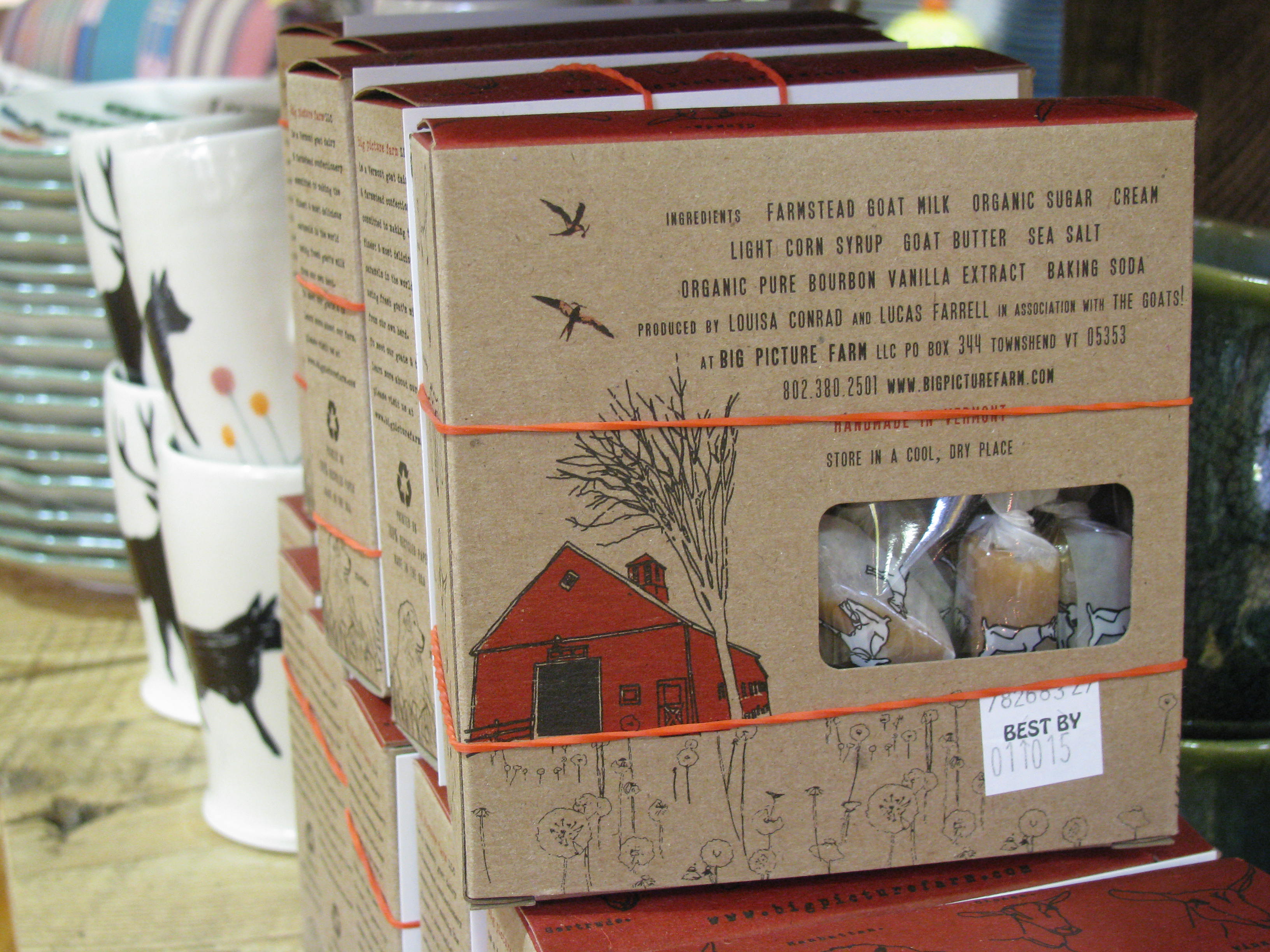
    Upon entering the store, there is a flow. A serene, calming, slow-the-pace rhythm. Really, it's what we do in our homes by arranging furniture and grouping meaningful items to create cozy niches that bring intimacy to a space. Anthropologie masterfully accomplishes this on a much larger scale, often in an old architecturally unique building. Creatively quirky artistic expression is all around, often using common materials in uncommon applications. Take note of the details. Each carefully selected product, no matter how small and seemingly insignificant, is given equal care and attention. I immediately fell in love with the hand-drawn, natural-colored packaging of these handmade goat milk caramels from Big Picture Farm in Vermont.

    Goat milk caramels Goat milk caramels packaging

    It was the packaging, the black and white reindeer mugs stacked alongside, and the rustic wood and metal farmers table they sat upon that drew me in… and my youngest daughter, who is an Anthropologie visual manager. As a young child, along with her two sisters, she created elaborate stores in the unfinished basement of our home. They played for hours creating merchandise, displays, and signs for their individual storefronts. Now, as an adult, the marketing strategies and accompanying retail-specific language is more advanced, but… the environment remains the same. She still plays. In her store.  

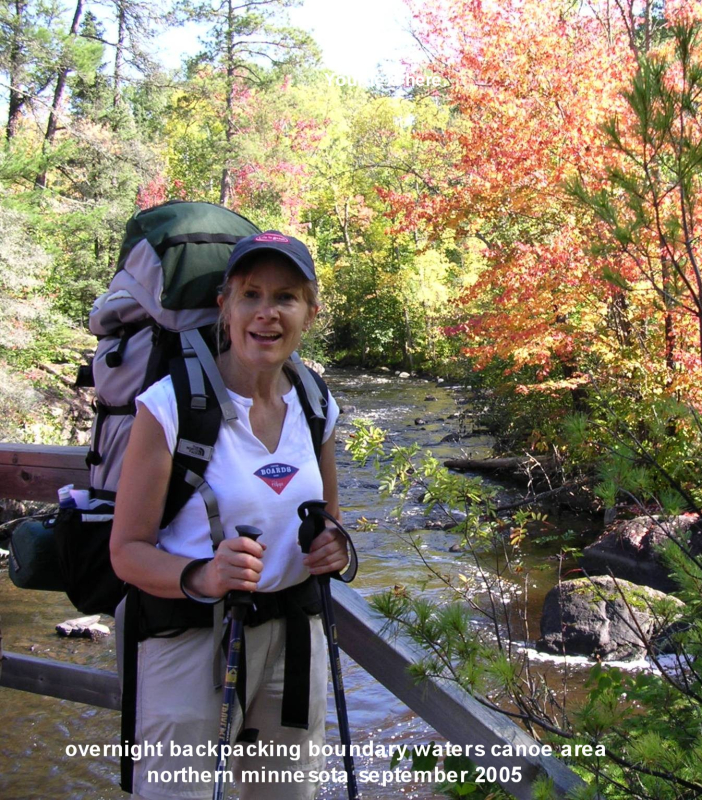
  • "A little bit about me before you go… " This phrase has been floating around in my brain… song lyrics, I think. Each of us has a story… a song. Here's mine.


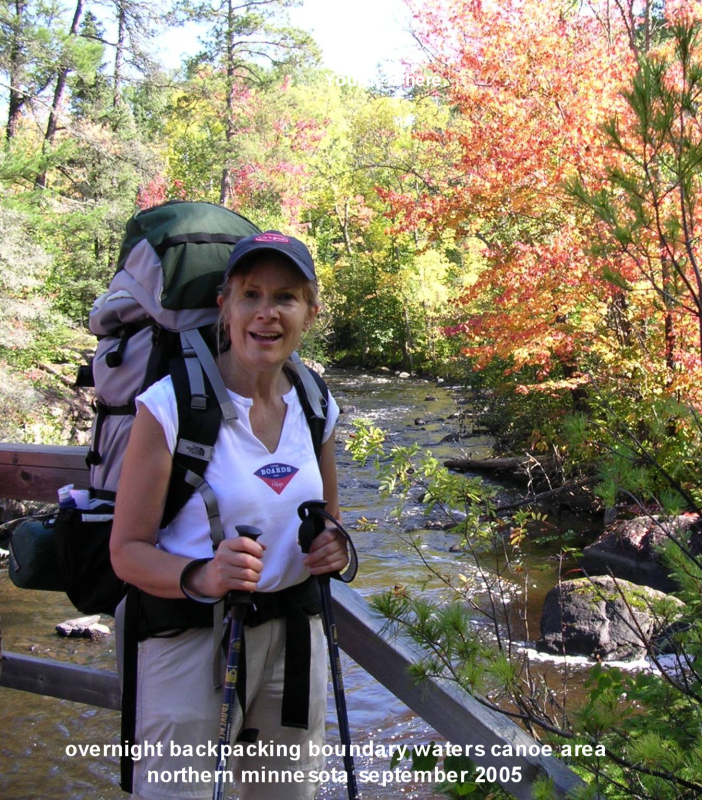
    Boundary Waters with orig dimensions with caption


    Hello. My name is Adrienne Cahoon (a.k.a. "queen of the meadow blooms"). I grew up in a family of fourteen on a 160-acre farm ten miles southeast of Brainerd. I attended first grade in a one-room schoolhouse 1-1/2 miles from my childhood home. The following year, schools were consolidated and we were bused into Brainerd. Throughout my childhood, I helped tend gardens and fields on the acreage that my father farmed in addition to his full-time job with the Minnesota State Highway Department. I had an apron-clad stay-at-home mom who baked made-from-scratch fresh from the oven bread and cookies for when I got off the school bus. It is from this background that I developed a love for all facets of homekeeping, gardening, land stewardship, and related environmental issues. During my eleven years as a full-time classroom teacher (six years in Minnesota and five years in Florida), I was selected 1996 Conservation Education Teacher of the Year for the state of Florida and recipient of Disney's 1996 Teacherrific $3000.00 Top Program Award for a school-wide waste management system utilizing composting. In 1993, I earned a Master of Science Degree in Curriculum and Instruction and completed my Master Gardener certification through the University of Minnesota in March 2000. In 1999, I opened Whiteley Creek Homestead Bed and Breakfast on the property where my husband, Dick, and I have lived since our marriage in 1974. We closed our business at the conclusion of the 2016 season to allow us the flexibility that retirement allows. I have three daughters. My eldest daughter lives in New York with her husband and five children. She is a full-time wife and mother with a background in graphic design as well as an author and illustrator of children's books. My middle daughter lives in New Jersey with her husband and two children where she is co-owner of a graphic design business. My youngest daughter lives and works in Atlanta as a visual manager for Anthropologie.

  • Greg_adrienne_with_origdimensions_2

    Growing up southeast of Brainerd on a farm surrounded by dirt roads all around, life took on a slower pace. Recently, paved roads have encroached within one mile on two sides of where the old homestead still remains, but the "washboard" gravel road thus far hasn't been covered over with asphalt in the name of progress. Agates are fewer in number than when I collected them forty plus years ago walking down the dusty road to the swimming beach 1 1/4 miles away, but the breeze rustling the trees with no noise of airplanes, cars, or trains is the same now as then. The half-mile long driveway that leads to my present home, where Dick and I have shared our life for thirty-five years, has become a bed and breakfast symbolic of the richly simple life I had as a child. Bob C., a longtime friend, shared this Dirt Roads message that encapsulates all the feelings that I have never sat down to express on paper. (My brother, Greg, has his arm around me in this 1955 photo. Dick likes think it is him instead.)


    Dirt Roads by Paul Harvey

    What's mainly wrong with society today is that too many dirt roads have been paved.

    There's not any problem in America today… crime, drugs, education, divorce, delinquency… that wouldn't be remedied, if we just had more dirt roads, because dirt roads give character.

    People that live at the end of dirt roads learn early on that life is a bumpy ride… that it can jar you right down to your teeth sometimes, but it's worth it, if at the end is home… a loving spouse, happy kids and a dog.

    We wouldn't have near the trouble with our educational system if our kids got their exercise walking a dirt road with other kids, from whom they learn how to get along.

    There was less crime in our streets before they were paved. Criminals didn't walk two dusty miles to rob or rape, if they knew they'd be welcomed by five barking dogs and a double barrel shotgun… and there were no drive by shootings.

    Our values were better when our roads were worse. People did not worship their cars more than their kids and motorists were more courteous; they didn't tailgate by riding the bumper or else the guy in front would choke you with dust and bust your windshield with rocks. Dirt roads taught patience.

    Dirt roads were environmentally-friendly… You didn't hop in your car for a quart of milk. You walked to the barn for your milk.

    For your mail, you walked to the mailbox.

    What if it rained and the dirt road got washed out? That was the best part… then you stayed home and had some family time, roasted marshmallows, popped popcorn, pony rode on Daddy's shoulders, and learned how to make prettier quilts than anybody.

    At the end of dirt roads, you soon learned that bad words tasted like soap.

    Most paved roads lead to trouble. Dirt roads more likely lead to a fishing creek or a swimming hole.

    At the end of a dirt road, the only time we even locked our car was in August because, if we didn't, some neighbor would fill it with too much zucchini.

    At the end of a dirt road, there was always extra springtime income from when city dudes would get stuck. You'd have to hitch up a team and pull them out. Usually you got a dollar…always you got a new friend…at the end of a dirt road.

  • The Battle of Gettysburg, fought July 1-3, 1863 in and around the town of Gettysburg, Pennsylvania, was a turning point in the American Civil War (April 12, 1861-April 9, 1865). The Union Army led by Maj. Gen. George Meade defeated Gen. Robert E. Lee's Confederate Army, but not without cost. Both armies experienced heavy losses. I remember learning of this battle in Mr. Engebretson's 10th grade American History class. Dick's and my visit to Gettysburg so many many years later, to retrace the steps of the soldiers who bravely fought this battle, was a field trip forty-six years overdue. Our visit began at the Gettysburg National Military Park Museum and Visitor Center where we viewed the film, "A New Birth of Freedom," which provided an overview of the American Civil War and the Battle of Gettysburg.

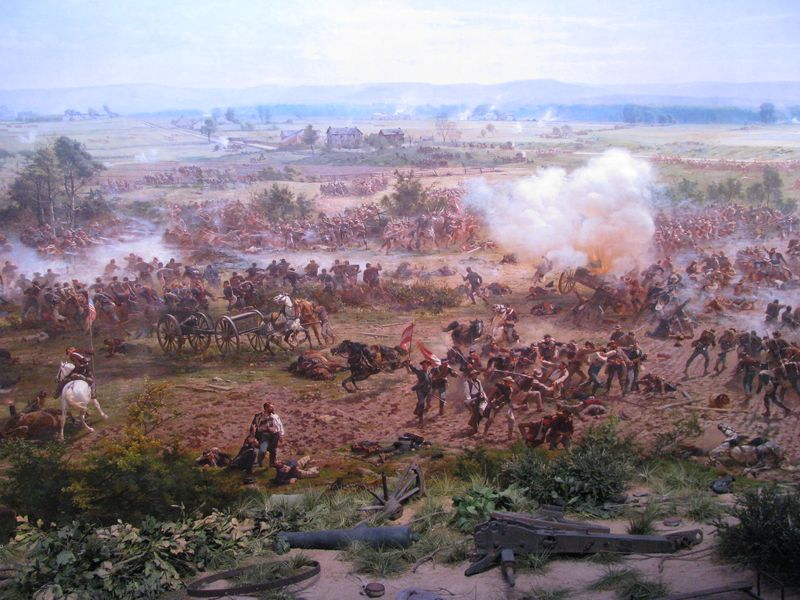
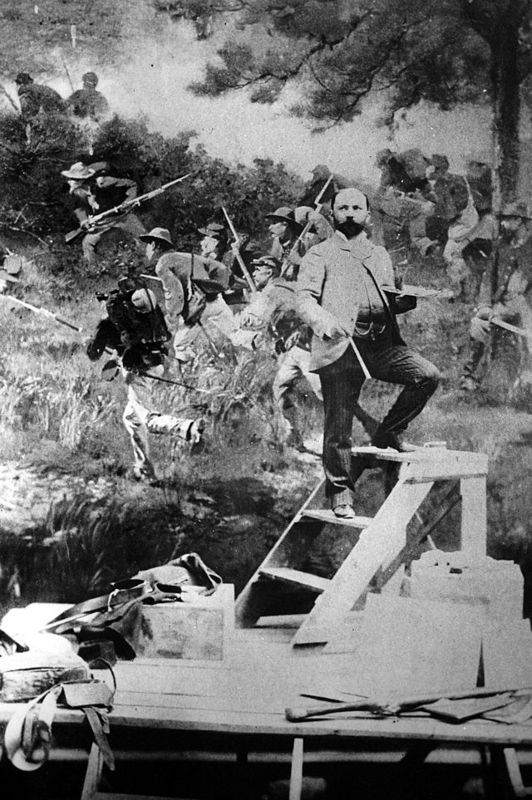
    Battle of gettysburg day sky Philippoteaux painting gettysburg cyclorama

    We, then, moved on to a huge round room with concave walls covered with a 360 panoramic painting called a cyclorama depicting Pickett's Charge, which was Gen. Robert E. Lee's infantry's failed assault against the Union Army that marked the turning point of the Battle of Gettysburg thus ending the Confederate Army's attempt to invade the North. Wagon wheels, cannons, canteens, clothing, broken fences, and other three-dimensional relics of battle litter the foreground to create a diorama which adds depth to the realistic, detailed scene. As we stood in the center of the room, a narrator recounted the battle's major events while spotlights highlighted locations in the painting. The black and white photo is the French artist, Paul Philippoteaux, who, along with a team of assistants, sketched the topography and key areas in the battlefield and interviewed veterans of the battle before beginning the oil painting which took over a year and one-half to complete. 

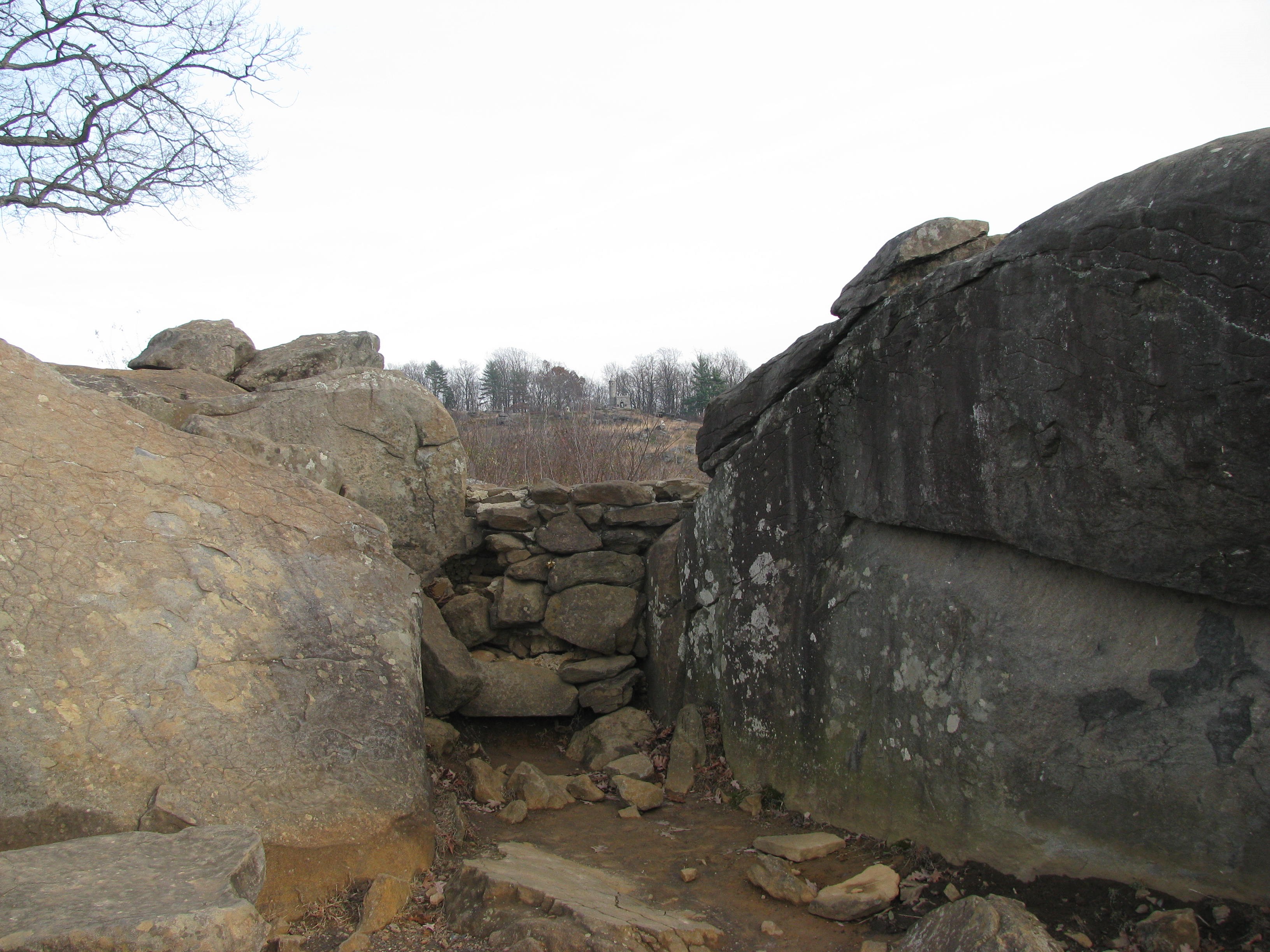
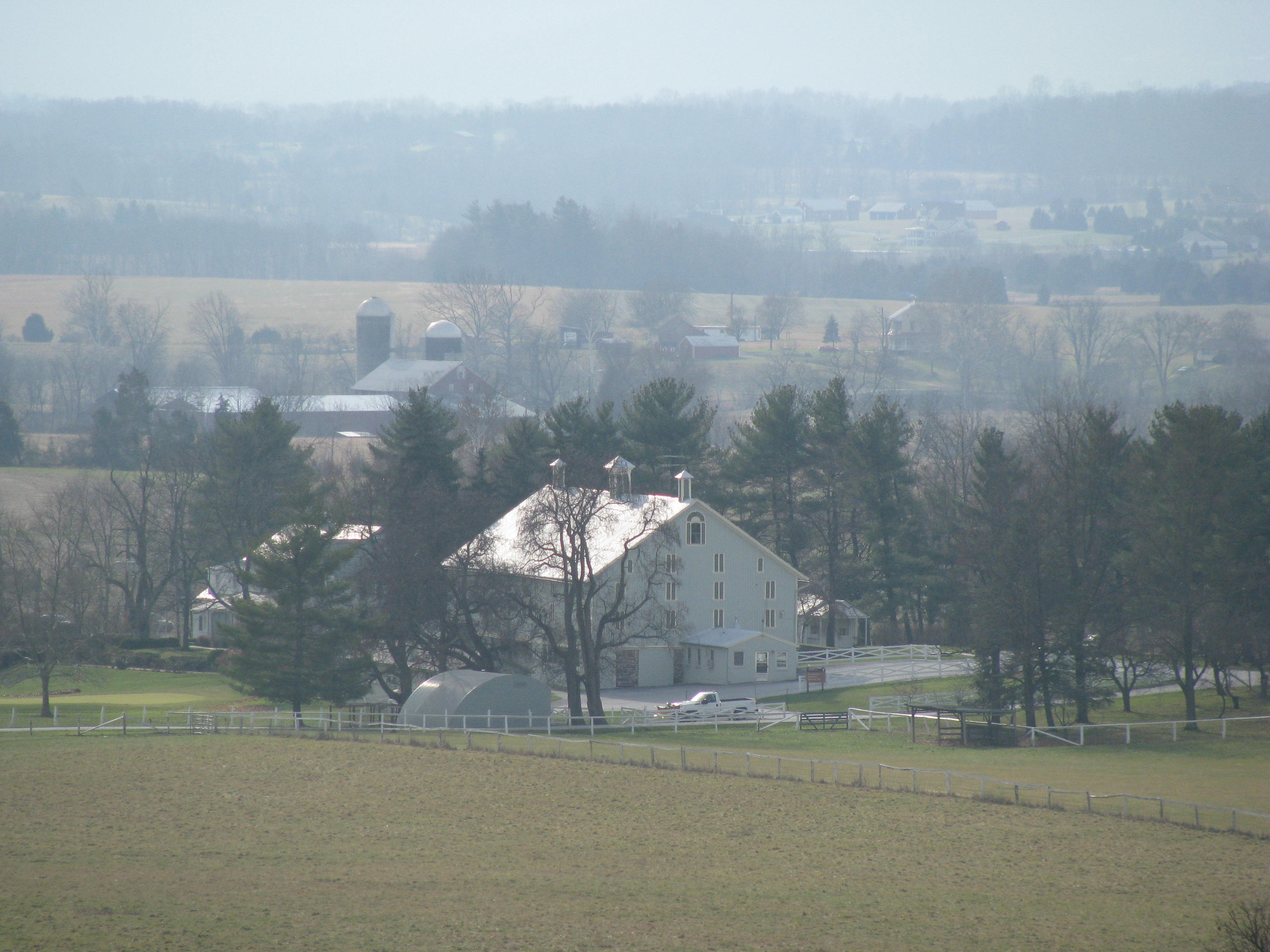
    Devils den Eisenhower farm

    Informational markers along a 24-mile route identify key chronological events during the 3-day Battle of Gettysburg. One location known as Devil's Den (left photo) is a hill strewn with huge boulders that shielded Confederate sharpshooters from Union soldiers occupying Little Round Top which can be seen off in the distance above the rock barricade. (Right Photo) Adjacent to the battlefield is the 189-acre Eisenhower Farm. The farm was purchased in 1950 by General Dwight D. Eisenhower. After completing two terms as president (1953-1961), he retired to the farm with First Lady Mamie Eisenhower living there until his death in 1969. Mamie continued to live at the farm until her death in 1979. The farm became a national historical site after the Eisenhower's gifted the farm to the federal government in 1967. It was opened for public tours in 1980. Tickets can be purchased at the Gettysburg National Military Park Visitor Center where a shuttle is taken to the farm. After completing the three hour driving tour of the battlefield, there was not enough time remaining to tour the farm. We will return.     

    The Henry Ford (1863-1947) Museum and Greenfield Village in Dearborn, Michigan followed by Thomas Edison's (1847-1931) factories, lab, and home in West Orange, New Jersey then the American Civil War's (1861-1865) Battle of Gettysburg in Gettysburg, Pennsylvania were three destinations that fit together so perfectly in one trip.