


Yesterday's Quinoa Beet Pancakes resulted in extra beet puree. What's a girl to do? Make beet ice cream, of course! I combined steps from four different recipe's to create this luscious, creamy treat.
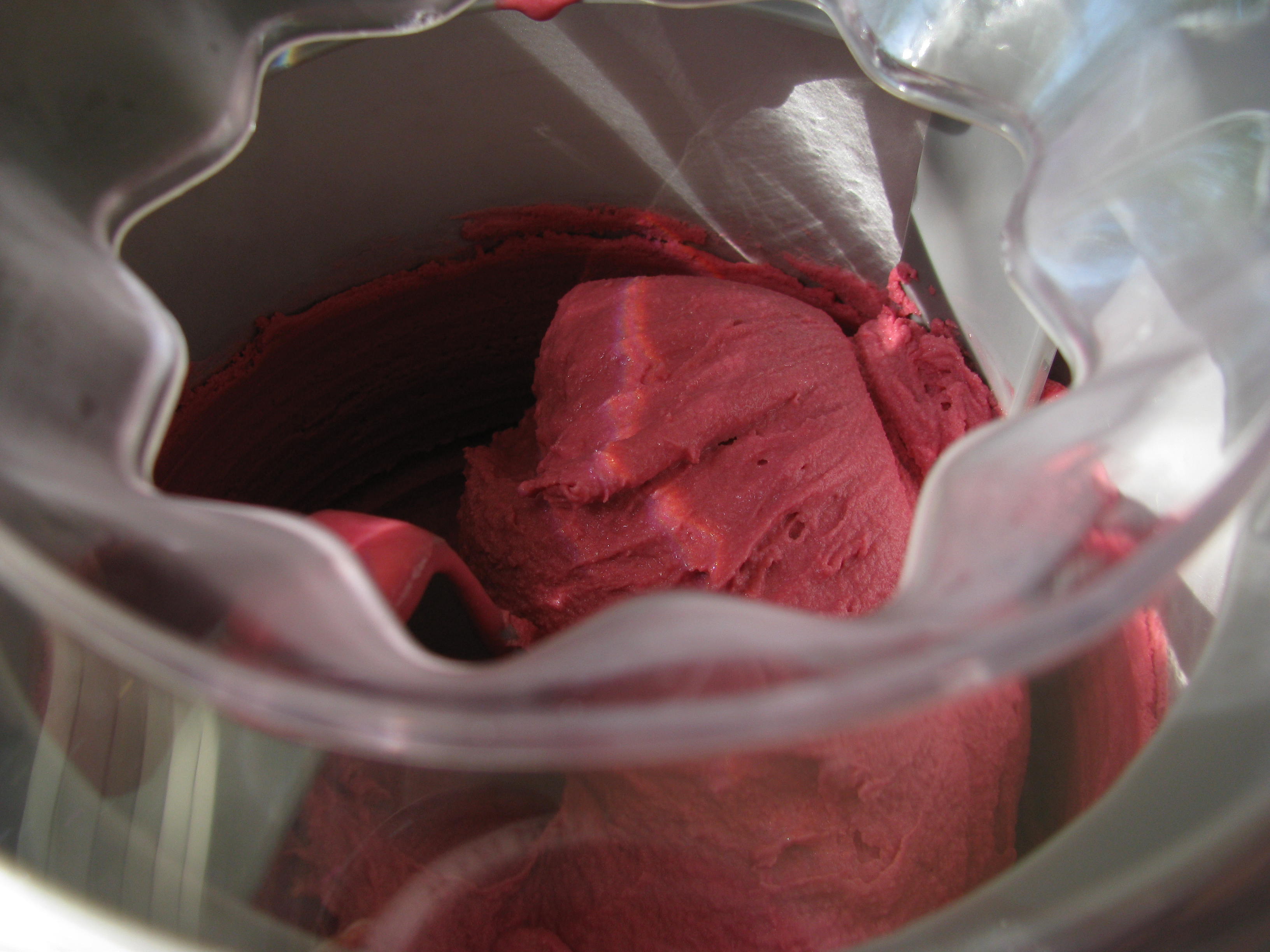
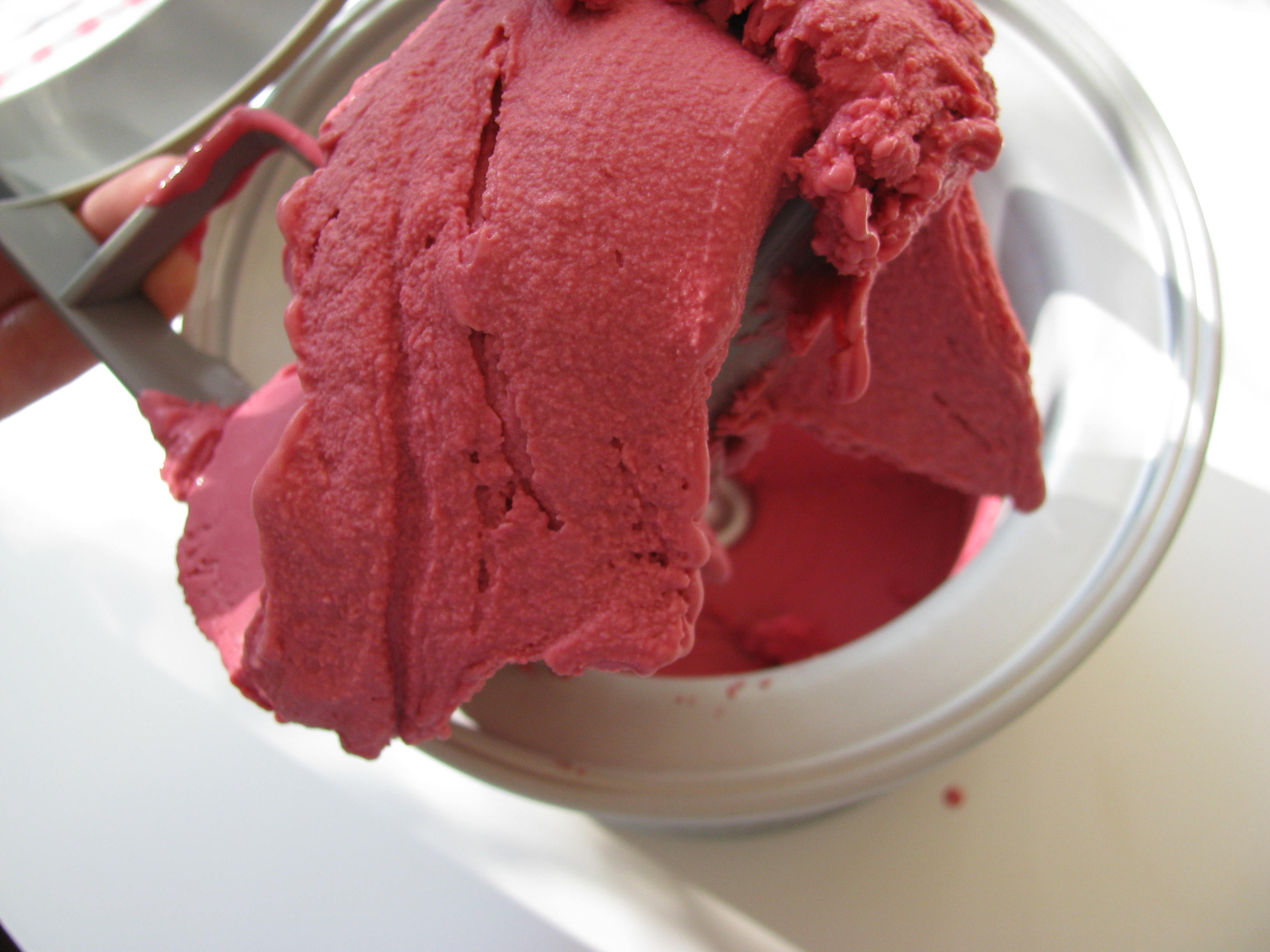
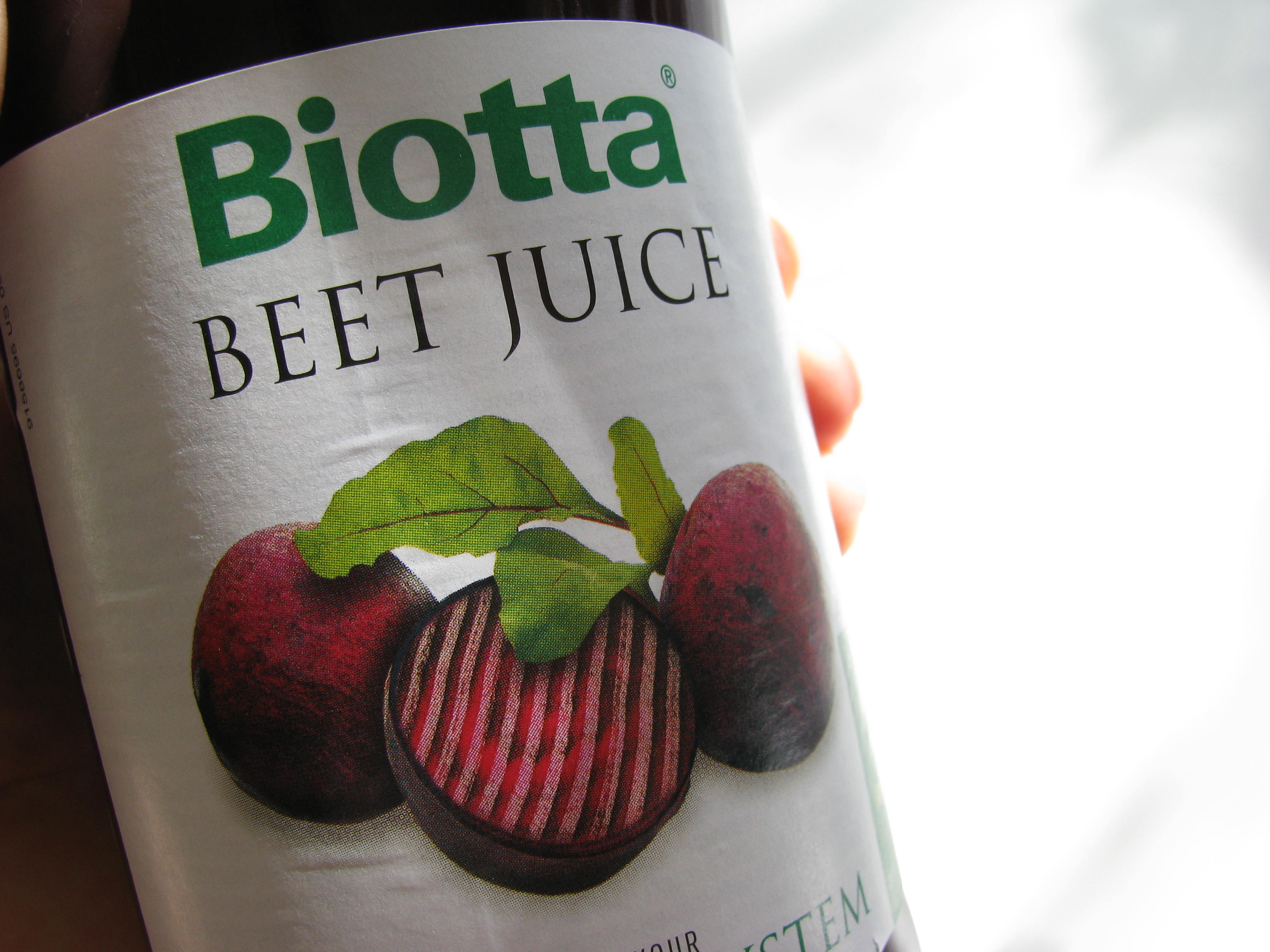
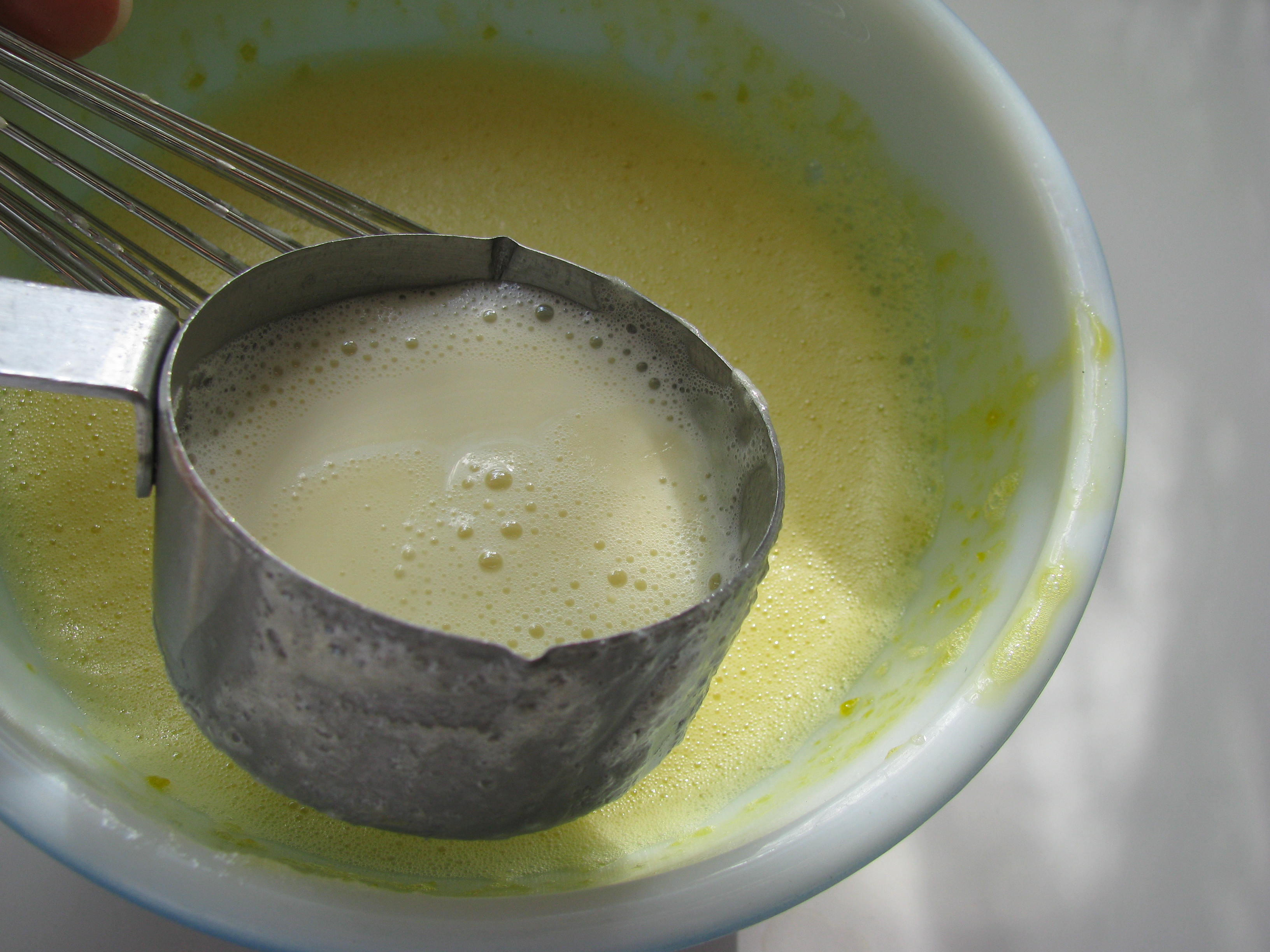
Far and above, the most important step that I have discovered in the ice cream making process is tempering the egg yolks to prevent scrambled eggs. These things I know… just believe. Tempering is done by gradually whisking some of the hot liquid into the yolks. When the cooked custard begins to thicken as the ice cream maker churns, it is a thing of beauty. My heart leaps at the sight. In the recipe's directions, I have suggested purchasing beet juice as a time saver instead of juicing beets. Biotta, a USDA certified organic brand, is available in my local grocery store's natural/organic foods section. It may also be purchased through vitacost.com.
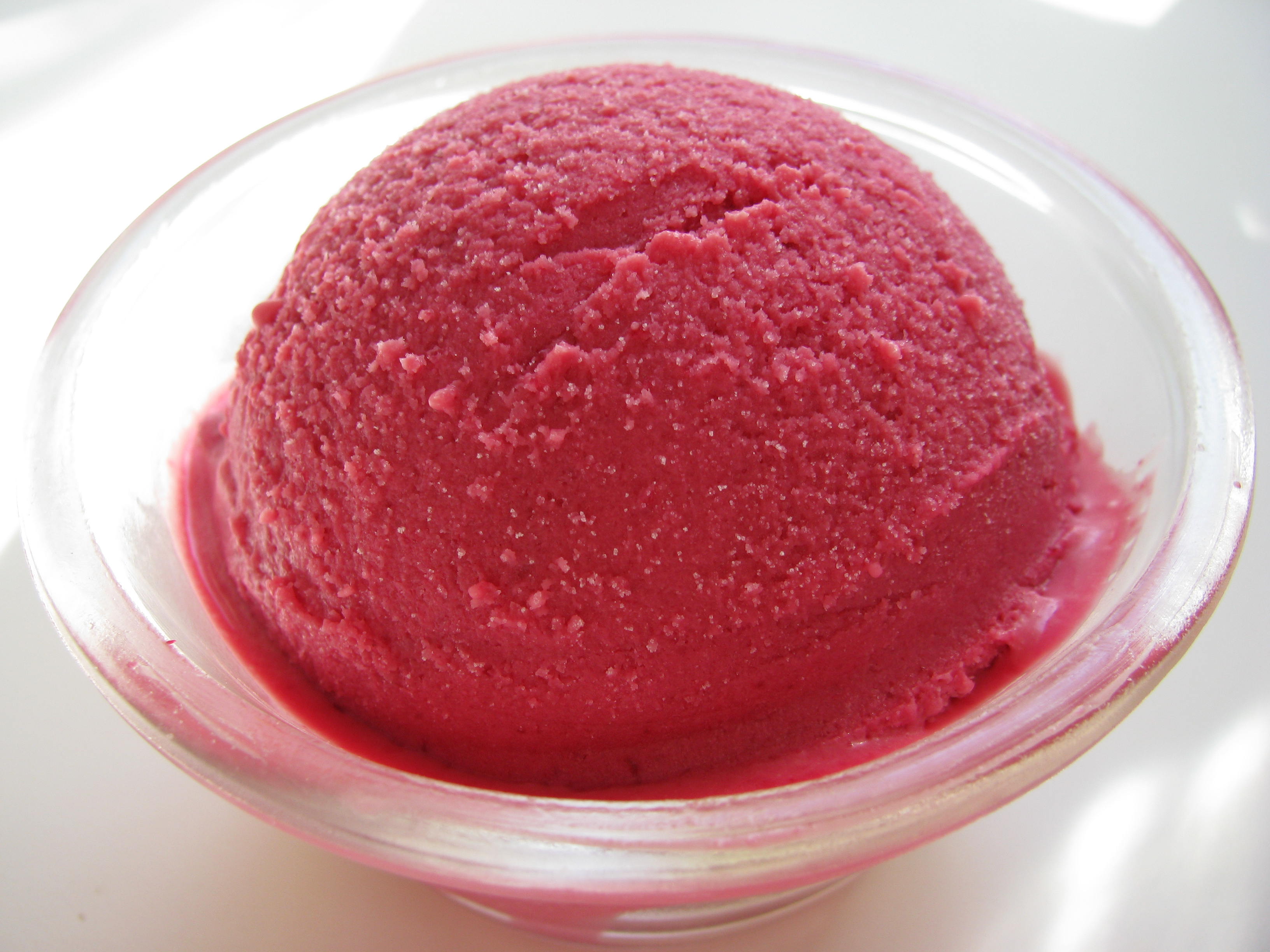
Beet Ice Cream
Makes 1 quart.
1 scant cup of roasted puréed beets
1 2/3 cup heavy cream
1 cup milk
½ cup 1/3 cup + 2 tbsp sugar
pinch of salt
4 egg yolks
To roast the beets, preheat oven to 375° and place approximately 4-5 firm, scrubbed, unpeeled beets into a baking dish. Add about ½ cup water. Cover with a lid. If baking dish has no lid, cover it with aluminum foil. Covering veggies when roasting causes them to roast more evenly. Smaller beets take about 25 minutes. Larger and older beets can take up to an hour. When beets are fork tender, allow them to cool enough to handle, then slip their peels off using a paring knife or by rubbing them with your fingers or a paper towel. Cut the beets into quarters and purée in a food processor.
To make the custard, heat the cream, milk, and beet purée (or beet pulp*) in a large heavy-bottomed saucepan until it just barely comes to a simmer. Remove pan from the heat, cover, and let steep for 30 minutes. Meanwhile, in a small bowl, whisk the egg yolks with 2 tbsp sugar and prepare an ice bath by setting a medium bowl over a larger bowl filled with ice water. After the steeping time has elapsed, strain the liquid to separate out the beet solids and return it to the saucepan. Add 1/3 cup sugar. Bring to a simmer stirring to dissolve the sugar. Very slowly, pour some (about 1/3 to ½) of the hot cream mixture into the bowl with the egg yolks while whisking constantly until the temperature of the yolks is closer to that of the cream. This is a very important step to avoid scrambled eggs. Pour the tempered yolk mixture back into the saucepan. Stir continually over medium-low heat until the temperature registers 170° – 185° on a digital thermometer and the custard is thick enough to coat the back of a spoon. Pour the custard through a fine-mesh strainer into the bowl set over the ice bath. Let cool for 30 minutes in the ice bath, then place the mixture into the fridge. Once it is cool enough not to form condensation on the lid, cover and chill the mixture thoroughly in the refrigerator for 4 to 8 hours until it registers 40° or below on a digital thermometer. Churn in an ice cream maker according to the manufacturer’s instructions. This should take approximately 25-35 minutes. Serve immediately for soft serve or place in freezer for 3-4 hours to allow ice cream to harden.
*An alternative method to puréeing beets is to put raw beets through a vegetable juicer until you get about 1 cup of beet juice. Simmer the juice in a shallow saucepan over medium-low heat until it reduces to approximately ¼ cup. The beet juice reduction’s flavor is more intense and sweeter than its original state. Add the beet juice just prior to pouring the cooked custard through a fine-mesh strainer into the bowl set over the ice bath. Use the pulp byproduct in place of the beet purée in recipe.
For a milder flavored ice cream but still deeply magenta-colored, add the beet juice reduction but not the pulp. If you have no juicer, or want to cut prep time, a bottled beet juice may be purchased.


 Whiteley Creek Homestead
Leave a reply to Jack Holbrook Cancel reply