


I plant seed potatoes on May 20th, my father's birthday. It's what I've done since I began to garden. Because as kids, May 20th was the marker that gauged when our parents began garden planting here in central Minnesota. Seedlings were not transplanted into the ground until after Memorial Day due to the risk of a late spring frost. Upon the death of my father in 2005, at the age of 94, my sister Rita and I have planted seed potatoes each spring on May 20th in honor and remembrance of him. Today, I prepared for tomorrow's potato planting. You were with me in my garden today, Dad. You guided my hands as I cut each potato, just as you did when I was a young child. You knelt beside me as I prepped the soil and marked the planting plot. You reminded me to lay the cut side of each potato gently into the earth so as not to sever any sprouts. Your back no longer caused you pain as you worked alongside. I chatted with you about some new methods I had learned in my gardening books. I was in no hurry to plant seed potatoes just to say I had completed the task. No, it was the time spent with you today that was important. What a sweet time it was. We didn't put a single potato into the ground. That is for tomorrow.
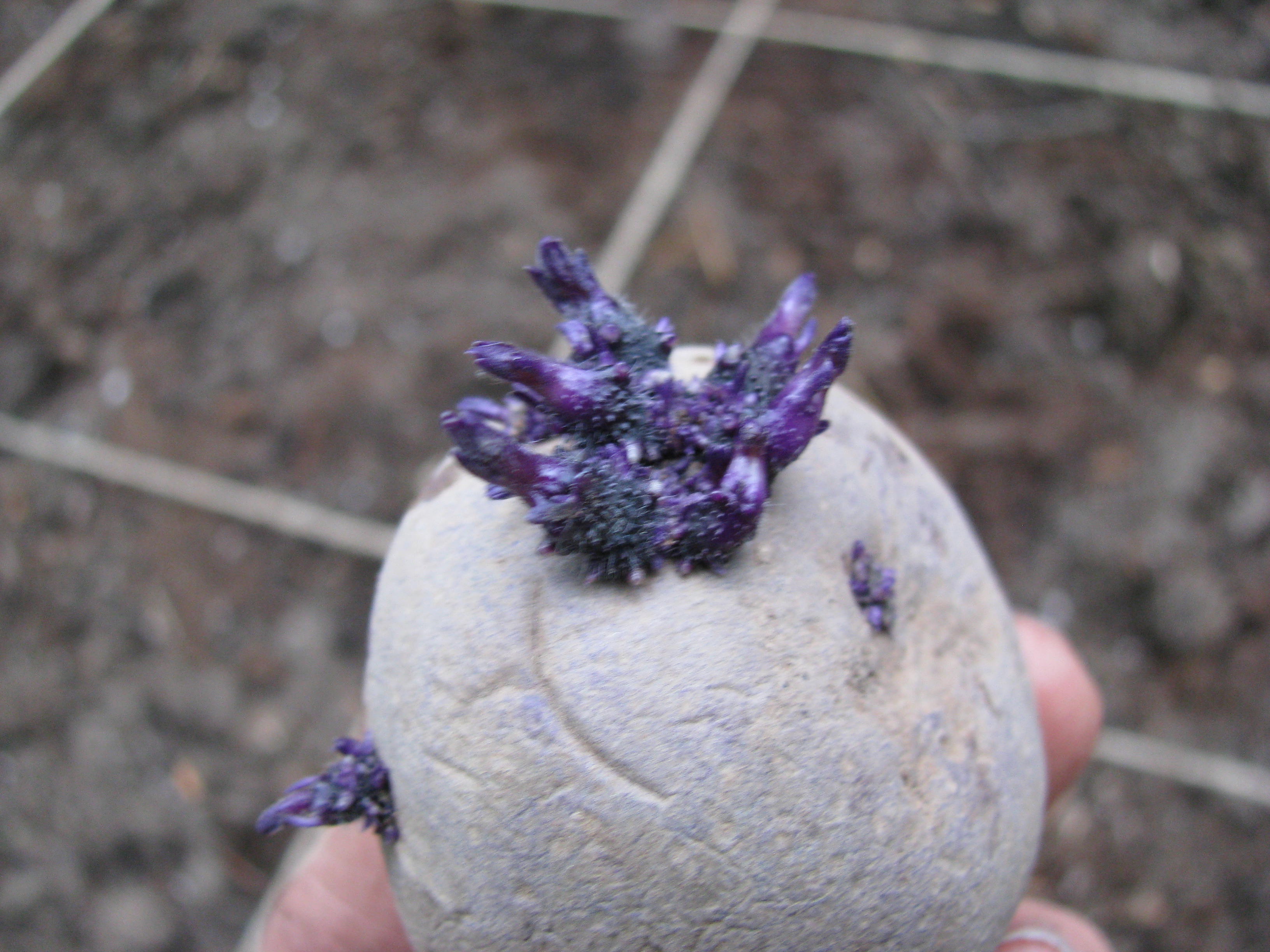
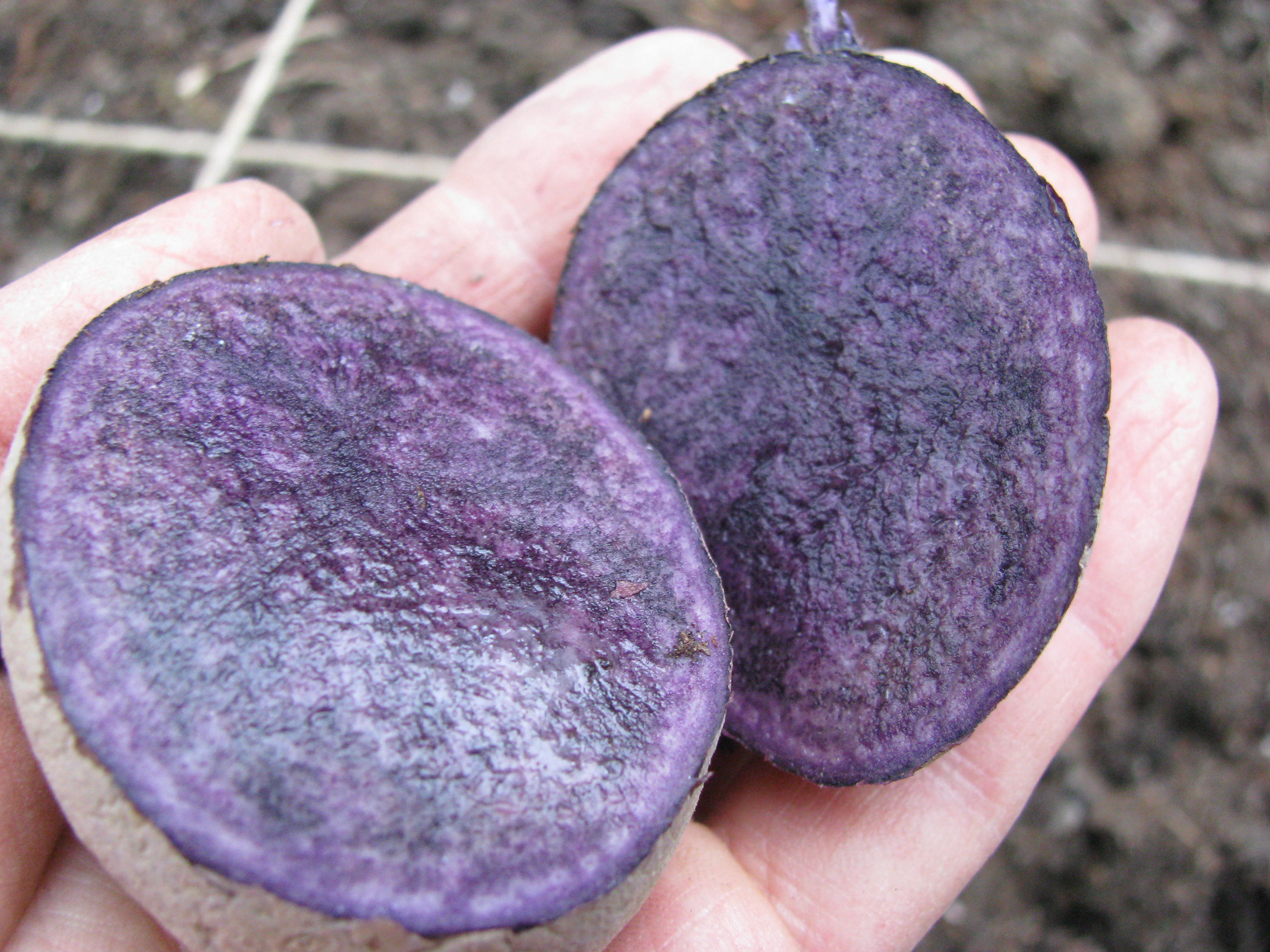
Growing up, potato planting involved the entire family. It began with cutting potatoes, leftover from winter cellar storage, into chunks with 2 to 3 "eyes" in each piece. An eye is a bud where the stem will grow from. The natural blue pigment in these purple potatoes provides extremely high levels of anthocyanin, which has antioxidant and anti-inflammatory properties. Blueberries and blackberries are good sources of anthocyanins, too.
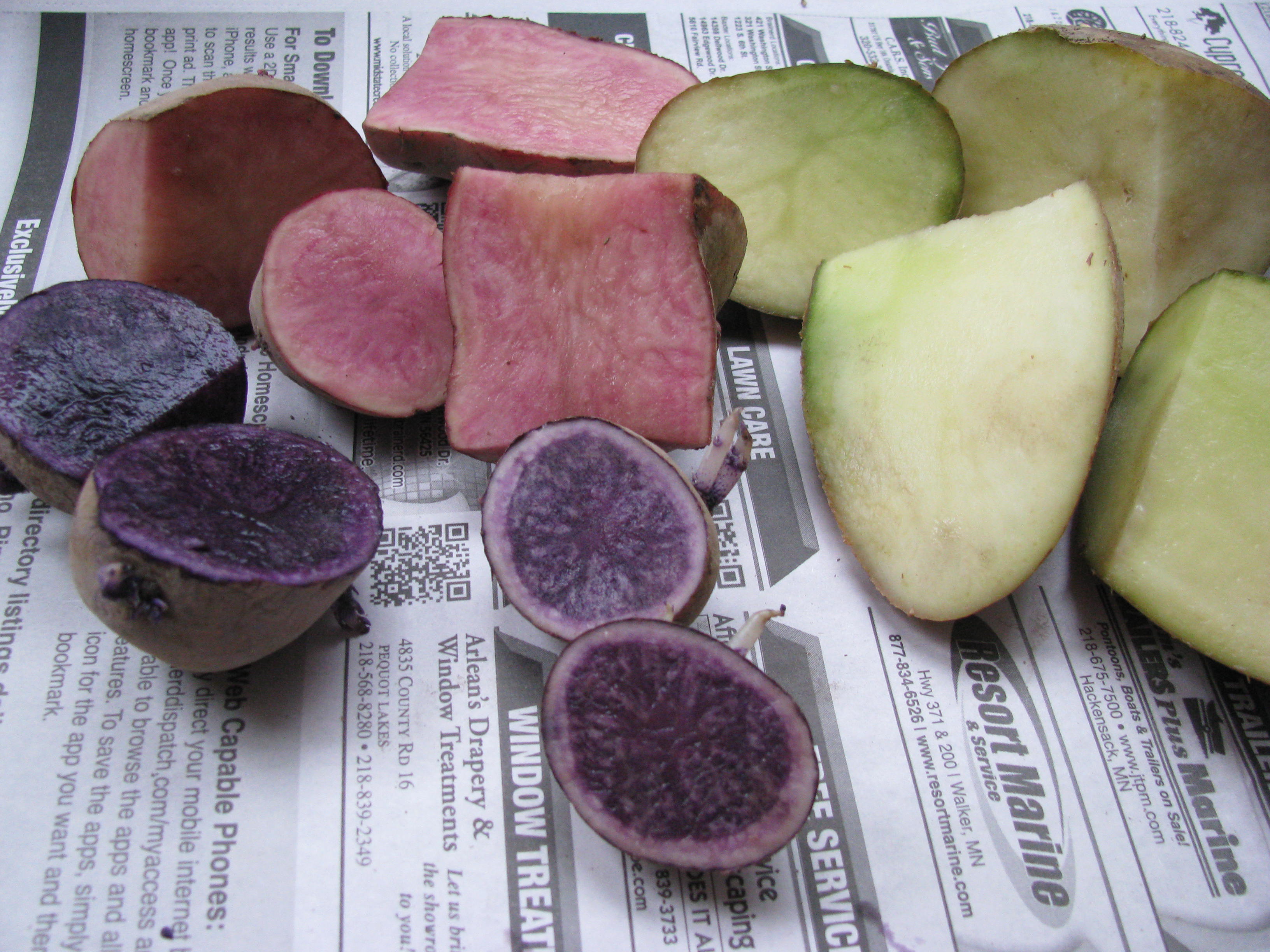

In addition to a purple variety, I also chose to plant red, white, and blue potatoes. Look at the size of the white seed potatoes that arrived in my mailbox! A special gift from my sister, Rita, is a "Bintje" Seed Potato that was developed in the Netherlands in 1905. I will make a special marker identifying its place in my garden.The potatoes have begun to sprout, so now I will allow my seed potato chunks to "cure" for a couple days before planting to allow the cut side to heal to lessen the risk of the potato rotting in the ground. According to Ithaca, New York's Cornell University web site, curing isn't necessary if soil is well-drained, has plenty of oxygen, and soil temperatures are between 50 and 65 F as these conditions promote rapid healing in the ground. In my case, curing isn't essential because… 1)My soil isn't clay so it doesn't hold excessive water. 2)A week ago, I spread well-decomposed compost and cow manure onto the soil then turned it into the ground with a spade to aerate the soil. Incorporating compost or manure loosens the soil better and lasts longer than turning just the soil. 3)My soil's temp is 68 F.


To amend the soil, I made Complete Organic Fertilizer (COF) following the recipe in Steve Solomon's Gardening When it Counts. The fertilizing mix, which is made entirely of natural substances, supplies the plant's requirements for nutrients and boosts the nutritional value of the garden vegetables that I harvest. I combined 4 parts seedmeal, 1/4 part agricultural lime, 1/4 part gypsum, 1/2 part dolomite lime, and 1 part bonemeal and spread it on my garden's soil at a ratio of 4 to 6 quarts of COF for each 100 square feet of raised bed. For easy measuring, I used a one-gallon (4-quart) ice cream bucket. Solomon stated that, "Complete decomposition of COF takes about two months in warm soil during which time nutrients are slowly and steadily being released." He suggests side-dressing seedlings with COF a few weeks after they poke through the soil, or when they are transplanted into the garden, then repeatedly side-dressing the plants every 3 to 4 weeks throughout the growing season. I highly recommend adding the books, Gardening When it Counts and Square Foot Gardening, to your gardening resource library.
Finally, I pounded nails at one foot intervals into the wooden frames housing my raised beds and stretched twine across the length securing it to the nails. This formed my garden layout as described in Mel Bartholomew's Square Foot Gardening. My son-in-law, Patrick, notched his wooden frames at one-foot intervals instead of using nails. I envision a more efficient removal of the string markings than my method. I will plant one seed potato chunk into each one foot square. Tomorrow.


Leave a comment