


Winter. A pot of bean soup. A perfect pairing. With the inclusion of a soaking step, beans nutritional value can be maximized with miniscule additional effort. Soaking beans 12 to 24 (or 36) hours in an acidic, alkaline, or neutral water solution 1)lessens cooking time, 2)reduces or eliminates legumes gaseous effect, and 3)neutralizes phytic acid to improve digestion with increased nutrient absorption. To soak beans, cover 2 cups dry beans with filtered water allowing enough extra for the beans' absorption. Using the chart below as a reference, for each cup of black beans, lentils, or fava beans mix 1 tbsp lemon juice, vinegar (i.e, Bragg Organic Raw Unfiltered Apple Cider Vinegar), or whey into the soaking water. For each cup of dried or split peas, a pinch of baking soda is added to the soaking water. Brown, white (navy), and kidney beans are soaked in plain water. Chickpeas (aka garbanzo beans) require 2 tbsp lemon juice, vinegar, or whey per cup of beans.
Neutralizing Phytic Acid
|
Legume variety |
Optimal water pH |
Soaking time |
Best Soaking Medium |
|
Black beans |
5.5 |
18-24 hours |
Water with lemon juice, vinegar or whey added |
|
Lentils |
5.0 |
10 hours |
Water with lemon juice, vinegar or whey added |
|
Fava beans |
4.0 |
10 hours |
Water with lemon juice, vinegar or whey added |
|
Dried and split peas |
7.0 to 7.5 |
10 hours |
Plain soft water with pinch of baking soda |
|
Brown, white & kidney beans |
7.0 |
18-24 hours |
Plain soft water |
Source: Wise Traditions in Food, Farming and the Healing Arts, the quarterly magazine of the Weston A. Price Foundation, Winter 2006
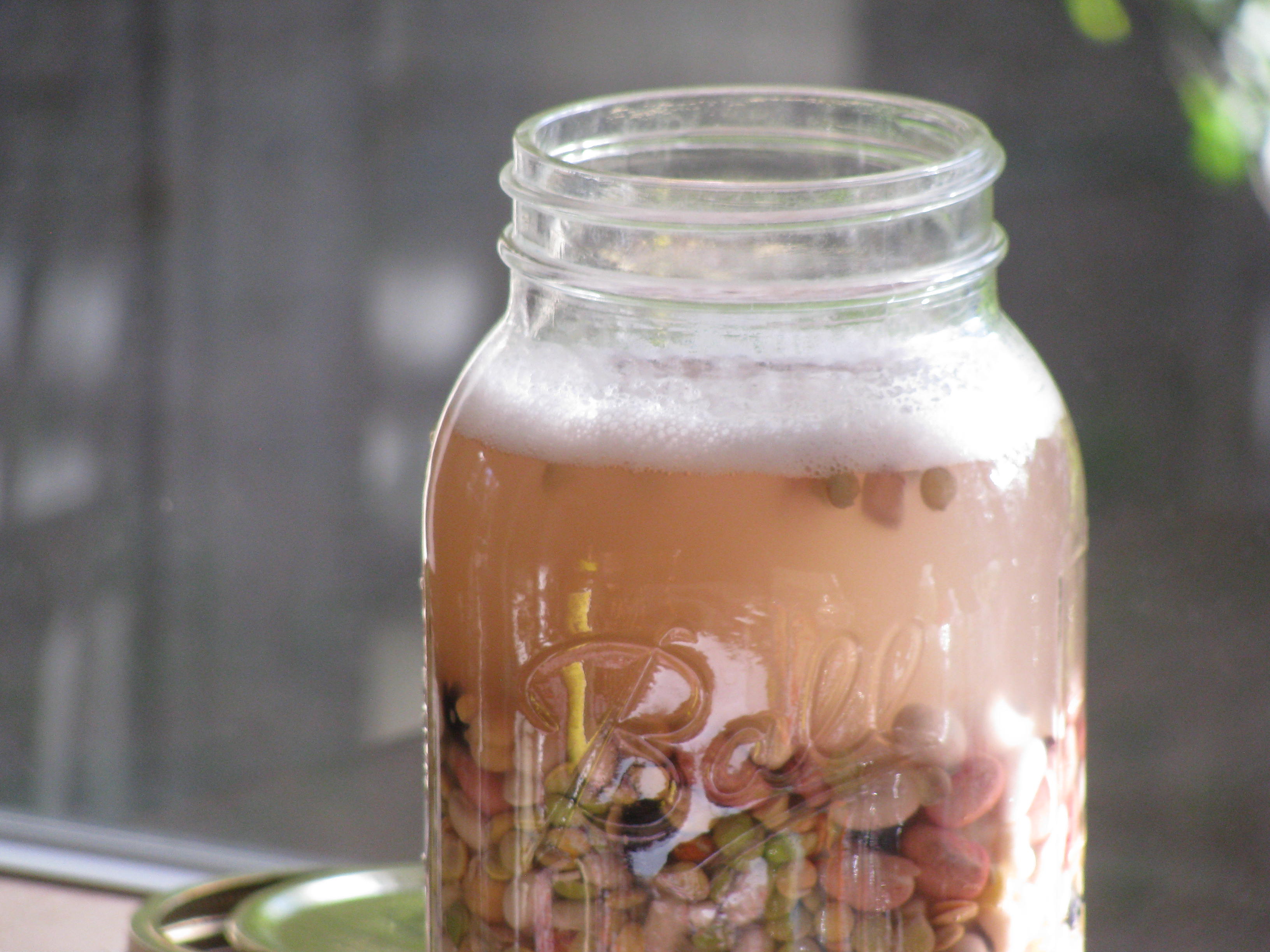
Foam will form during the soaking process as evidenced in this bean mix that I allowed to soak in a water/vinegar solution for 36 hours on my kitchen counter. Increased digestibility may be attained by draining and replenishing the acid or alkaline solution midway during the soaking process.
At the end of the soaking period, drain the water off and rinse the beans with fresh water. They are now ready to be cooked in fresh water or broth. As the beans simmer, skim off any additional foam that forms.

 Whiteley Creek Homestead
Leave a comment