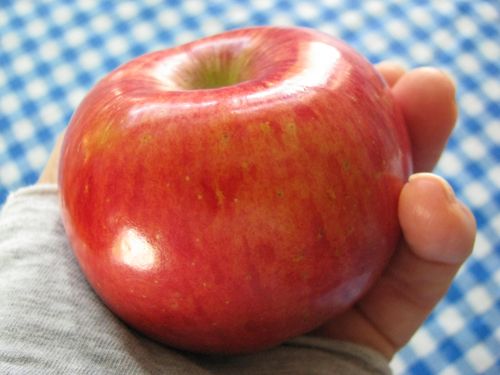
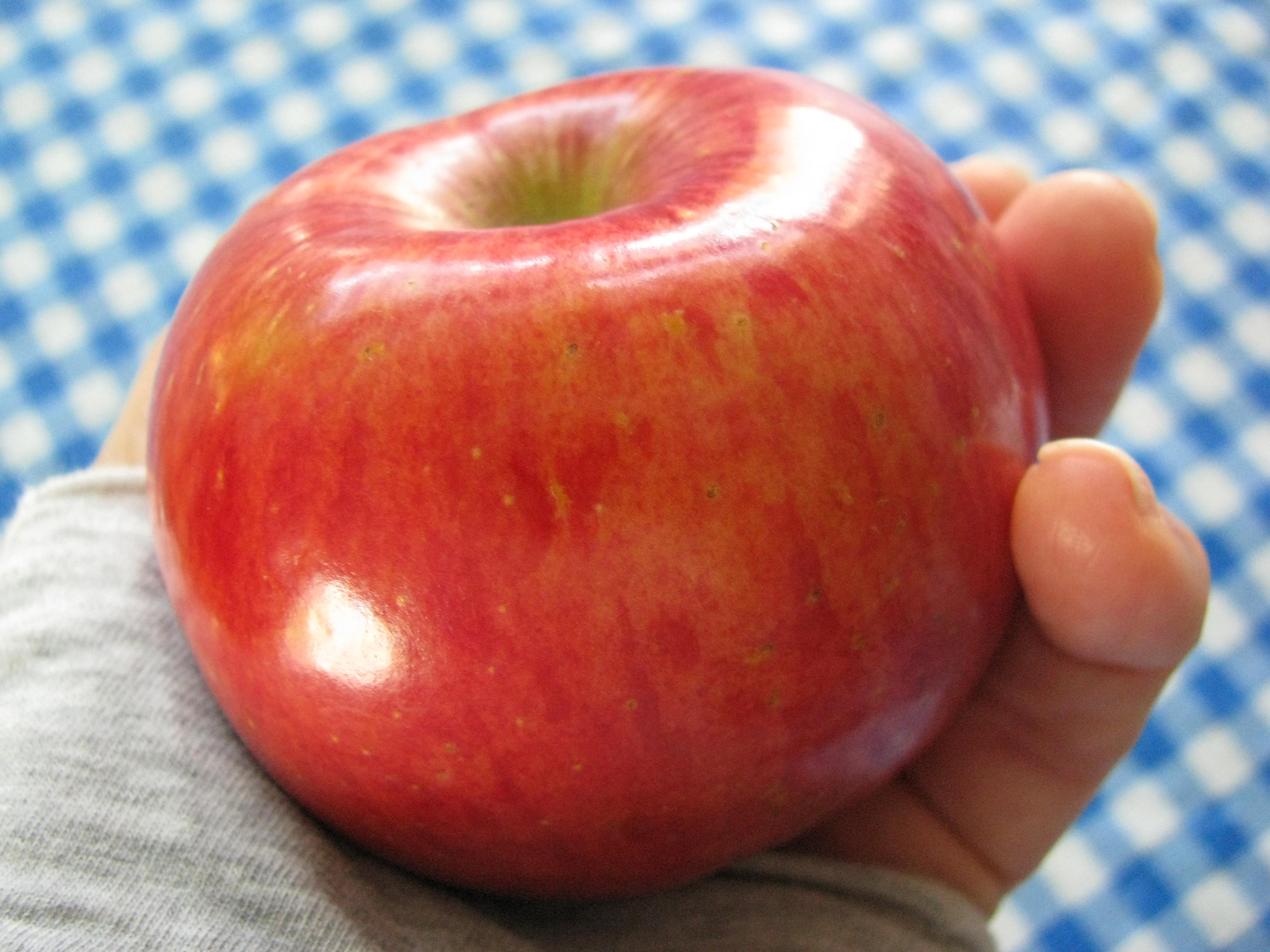
This apple's beautiful coloring reminds me of a crayon resist elementary school art project. Imagine a ruby-red crayon to make blotchy stripes then yellow watercolor paint brushed over top to fill in the gaps and create the background color. I discovered the apple during a routine sweep through the organic produce bins at my local supermarket yesterday. Its name is "Kiku."
Kiku apples were discovered in 1990 by an Italian apple grower named Luis Braun who noticed them growing on a Fuji apple tree in a Japanese orchard. They are considered a natural genetic mutation of the Fuji apple. Braun bought the rights to the apple and began growing it in Italy. Introduced into the U.S. market in 2010, select growers in Pennsylvania, Michigan, and Washington State are licensed to grow this apple. Availability is limited. Info source: http://www.specialtyproduce.com
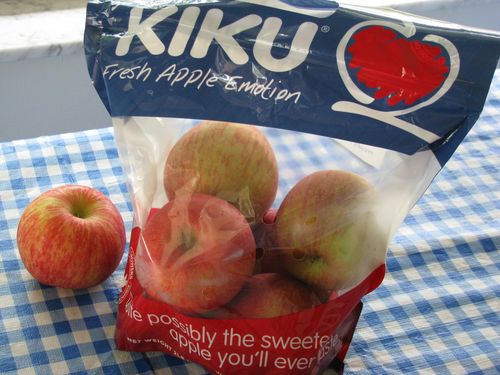
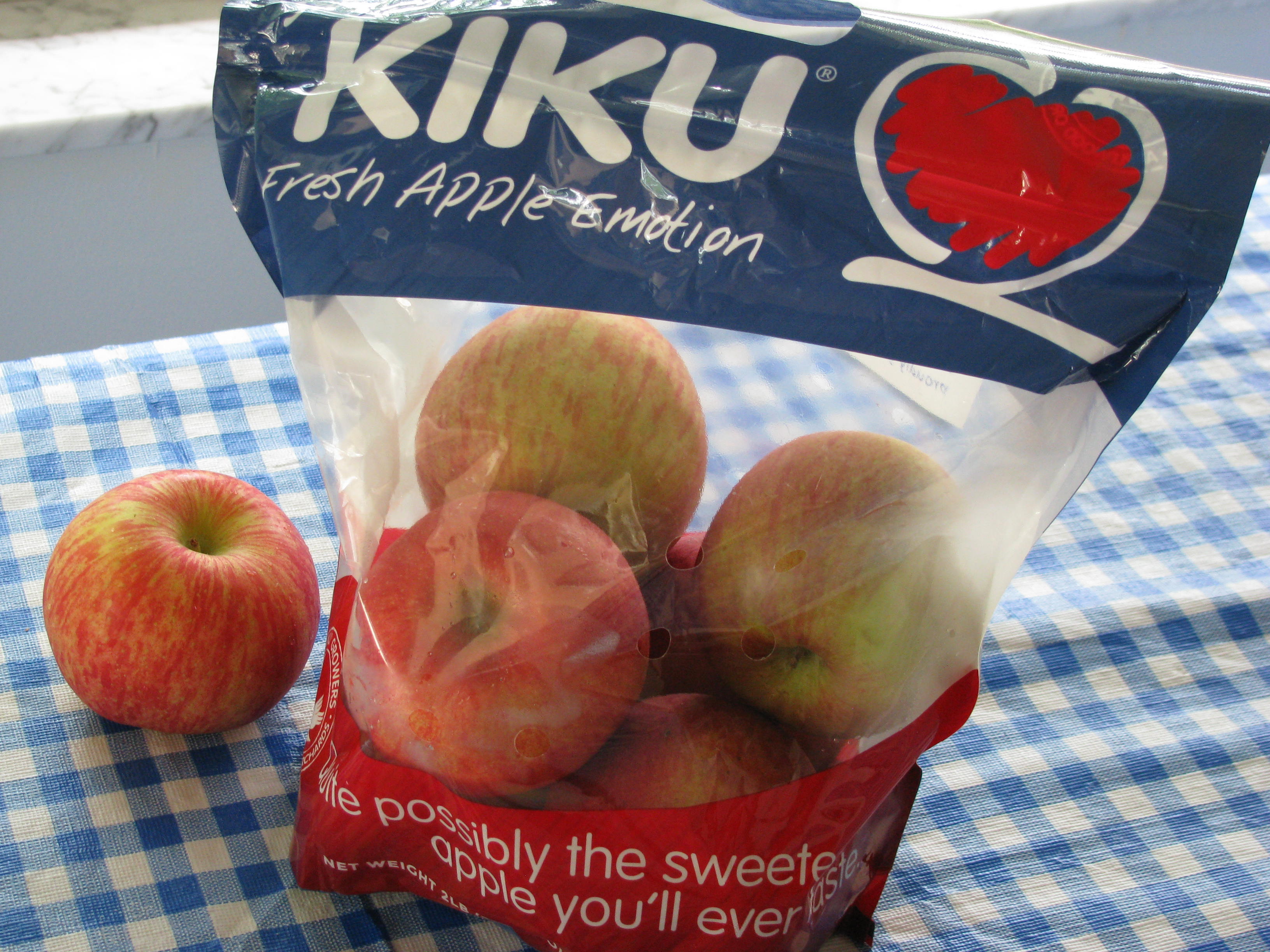
This super sweet strain of a Fuji apple is "quite possibly the sweetest apple you'll ever taste," as the package label boasts. I can attest to this. In addition, the flesh is firm, juicy, and crunchy… all traits that I consider important. Today, I returned to purchase another bag. And another. The Kiku apple has become my winter/early spring favorite alongside my autumn apple favorite, Honeycrisp. Note: Although the apple was displayed in the organic department, it is not organic.
Kiku apples were discovered in 1990 by Louis Braun, an Italian apple grower, who found them growing on a Fuji apple tree in a Japanese orchard. They are considered a ‘sport’ (or natural mutation) of the Fuji; different mostly in appearance and size. Braun bought the rights to the apple and began growing it in Italy. The sweet Kiku was introduced to the US Market in 2010. Now, select growers around the world have permission to grow these sweet apples. Though primarily grown in Italy, they can be found growing in Pennsylvania, Michigan and Washington State in the US and perhaps New Zealand and Chile in the near future.
– See more at:
http://www.specialtyproduce.com/produce/Kiku_Apples_8800.php#sthash.MbjuqBep.dpufKiku apples were discovered in 1990 by Louis Braun, an Italian apple grower, who found them growing on a Fuji apple tree in a Japanese orchard. They are considered a ‘sport’ (or natural mutation) of the Fuji; different mostly in appearance and size. Braun bought the rights to the apple and began growing it in Italy. The sweet Kiku was introduced to the US Market in 2010. Now, select growers around the world have permission to grow these sweet apples. Though primarily grown in Italy, they can be found growing in Pennsylvania, Michigan and Washington State in the US and perhaps New Zealand and Chile in the near future.
– See more at:
http://www.specialtyproduce.com/produce/Kiku_Apples_8800.php#sthash.MbjuqBep.dpufKiku apples were discovered in 1990 by Louis Braun, an Italian apple grower, who found them growing on a Fuji apple tree in a Japanese orchard. They are considered a ‘sport’ (or natural mutation) of the Fuji; different mostly in appearance and size. Braun bought the rights to the apple and began growing it in Italy. The sweet Kiku was introduced to the US Market in 2010. Now, select growers around the world have permission to grow these sweet apples. Though primarily grown in Italy, they can be found growing in Pennsylvania, Michigan and Washington State in the US and perhaps New Zealand and Chile in the near future.
– See more at:
http://www.specialtyproduce.com/produce/Kiku_Apples_8800.php#sthash.MbjuqBep.dpuf




 Whiteley Creek Homestead
Leave a reply to Jackie Whitesell Cancel reply