Whiteley Creek Homestead

LIFE AT THE END OF A DIRT ROAD IN CENTRAL MINNESOTA

organically grown triticale in our field
canoeing in our wetlands
raspberries growing wild on our property
our back porch fieldstone fireplace
  • My friend, Sharon, asked me if I could recommend a cake recipe for her granddaughter's 1st birthday on the 13th of April. Simple, right? Not so fast. It needs to be milk, soy, oat and wheat free due to sensitivities. Traditionally recognized wheat also includes varieties like spelt, kamut, farro, and durum and products made from wheat like bulgur and semolina, so these are all off-limits. If gluten is the culprit, then barley, rye, triticale, and oats* should be avoided, as well. *Oats are inherently gluten-free, but are frequently contaminated with wheat during growing or processing. Bob's Red Mill offers pure, uncontaminated oats that are labeled gluten-free. One option that Sharon has is to substitute a gluten-free flour milled from grain such as amaranth, buckwheat, corn, millet, montina (Indian rice grass), quinoa, rice, sorghum, teff, or wild rice for regular flour in one of her favorite cake recipes. Two other gluten-free flour options are almond flour and coconut flour. This afternoon, I tested a Carrot Cake Cupcakes recipe from Elanas Pantry made with almond flour that fits Sharon's criteria and is light, tender, nutritious, and yummy to boot! Traditional carrot cake is high calorie due to the high sugar and fat content. This version is mega healthy and tastes very much like the traditional version.
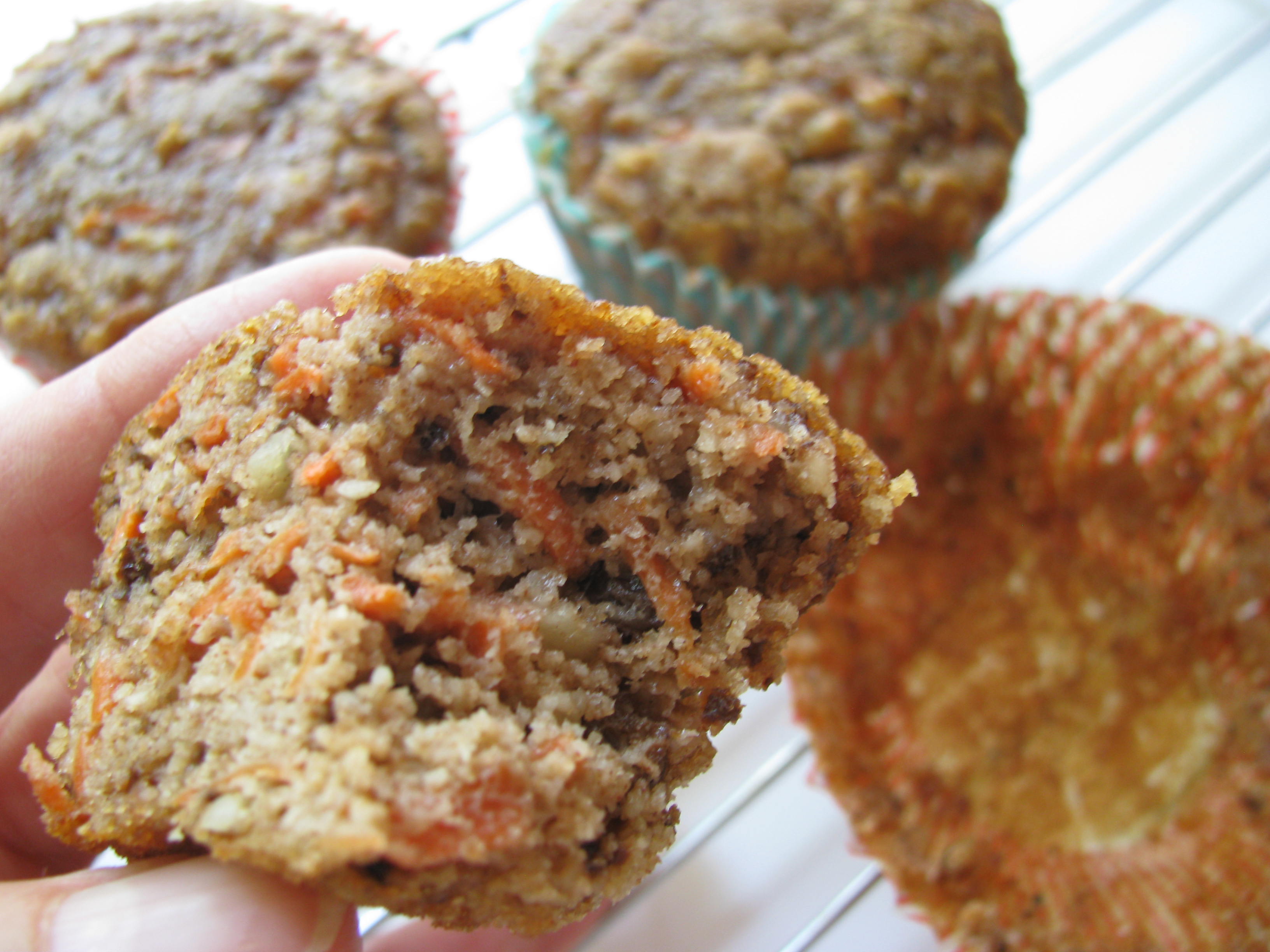
    Gluten-free carrot cake cupcakes 
    Gluten-Free Carrot Cake Cupcakes or Muffins

    Spread with icing to transform into birthday party fare. Elanas Pantry's dairy-free Coconut Cream Frosting would be nice, I think (although it looks to be over-the-top sweet). I say just eat them plain or with a few pumpkin seeds, raw sunnies, or chopped nuts sprinkled on top of the batter before baking to add crunch and visual appeal. Now, they are perfectly appropriate breakfast fare.

    Gluten-Free Carrot Cake Cupcakes or Muffins

    1 ½ 2 cups almond flour

    ½ tsp sea salt

    ½ tsp baking soda

    ½ tbsp cinnamon

    3 eggs

    2 tbsp oil

    ¼ cup agave nectar (I sometimes sub honey.)

    1 ½ cups carrots, grated

    ½ cup pecans, chopped

    I add in ¼ c raisins or dried cranberries and 1/4 c shredded
    unsweetened coconut, too.

    In a large bowl, combine dry ingredients. In another bowl,
    combine wet ingredients plus carrots and pecans (and raisins if using). Stir
    wet ingredients into dry. Scoop batter into paper-lined cupcake pan. Bake at
    325° for 18 to 22 minutes. (My oven took 25 to 27 minutes.) Cool to room
    temperature and spread with cream cheese frosting or leave them plain jane. Makes 10 regular or 5 jumbo cupcakes or muffins.

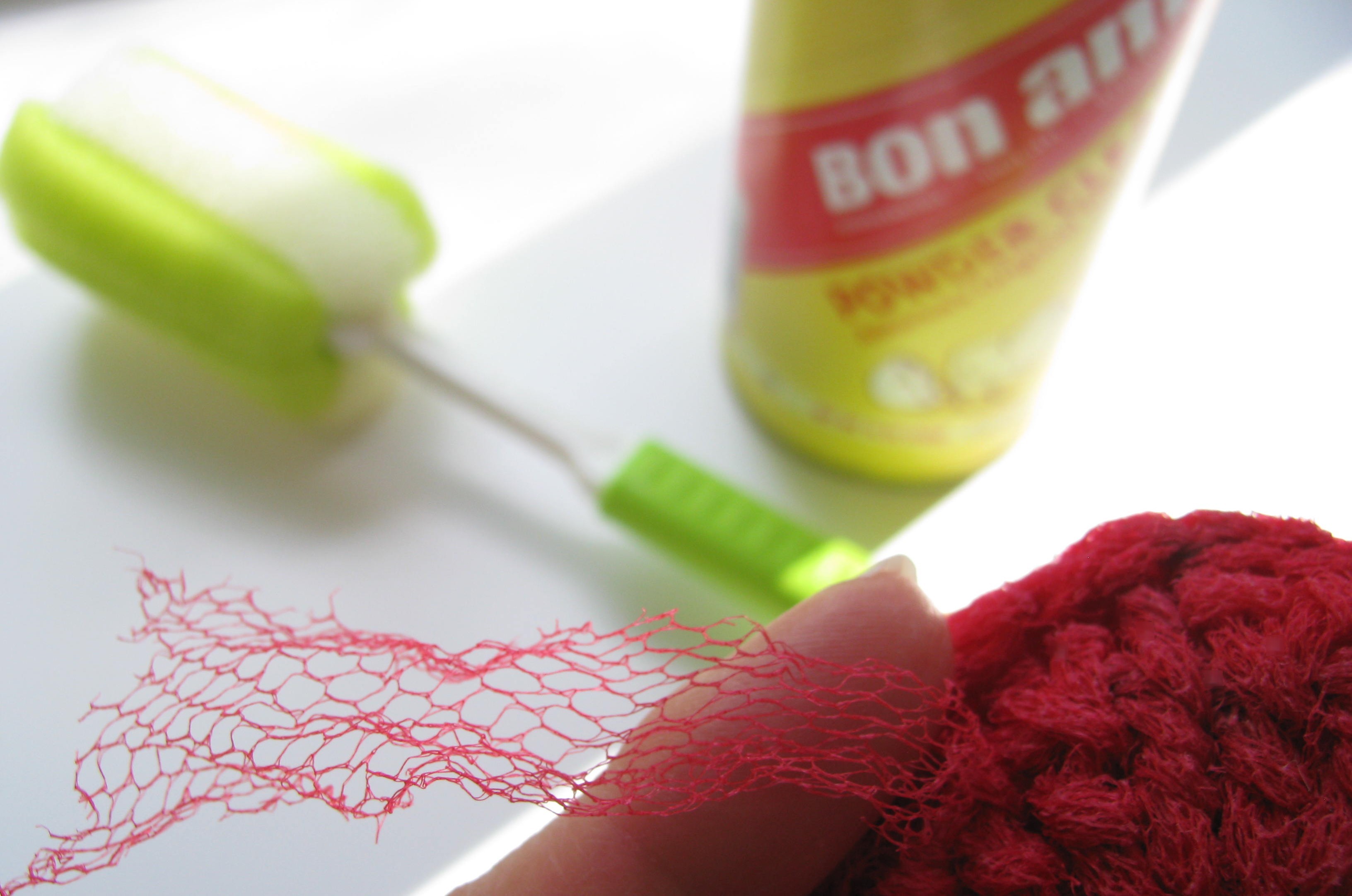
  • These are three of my go-to kitchen cleanup aids. I prefer the Bon Ami Powder Cleanser because of its simple ingredients: limestone, feldspar, biodegradable cleaning agents (from corn, coconut, and palm), soda ash, and baking soda… and the label's cute baby chick.      

    Dish cleaning aids 
    The sponge brush is perfect for cleaning two-quart canning jars that I use for raw milk storage and one-quart canning jars that I use for culturing buttermilk and yogurt. With a quick twist of the wrist, the brush swipes away the slight coating of nonhomogenized milk's cream that clings to the jars' sides before its dishwasher sterilization. The brush's adjustable handle lengthens to accommodate taller jars and bottles. It was a bonus gift when I purchased my eco mugs.

    Scrubber netting 

    The hand crocheted or knitted scrubber is made from netting. I learned that tidbit of info after my curiosity led me to pull a bit of material out of the scrubber's center. In most instances, the scrubber is all that is needed to snuff out a stubborn spot in a pan's bottom. With a squirt of dish soap, it's also perfect for cleaning wooden cutting boards. Toss it in the washing machine's hot water cycle and it's good for another round. 


  • Chicks two weeks old 
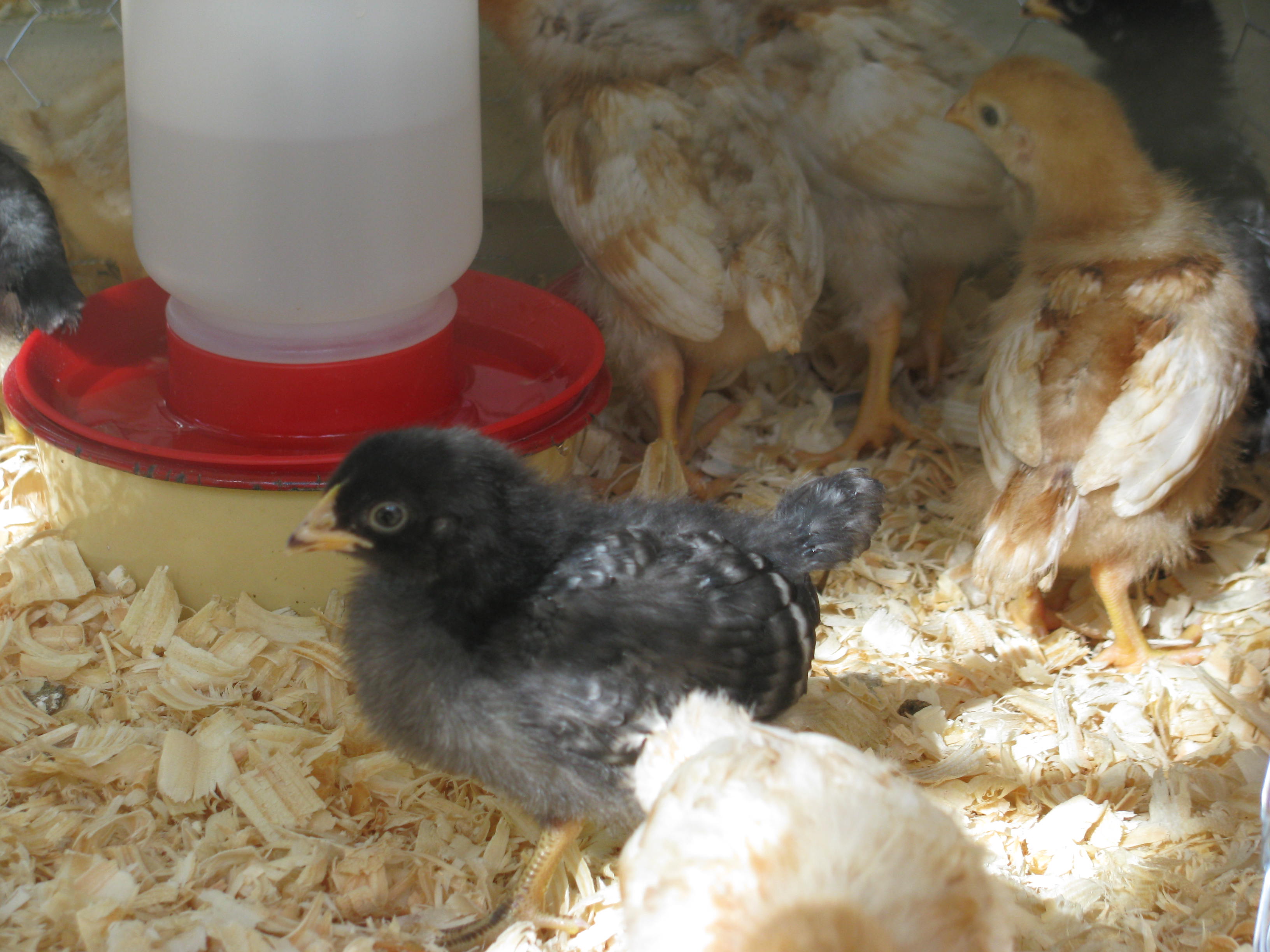
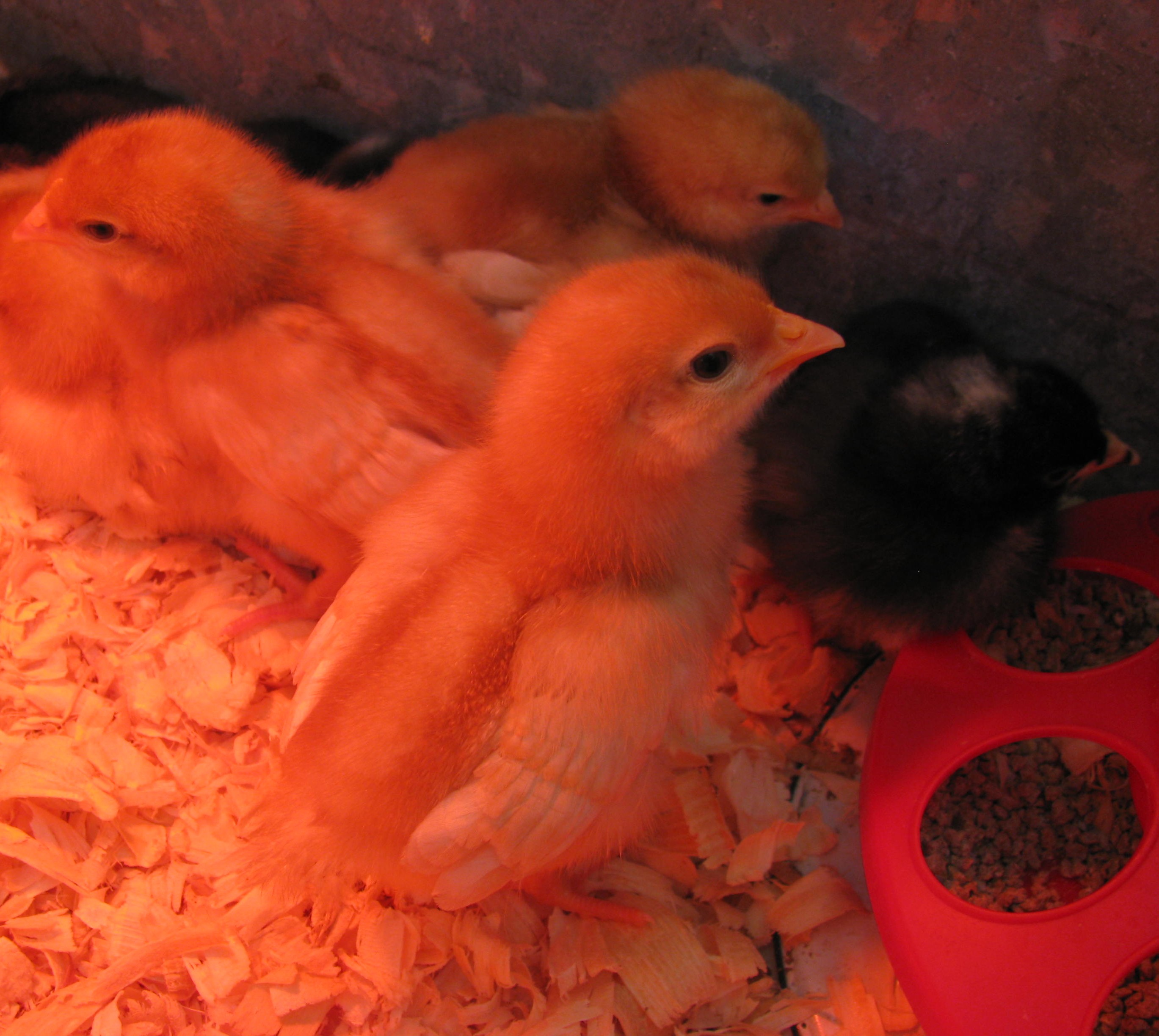
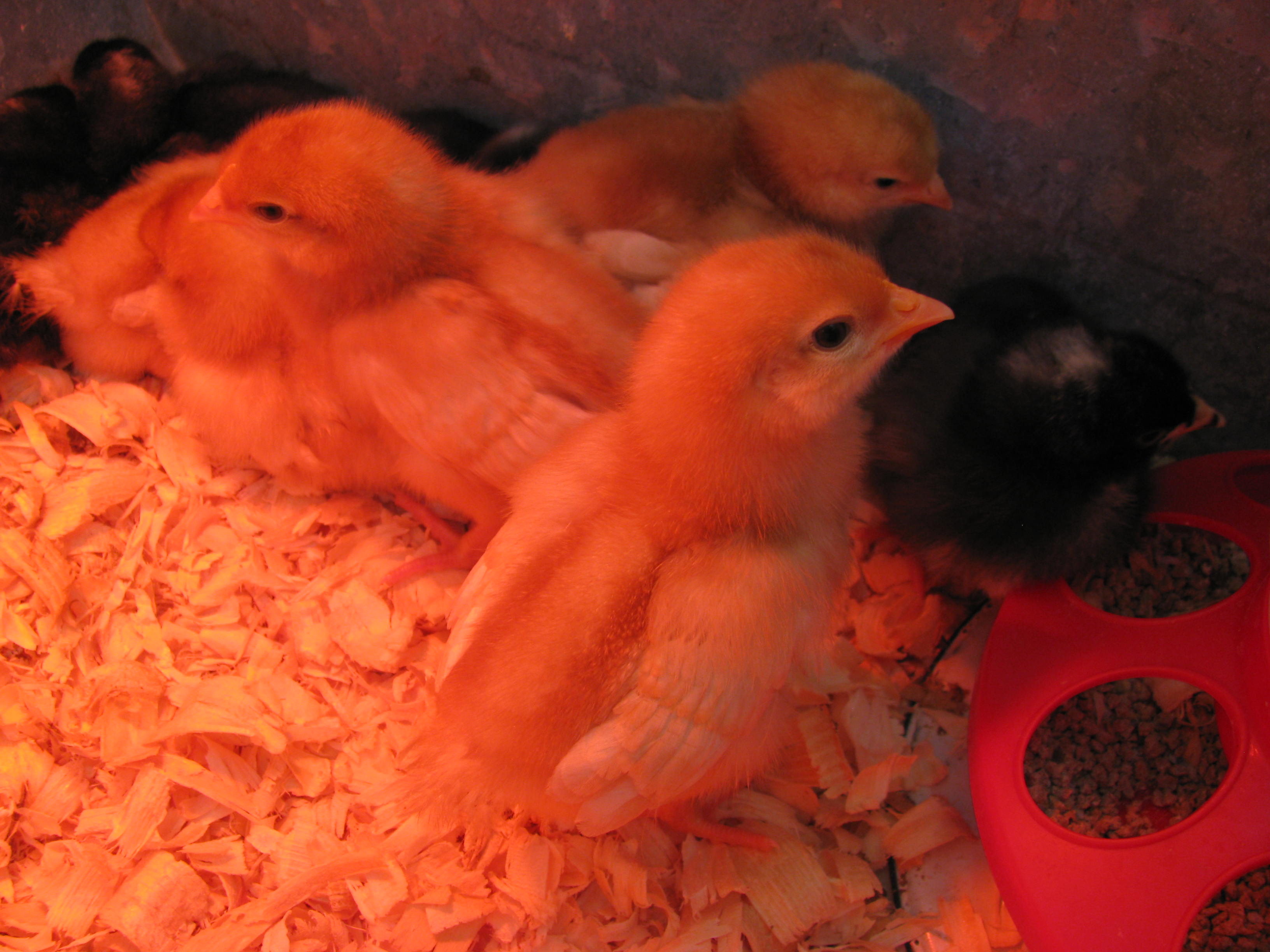
    My barred rock and red star chicks are two weeks old today. A major growth change since my last photo shoot at one week old is their wing development. We created an outdoor playground where Olga, Pearl, Flossie, Opal, Henny Penny, Cora, Phoebe, Edith, and Hilda frolic in the sunshine during the daytime hours. 

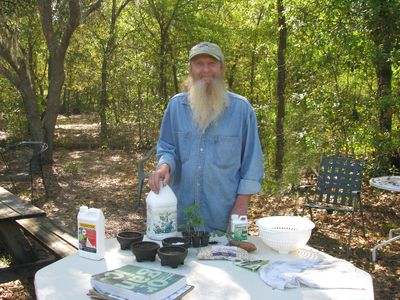
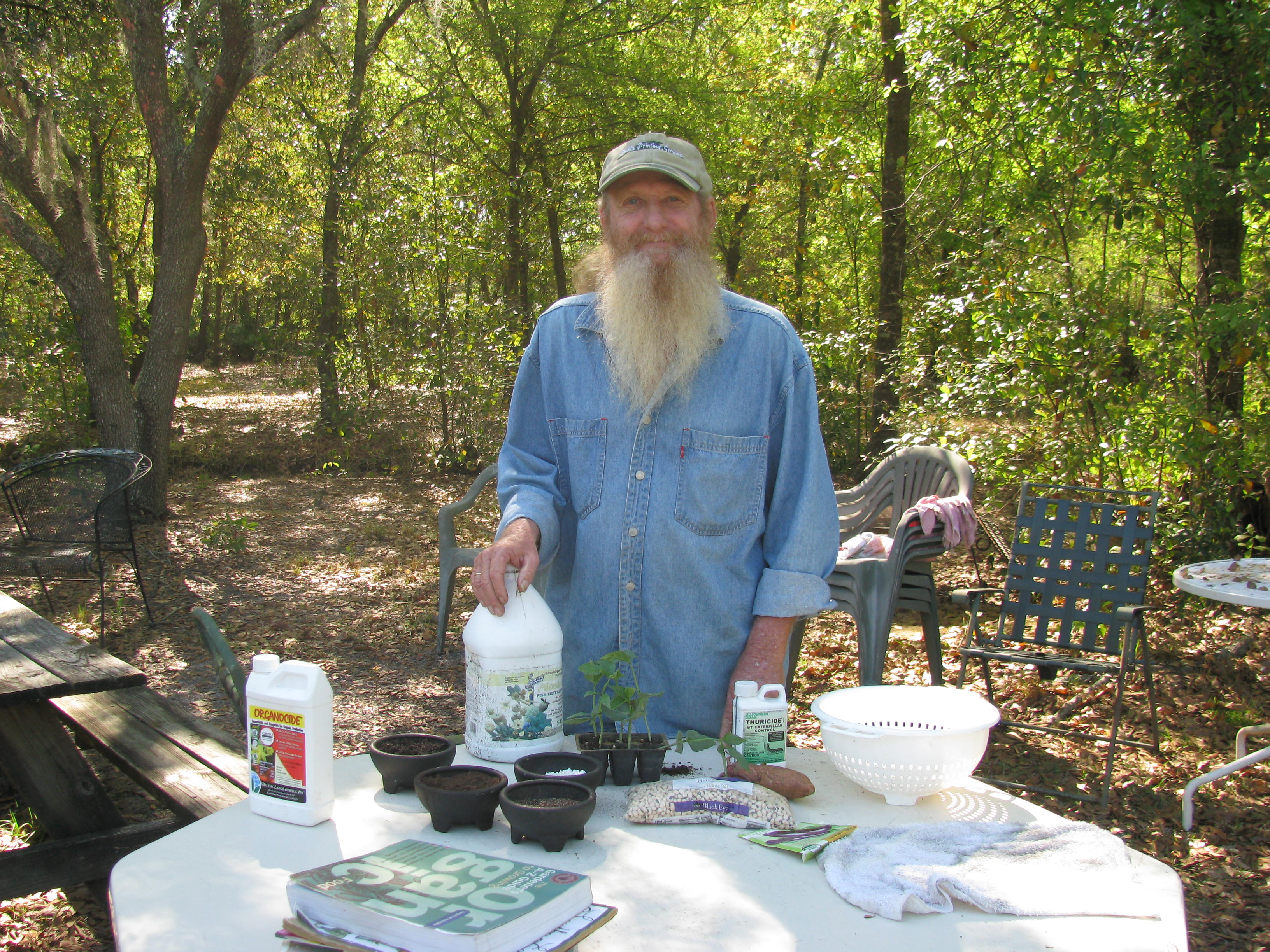
  • Normally, on Saturday morning, I am at the downtown farmers market. Today I switched things up a bit and attended an organic gardening workshop taught by two market vendors, Jeff and Peggy Campbell, at their farm. To be standing on the ground where the food I put on my table comes from… immeasurably meaningful. 

    Org gardening class jeff 
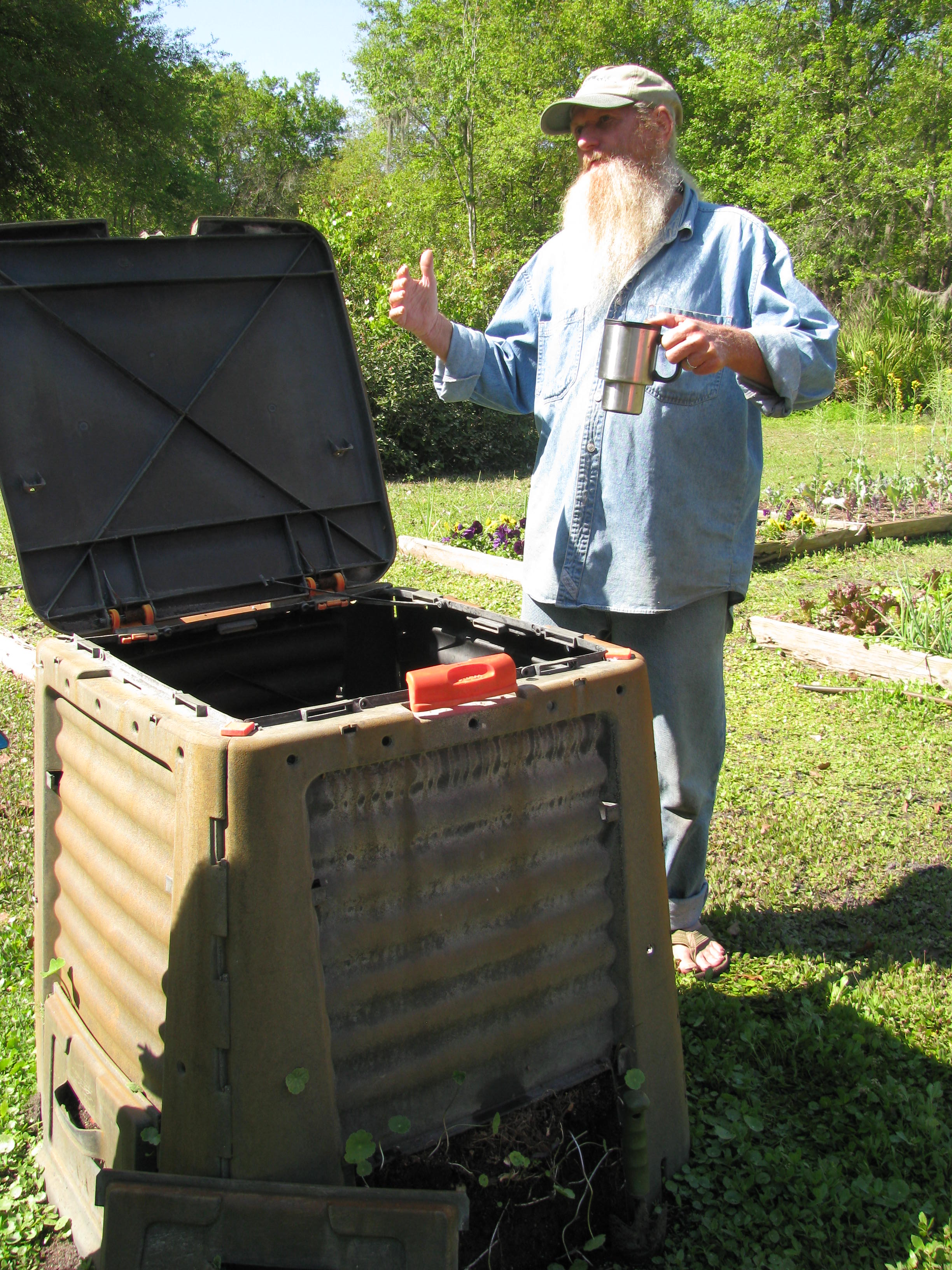
    While the sunlight filtered through the fresh spring growth on the trees, Jeff began by explaining that we need to grow soil because the soil is going to grow the plants. To grow soil means to enrich it by natural means like adding compost and planting cover crops to supply nitrogen. He suggested a simple cover crop of black eyed peas to precede the planting of squash. I will share a detailed explanation of this process in a post later this spring. The goal is to create a fertile soil so that fertilizer (even organic ones) won't be necessary and to create an environment in which plants are less likely to become stressed, since that is when pest infestations generally become a problem. When necessary, Jeff uses a fish emulsion fertilizer and two nonchemical insectcide/fungicides, although he was quick to point out that a gardener's first line of defense is to hand pick pests off plants. To build fertile soil, composting is an important element. This is the composting unit from Home Depot that the Campbells use.  

    Org gardening class composter 
    The drawer on the bottom, that is assessible from all four sides, is where the usable composted material is. To speed the decomposing, Jeff uses a large landscsaping shears to snip the dried brown leaves and green plants into small pieces. The time it takes is minimal, but it reaps huge dividends. As plants are ready to be harvested and sold at the farmers market, there are also pots with seedlings at varying stages of development. For additional information about the Campbells' small-scale farming venture, click here to read an informative newspaper article that includes a wonderful video depicting  their day to day activities.

     Org gardening class zucchini seedlings 
    Peggy used an analogy to explain how our life is like a puzzle. We pick up a puzzle piece and sometimes we set it down again without doing anything with it. At other times, we choose a puzzle piece and find where it fits. Over time, the puzzle begins to take shape until it is complete. I am beginning to see my puzzle coming together. I am solidifying who I am… where my interests lie, what is important for me to glean from life, how I choose to spend my time. One thing I do know. I must learn. This Mahatma Gandhi quote is especially meaningful to me. "Learn as if you were going to live forever. Live as if you were going to die tomorrow." So, I learn. This morning, it was about organic gardening.   

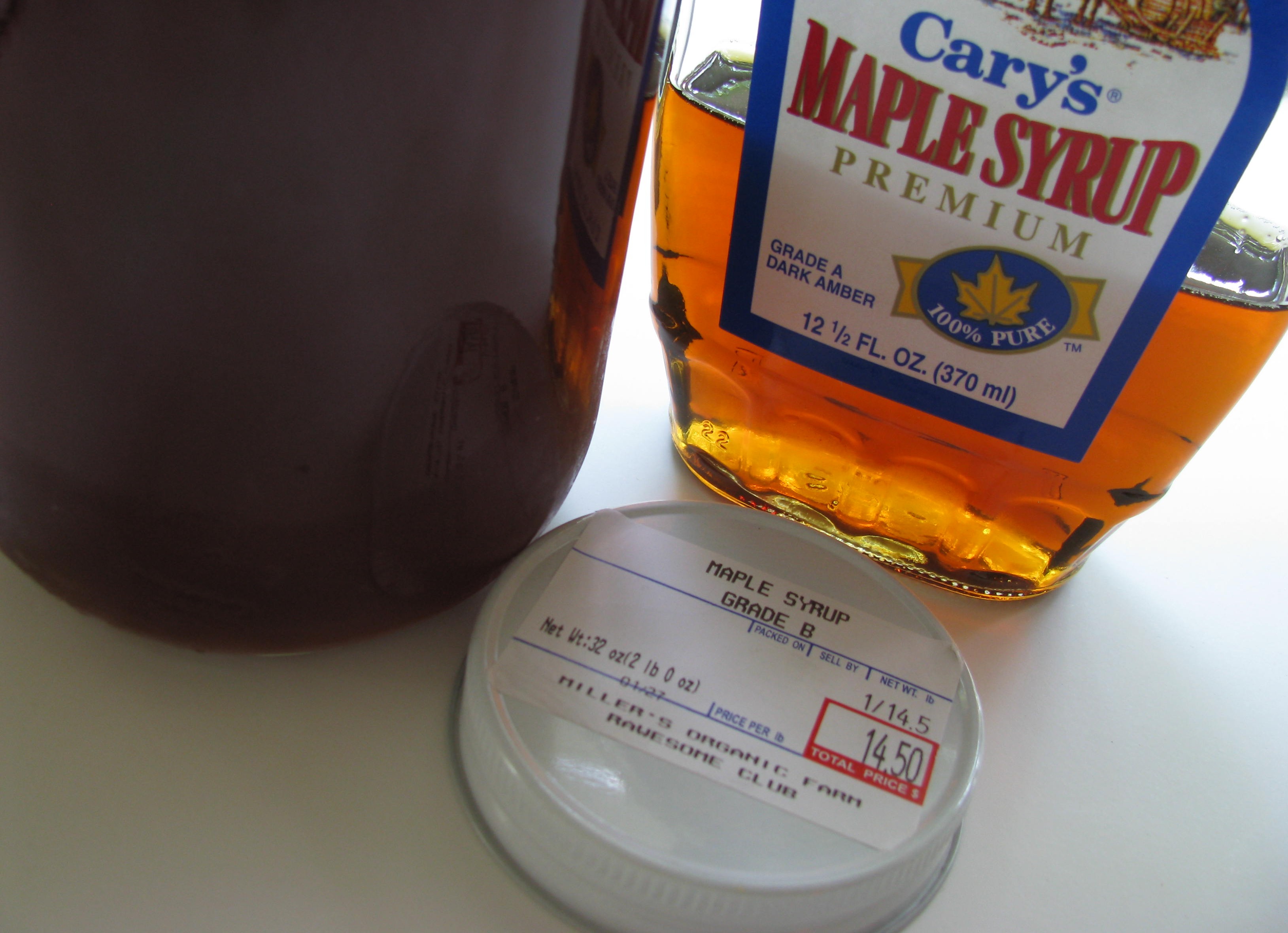
  • I was on a quest recently to discover the difference between Grade A and Grade B maple syrup, so I purchased a quart of Grade B maple syrup from an Amish farmer in Pennsylvania to compare it with a bottle of Grade A maple syrup. In a nutshell, Grade A is the first syrup of the season and is lighter in color with a delicate, milder flavor. Grade B comes from batches at the end of the season and is darker in color with a more pronounced maple flavor.

    Grade b vs grade a 

    In simplistic terms, what is the science behind this? As the sap season progresses and the trees get closer to leafing out, there is less sugar content in the sap. Therefore, it needs to be boiled longer to evaporate the water from the sap to achieve the thickness that characterizes syrup. This not only makes it thicker, but it also gives it a darker appearance. Maple syrup is sold in four grades: Grade A Light Amber, Grade A Medium Amber, Grade A Dark Amber, and Grade B. (There is a fifth grade called Grade C Commercial that is sold in 40 gallon barrels to industrial producers of maple flavored products.)

    For a beautifully photographed free printable depicting how to collect sap from maple trees and transform it into syrup, along with a delightful blog post that chronicles the process, head over here. After reading the blog's posts, you'll want to slip on a pair of snow boots and find the nearest maple tree to tap. (The trees suitable for tapping include all of the maple family:  sugar, silver and red maples as well as box elder.  Sugar maple sap contains the highest concentration of sugar.)

    So what do I think of Grade B maple syrup now that I have spoon-tested it, slurping one spoonful, then another, and another, and another… with a little drizzle that  made its way on top of pancakes? Will I avoid it as I did in the past because I mistakenly believed that the "lower" Grade B rating was an indication of it insuperiority? Definitely not! Will I go out of my way to unearth a local source? Definitely!  

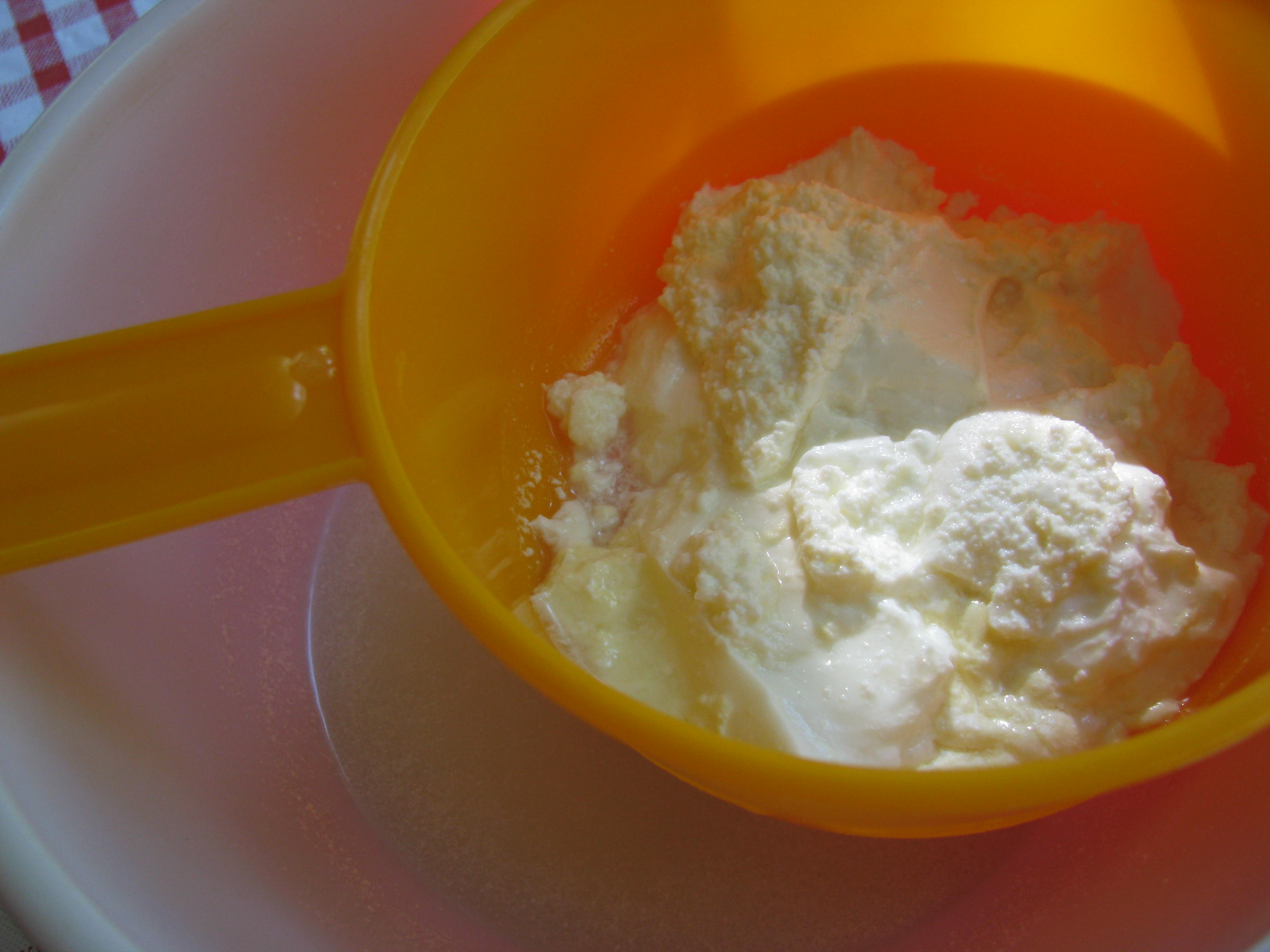
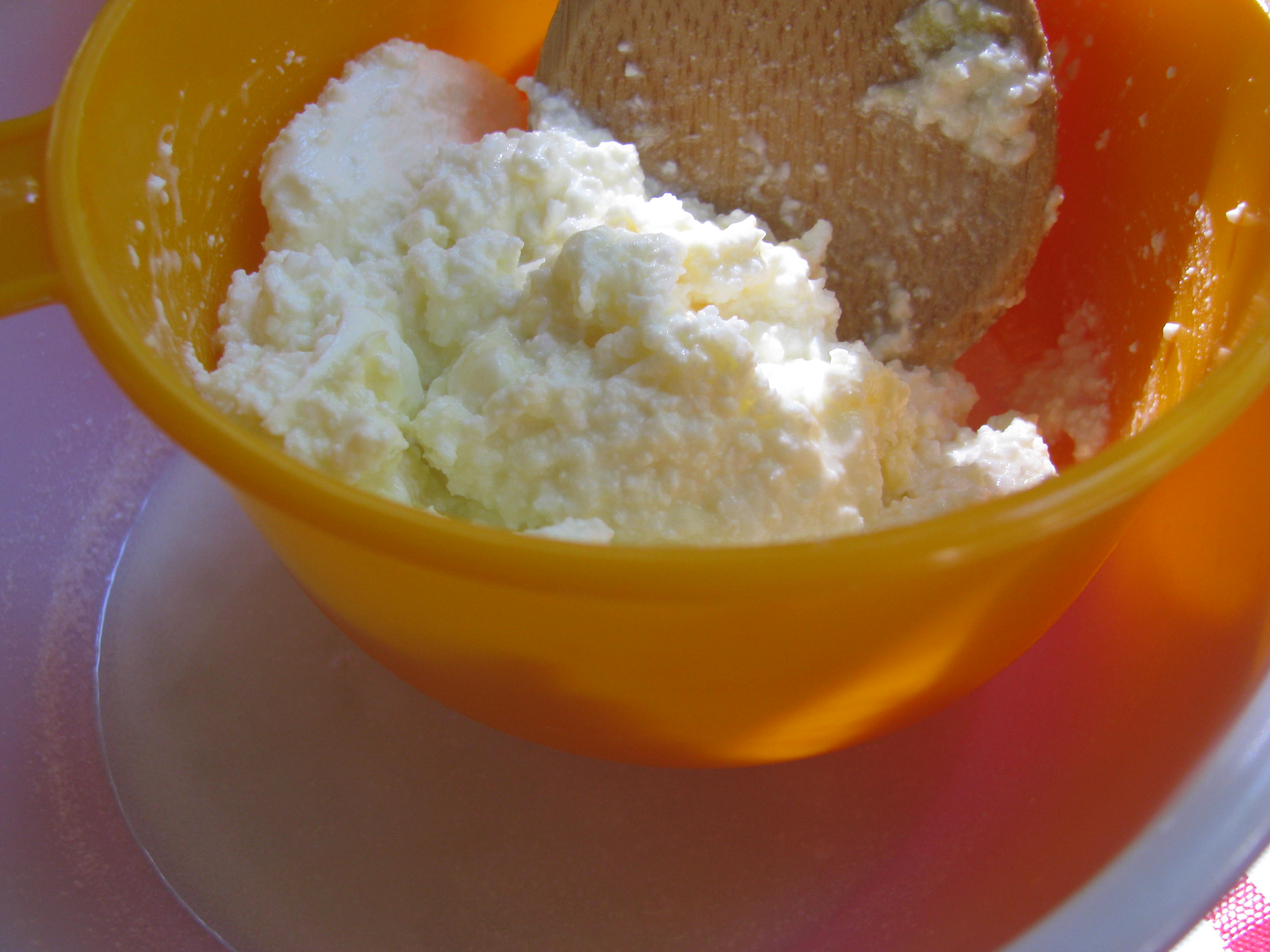
  • I am attempting to make milk kefir. This photo may mean something… or nothing to you. At this point in time, its sole purpose is to provide a visual for Wardeh, the teacher of my Cultured Dairy and Cheesemaking e-Course, and my classmates in that course. If you are in the "this means nothing to me" category, join me back here… right here on this post… at a later date when I'll have more to share of usefulness. It'll all make sense then. I am sure of it. 

    Milk kefir rehydration curds 
    Milk kefir rehydration residue 


  • Opening the mailbox to discover the season's first seed catalog has been a ritual for decades… a mainstay to count on as much as the approach of the season itself. The wood carving on the left, titled The New Seed Catalog, and the farmer on the right, are two of several carvings by Harley Refsal that were featured in a February 1988 issue of Midwest Living Magazine. I tore the three-page article from the magazine 23 years ago upon falling in love with Harley's carving subjects… "rugged Norwegian farmers and their rural neighbors of the upper Midwest."

        Wood carving new seed catalog  Midwest farmer wood carving

    Harley, who grew up in a Norwegian community near Hoffman, Minnesota, is a professor at Luther College in Decorah, Iowa. He offers woodcarving seminars and his carvings are for sale. 

    Contact info:
    Harley Refsal
    621 North Street
    Decorah, IA 52101
    (563) 382-9383
    refsalha@luther.edu

    I still  have a need to hold a seed catalog in my hands to flip through the pages of colorful flowers and vegetables, but times they are a-changin'. More often than not, online seed ordering has become the norm. Happily, I have uncovered online shops such as The Little Ragamuffin. Jen, this etsy shop's owner, captured my heart upon reading thus… "Handmade seed packets filled with organic, open-pollinated, heirloom seeds grown and collected by hand on our small-scale sustainable farm. Each seed packet you buy helps to support The Kirk Estate – the 19th century haunted farmhouse and surrounding property where I live that has been preserved for five generations. Our small scale sustainable farm is worked the old fashioned way; no chemicals, no petroleum intensive machines -only sustainable farming practices that help to improve the land, the environment, the wildlife, and the people. Thank you for your support of this time and effort intensive process. Your purchase is helping to make a difference."

    "Many moons ago Eric met Jen in the elevator of a college dormitory." Besides harvesting and sharing garden seeds, they now make music together… no really. They do. Take a listen…https://theparlormusic.com/ 

  • My chicks hatched on March 7, 2011, so they are one week old today. In this brief timespan, their wings have grown noticeably larger.

    Chicks one week old 
     

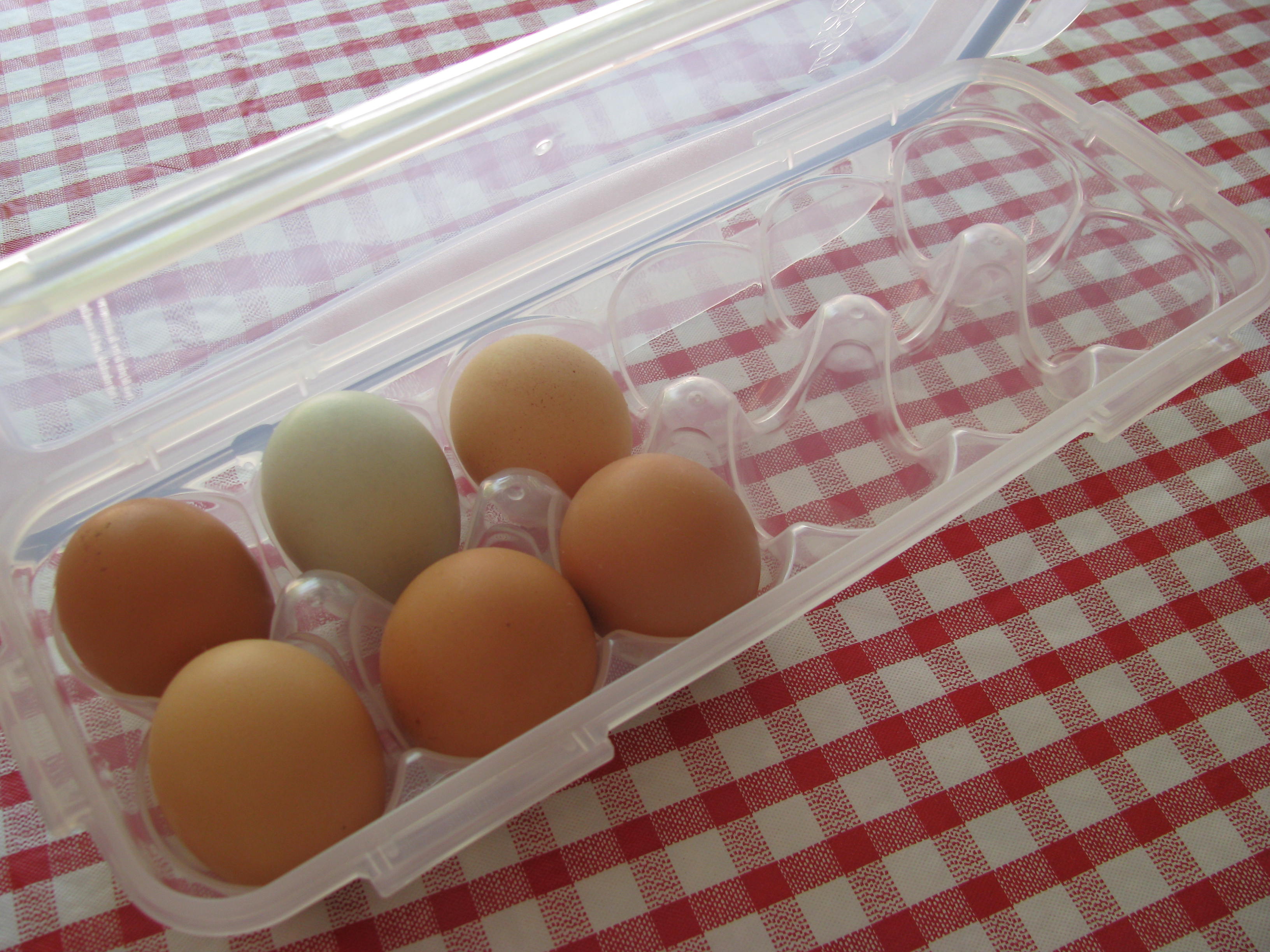
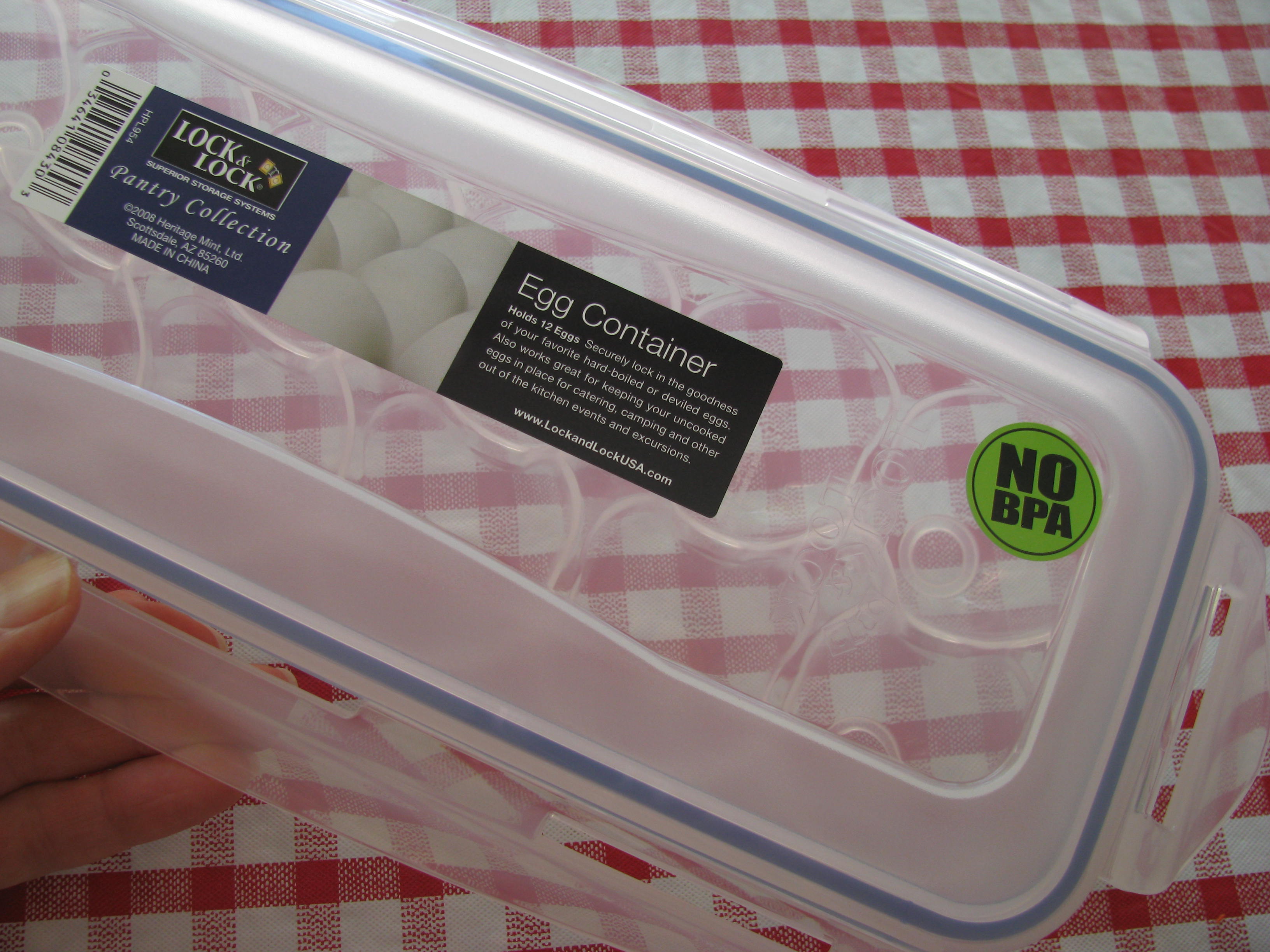
  • If we invest extra time and expense in raising a flock of hens or purchase eggs from a local farmer… or grocery store, it's prudent to take measures to lengthen the eggs' shelf-life. Because egg shells are porous, they are prone to moisture loss and odor absorption. Storing them in their original carton is better than in egg trays molded into a refrigerator door, but here's a better idea yet… airtight egg containers.

    Egg container 

    A simple downward snap of each of the four latches… two at a time… and the lid's sealing ring on this Lock & Lock egg storage container "securely locks in the goodness." The clear lid showcases multi-colored eggs, that are too pretty to be hidden away.      

    Lock & lock egg container 

    In my online search for such a container, some sites offer ones for 10 eggs. How practical is that? I say go for the 12-egg capacity. 

  • Tomorrow afternoon is raw milk delivery day which means that I needed to use up some surplus homemade cultured buttermilk to make room in my fridge. Buttermilk's acidity deactivates the phytic acid in grains, so I am prepping hearty pear pecan muffins and oatmeal hot cereal by soaking the grains overnight. In preparation for making bean soup, I am soaking a variety of dry beans, split peas, and lentils in the third bowl using vinegar as the acidic medium. 

    Soaking grains 

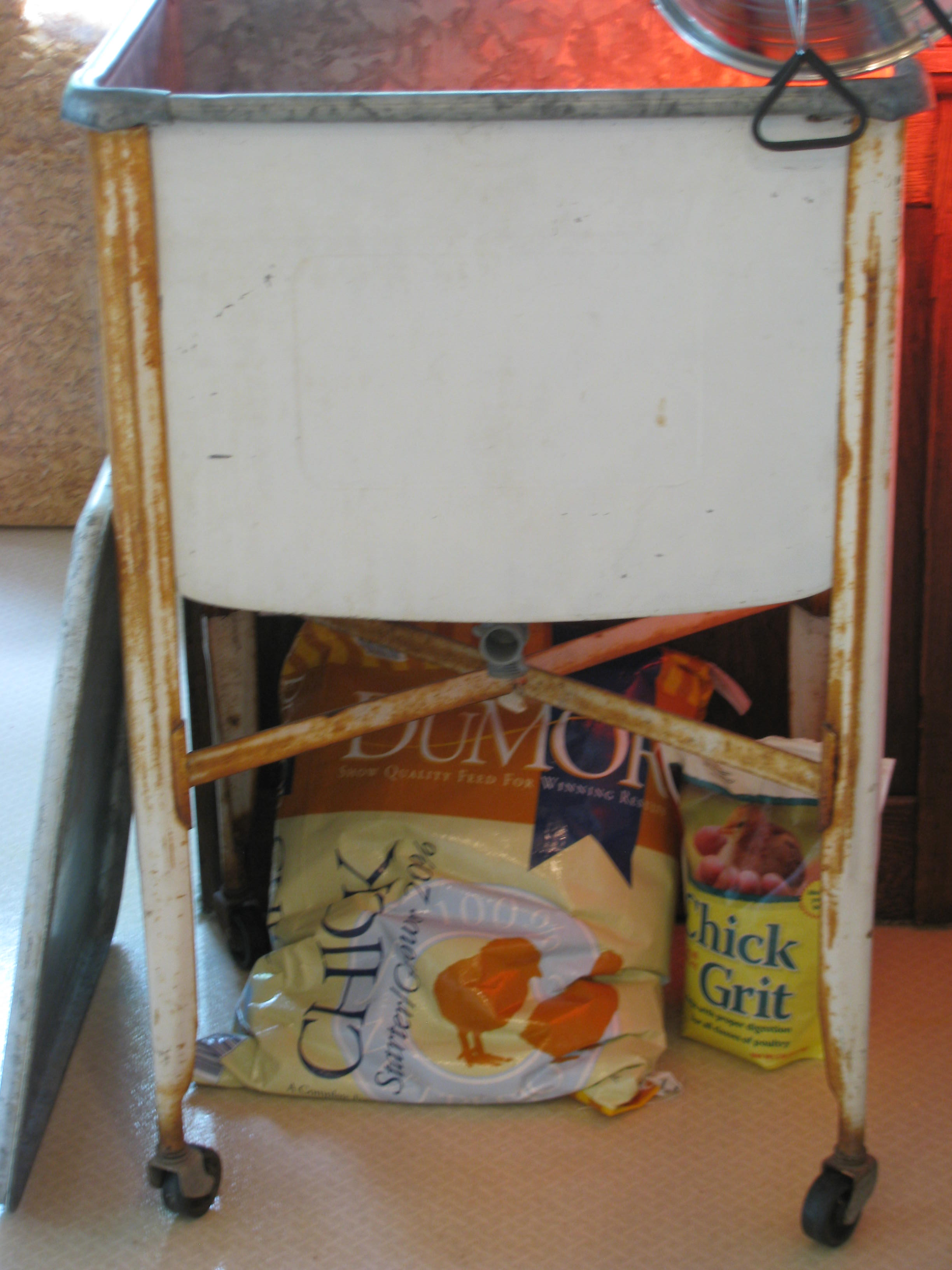
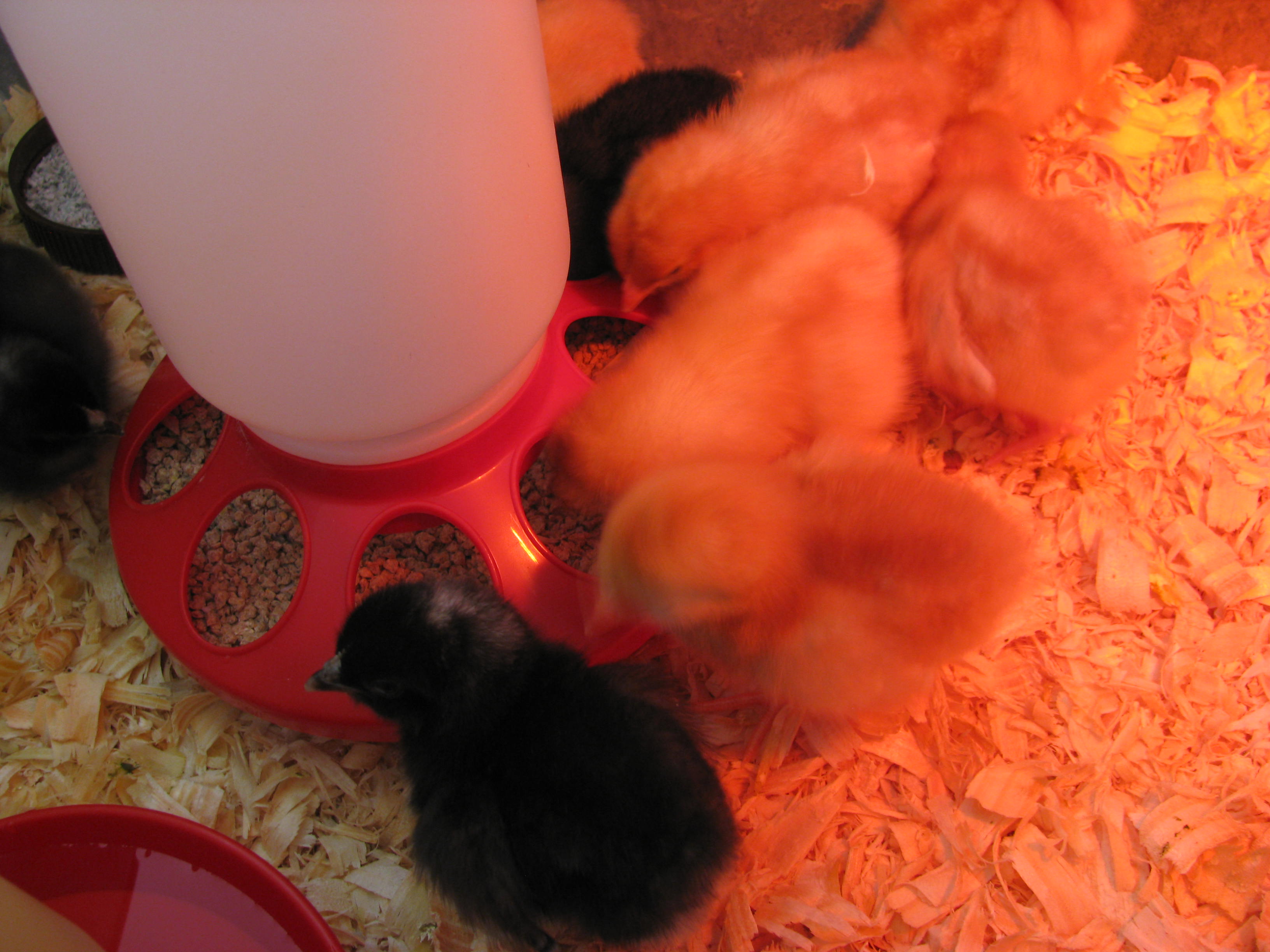
    Prepping grains for muffins and hot cereal is not the only flurry of activity this afternoon. I have nine 2-day old baby chicks hatched at 10 a.m. on March 7, 2011… 5 red star and 4 barred rock that Dick and I hand-picked at the neighborhood farm store today. I emptied a stash of fabric out of an old washtub to use as a make-shift brooder, layered the bottom with 2 inches of bedding material (wood shavings), attached a reflector brooder clamp light with a red heat lamp to the washtub's edge, filled water, feed, and grit containers, then introduced our chicks to their new home.  

    Washtub brooder 
    brood·er

    [broo-der]

    –noun

    1.

    a device or structure for the rearing of young chickens or other birds.
     
    2-day old chicks in washtub 
    As I keep busy in my kitchen, their gentle chirps are as soul-soothing as a stream trickling over rocks in its path, a Nora Jones song playing on the radio, a tractor slowly chugging along a dirt road… yes, there are still some dirt roads to be found although they are sadly, quickly disappearing. In my memory, there are many still.