Whiteley Creek Homestead

LIFE AT THE END OF A DIRT ROAD IN CENTRAL MINNESOTA

organically grown triticale in our field
canoeing in our wetlands
raspberries growing wild on our property
our back porch fieldstone fireplace
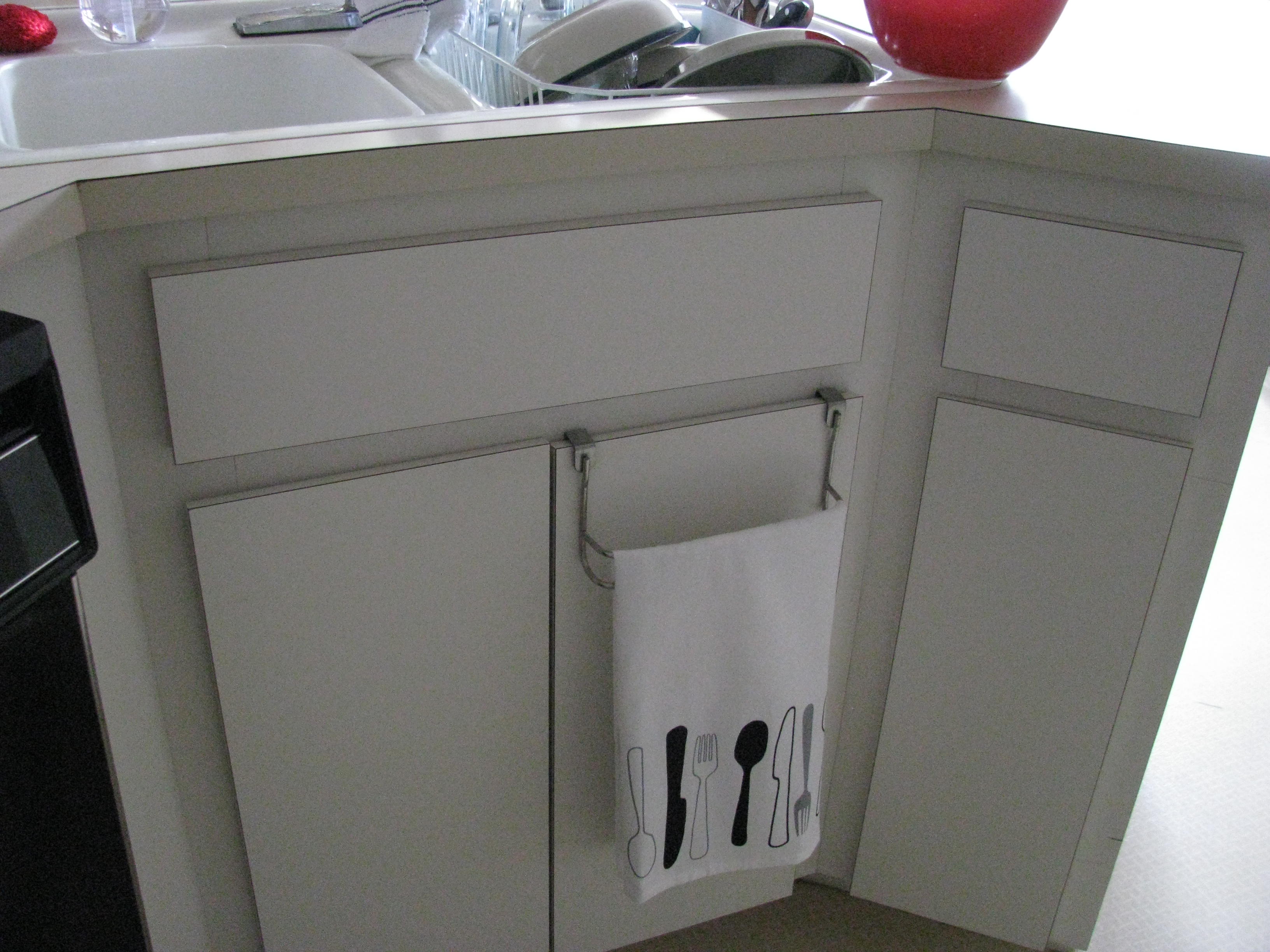
  • In my mailbox… it awaited. I reached in and pulled out a little box addressed to me. It was from my friend, Deb. Inside was the most perfect Valentine's Day gift… an over cabinet towel bar that requires no drilled holes. It is up and functional in seconds. I purchased a new dishtowel to drape over my new towel bar… a perfect duo. (Click photo to enlarge.)

    Kitchen towel bar 
     

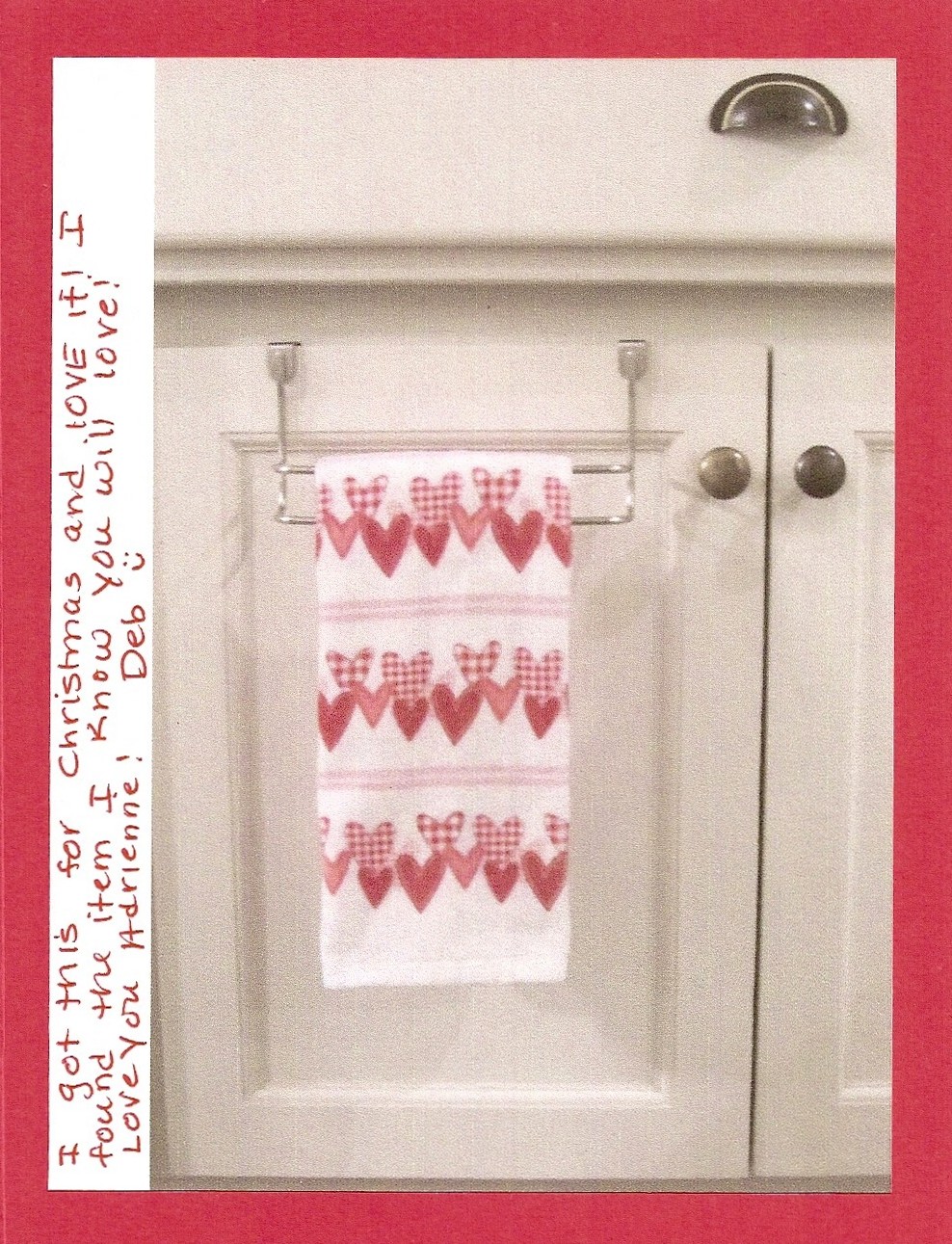
    To make my gift's presentation special, Deb included this photo of her own towel bar.Debs over cabinet towel bar

    Over cabinet towel bar and black and white stenciled dishtowel? Target and Target.

  • With the exception of a few that come and go sporadically, Dick's and my swim class at the Y consists of a core group. It's amazing how rapidly a group of strangers, brought together for a common purpose, become bonded. I love the water exercise but, just as much, I look forward to the people that create the comforting rhythm of the everyday. Today, Jack, who gives Dick company in a predominantly female dominated class, brought a large box of chocolates to share with everyone to celebrate Valentine's Day. How sweet! To pass the love on, I made Dick cupcakes when I returned home after swimming.  

    Almonds finely ground

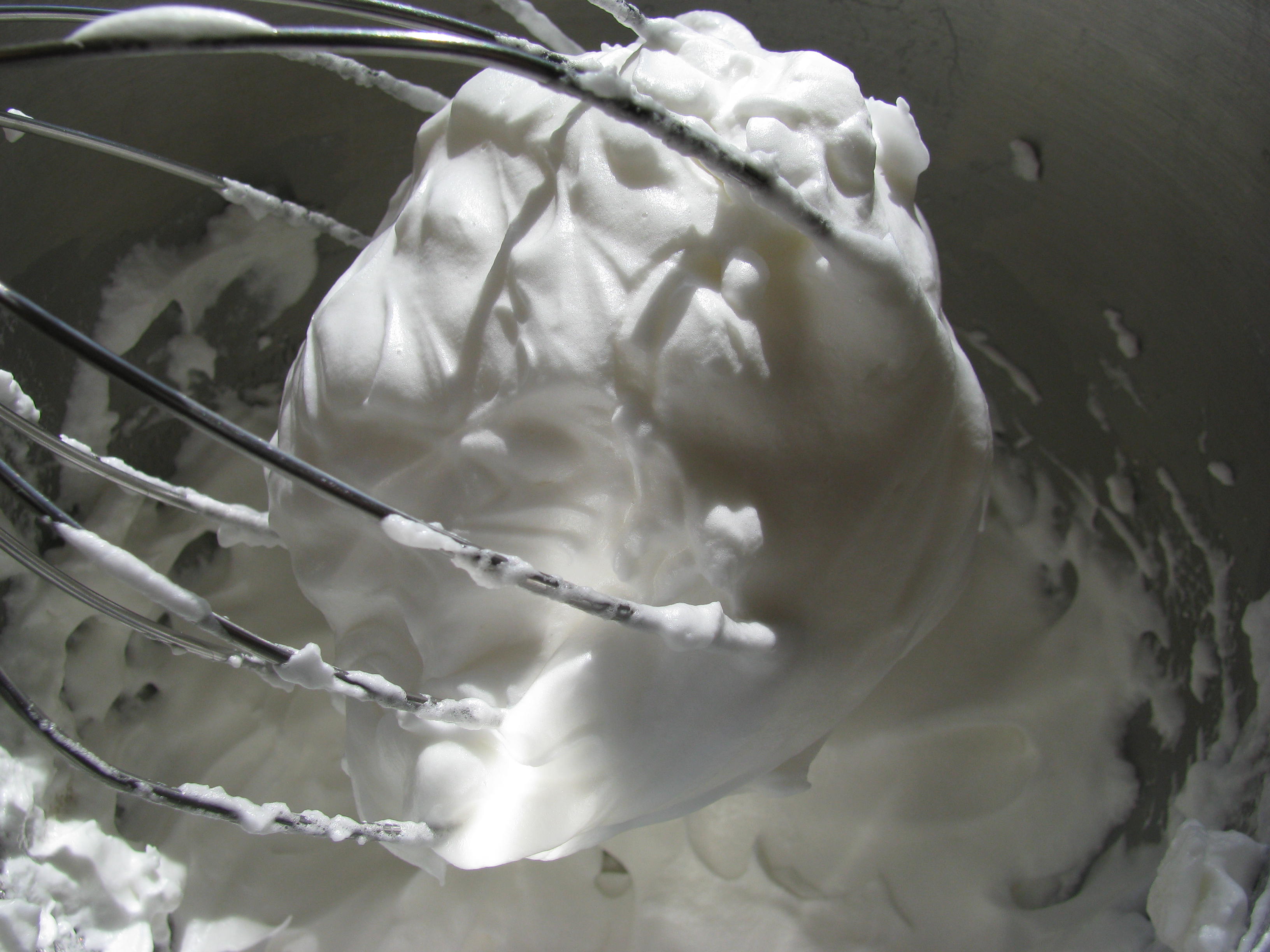
    Egg whites beaten

    To make the cupcakes, I began by grinding almonds in a food processor and beating egg whites.

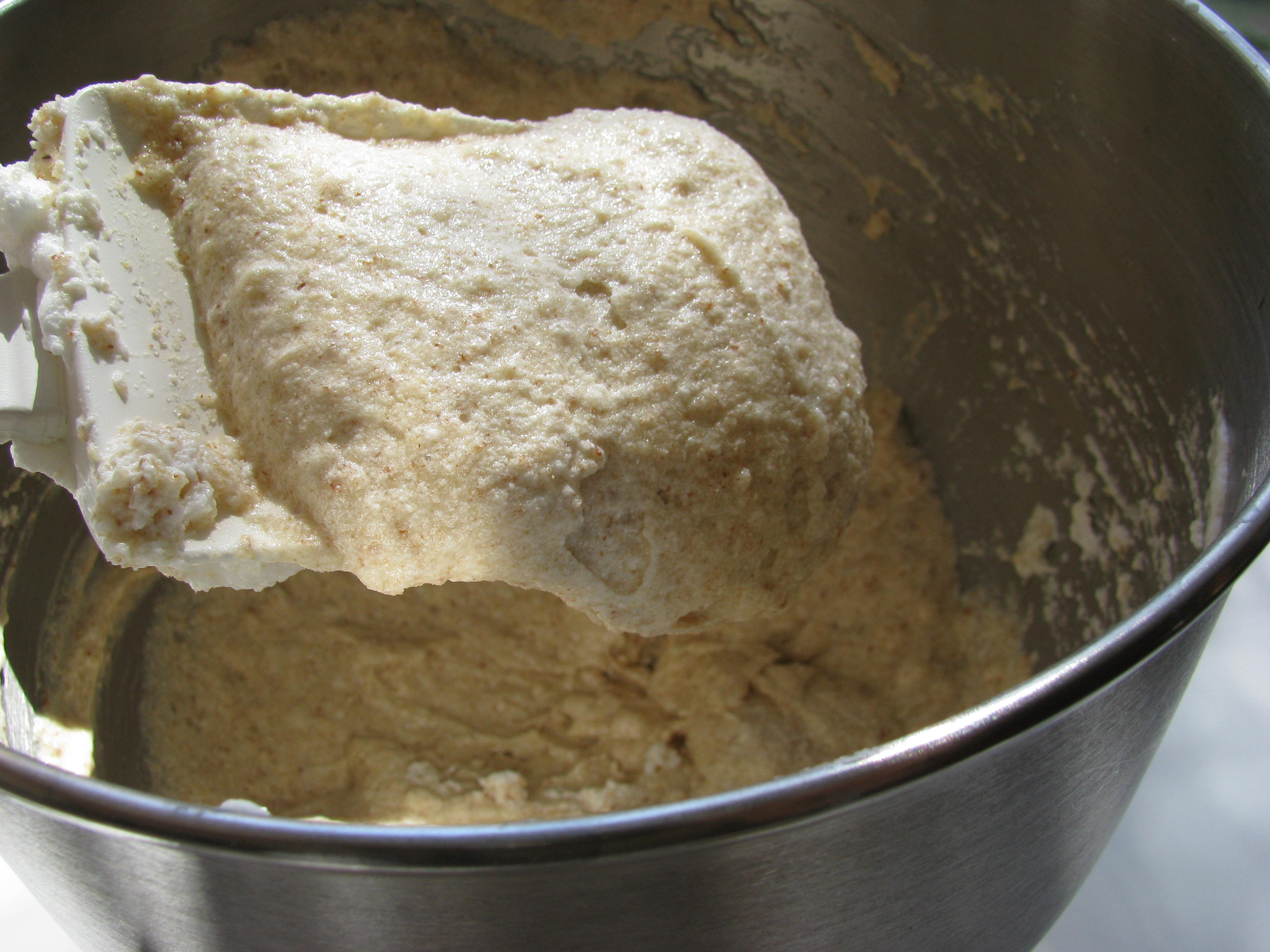
    Almond cake batter

    Almond cupcakes baking

    The egg whites produce a very fluffy batter. There is no baking powder or baking soda in the recipe, but you can see through the oven window how poofy the cupcakes rise in the oven as they bake. I chose a cake recipe from Martha Stewart's web site that was used to make Pinecone Cakes. They look as cute as can be but way too putzy, so I made cupcakes instead. In Dick's words, "This is good. Oooooh, this good! I think I'll have another." (The heart balloons cupcake topper and pretty-in-pink cupcake liners are available at my daughter Jessica's fortandfield shop.)   

    Almond cupcakes frosted 

    Almond Cupcakes

    Makes seven regular-size cupcakes.

    ½ cup whole almonds

    ¾ cup sugar

    ½ cup all-purpose flour

    5 tbsp unsalted butter

    1 tsp vanilla

    4 large egg whites

    tiny pinch salt

    Preheat oven to 350°. Line muffin tin with paper liners. Process almonds and half of the sugar in a food processor until finely ground. Transfer to a bowl, add flour, and whisk together. Melt butter in a small saucepan; remove from heat and stir in vanilla. Let cool slightly. In the bowl of an electric mixer, fitted with the whisk attachment, beat egg whites with salt until soft peaks form. Gradually beat in the remaining sugar, beating to stiff glossy peaks. Fold the flour mixture into the egg-white mixture in three batches, alternating with the butter mixture, beginning and ending with the flour mixture. Fill muffin cups 2/3 full and bake about 20 minutes until golden around the edges and a toothpick inserted in center comes out clean. Transfer cupcakes to a wire rack to cool completely. Spread icing over tops.

    Buttercream Frosting*

    1 stick unsalted butter, softened (Martha Stewart’s Fluffy Vanilla Buttercream called for 2 whopping sticks butter. I chose to use 1 stick and it was plenty. Next time, I’m going to try reducing it to ½ stick.)

    3 cups sifted powdered sugar

    ¼ tsp vanilla (I subbed 1 tbsp Montmorency tart cherry juice which added a wonderful flavor and a natural pink color.)

    Put butter in bowl of an electric mixer. Beat on medium-high speed until creamy, about 2 minutes. Reduce speed to medium; add sugar ½ cup at a time, mixing well, about 5 minutes total. Add vanilla (or cherry juice). Increase speed to medium-high; beat until smooth, about 1 minute more. (Add milk or cream, if necessary, to achieve spreading consistency.) *For a reduced-fat icing, try Martha Stewart's Light Cream Cheese Icing.   

  • I'm in my second week of a 16-week long online Cultured Dairy and Cheesemaking Course. Throughout the course, I will be sharing photos of what I am learning. However, I will not be explaining the process out of respect for Wardeh Harmon who has invested endless hours creating detailed lessons in her GNOWFGLINS eCourses that include videos, easy-to-understand printed materials, and recipes. I highly recommend that you come on board and take the class alongside me. Even though the class has already started, you can jump in at anytime. Why fuss making products that you can quickly toss into your cart at the grocery store? It's about increasing the nutrient content, introducing beneficial organisms, avoiding processing, and peak freshness… not to mention the fun of it.

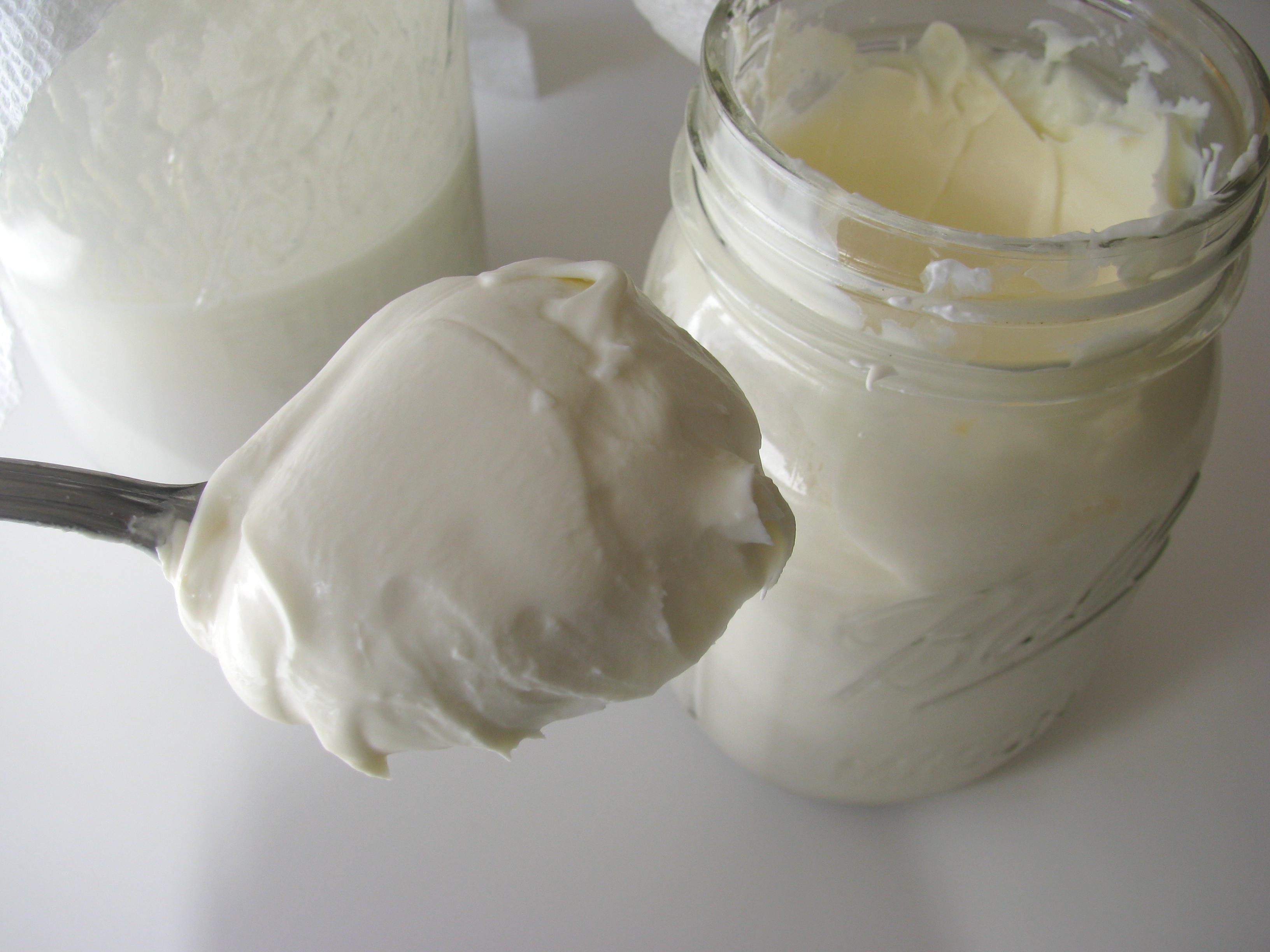
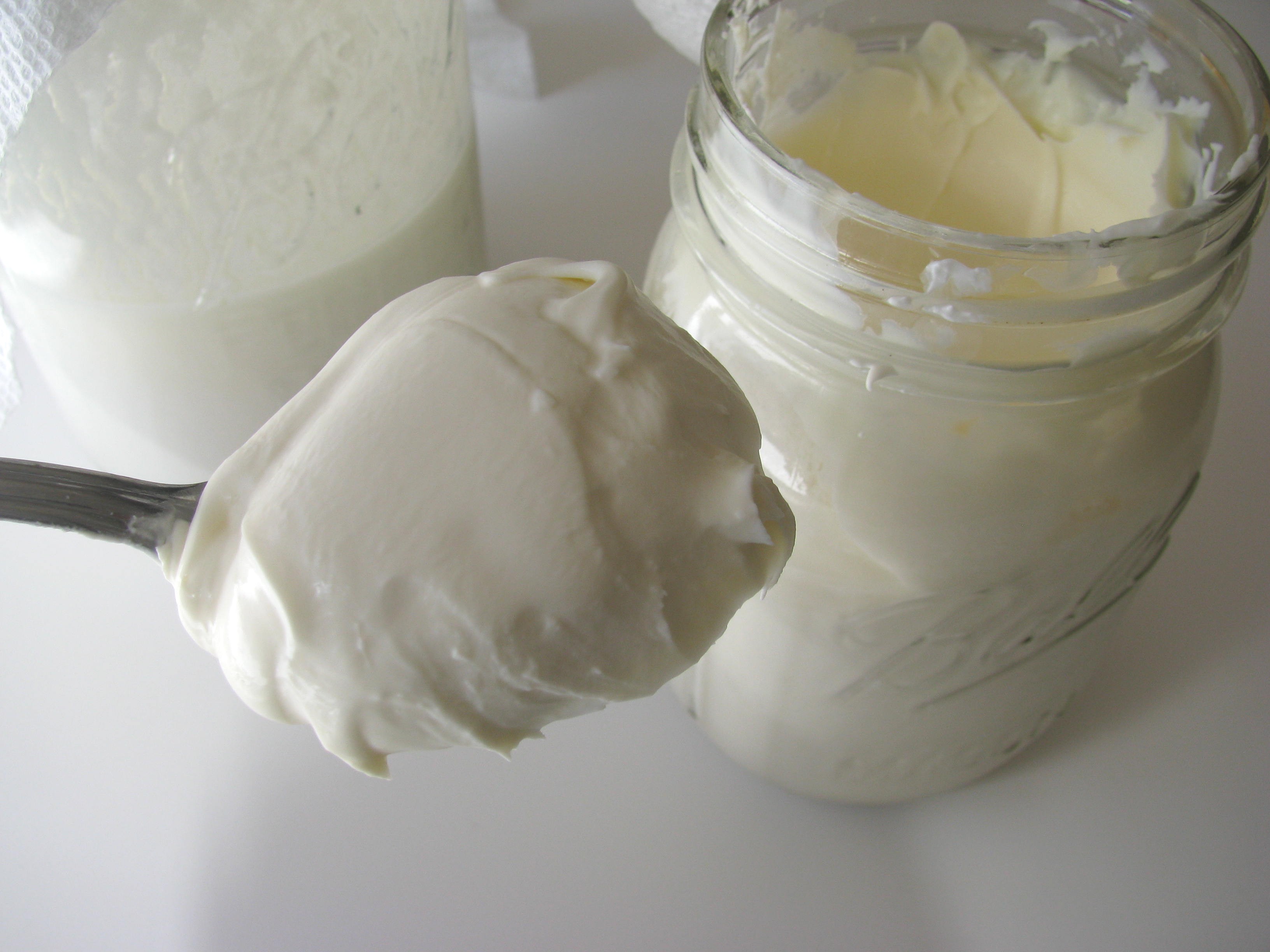
    Homemade sour cream 
     
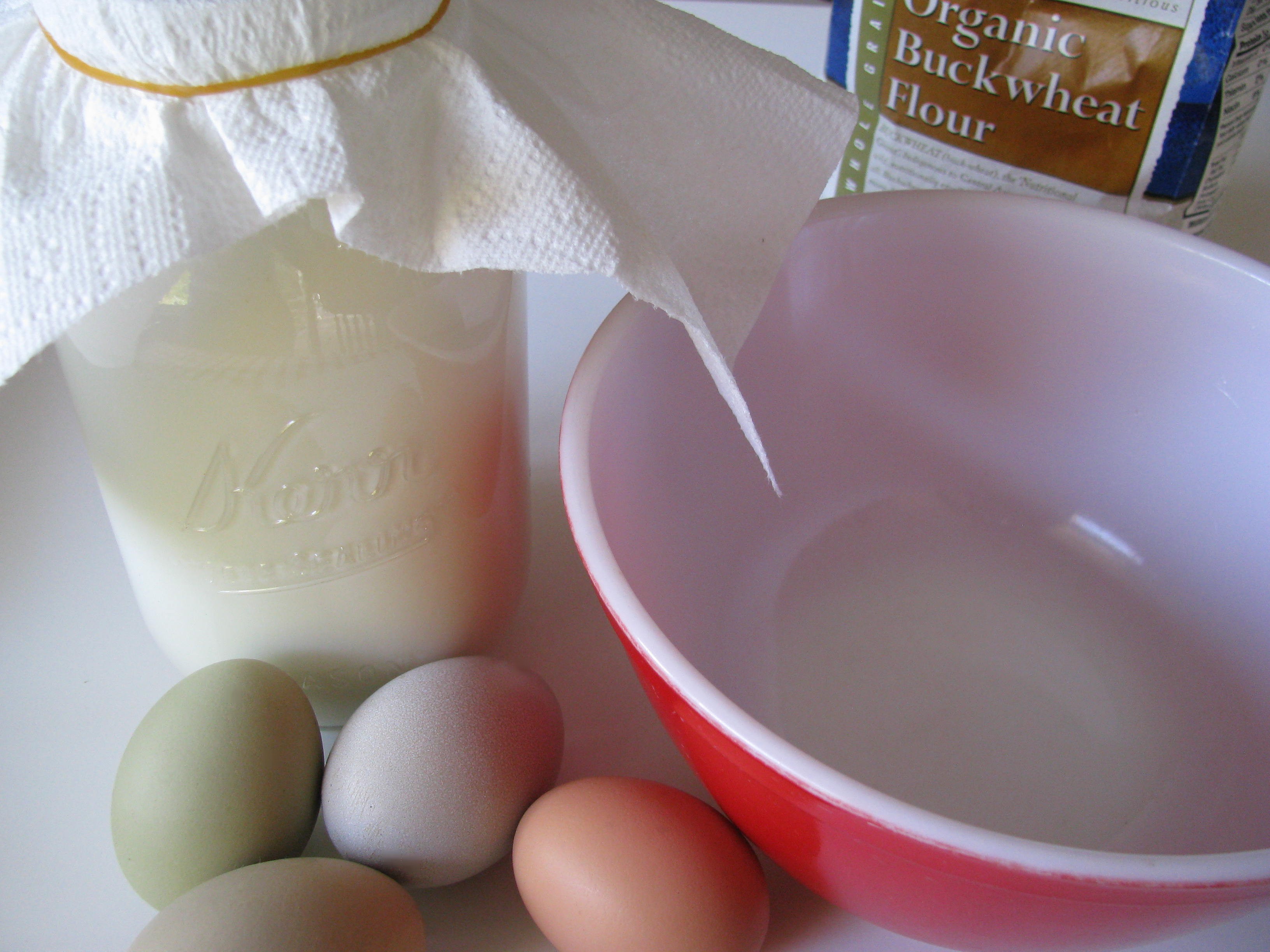
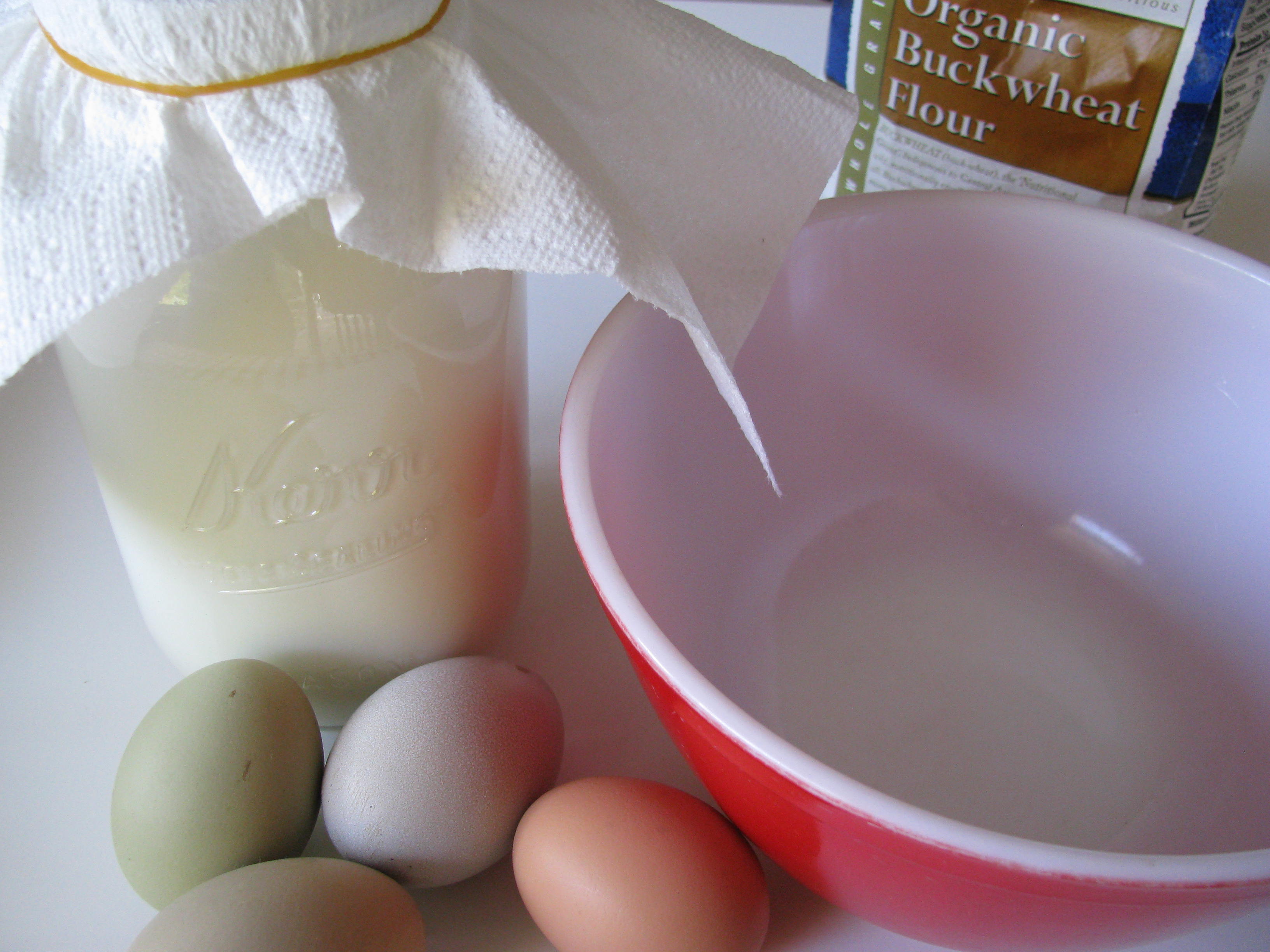
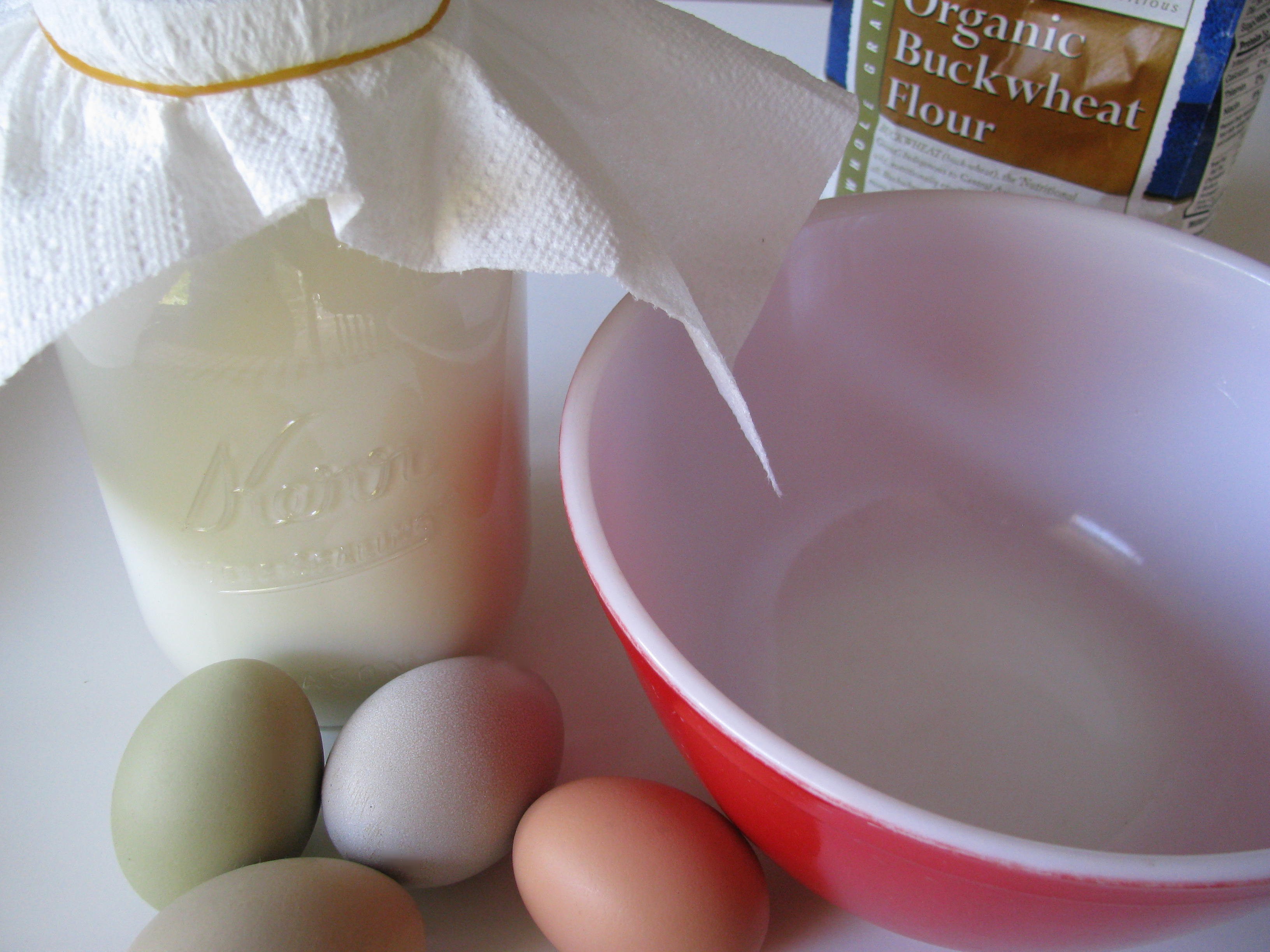
    This week, I learned how to make sour cream and buttermilk. After a few minutes of thoughtful pondering, I pulled a Fluffy Buttermilk Pancake recipe from my file. Adapting it slightly by substituting buckwheat flour for part of the whole wheat pastry flour, I decided it would be a perfect use for my luscious, rich homemade buttermilk and colorful Araucana eggs that a neighbor had dropped off. The pancakes were lighter and more tender than ever before. It was the homemade buttermilk… I am sure of it! 

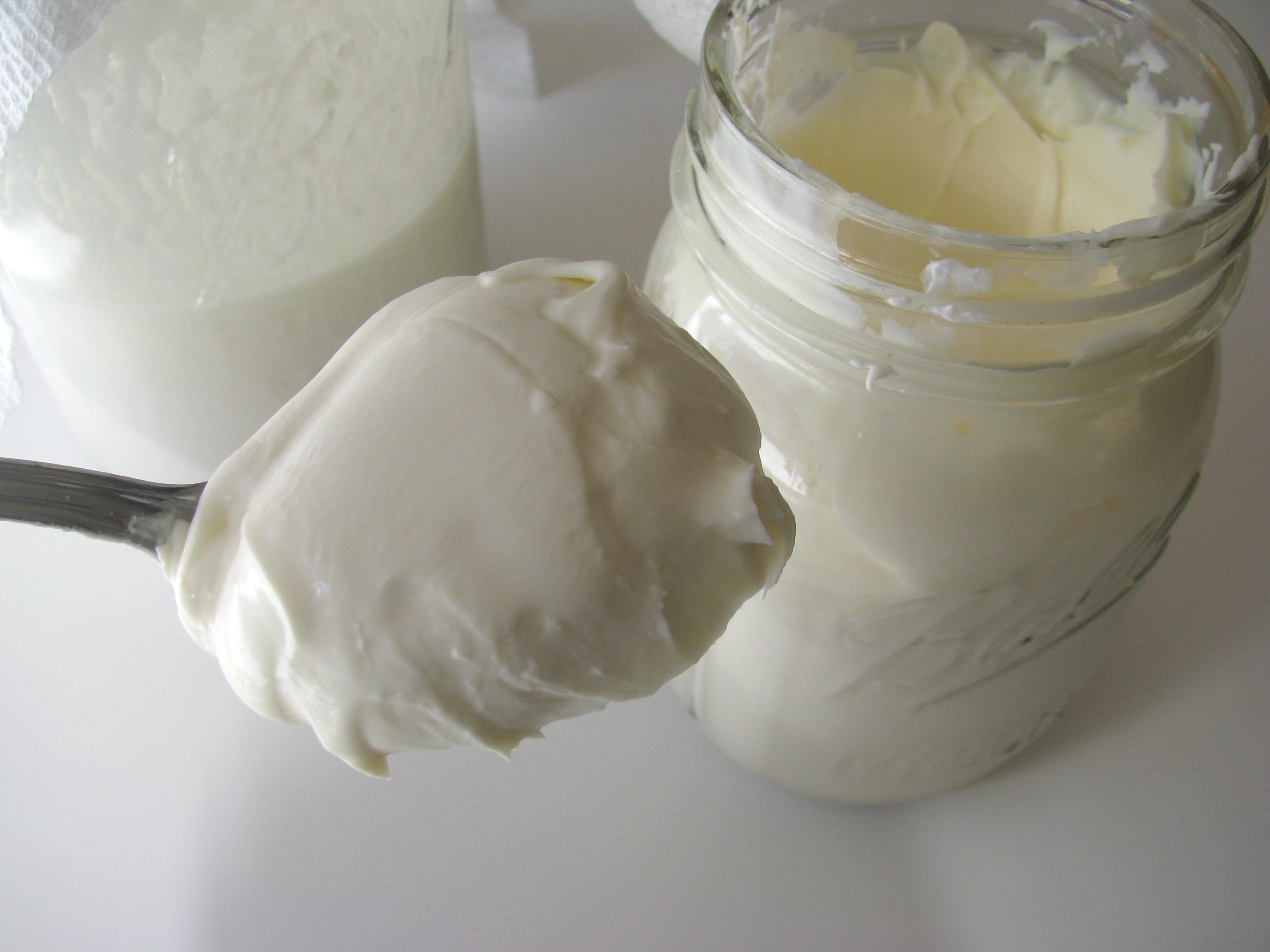
    Homemade buttermilk 

    Buckwheat Buttermilk Pancakes

    1 cup buttermilk

    1 egg

    1 tbsp oil

    ½ cup buckwheat flour

    ¼ cup whole wheat pastry flour

    ¼ cup wheat germ

    1 tbsp sugar

    ½ tsp salt

    ½ tsp baking soda

    1 tsp baking powder

    Beat buttermilk, egg, and oil. Whisk dry ingredients together.  Add dry ingredients to wet, mixing just until blended. Don’t overmix. Heat griddle to 350°. Pour ¼ cup batter onto heated skillet. Sprinkle a few blueberries on top, if desired. When top is covered with small bubbles and dry around the edges, flip pancakes and cook on other side until brown. Serve immediately or keep pancakes in a 200° oven while making the remainder of the batch. In place of syrup, spread with unsweetened applesauce or apple apricot sauce. 

  • I'm devoting a second post to whole grain teff as a hot breakfast cereal because I am so impressed with it and I also want to share a bit about its preparation. My intent was to snap a photo of my bowl of teff hot cereal this morning before I dug in, but in my haste to enjoy its goodness… well, as my photo testifies, I got lost in the moment and remembered to grab my camera only after it was nearly devoured. I love teff's texture, flavor, and the comforting feeling it produces in my tummy.   

    Teff hot cereal 
    According to the package's cooking instructions, bring 2 cups water to a boil, add 1/2 cup teff grain, cover, and simmer 15 to 20 minutes until water is absorbed. Stir occasionally. Sometimes when I cook hot cereal, I substitute milk for the water for a creamier end product. No more. Let me explain why. Dick and I consume raw dairy products. (Note: For bed and breakfast food preparation, I utilize low-temperature pasteurized dairy products , to conform to Minnesota Dept. of Health regulations, which is still a better choice than traditionally pasteurized and… gasp… ultra-pasteurized milk.) It came to me in an aha moment that by heating the raw milk in the cereal cooking process, I was basically pasteurizing the milk in  my own kitchen… exactly what I had set out to avoid by purchasing raw milk. I was negating my own efforts! Raw whole milk is so rich and luscious, you'll still achieve hot cereal's creaminess by using water in its preparation and pouring milk over it in the bowl prior to serving.   

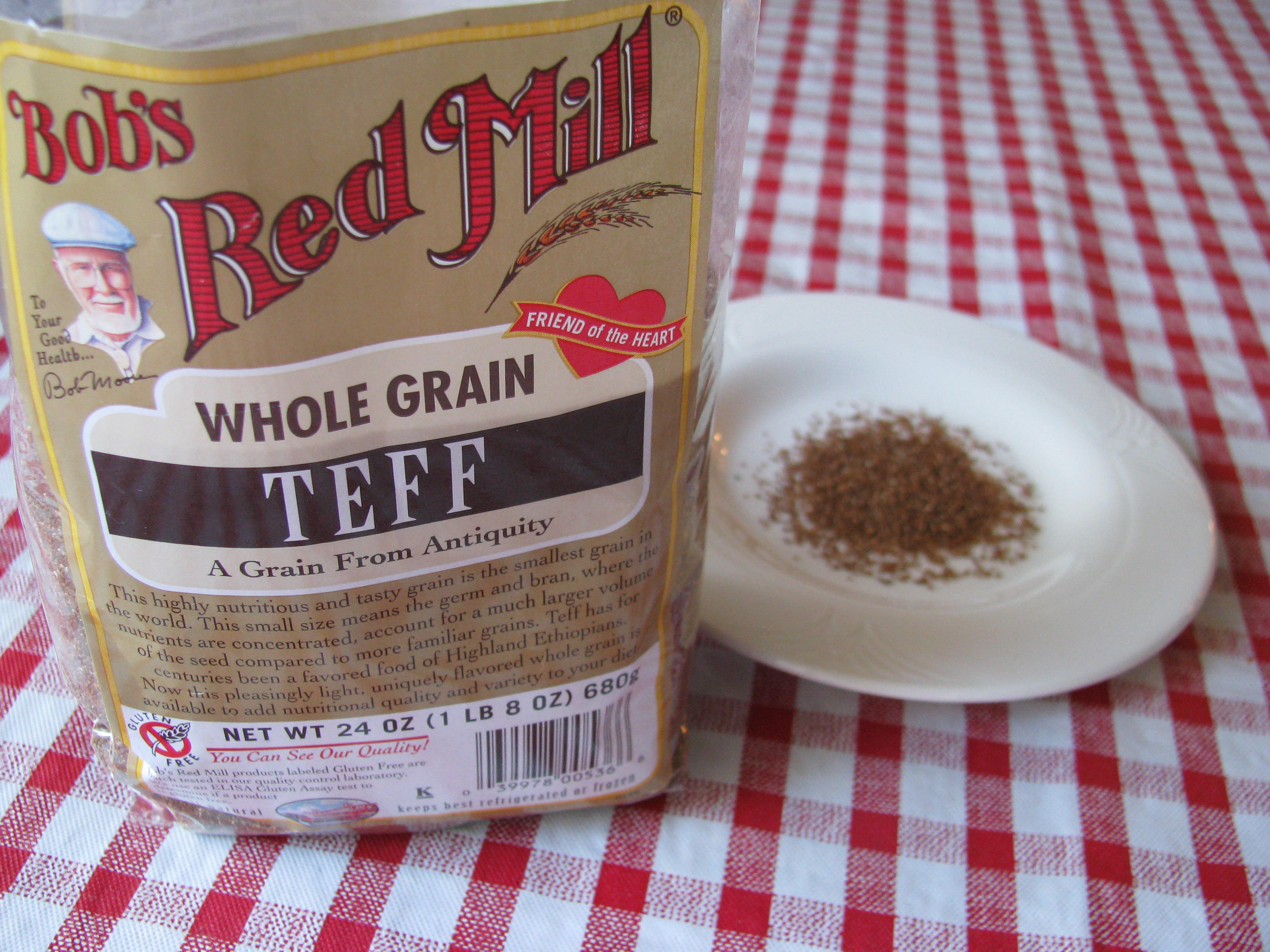
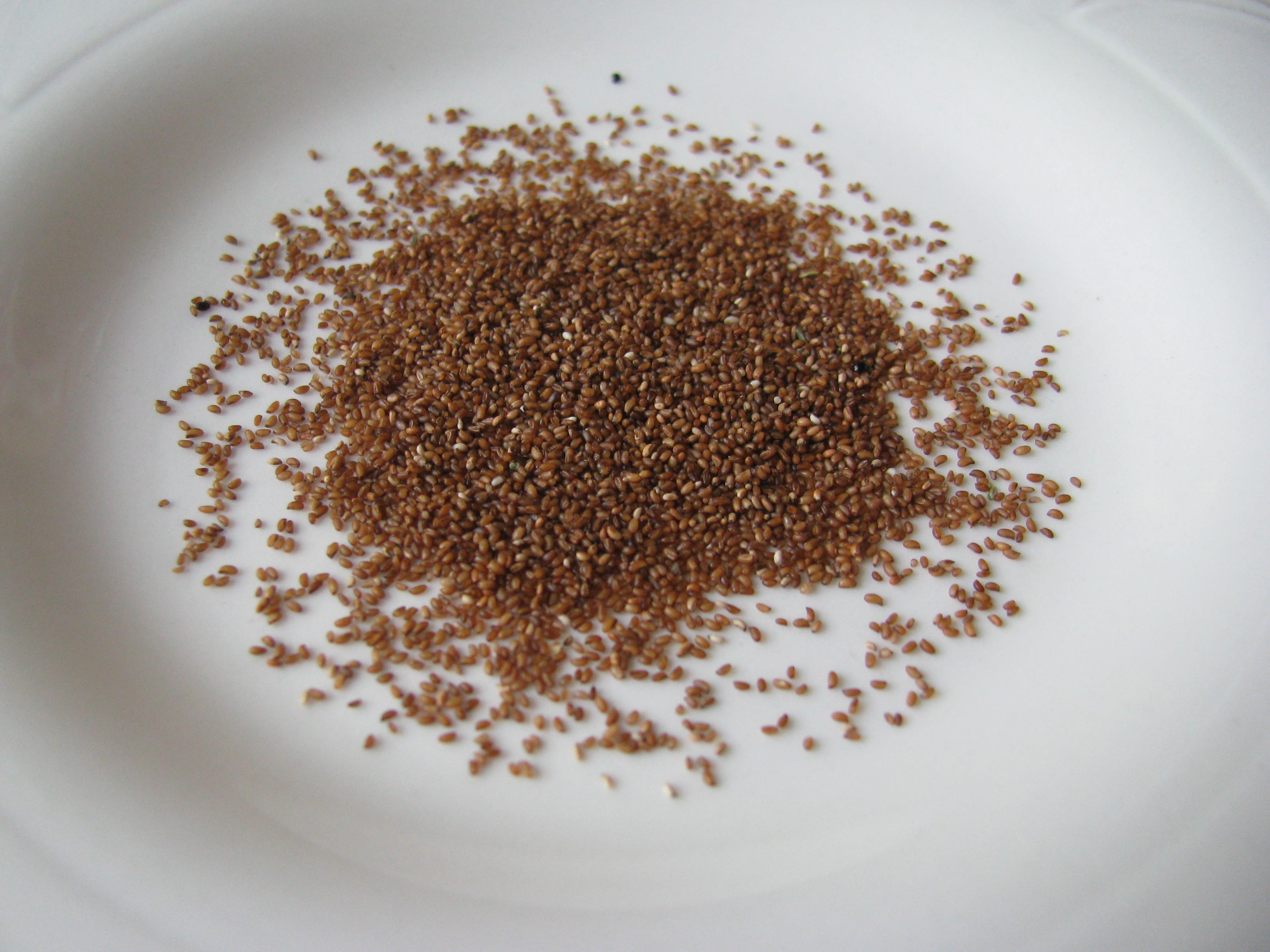
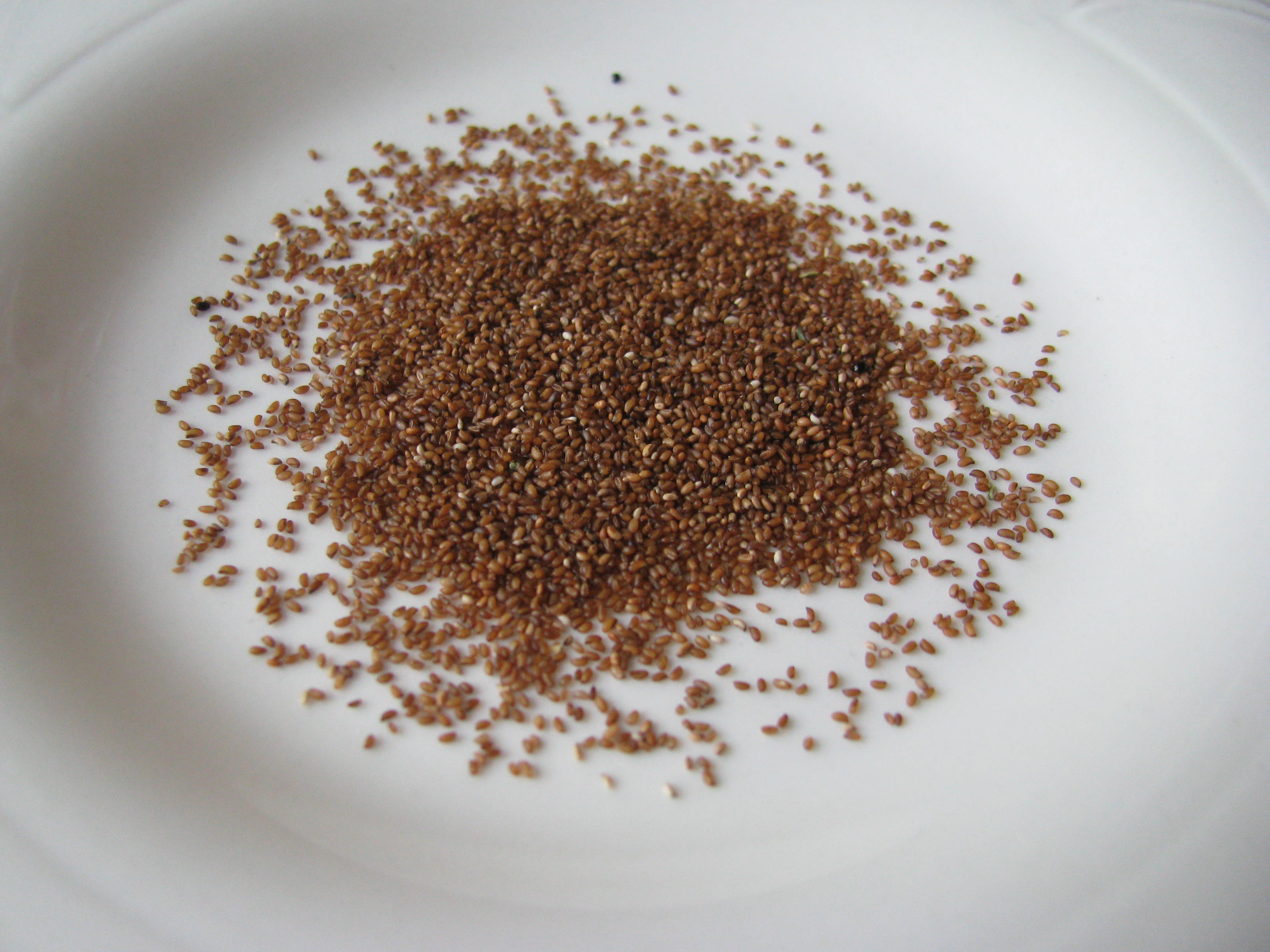
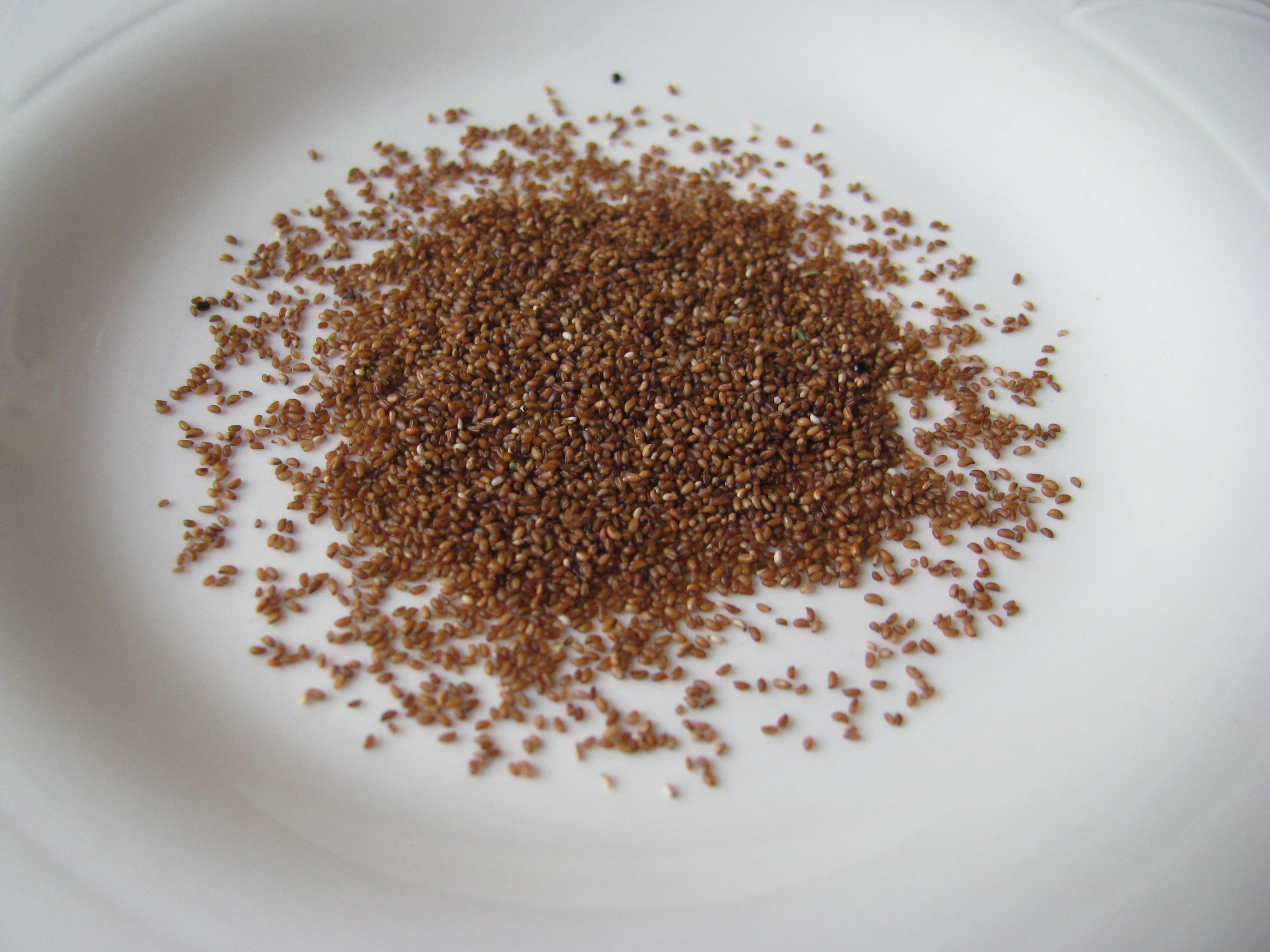
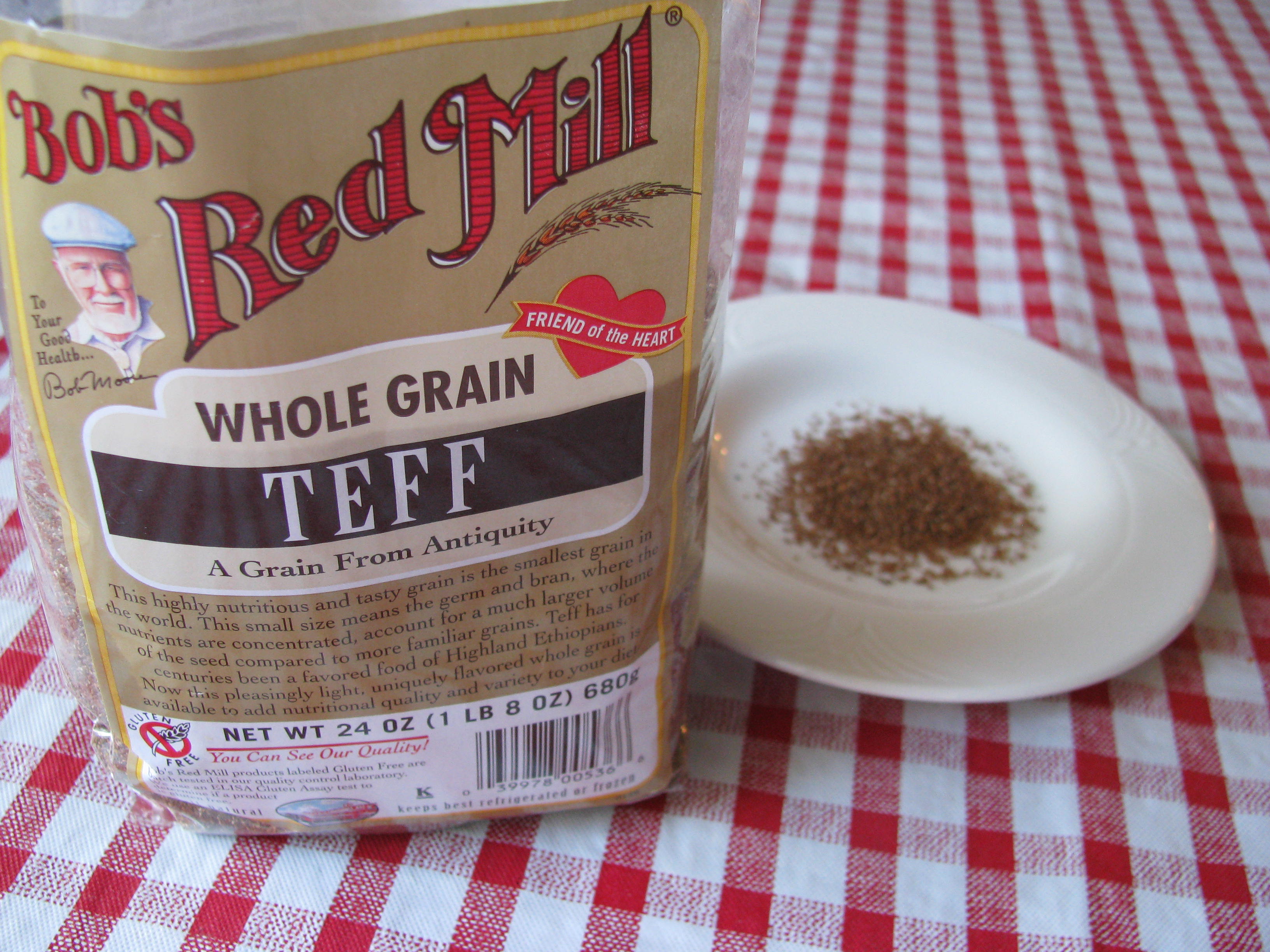
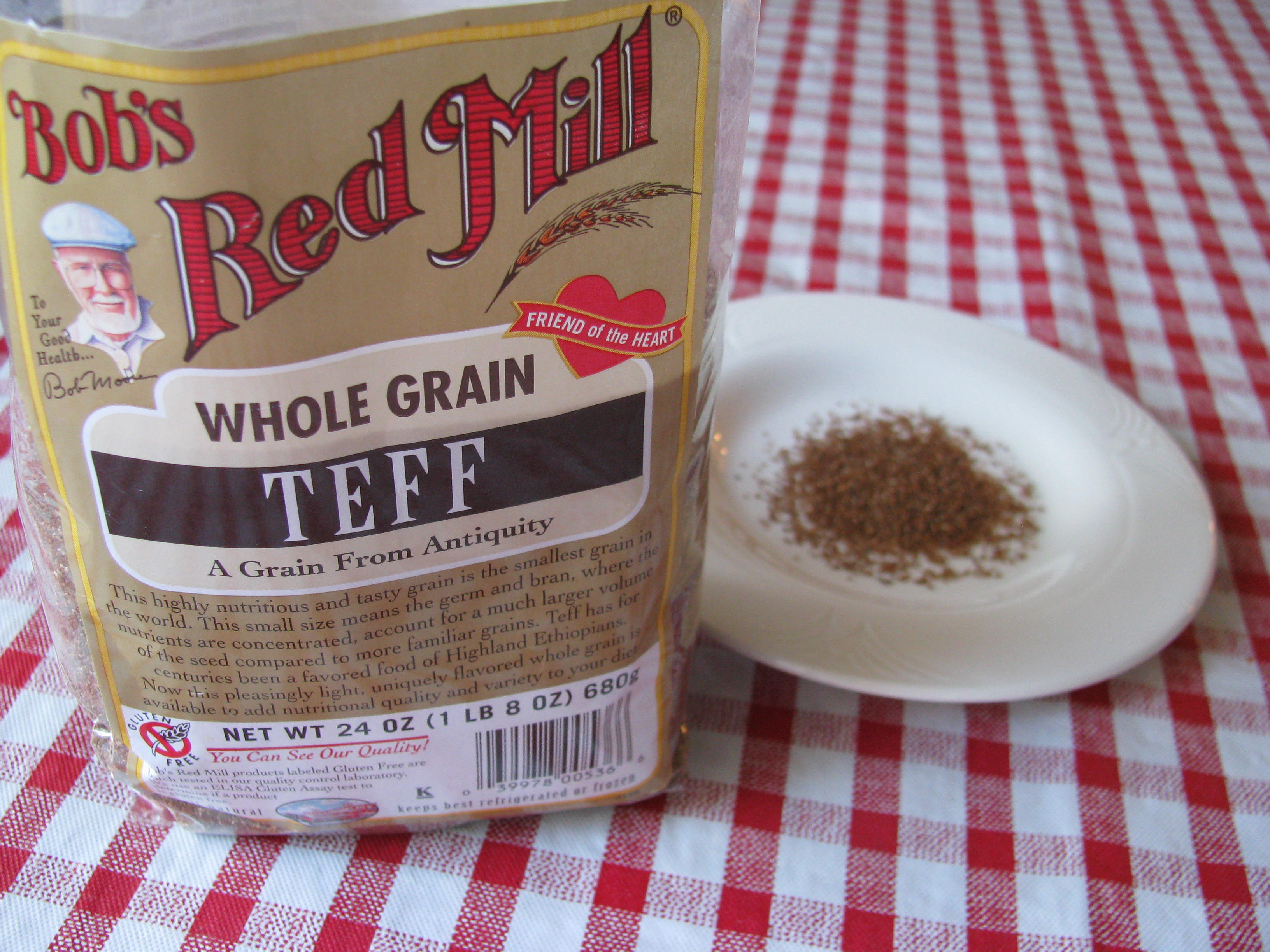
  • This morning, I made hot cereal from the smallest grain in the world. This seed is so small that it takes 150 seeds to equal 1 kernel of wheat! The century-old grain is called teff. The texture and flavor reminded me of the farina (aka cream of wheat) that my mom prepared in the wintertime for my siblings and I before we left for school. She would sometimes add baking cocoa to create a chocolate version.
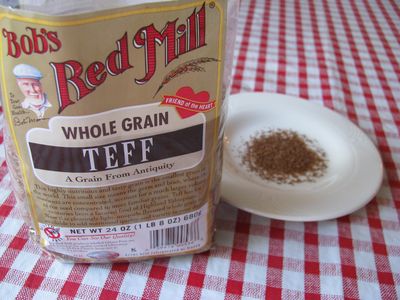
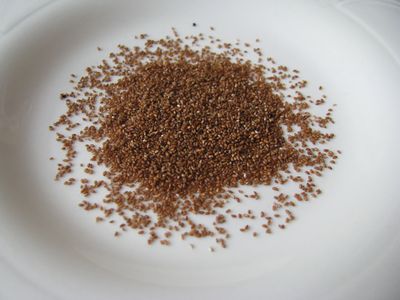
    Bob's red mill teff 
    Teff  

    Whole grain teff is a highly nutritious grain with 4 grams dietary fiber and 7 grams protein per 1/4 cup (dry) serving. It is super dense in calcium and very high in phosphorus, iron, copper and thiamin. I was curious to learn how teff compares nutritionally to cream of wheat. My Internet search led me to a Cooking with Real Food Group where Johnny Penso posted the following on a cream of wheat forum.

    "When I first started researching healthy eating a few years ago, breakfast was one of my top priorities. I always eat first thing in the morning, no matter what time I get up and I like variety. I was going through what I thought were new healthy options in the grocery store and ran across Cream of Wheat.  I thought, “this must be good for me, it’s made from wheat”. Believe it or not, I had never eaten it before, in spite of coming from Canada, where almost everyone has eaten it at one time or another. But as I looked on the box and read the label I said to myself, “Hmmm, I may be colour blind, but I know that wheat in the field is not white, and there doesn’t seem to be enough fibre in here for it to be made from whole wheat, I better investigate this”.

    So I went to the net and did a google search on “how is cream of wheat made”. Here’s what it said in a nutshell. As the wheat is fed into the mill, the rollers flake off the bran and germ, and the starch (or endosperm) is cracked into coarse pieces in the process. Through sifting, these particles are separated from the bran and this is semolina also known as farina or Cream of Wheat. There are two main types of semolina sold on the general market. Durum semolina, made from hard wheat (typical white pasta flour) , and soft wheat semolina, also known as farina or by the trade name Cream of Wheat, used as a hot breakfast cereal.

    Wait a minute I said, that sounds suspiciously like white bread or pasta flour. Why is that? Because it’s the exact same process used to make white flour, that is removing the most nutritious part of wheat, the germ and the bran. So when you are eating Cream of Wheat, you are basically eating hot, wet, white bread, from a nutritional standpoint. If you put their nutritional profiles side by side, you’ll find that White Bread, denounced as the nutritional wasteland it actually is, really has significantly more niacin, thiamin, riboflavin and folate.

    Add to that that Cream of Wheat is 66 on the glycemic index (life savers candy are a close 70) so to your blood sugar, there is no difference between eating a bowl full of sugar and a bowl of Cream of Wheat."

    Something to think about… I'd give teff a whirl. 


  • In my daughter Heather's blog post precious paper petals, she speaks of her home being peacefully melodic. "A quiet rustle of my tidying. A faintly perceptible 'snip, snip' of child-size shears cuts construction paper in two rosy hues. Sounds of content occupation." It caused me to contemplate Dick's and my day to day rhythm. We do thrive on sporatic adventures, but there is a calmness that sprouts from routines… not a stuck in a rut sort of sameness but that which comes from expectancy and constancy. This canvas bucket is important to our rhythm of the everyday.

    Canvas bucket 
    Five days a week, this collapsible canvas bucket holds Dick's and my post workout (swimming and yoga) snacks. It begins our day. I prepare breakfast. I pack our snacks. To vary the snacks, I glean ideas from many sources. Examples are the two-week menu plan in each issue of my Clean Eating Magazine. I also use Laptop Lunches Quick-Reference Lunch Ideas Chart. The bucket, which was a gift from Heather several years ago, is watertight and can also be used to carry two gallons of water.

    Heather's post spawned a conversation between Dick and I. We began to ponder what has become our unique rhythm… that which is ours alone.           

  • Yogurt strained

    Simple advance preparation is required as a first step in making the Raspberry Fool that I featured in a post two weeks ago. The recipe calls for draining the yogurt for several hours or overnight to separate the whey (watery liquid) so that the end product will have a thicker consistency. In this photo, you can see that there is a substantial amount of whey in the 1 1/2 cups of yogurt called for in the recipe. I've wondered about whey's food value and how Greek yogurt stacks up compared to regular yogurt. My questions were answered by David L. Katz, MD in a November 2008 issue of O, The Oprah Magazine when a reader posed the same question. 

    Q: I've been straining nonfat yogurt and pouring off the whey to get the thicker consistency I like. Am I diminishing the nutritional value of the yogurt?
    — Martha Northcutt, Windham, New Hampshire

    A: You are definitely changing the nutritional value. If you pour off just the whey—the fluid at the top of the carton—you'll lose a small amount of calcium. However, if you strain low-fat yogurt for several hours using cheesecloth or a dish towel, about half the calcium will go down the drain. On the other hand, the thicker, creamier result of straining yogurt, which is sometimes referred to as Greek yogurt, is higher in protein than the standard stuff, providing roughly 20 grams versus 13 for an 8-ounce serving. It's also lower in carbohydrates because some of the milk sugar, or lactose, is lost. You're wise to use nonfat yogurt: Removing the whey has the effect of increasing the yogurt's density, and usually when you do that to a food, you boost the concentration of fat and calories. Strain the full-fat version and you'll end up with yogurt that is more than twice as fatty and caloric as regular yogurt. Fat-free Greek yogurt has about the same amount of calories as standard varieties.

     
    Another question I had was what I could do with the liquid (whey) that I drained off to make this dessert. My Internet search led me to Ali's Cleaner Plate Club Blog where she stated that she'd heard that whey can be used in bread or muffins and lacto-fermented foods. I chose to add mine to a smoothie that was whirling in my blender. Whey definitely won't be going down my kitchen drain… that's a fer sure.  
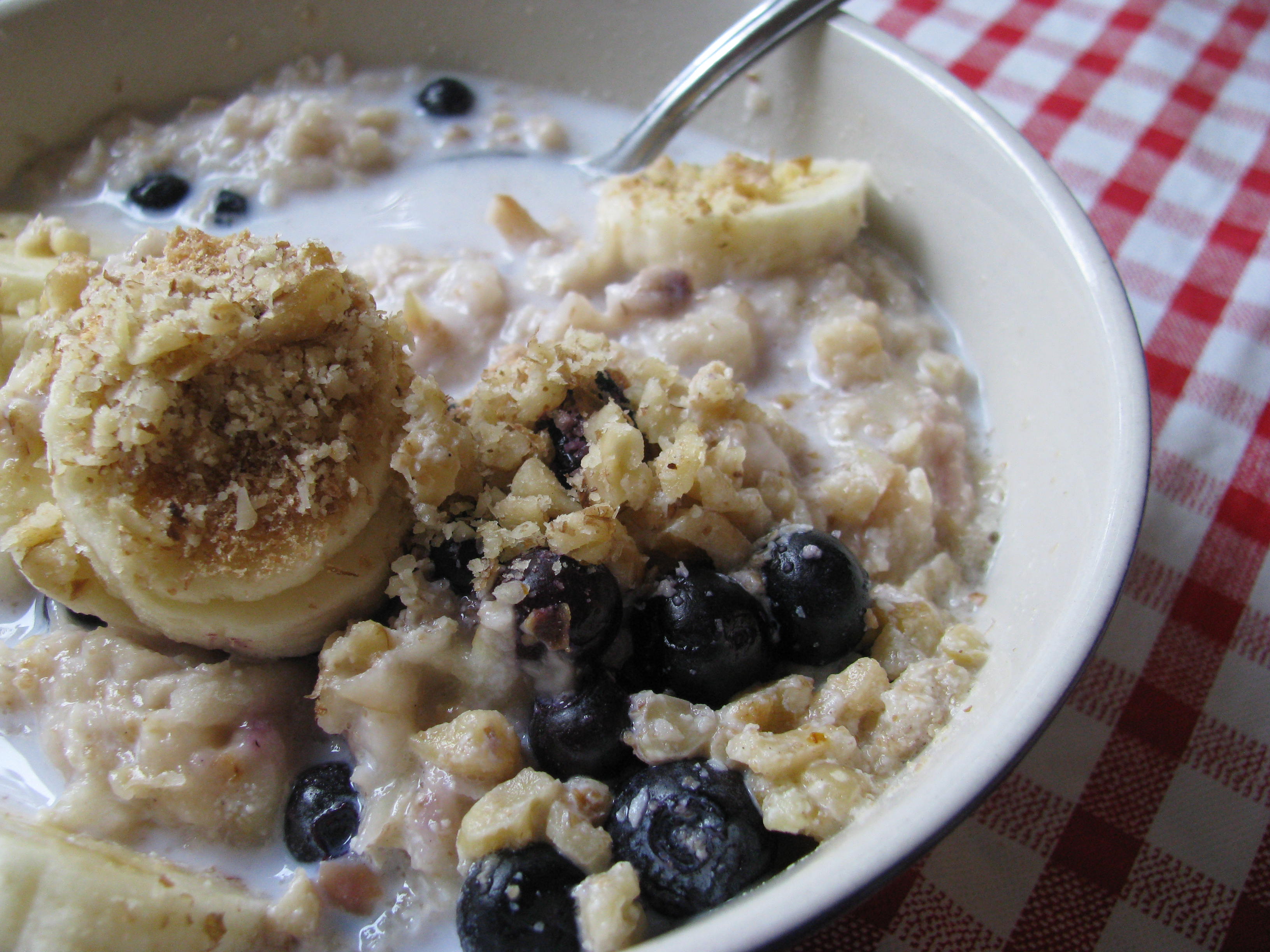
  • You wouldn't think that adding shredded apple to oatmeal would make a noticeable difference, but it really changes things up a bit. The original title of this recipe from Eat Right America is Blueberry Nut Oatmeal, but the apples add an important element so I elevated them to star status by renaming the recipe Apple Blueberry Nut Oatmeal. It was a hearty start to the day as I headed out the door to yoga class this morning.

     Apple blueberry nut oatmeal 
    Apple Blueberry Nut Oatmeal

    1 ¾ cups water

    1 cup old fashioned rolled oats

    1 cup unpeeled, grated apple

    2 tbsp currants, raisins, or dried cranberries (optional)

    1 2 tbsp ground flaxseed (or 2 scoops flax lignans)

    1 cup fresh or frozen blueberries (If using frozen, spread out on a plate to partially thaw while oatmeal cooks.)

    bananas, sliced (my addition)

    pecans (or walnuts), chopped

    In a saucepan, stir together water, oats, apple, and dried fruit. (It may seem like there isn’t enough liquid, but not to worry. As the apple cooks, it begins to release its juices.) Bring to a boil, then reduce heat and simmer for 5 minutes stirring occasionally. Remove from heat and cover for 2-3 minutes before serving. Top bowls of oatmeal with flaxseed, fruit, and nuts. Serve with milk. Makes 2 to 3 servings.

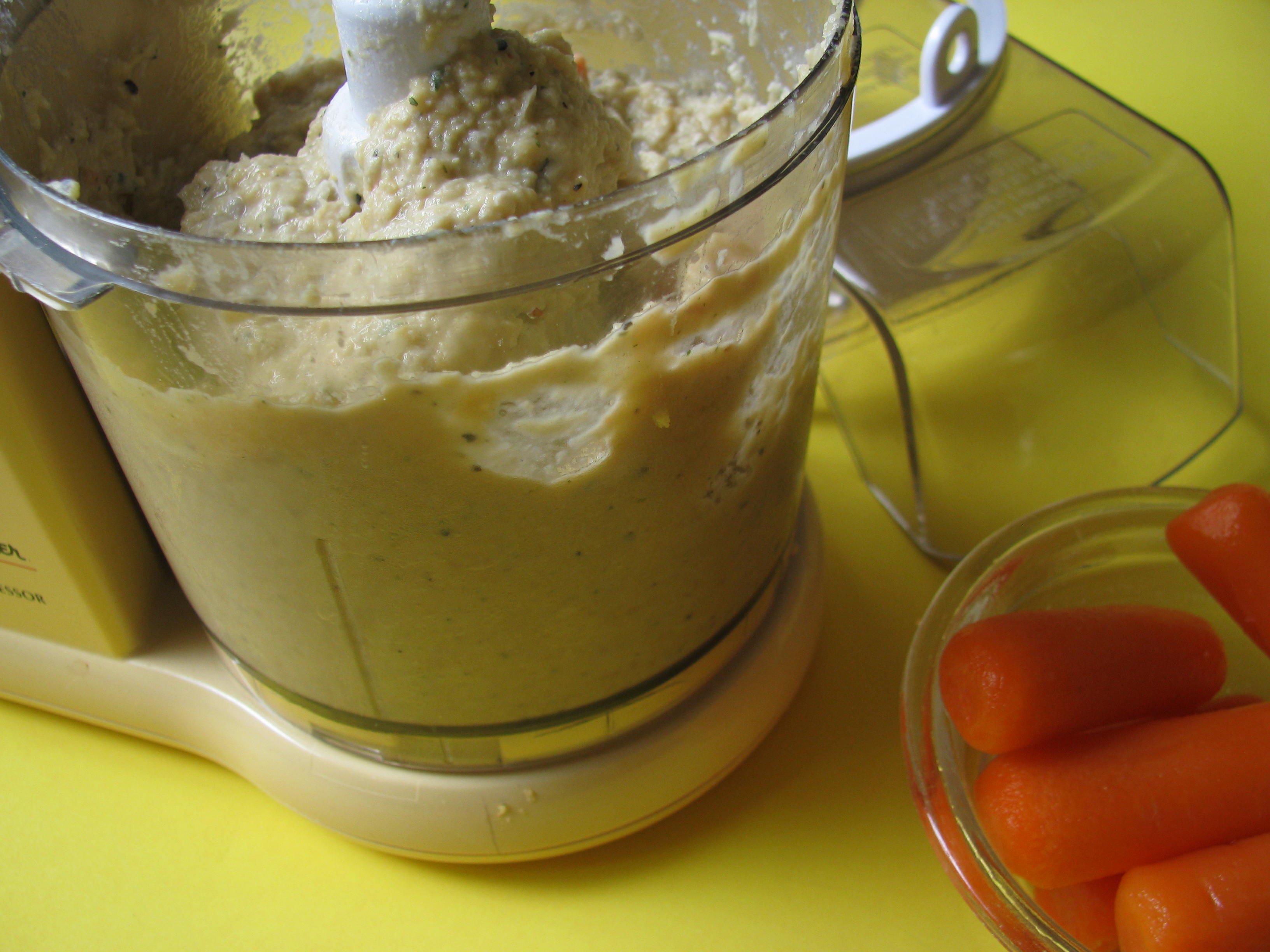
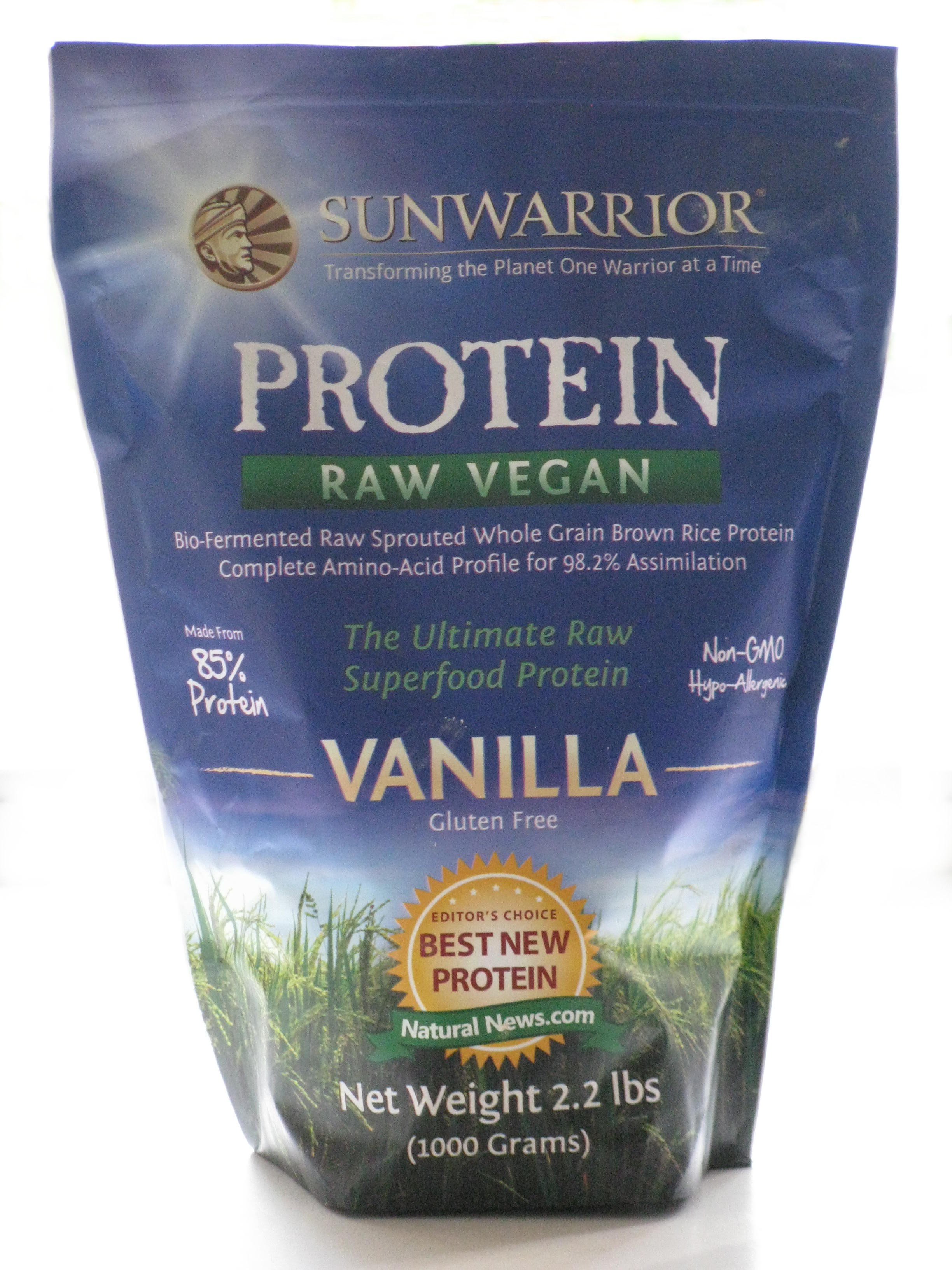
  • Dick andSun warrior protein I joined the Y and have been participating in aquasize classes 3X/week. For a pre-exercise breakfast, we have carbs to provide energy. This morning, I made Fluffy Buttermilk Pancakes spread with unsweetened applesauce. For post-exercise, we pack a protein snack to build muscle. Today, I made hummus (with garbanzo beans to supply protein) as a dip for carrots and a smoothie with the addition of a scoop of protein powder. I purchase Sun Warrior Protein Powder that is made from bio-fermented raw sprouted whole grain brown rice protein.

    This hummus recipe uses raw unhulled sesame seeds instead of tahini, which is a sesame seed paste typically used to make hummus. 

    Homemade hummus 
    Homemade Hummus

    1 cup cooked or canned garbanzo beans, drained (reserve liquid)

    ¼ cup bean liquid or water

    ¼ cup raw unhulled sesame seeds

    1 tbsp lemon juice

    1 tbsp Mrs. Dash or other no salt seasoning

    1 tsp Bragg Liquid Aminos

    1 tsp horseradish (optional)… I didn’t use.

    1 small clove garlic, diced

    Blend all ingredients in a high powered blender until creamy smooth. (I used my food processor.) Yields 1 cup.

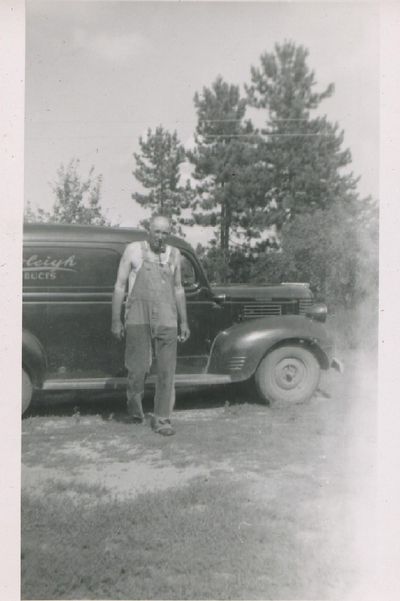
  • For a sweet treat to top off tonight's tempeh chili supper, I chose a recipe for Vanilla or Chocolate Pudding from an April 2006 issue of Martha Stewart's Everyday Food Magazine. To add my own little spin, I subbed coconut oil for butter and added in shredded unsweetened coconut. The aroma and flavor that these simple changes made triggered childhood memories of my Grandma Grace's coconut pudding. She used a coconut dessert mix from my Grandpa Bill's Rawleigh inventory. This is a photo of Grandpa standing beside a 1941 Plymouth Panel Delivery that he used on his Rawleigh route in earlier years.

    Grandpa's rawleigh 1941 plymouth panel delivery 

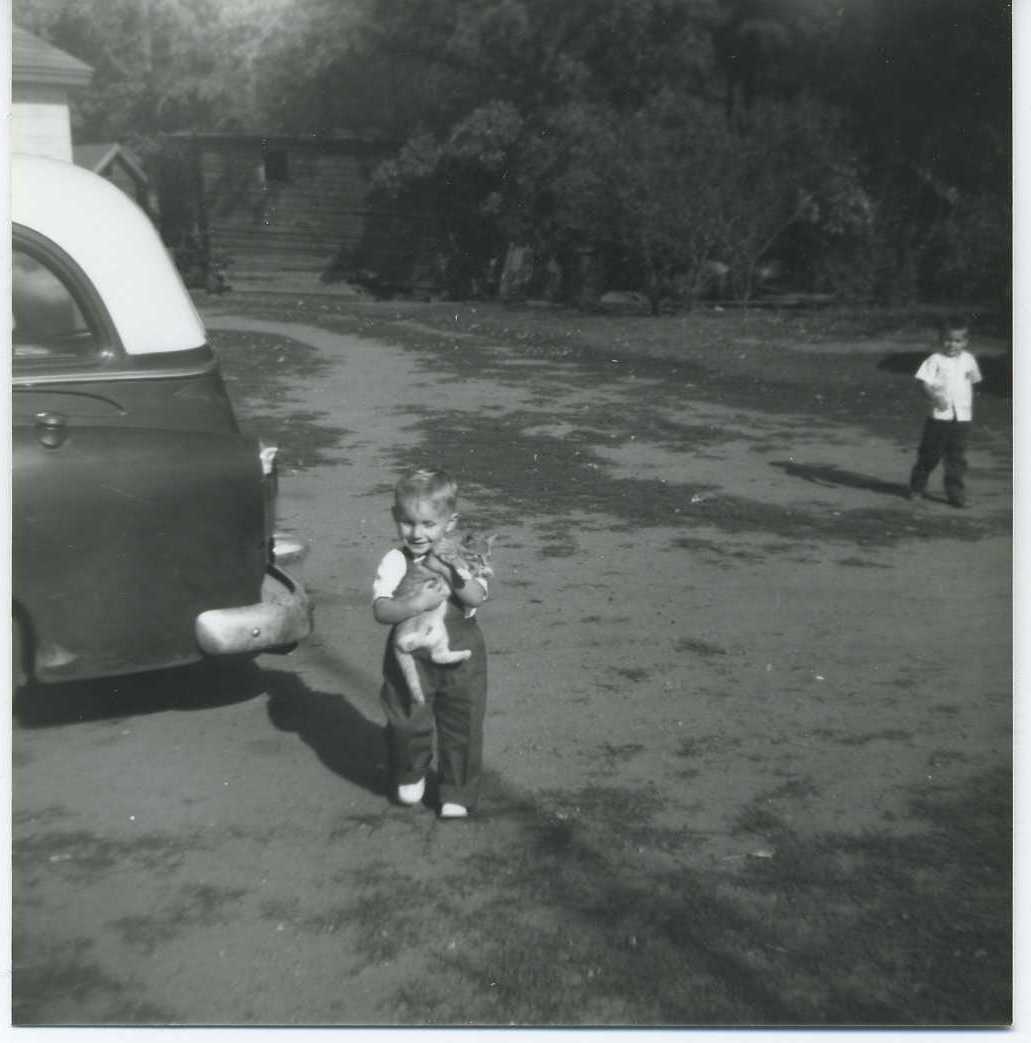
    Below is a photo of the back end of grandpa's 1954 Chevrolet Handyman Station Wagon that he used when I was about 9 or 10 years old. My brother Rick is holding a cat and my brother Ron is in the background. The photo was taken at the farm where I grew up 10 miles southeast of Brainerd. (Photos courtesy of my sister Marlene. Identification of car's make and model courtesy of my husband Dick.)

    Rick_with_cat_at_farm 

    The car grandpa owned is like the one in the illustration below minus the side chrome and it was painted two-tone with a white top rather than a solid color.   

    1954-chevrolet-belair-townsman-station-wagon 

    Although this coconut pudding turned out to be a luscious treat, the memories it brought to mind were a precious, unexpected bonus. 

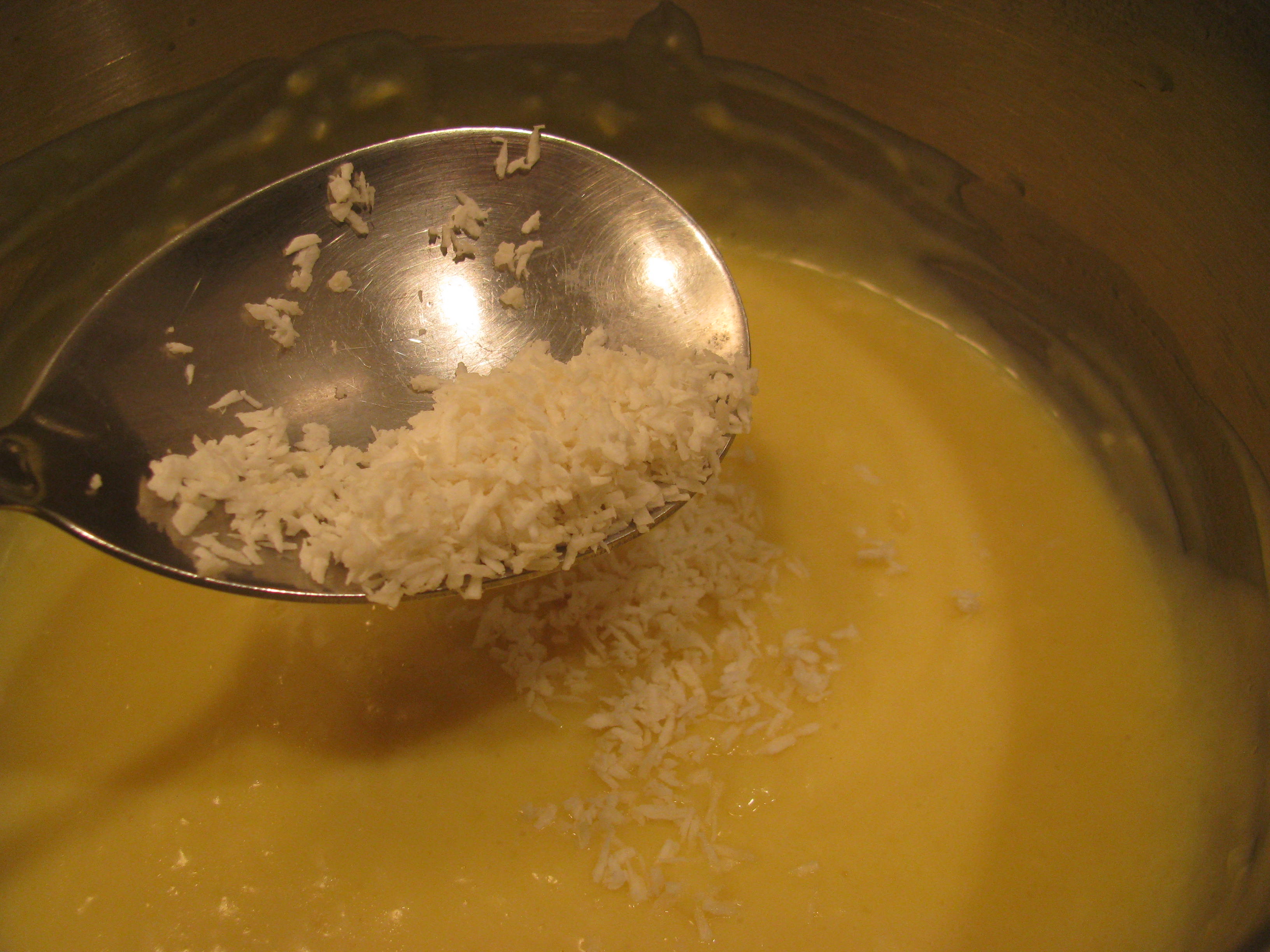
    Shredded unsweetened coconut 
    Vanilla, Chocolate, or Coconut Pudding

    2/3 cup sugar (I used 1/3 cup.)

    ¼ cup cornstarch

    ¼ tsp salt

    1/3 cup unsweetened cocoa powder (if making chocolate pudding)

    2 ½ cups milk

    4 large egg yolks

    2 tbsp unsalted butter, cut into pieces (or 1 tbsp coconut oil)

    1 tsp vanilla

    ¼ cup shredded unsweetened coconut (if making coconut pudding)

    Place a fine-mesh sieve over a medium bowl; set aside. In a medium saucepan, off heat, whisk together sugar, cornstarch, and salt. If making chocolate pudding, add cocoa powder. Very gradually (a few tablespoons at a time), whisk in milk taking care to dissolve cornstarch. Whisk in egg yolks. Whisking constantly, cook over medium heat until the first large bubble forms and sputters. Reduce heat to low; still whisking, cook 1 minute. (Instead, to prevent the pudding from burning, I cooked it in the top of a double boiler stirring frequently once it starts to thicken.) Remove from heat; immediately pour through sieve into bowl. Stir butter (or coconut oil), vanilla, and coconut (if making coconut pudding) into hot pudding. Chill at least 3 hours and up to 3 days. Yeah, right. I say eat it while it’s warm. Serves 4 (or 6 for just a little treat… but still enough to thoroughly enjoy).